Close Menu
  • Home
  • UNSUBSCRIBE
  • News
  • Lifestyle
  • Tech
  • Entertainment
  • Sports
  • Travel
Facebook X (Twitter) WhatsApp
Trending
  • Glowing ring of plankton surrounding New Zealand islands linked to deadly underwater plateau — Earth from space
  • Omar files new financial form in response to Trump, GOP critics
  • New study confirms lobsters feel pain, driving scientists to call for a ban on boiling them alive
  • Ex-CENTCOM commanderwarns against ‘risky’ US ground op to seize Iran uranium
  • Santa Ana’s Upcoming Report on Police Firing on ICE Protesters Lacks Details
  • Stephen Hawking’s black hole information paradox could be solved — if the universe has 7 dimensions
  • Nancy Sinatra calls Trump’s use of Frank Sinatra’s ‘My Way’ a ‘sacrilege’
  • Afghan national is on trial for suspected role in 2021 Kabul airport bombing
Facebook X (Twitter) WhatsApp
Baynard Media
  • Home
  • UNSUBSCRIBE
  • News
  • Lifestyle
  • Tech
  • Entertainment
  • Sports
  • Travel
Baynard Media
Home»Lifestyle»Glowing ring of plankton surrounding New Zealand islands linked to deadly underwater plateau — Earth from space
Lifestyle

Glowing ring of plankton surrounding New Zealand islands linked to deadly underwater plateau — Earth from space

EditorBy EditorApril 21, 2026No Comments4 Mins Read
Share Facebook Twitter Pinterest LinkedIn Tumblr Reddit Telegram Email
Share
Facebook Twitter LinkedIn Pinterest Email

QUICK FACTS

Where is it? Chatham Islands, New Zealand [-44.00258384, -176.50074474]

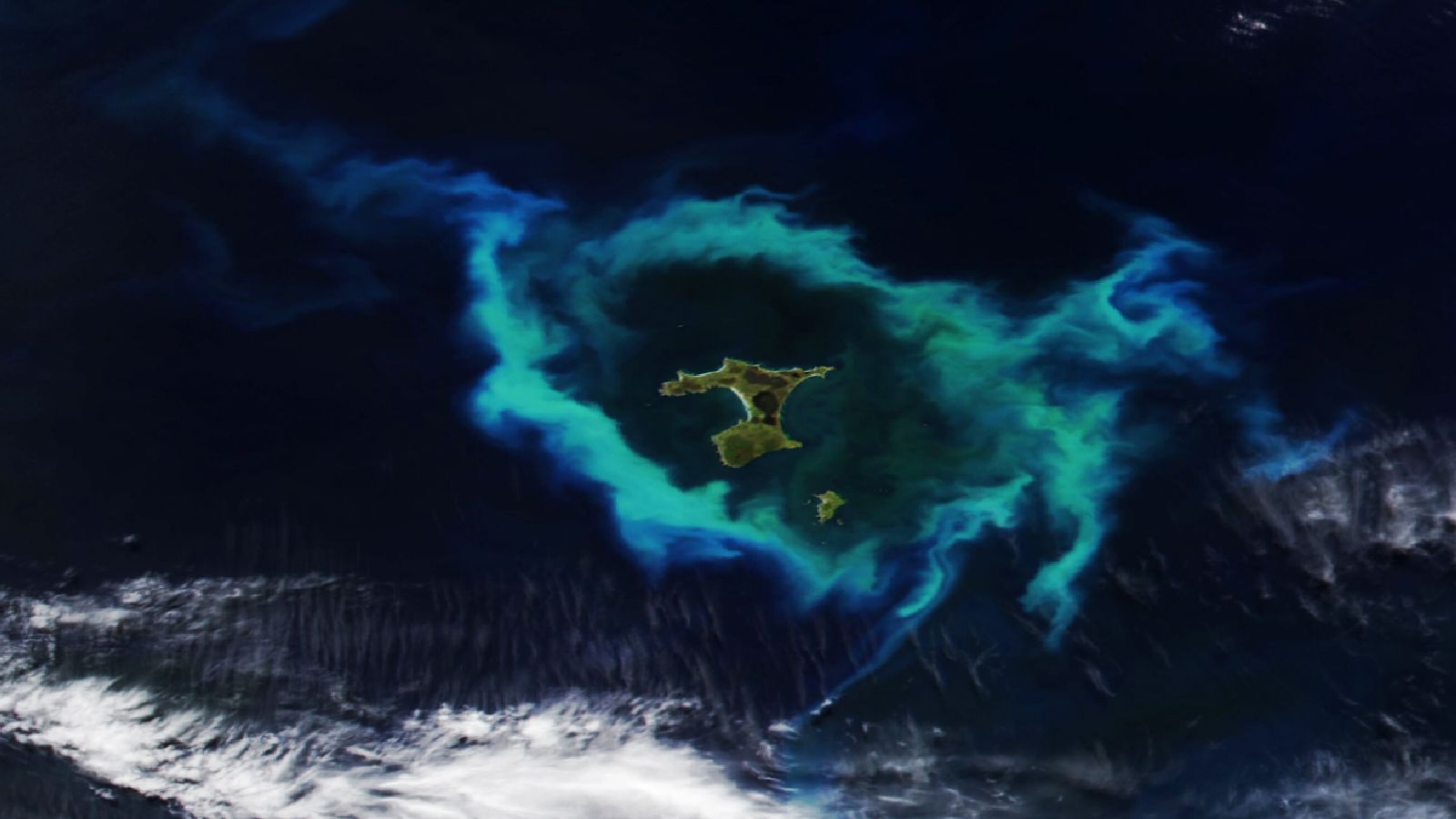
What’s in the photo? A glowing ring of phytoplankton around an archipelago

Which satellite took the photo? NOAA-20

When was it taken? Jan. 10, 2026

This dazzling satellite photo shows a glowing ring of plankton surrounding a remote group of New Zealand islands. The illuminated landmasses are hotspots for deadly whale stranding events, which are tied to the same underwater structure that birthed this spectacular bloom.

The gleaming ring encircles the Chatham Islands — a group of 10 islands in the Pacific Ocean around 520 miles (840 kilometers) west of Christchurch, on the east coast of New Zealand’s South Island. The largest of those islands, Chatham Island and Pitt Island, are approximately 36 miles (58 km) and 9 miles (15 km) across, respectively. (The other landmasses are much smaller and are not clearly visible in the image.)

The Chatham Islands are surrounded by the Chatham Rise — a shallow underwater plateau that extends up to 900 miles (1,450 km) from the South Island’s east coast. This hidden structure acts like a giant ramp that funnels cold, nutrient-rich waters to the ocean’s surface. In the summer, warmer seasonal currents mix with this nutrient-rich water, providing the perfect conditions for algae to bloom.


You may like

The circular bloom in the photo was one of the largest in recent decades. It consists mostly of coccolithophores, a group of photosynthetic plankton, or “phytoplankton,” that convert sunlight into energy and surround themselves with intricate calcium carbonate armor.

The satellite image was captured with a special near-infrared filter, which likely enhanced the algae’s vivid hues. However, the blooming microorganisms would have been clearly visible to the naked eye from space, according to NASA’s Earth Observatory.
A photo of an island in the sea taken from the air

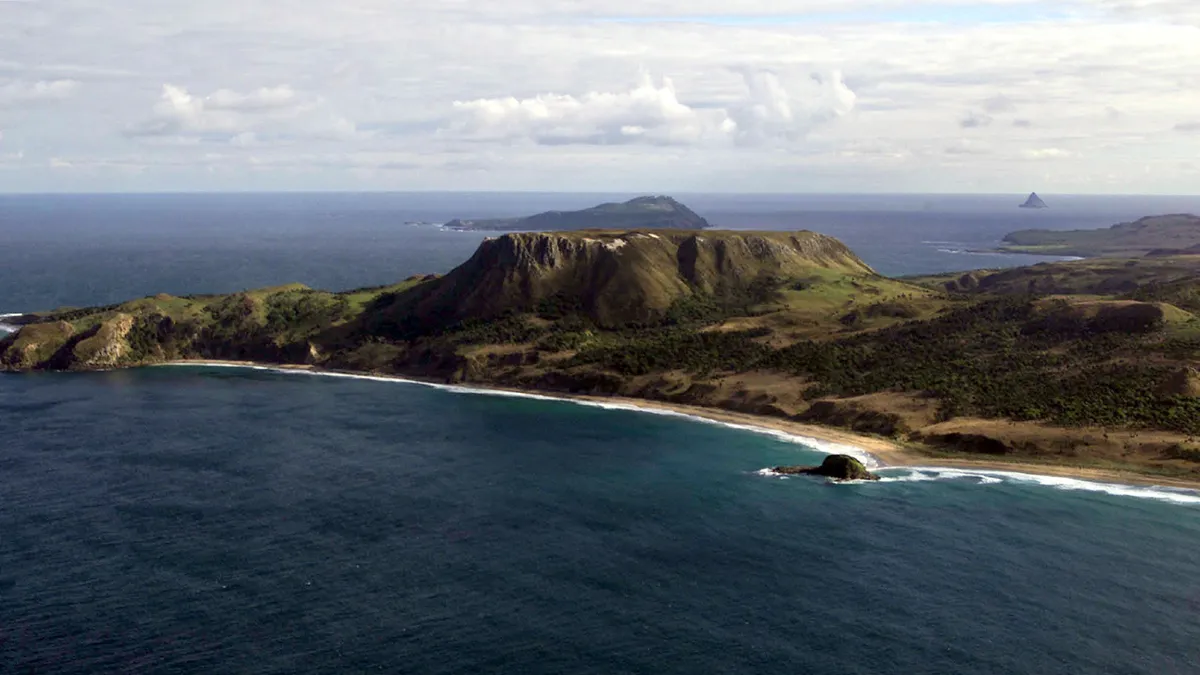
The Chatham Islands are marine biodiversity hotspots. This photo shows Mount Hakepa on the coast of Pitt Island, which is home to thousands of seabirds. (Image credit: Phil Walter via Getty Images)

Phytoplankton are the base of the pelagic (open-water) food web, similar to plants’ role in terrestrial environments. As a result, the Chatham Islands are marine biodiversity hotspots that are home to various animals, including penguins, albatrosses, seals and sea lions, as well as commercially important populations of cod and lobsters.

At least 25 species of whales and dolphins, or cetaceans, are also drawn to the islands to feed, including orcas (Orcinus orca), sperm whales (Physeter macrocephalus) and pilot whales (Globicephala), according to New Zealand’s Department of Conservation (DOC). However, this is not always a good thing for the visitors.

Get the world’s most fascinating discoveries delivered straight to your inbox.

Large groups of cetaceans often get disoriented in the shallow waters and can end up accidentally swimming too close to shore and getting trapped as the tide goes out, which is often fatal without human intervention.
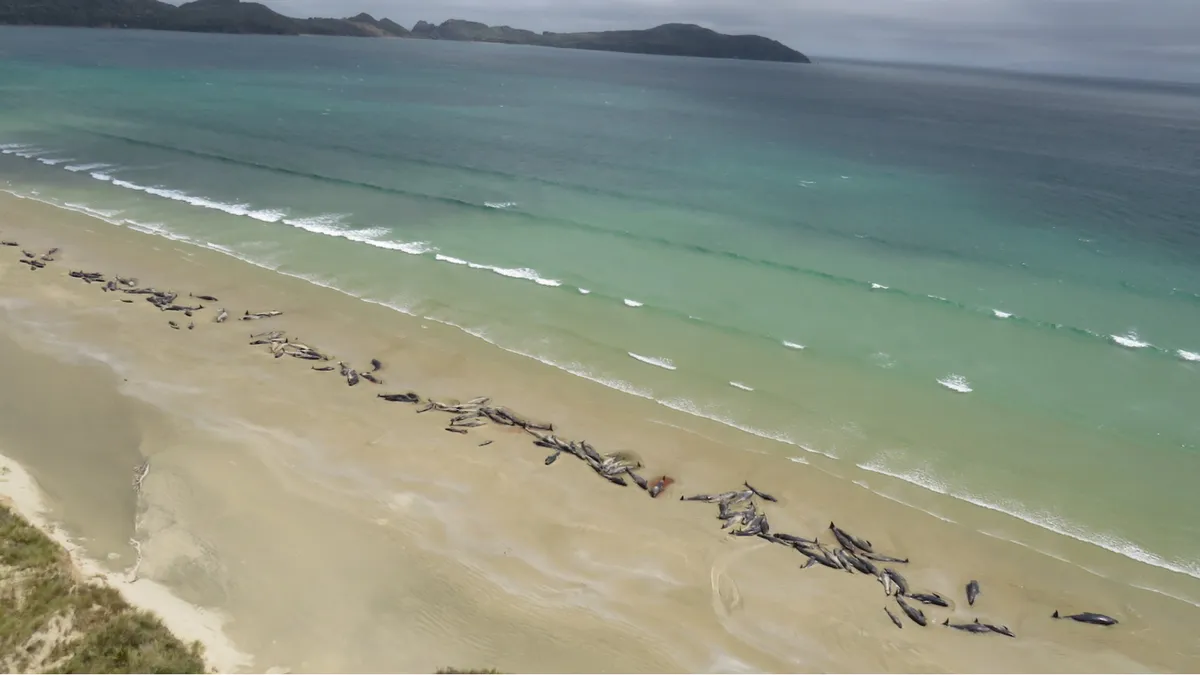
Photo of a beach with hundreds of dead pilot whales lined along the shoreline

Pilot whales have been known to get stranded on the beaches of Chatham Island in their hundreds. This photo shows a similar stranding event on the New Zealand mainland in November 2018. (Image credit: New Zealand Department of Conservatio)

Chatham Island has experienced multiple strandings over the past few years, including an event in October 2022 when nearly 500 pilot whales were euthanized on Chatham Island after washing up over the space of around four days, according to a DOC report. In 1918, more than 1,000 pilot whales are also believed to have died there after washing ashore, which remains the most deadly whale stranding event in recorded history. (Pilot whales are particularly prone to stranding because they are highly social, so an entire pod can be dragged into danger by a single injured or disoriented individual.)

Cetaceans are not the only creatures that have met an untimely end on the Chatham Islands. The archipelago was previously home to at least eight endemic bird species that have since gone extinct, including the Chatham penguin (Eudyptes warhami). Most of these species disappeared between 150 and 200 years ago due to the island’s first human settlers, who arrived there from Polynesia in the 15th century.
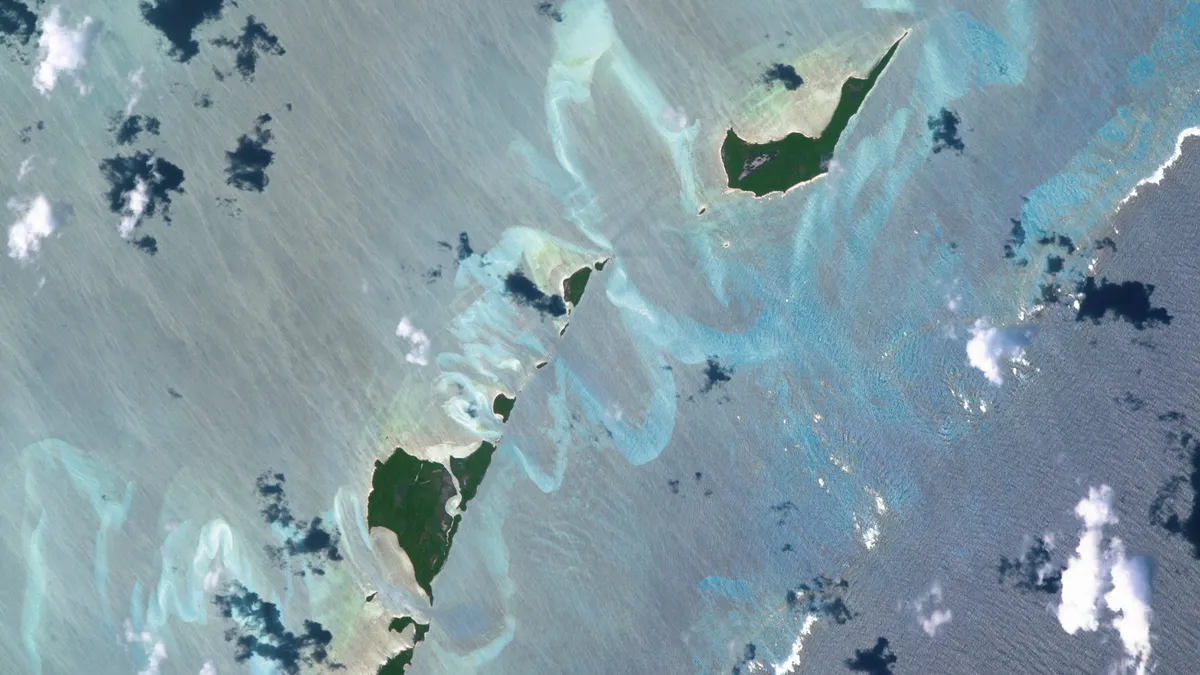
A beautiful light blue plume swirling in the sea off Key West ‘Arctic blast’ plume in Florida

A 2026 satellite photo captured a stunning scene of sediment swirling across the West Florida Shelf after an extreme cold snap that covered large parts of the eastern U.S. in snow.

An astronaut photo of two islands in the Bahamas surrounded by twisting ribbons of shining blue sand banks Shining sandbanks in Bahamas

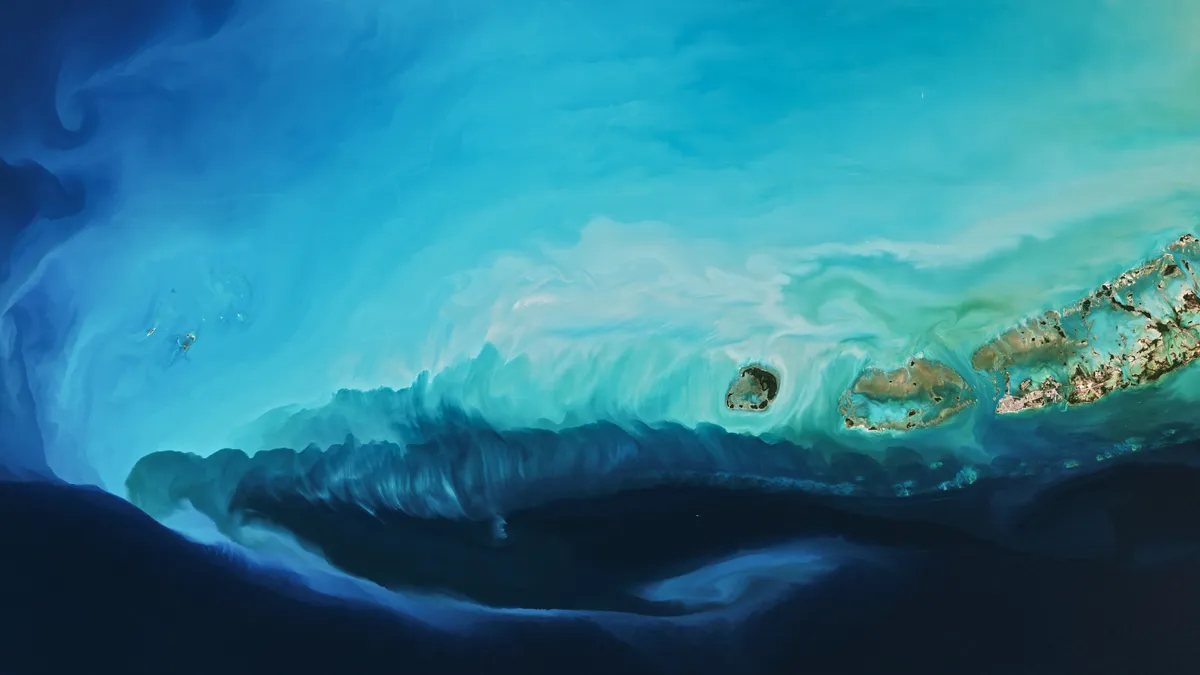
A 2016 astronaut photo of the Bahamas shows a series of luminous, rippling sandbanks partly carved out by a coral reef. The image also reveals subtle differences in the ocean’s surface caused by a steep, hidden ocean drop-off.
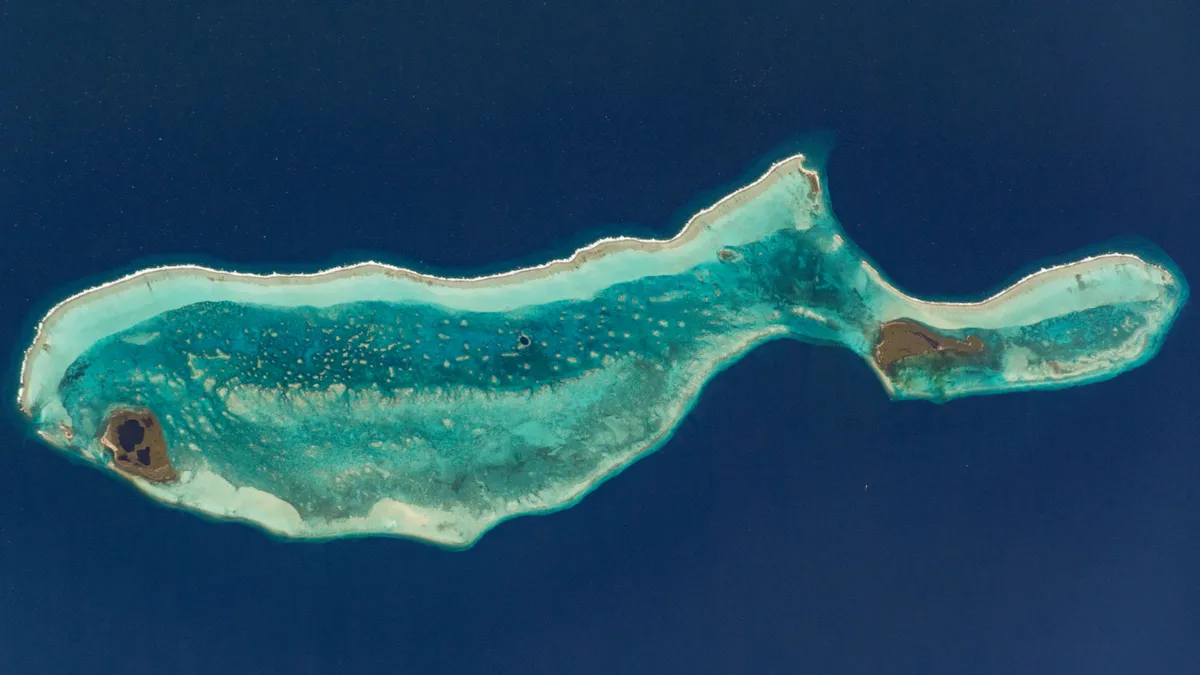
A satellite photo of a whale shaped island Whale-shaped island in Belize

A 2020 astronaut photo shows the unusual cetacean-like shape of Belize’s Lighthouse Reef. It’s home to the famous Great Blue Hole, which doubles as the island’s “blowhole” when viewed from space.


Source link

Share. Facebook Twitter Pinterest LinkedIn Tumblr Email
Previous ArticleOmar files new financial form in response to Trump, GOP critics
Editor
  • Website

Related Posts

Lifestyle

New study confirms lobsters feel pain, driving scientists to call for a ban on boiling them alive

April 21, 2026
Lifestyle

Stephen Hawking’s black hole information paradox could be solved — if the universe has 7 dimensions

April 21, 2026
Lifestyle

Scientists identify main cause of extreme nausea and vomiting in pregnancy

April 20, 2026
Add A Comment

Comments are closed.

Categories
  • Entertainment
  • Lifestyle
  • News
  • Sports
  • Tech
  • Travel
Recent Posts
  • Glowing ring of plankton surrounding New Zealand islands linked to deadly underwater plateau — Earth from space
  • Omar files new financial form in response to Trump, GOP critics
  • New study confirms lobsters feel pain, driving scientists to call for a ban on boiling them alive
  • Ex-CENTCOM commanderwarns against ‘risky’ US ground op to seize Iran uranium
  • Santa Ana’s Upcoming Report on Police Firing on ICE Protesters Lacks Details
calendar
April 2026
M T W T F S S
 12345
6789101112
13141516171819
20212223242526
27282930  
« Mar    
Recent Posts
  • Glowing ring of plankton surrounding New Zealand islands linked to deadly underwater plateau — Earth from space
  • Omar files new financial form in response to Trump, GOP critics
  • New study confirms lobsters feel pain, driving scientists to call for a ban on boiling them alive
About

Welcome to Baynard Media, your trusted source for a diverse range of news and insights. We are committed to delivering timely, reliable, and thought-provoking content that keeps you informed
and inspired

Categories
  • Entertainment
  • Lifestyle
  • News
  • Sports
  • Tech
  • Travel
Facebook X (Twitter) Pinterest WhatsApp
  • Contact Us
  • About Us
  • Privacy Policy
  • Disclaimer
  • UNSUBSCRIBE
© 2026 copyrights reserved

Type above and press Enter to search. Press Esc to cancel.