Close Menu
  • Home
  • UNSUBSCRIBE
  • News
  • Lifestyle
  • Tech
  • Entertainment
  • Sports
  • Travel
Facebook X (Twitter) WhatsApp
Trending
  • ‘We kept finding large, circular mass graves’ in the Sahara predating the ancient Egyptians, archaeologists report
  • Why aren’t brain transplants possible?
  • Can people catch infections from plants?
  • Andes virus spreads via ‘close contact’ — but what exactly does that mean?
  • 8-year-old African American boy from Colonial Maryland found buried with white Colonists, and it’s unclear if he was enslaved
  • Science news this week: PCOS has a new name, Neanderthals were the world’s oldest dentists, and the first nuclear bomb explosion spawned an ‘alien’ crystal
  • Newly discovered, blue-whale-size asteroid will fly super close to Earth Monday — and you can watch it live
  • Don Juan Pond: Antarctica’s salty, syrupy lake that never freezes, even when it’s minus 58 F
Facebook X (Twitter) WhatsApp
Baynard Media
  • Home
  • UNSUBSCRIBE
  • News
  • Lifestyle
  • Tech
  • Entertainment
  • Sports
  • Travel
Baynard Media
Home»Lifestyle»Croesus stater: The 2,500-year-old coin that introduced the gold standard
Lifestyle

Croesus stater: The 2,500-year-old coin that introduced the gold standard

EditorBy EditorFebruary 24, 2025No Comments3 Mins Read
Share Facebook Twitter Pinterest LinkedIn Tumblr Reddit Telegram Email
Share
Facebook Twitter LinkedIn Pinterest Email

Name: Croesus stater or Croeseid

What it is: A gold coin

Where it is from: The kingdom of Lydia (modern western Turkey)

When it was made: Circa 560 to 547 B.C.

Related: Ancient Egyptian ‘granary with scribes’ diorama: A miniature workplace found buried in a tomb from the Middle Kingdom

What it tells us about the past:

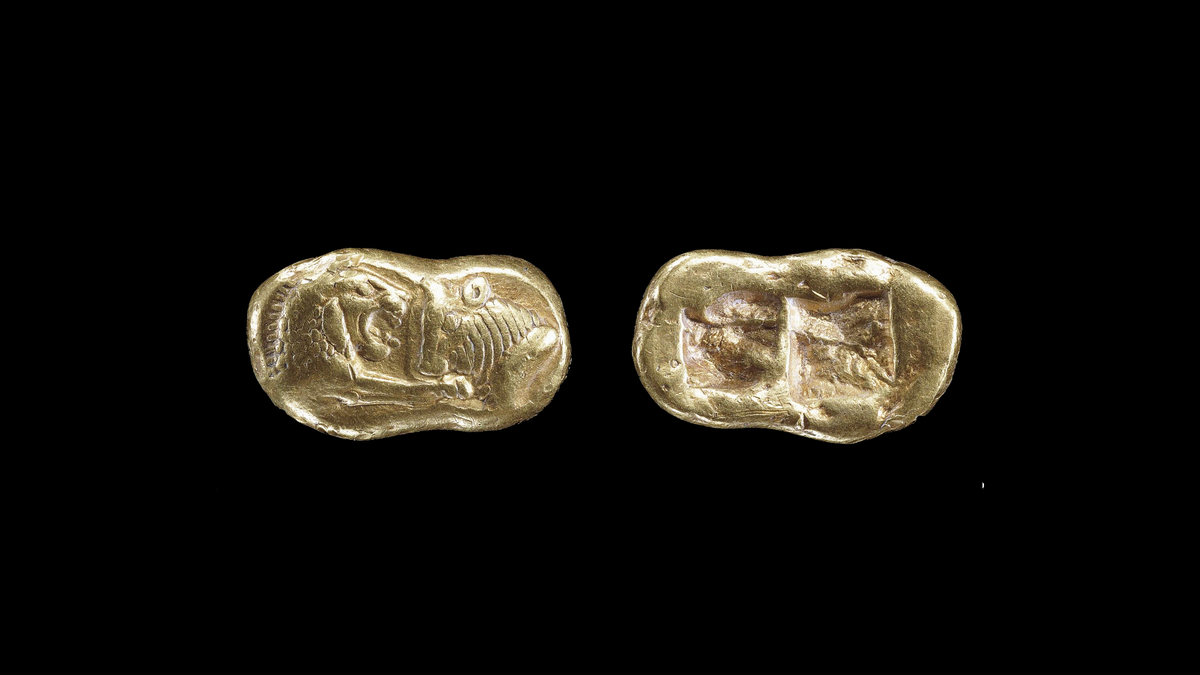
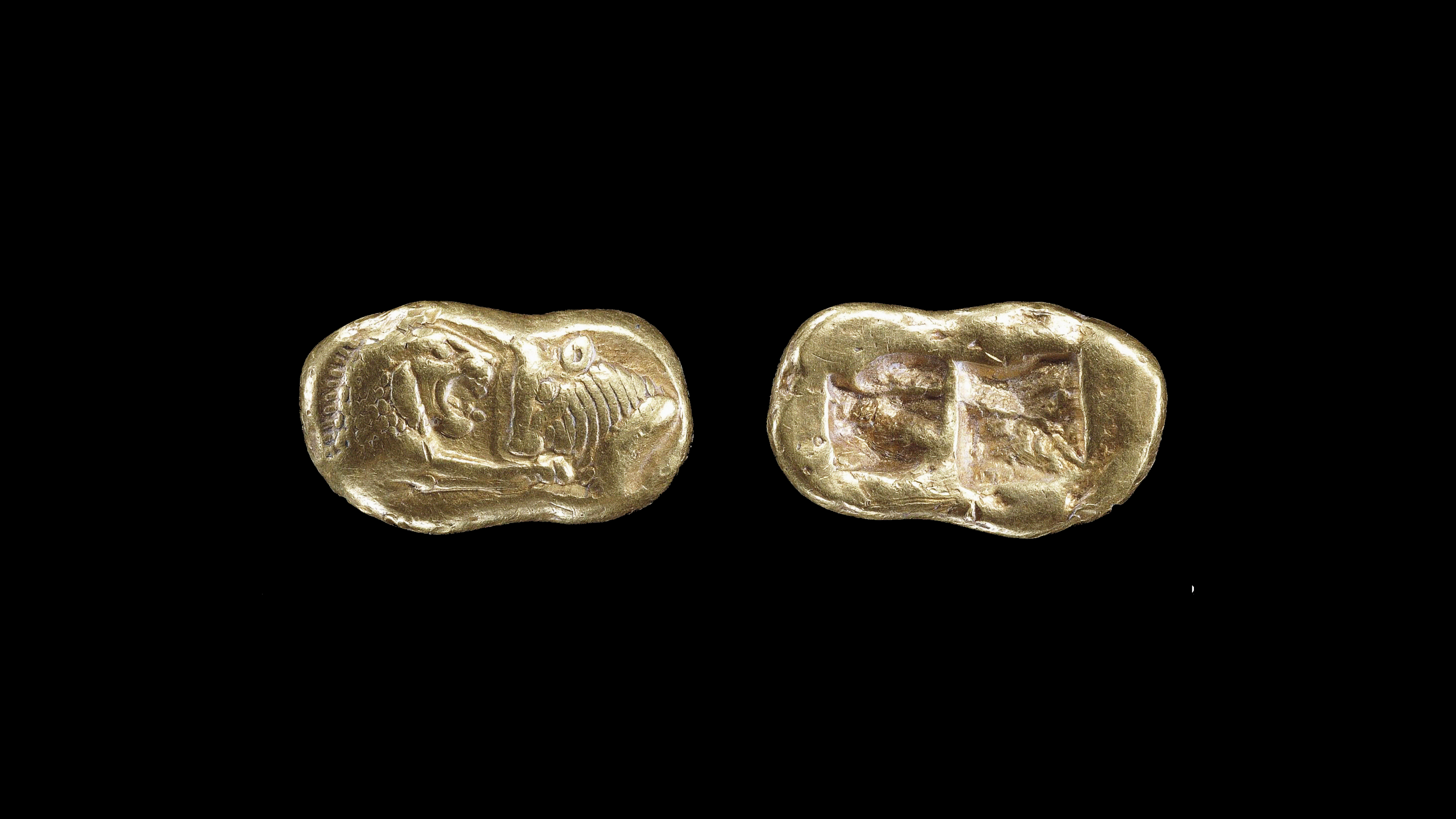
In the middle of the sixth century B.C., King Croesus of Lydia minted the world’s first gold coin. Known as a stater or Croeseid, the coin represents a key turning point in the history of financial systems: the invention of the gold standard.

Get the world’s most fascinating discoveries delivered straight to your inbox.

Croesus ruled over the kingdom of Lydia, the western half of what is now Turkey, from 560 to 546 B.C. Already a wealthy man thanks to his control over the precious metal deposits in the Pactolus River (now known as the Sart Çayı), Croesus expanded his power by establishing diplomatic ties and trade relationships with Egypt, Greece and Babylon. This trade was facilitated through the invention of coins — small, circular bits of precious metal — which were first issued by Croesus’ father, Alyattes, around 650 B.C.

But Alyattes had been making coins out of electrum, a naturally occurring gold-and-silver alloy that often has bits of other metals in it. Alyattes’ coins were standardized based on weight, but because the ratio of gold to silver in electrum varies, the value of the coins was unpredictable.

MORE ASTONISHING ARTIFACTS

Croesus decided to change the variable electrum coins into two separate denominations to eliminate the guesswork on valuation. He set up workshops in Sardis, the capital of Lydia, to refine gold and silver from electrum. These first coins were about the size of a dime and were standardized at 10.7 grams (about one-third of an ounce). There was a consistent exchange rate between gold and silver, making Croesus’ system the world’s first two-metal monetary system and the earliest gold standard.

The gold and silver Croeseids had the same design. On one side were the front parts of a lion and a bull. The symbolism may reflect a common Near Eastern motif, or each animal may represent one of the precious metals. On the back of the coin, two squares were hammered into the gold staters and one into the silver ones. Soon after Croesus invented modern coinage, the idea was adopted throughout the ancient world.

Although Croesus lost the kingdom of Lydia to Persia during the Siege of Sardis in 546 B.C., his name and reputation as a wealthy man live on in the phrase “as rich as Croesus.”

Source link

Share. Facebook Twitter Pinterest LinkedIn Tumblr Email
Previous ArticleJane Fonda Accepts Life Achievement Award
Next Article Ranking the biggest moves of the 2024-25 MLB offseason
Editor
  • Website

Related Posts

Lifestyle

‘We kept finding large, circular mass graves’ in the Sahara predating the ancient Egyptians, archaeologists report

May 17, 2026
Lifestyle

Why aren’t brain transplants possible?

May 17, 2026
Lifestyle

Can people catch infections from plants?

May 16, 2026
Add A Comment

Comments are closed.

Categories
  • Entertainment
  • Lifestyle
  • News
  • Sports
  • Tech
  • Travel
Recent Posts
  • ‘We kept finding large, circular mass graves’ in the Sahara predating the ancient Egyptians, archaeologists report
  • Why aren’t brain transplants possible?
  • Can people catch infections from plants?
  • Andes virus spreads via ‘close contact’ — but what exactly does that mean?
  • 8-year-old African American boy from Colonial Maryland found buried with white Colonists, and it’s unclear if he was enslaved
calendar
May 2026
M T W T F S S
 123
45678910
11121314151617
18192021222324
25262728293031
« Apr    
Recent Posts
  • ‘We kept finding large, circular mass graves’ in the Sahara predating the ancient Egyptians, archaeologists report
  • Why aren’t brain transplants possible?
  • Can people catch infections from plants?
About

Welcome to Baynard Media, your trusted source for a diverse range of news and insights. We are committed to delivering timely, reliable, and thought-provoking content that keeps you informed
and inspired

Categories
  • Entertainment
  • Lifestyle
  • News
  • Sports
  • Tech
  • Travel
Facebook X (Twitter) Pinterest WhatsApp
  • Contact Us
  • About Us
  • Privacy Policy
  • Disclaimer
  • UNSUBSCRIBE
© 2026 copyrights reserved

Type above and press Enter to search. Press Esc to cancel.