Close Menu
  • Home
  • UNSUBSCRIBE
  • News
  • Lifestyle
  • Tech
  • Entertainment
  • Sports
  • Travel
Facebook X (Twitter) WhatsApp
Trending
  • Are we more closely related to cats or dogs?
  • Declassified Apollo 12 images show UFOs on the moon — Space photo of the week
  • ‘More than 100 million years of evolution’: How snakes evolved and lost their legs
  • More polar bears are approaching human sites as the climate warms, and it’s not just the skinny ones
  • James Webb telescope zooms in on a black hole that could reveal the truth about ‘little red dots’
  • If humans are getting smarter, why are our brains shrinking?
  • ‘Feuding tech bros’ go head to head in legal showdown. But what does it mean for the future of AI?
  • Pregnancy quiz: Can you deliver on the science of growing babies?
Facebook X (Twitter) WhatsApp
Baynard Media
  • Home
  • UNSUBSCRIBE
  • News
  • Lifestyle
  • Tech
  • Entertainment
  • Sports
  • Travel
Baynard Media
Home»Lifestyle»Cantor’s giant softshell turtle: The frog-faced predator that spends 95% of its time completely motionless
Lifestyle

Cantor’s giant softshell turtle: The frog-faced predator that spends 95% of its time completely motionless

EditorBy EditorNovember 16, 2024No Comments2 Mins Read
Share Facebook Twitter Pinterest LinkedIn Tumblr Reddit Telegram Email
Share
Facebook Twitter LinkedIn Pinterest Email

Name: Cantor’s giant softshell turtle (Pelochelys cantorii)

Where it lives: Rivers in South and Southeast Asia

What it eats: Fish, crustaceans, mollusks, frogs, insects, birds, small mammals

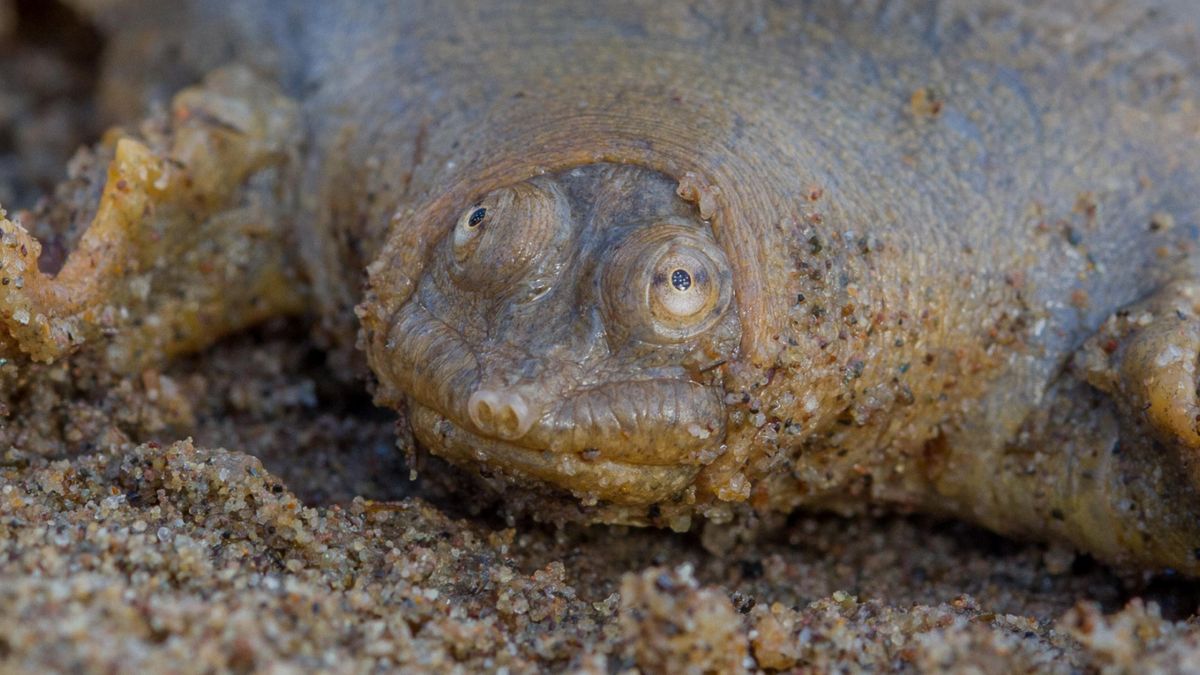
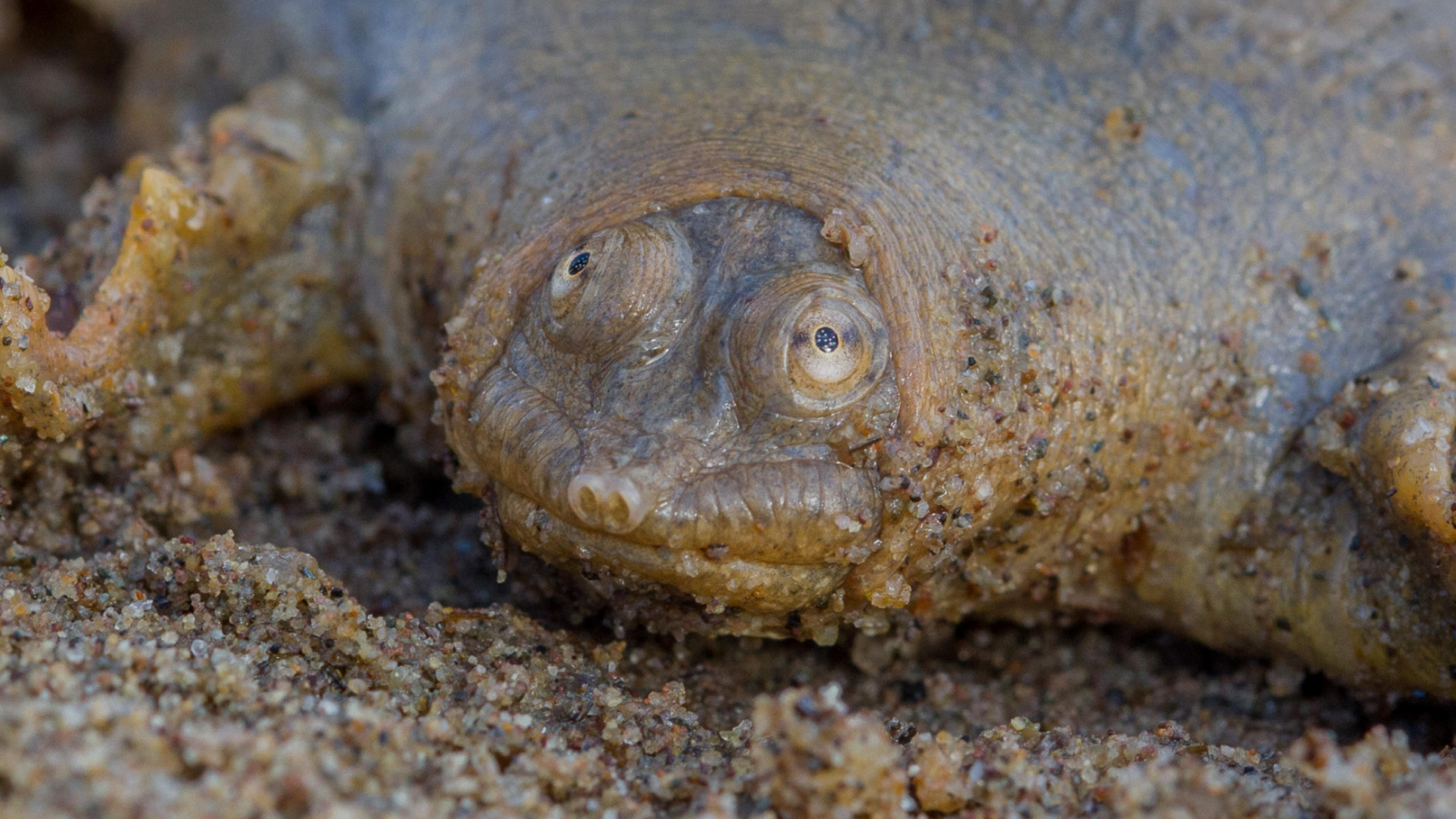
Why it’s awesome: Cantor’s giant softshell turtles — named in honor of Danish zoologist Theodore Edward Cantor — spend 95% of their lives completely motionless, buried under mud or sand in shallow rivers with only their eyes and snorkel-like snouts protruding out. But when these unusual-looking reptiles spot something to eat, they can move at lightning-quick speeds.

When they spot fish, frogs or crustaceans, they rapidly extend their necks to strike their prey. They have long claws and powerful jaws that are strong enough to crush bone.

Unlike their hard-shelled cousins, these turtles have leathery, flat, green or brown shells. These large, freshwater turtles are also known as “frog-faced softshells” because of their amphibian-like facial features. They can grow up to 40 inches (100 centimeters) long — although some sources suggest they can grow even larger — and weigh more than 100 kilograms.

Like other soft-shell turtle species, they are thought to have the ability to extract oxygen from the water through their skin, which helps them stay underwater for long periods of time. However, they can only get so much oxygen this way, so they come up to the surface to breathe air twice a day.

Get the world’s most fascinating discoveries delivered straight to your inbox.

These endangered turtles are extremely rare: Between 1985 and 1995, only a single specimen was found. They are native to rivers in India, Bangladesh, Burma, Thailand, Malaysia, Laos, Cambodia, Vietnam, China, the Philippines and Indonesia.

In 2024, the first nesting site of a Cantor was discovered by biologists on the banks of the Chandragiri River in Kerala,India. The researchers used knowledge from local communities to locate the turtle.

Source link

Share. Facebook Twitter Pinterest LinkedIn Tumblr Email
Previous ArticleCan You Tell How Many Matchsticks Are in the Picture? How Sharp Are Your Observation Skills?
Next Article England v South Africa: Autumn Nations Series rugby union – live | Autumn Nations Series
Editor
  • Website

Related Posts

Lifestyle

Are we more closely related to cats or dogs?

May 11, 2026
Lifestyle

Declassified Apollo 12 images show UFOs on the moon — Space photo of the week

May 10, 2026
Lifestyle

‘More than 100 million years of evolution’: How snakes evolved and lost their legs

May 10, 2026
Add A Comment

Comments are closed.

Categories
  • Entertainment
  • Lifestyle
  • News
  • Sports
  • Tech
  • Travel
Recent Posts
  • Are we more closely related to cats or dogs?
  • Declassified Apollo 12 images show UFOs on the moon — Space photo of the week
  • ‘More than 100 million years of evolution’: How snakes evolved and lost their legs
  • More polar bears are approaching human sites as the climate warms, and it’s not just the skinny ones
  • James Webb telescope zooms in on a black hole that could reveal the truth about ‘little red dots’
calendar
May 2026
M T W T F S S
 123
45678910
11121314151617
18192021222324
25262728293031
« Apr    
Recent Posts
  • Are we more closely related to cats or dogs?
  • Declassified Apollo 12 images show UFOs on the moon — Space photo of the week
  • ‘More than 100 million years of evolution’: How snakes evolved and lost their legs
About

Welcome to Baynard Media, your trusted source for a diverse range of news and insights. We are committed to delivering timely, reliable, and thought-provoking content that keeps you informed
and inspired

Categories
  • Entertainment
  • Lifestyle
  • News
  • Sports
  • Tech
  • Travel
Facebook X (Twitter) Pinterest WhatsApp
  • Contact Us
  • About Us
  • Privacy Policy
  • Disclaimer
  • UNSUBSCRIBE
© 2026 copyrights reserved

Type above and press Enter to search. Press Esc to cancel.