Close Menu
  • Home
  • UNSUBSCRIBE
  • News
  • Lifestyle
  • Tech
  • Entertainment
  • Sports
  • Travel
Facebook X (Twitter) WhatsApp
Trending
  • OpenAI’s internal AI model just solved an 80-year-old math problem ‪—‬ and mathematicians verified it
  • Skeletal remains of Queen Elisenda, one of the most powerful rulers in medieval Europe, unearthed in Barcelona — along with several others who bore unexplained stab wounds
  • Tests that measure ‘biological age’ aren’t helpful for tracking your health, scientists say
  • Japan hits 6G key milestone with high-frequency speeds topping 100 Gbps
  • War has brought Iran’s water crisis to a breaking point: ‘Things will collapse unless there is meaningful structural change’
  • Fingal’s Cave: Scotland’s ‘cave of melody’ where eerie echoes bounce off pillars of solidified lava
  • Controversial ‘JuMBO’ planets discovered by James Webb telescope may not be an illusion after all
  • Scientists found the optimal robot body, and it has 20 legs ‪—‬ watch it scale walls and move through trees
Facebook X (Twitter) WhatsApp
Baynard Media
  • Home
  • UNSUBSCRIBE
  • News
  • Lifestyle
  • Tech
  • Entertainment
  • Sports
  • Travel
Baynard Media
Home»Lifestyle»‘Almost tragicomical’: Coins minted to protect the English from the Vikings ended up as Viking jewelry, experts discover
Lifestyle

‘Almost tragicomical’: Coins minted to protect the English from the Vikings ended up as Viking jewelry, experts discover

EditorBy EditorMay 7, 2026No Comments3 Mins Read
Share Facebook Twitter Pinterest LinkedIn Tumblr Reddit Telegram Email
Share
Facebook Twitter LinkedIn Pinterest Email

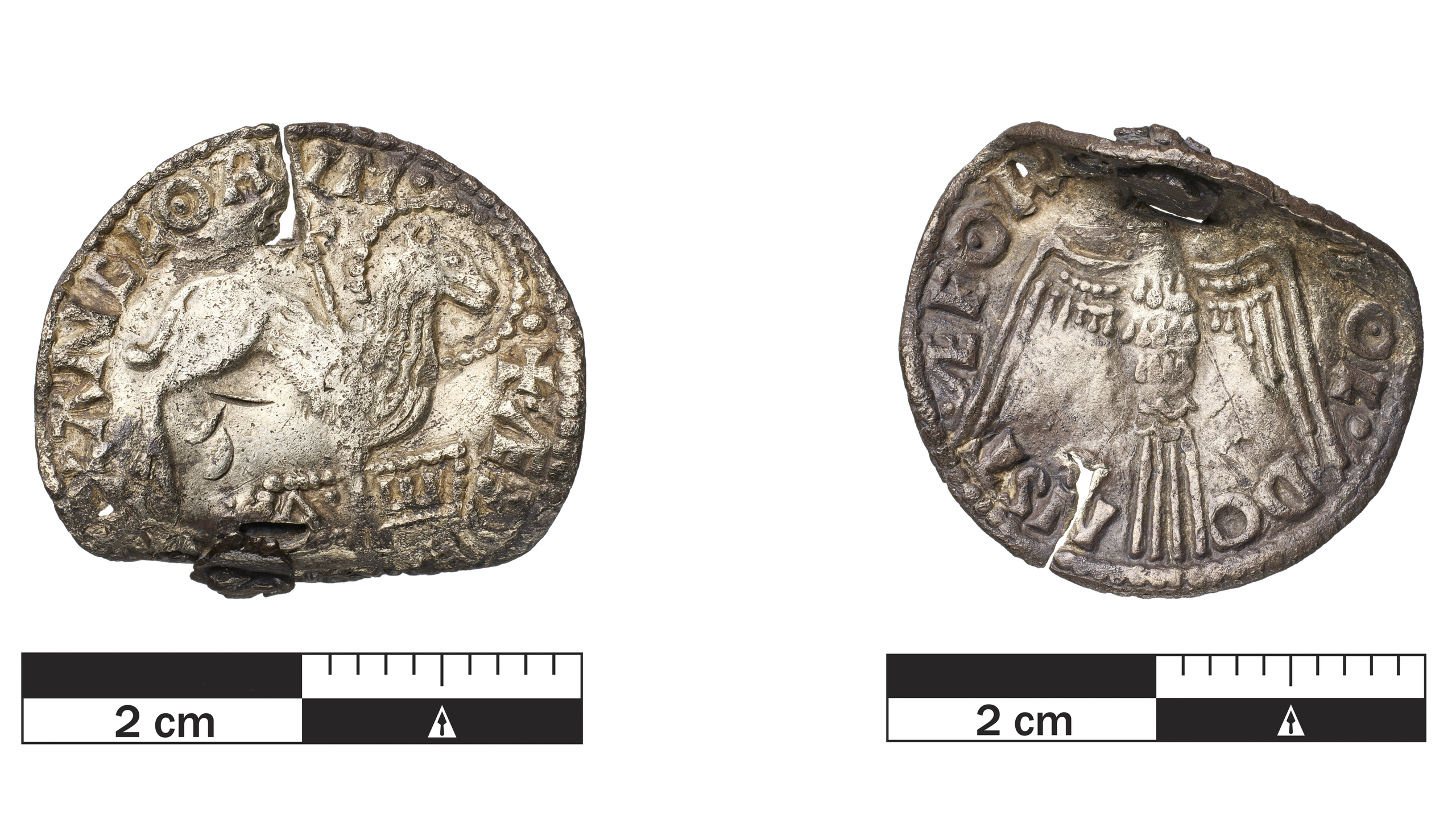
Two rare silver coins discovered by metal detectorists in Denmark reveal that the Vikings made jewelry out of Christian coins that were originally designed to prevent Viking raids, according to experts at the National Museum of Denmark.

The coins were minted around 1009, during the reign of English king Æthelred II, nicknamed “Æthelred the Unready,” and featured religious motifs that he hoped would protect his people from the Viking scourge. But he didn’t count on the Vikings’ appreciation of the coins’ aesthetics.
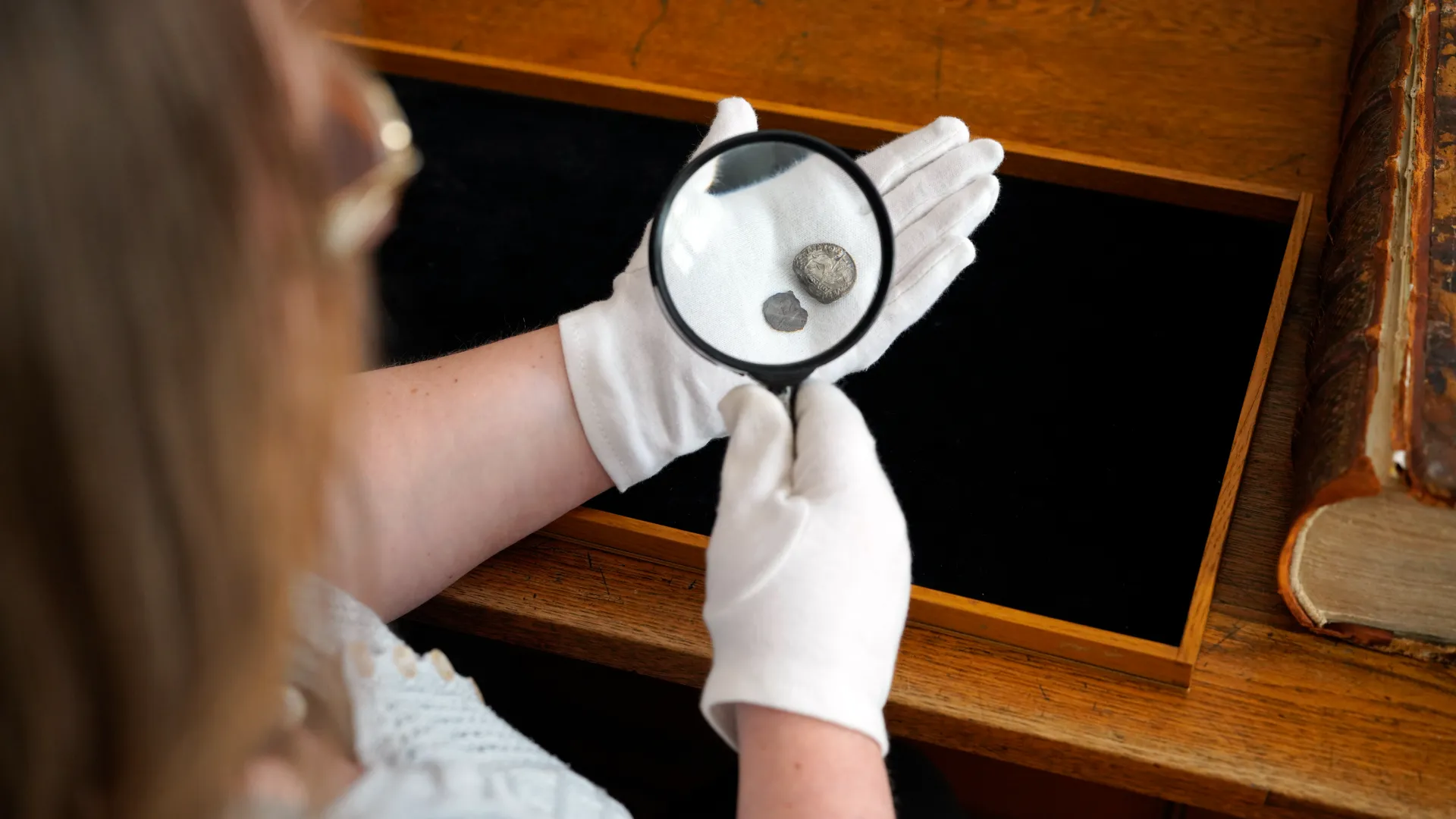
“It gave me goose bumps, because these coins are extremely rare,” Gitte Ingvardson, a curator at the National Museum of Denmark, said in a statement. “They were made to obtain protection against the Vikings, but ended up instead as jewelry or amulets worn by Vikings. That is almost tragicomical.”


You may like

a woman wearing white cotton gloves looks at two old coins under a magnifying glass

Gitte Ingvardson looks at the two coins using a magnifying glass.

(Image credit: John Fhær Engedal Nissen/National Museum of Denmark)

Experts have dubbed this style of anti-Viking coin “Agnus Dei,” or “Lamb of God,” because the front of the coin features a lamb pierced by a cross, which is a symbol of Christ’s sacrifice. Alpha and omega — the first and last letters of the Greek alphabet — also appear on the coin’s front side, symbolizing that God is the beginning and end. On the back of the coin, a dove symbolizing the Holy Spirit takes flight.

Contemporary English coins also feature a cross on the back but lack the imagery of the lamb, and the fronts of those coins typically include a profile of the king.

Only 30 such “Lamb of God” coins have been found to date, and most were discovered in Scandinavia; they were likely plundered by Vikings who were not actually warded off by the religious symbols. Most of the Scandinavian examples feature metal loops that had been soldered on, presumably so the Vikings could wear the coins on necklaces or as amulets.

“The Vikings soon realized that it was far more practical to use coins than to hack the silver into pieces for trading purposes,” Ingvardson said. The rare coins are important artifacts linking English kings, Danish kings, Christianity and the Vikings.

Get the world’s most fascinating discoveries delivered straight to your inbox.

The Viking Age ended in 1066, and people in what is now Denmark began converting to Christianity around then as Norse paganism declined. For example, archaeologists previously found more than 70 burials dating to the 1100s in a medieval Danish cemetery, and it’s likely that these Norse people were Christians, although some may have retained some Norse pagan beliefs.


See how much you know about ancient Norsemen with our Viking quiz!

Source link

Share. Facebook Twitter Pinterest LinkedIn Tumblr Email
Previous ArticleAndes virus — the only hantavirus strain that can spread between people — identified as culprit on cruise ship
Next Article Watch NASA’s Curiosity rover ‘struggle’ to remove a rock that got stuck on its robotic arm for nearly a week
Editor
  • Website

Related Posts

Lifestyle

OpenAI’s internal AI model just solved an 80-year-old math problem ‪—‬ and mathematicians verified it

May 30, 2026
Lifestyle

Skeletal remains of Queen Elisenda, one of the most powerful rulers in medieval Europe, unearthed in Barcelona — along with several others who bore unexplained stab wounds

May 29, 2026
Lifestyle

Tests that measure ‘biological age’ aren’t helpful for tracking your health, scientists say

May 29, 2026
Add A Comment

Comments are closed.

Categories
  • Entertainment
  • Lifestyle
  • News
  • Sports
  • Tech
  • Travel
Recent Posts
  • OpenAI’s internal AI model just solved an 80-year-old math problem ‪—‬ and mathematicians verified it
  • Skeletal remains of Queen Elisenda, one of the most powerful rulers in medieval Europe, unearthed in Barcelona — along with several others who bore unexplained stab wounds
  • Tests that measure ‘biological age’ aren’t helpful for tracking your health, scientists say
  • Japan hits 6G key milestone with high-frequency speeds topping 100 Gbps
  • War has brought Iran’s water crisis to a breaking point: ‘Things will collapse unless there is meaningful structural change’
calendar
May 2026
M T W T F S S
 123
45678910
11121314151617
18192021222324
25262728293031
« Apr    
Recent Posts
  • OpenAI’s internal AI model just solved an 80-year-old math problem ‪—‬ and mathematicians verified it
  • Skeletal remains of Queen Elisenda, one of the most powerful rulers in medieval Europe, unearthed in Barcelona — along with several others who bore unexplained stab wounds
  • Tests that measure ‘biological age’ aren’t helpful for tracking your health, scientists say
About

Welcome to Baynard Media, your trusted source for a diverse range of news and insights. We are committed to delivering timely, reliable, and thought-provoking content that keeps you informed
and inspired

Categories
  • Entertainment
  • Lifestyle
  • News
  • Sports
  • Tech
  • Travel
Facebook X (Twitter) Pinterest WhatsApp
  • Contact Us
  • About Us
  • Privacy Policy
  • Disclaimer
  • UNSUBSCRIBE
© 2026 copyrights reserved

Type above and press Enter to search. Press Esc to cancel.