
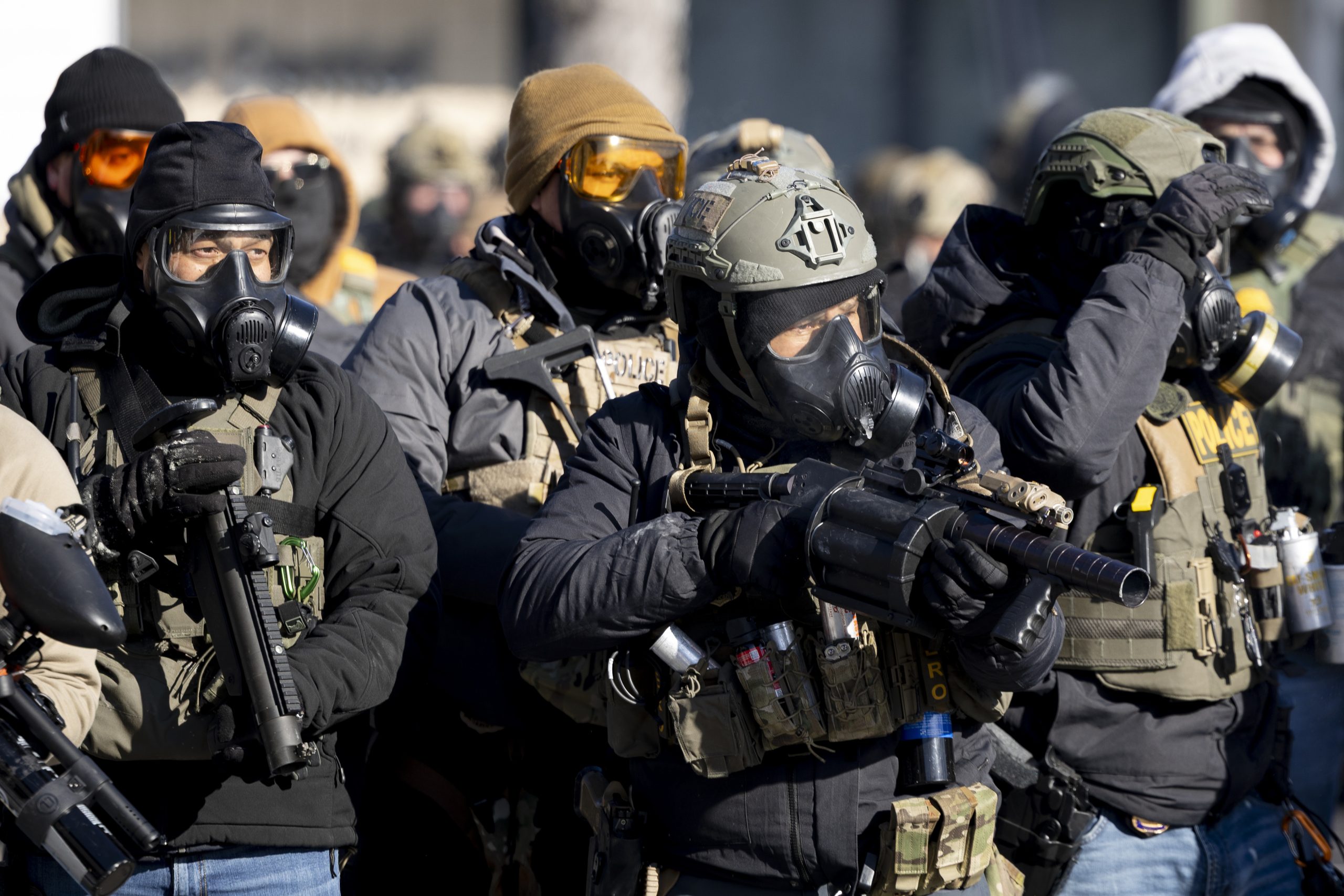
Federal agents’ access to K-12 schools, their ability to wear masks, and the public’s right to sue over constitutional violations: the Senate DFL has opted to roll those topics and more into one broad bill that’s headed for a floor vote.
With about five weeks left in the Legislative session, the outcome of the vote will offer another signal as to whether any of the DFL’s proposals in response to Operation Metro Surge will actually become law.
Operation Metro Surge drove international outcry over the aggressive tactics employed by thousands of federal agents and resulting deaths of two U.S. citizens, among other things.
But so far, the DFL’s response — in the form of dozens of bills and hours of public hearings — has not persuaded Republicans.
Sen. Ron Latz, DFL-St. Louis Park, seeks to change that with his wraparound proposal that absorbed at least nine stand-alone bills.
Related: ICE official: Whipple detainees chose not to use holding cell phones; Judge: That’s ‘unlikely’
So far, there’s no date for the Senate floor vote.
After hours of committee testimony this session, he said it’s been challenging to hear the “manner in which our federal immigration enforcement agents have been running roughshod over the Constitution.”
“The level of overreach — completely ignoring generally accepted restrictions on government conduct — is most distressing for what it portends for democracy and for our foundation,” he said.
What does the Senate bill include?
As a broad package, the Senate bill reduces the number of individual votes needed on the floor. It also adds more weight to that vote, given that it includes several key DFL platforms.
The bill would make it illegal for anyone — including federal agents — to conceal their identity in public using masks or other means. It includes several exceptions like face coverings for religious beliefs, medical needs, protection from airborne toxins and other things.
On the issue of sensitive locations, Senate DFL lawmakers want to limit federal agents’ access to health care facilities, K-12 schools, colleges, universities and child care centers to make civil immigration arrests without a valid judicial warrant. Arrests of that nature would also be prohibited regardless of a warrant on courthouse grounds.
Several types of institutions would also be prohibited from releasing personal data — such as someone’s immigration status — unless presented with a judicial warrant.
Minnesota law would also be updated to reflect the finding of a 1982 U.S. Supreme Court ruling that said all children have the right to access a K-12 education regardless of their immigration status. Challenging that Plyler v. Doe ruling has become a platform for Republicans in the U.S. Congress and several states.
And, lastly, the Senate bill includes the “civil remedies” proposal that would make it simpler for members of the public to sue over constitutional violations. That proposal has been described as an accountability measure needed in response to alleged retaliation against free speech, warrantless arrests and other illegal conduct by federal immigration agents.
The bill passed out of the Senate Judiciary and Public Safety committee last month. It doesn’t encompass all of the ICE-related proposals that could be voted on before session ends.
Is there any chance for bipartisanship?
The Senate bill gives lawmakers a chance to vote on topics that have already failed on party-line votes in the House. That short list includes similar DFL proposals to ban federal immigration agents’ ability to cover their faces and access K-12 schools.
But ICE-related proposals do have a better chance of passing in the Senate, given its one-seat DFL majority. The House is split 50-50 between Democrats and Republicans.
Sen. Michael Kreun, R-Blaine, is on the Judiciary and Public Safety Committee that has heard several of the ICE-related bills. Responding to a MinnPost question about the Senate bill, he said “Democrats’ proposals miss the mark because they are playing to their extreme base that simply doesn’t want immigration laws enforced at all.”
“Our Republican plan will take a responsible approach to focus on cooperation and reducing the need for street-level enforcement, while protecting public safety and the Constitution,” he said.
Related: Minnesota kicks off legal battle with Trump administration to hold ICE shooters accountable
A Lumaris poll found 59% of Minnesotans believed Operation Metro Surge made the state less safe. The study conducted between January and February used a random sample, with 1,072 adult respondents, to measure statewide views.
Latz, in an interview, said he thinks the politics of immigration has overwhelmed discussions about the way federal agents’ actions violated the law.
He said the most frustrating part is “the failure of spine, of backbone, of fortitude on the part of the GOP legislators who ought to be standing up in defense of the most fundamental elements of democracy.”
“I understand that it would be a political risk, given the politics around immigration, but if there’s ever a political risk worth taking, isn’t defense of democracy worth it?”
