
NASA has announced further delays to its Artemis program, which promises to return astronauts to the moon for the first time since 1972.
The Artemis 2 mission, originally slated to launch astronauts around the moon and back in September 2025, has been pushed back to April 2026. And the follow-up, Artemis 3, once targeted for late 2026, will be moved to mid 2027, NASA Administrator Bill Nelson said at a news conference on Thursday (Dec. 5).
This means that Artemis 2 will launch around 17 months after it was initially scheduled. NASA says the delay is due to the Orion capsule — which sits atop the 30-story Space Launch System (SLS) — needing additional prep time before it can safely carry a human crew.
“We and our industry and international partners need this time to make sure that our own capsule is ready to safely deliver our astronauts to deep space and back to Earth,” Nelson said. “We do not fly until we are confident that we have made the flight as safe as possible for the humans on board. We need to do this next test flight, and we need to do it right.”
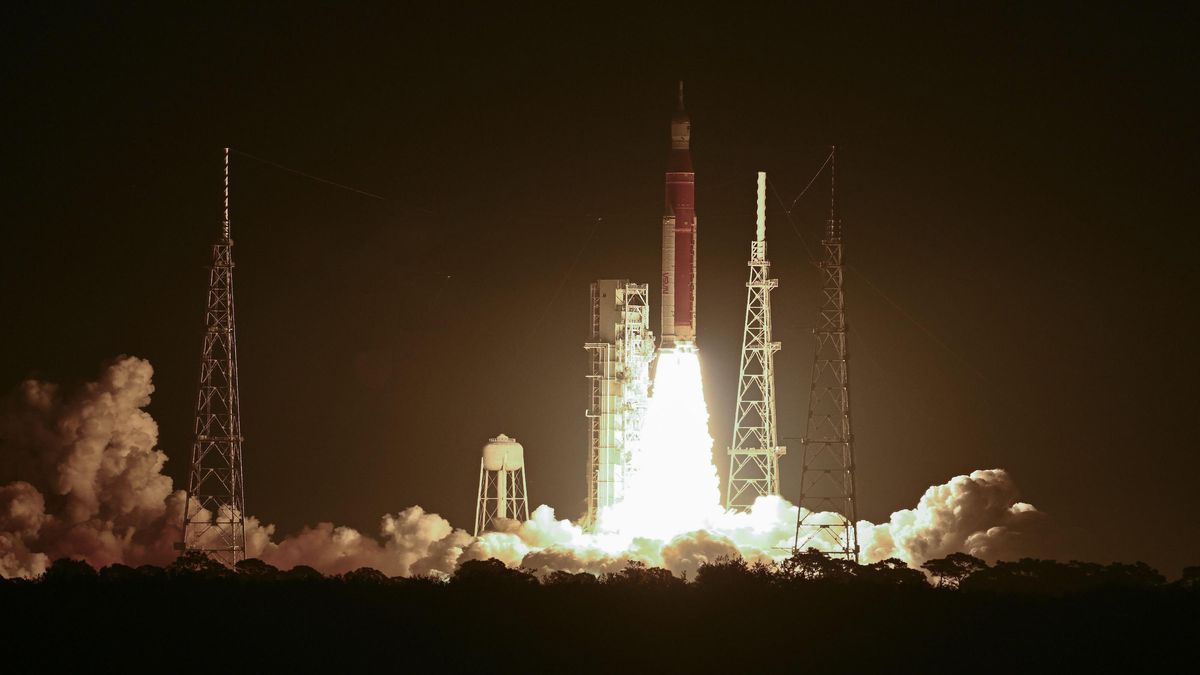
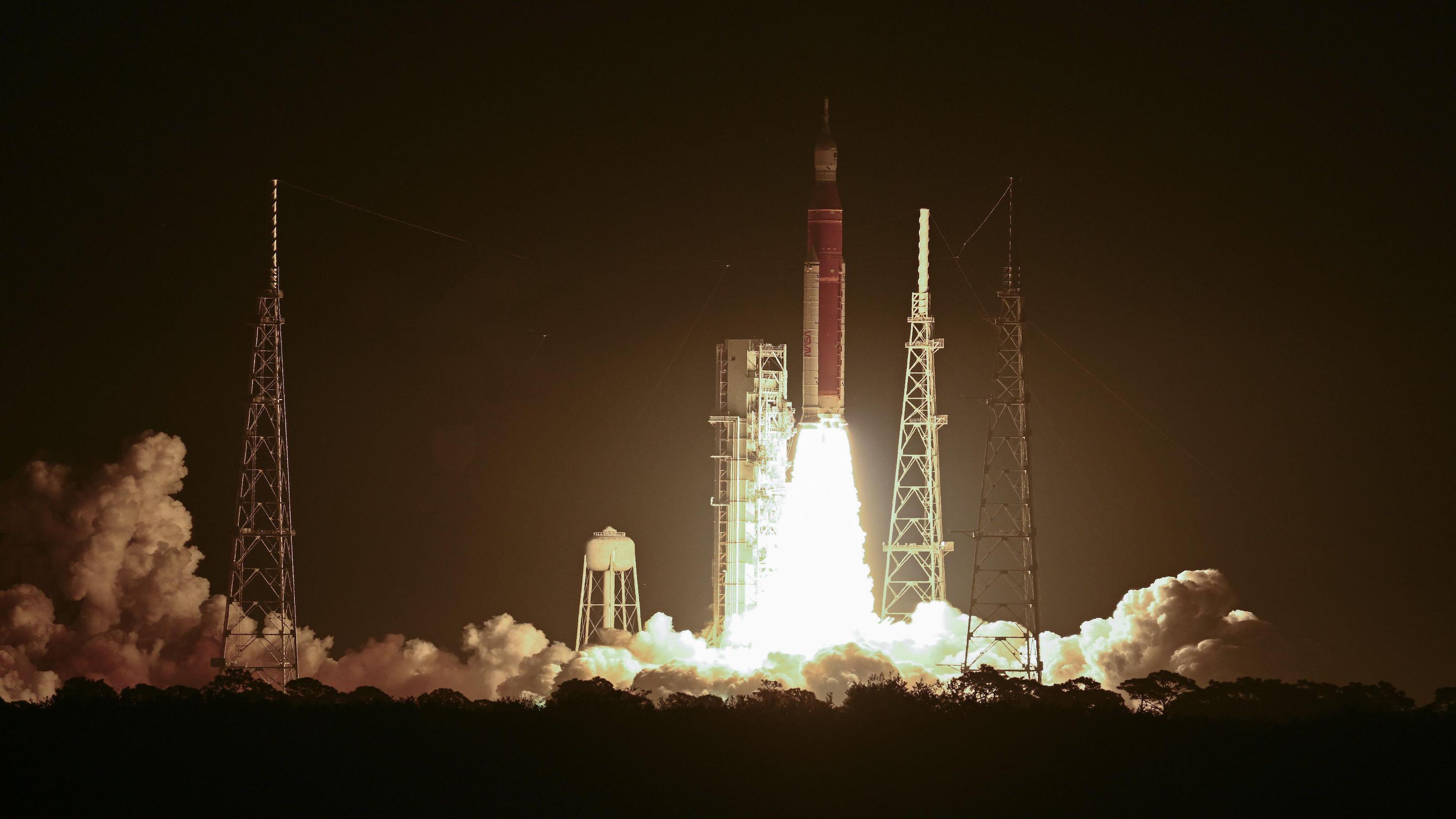
The SLS is the largest NASA rocket since the Apollo program’s Saturn V rocket. It has a liquid hydrogen and oxygen core booster with two smaller rocket boosters attached to its sides.
Related: NASA announces Artemis astronauts who will fly to the moon for the 1st time in 50 years
For the Artemis 1 flight in November, 2022, the rocket sent the Orion capsule on a six-day, 69 mile-high (111 kilometers) flyby of the moon’s surface, enabling NASA engineers to gather vital data on the module’s trajectory and the effects of low gravity on three humanoid mannequins that were on board.
Then, upon its dramatic return through Earth’s atmosphere at 32 times the speed of sound, the capsule’s heat shield was put to the test. The extreme air friction and its parachute slowed the spacecraft to just 20 mph (32.2 km/h), after which it plopped down off the coast of Baja California, Mexico, in the Pacific Ocean.
After examining the Orion capsule, NASA engineers discovered that the Lockheed Martin-manufactured spacecraft’s heat shield had been cracked and partially eroded as it bounced off the atmosphere during the capsule’s reentry.
“While the capsule was dipping in and out of the atmosphere as part of that planned skip entry, heat accumulated inside the heat shield outer layer, leading to gases forming and becoming trapped inside the heat shield,” Pam Melroy, NASA’s Deputy Administrator, said at the news conference. “This caused internal pressure to build up and led to cracking and uneven shedding of that outer layer.”
NASA won’t replace this heat shield for the Artemis 2 mission, but other technical issues with the craft — including its battery and life support systems — prompted the space agency to call for a six-month delay.
Despite these problems, Nelson insisted that the mission will launch in time to beat China in the race to send a crewed mission to the moon. China has recently landed rovers on the moon and Mars and completed construction of its Tiangong space station in 2022. The country is also leading construction efforts of an International Lunar Research Station, which is slated for completion by 2030.
“Assuming the SpaceX lander is ready, we plan to launch Artemis III in mid-2027,” Nelson said. “That will be well ahead of the Chinese government’s announced intention to land on the lunar surface by 2030.”
