
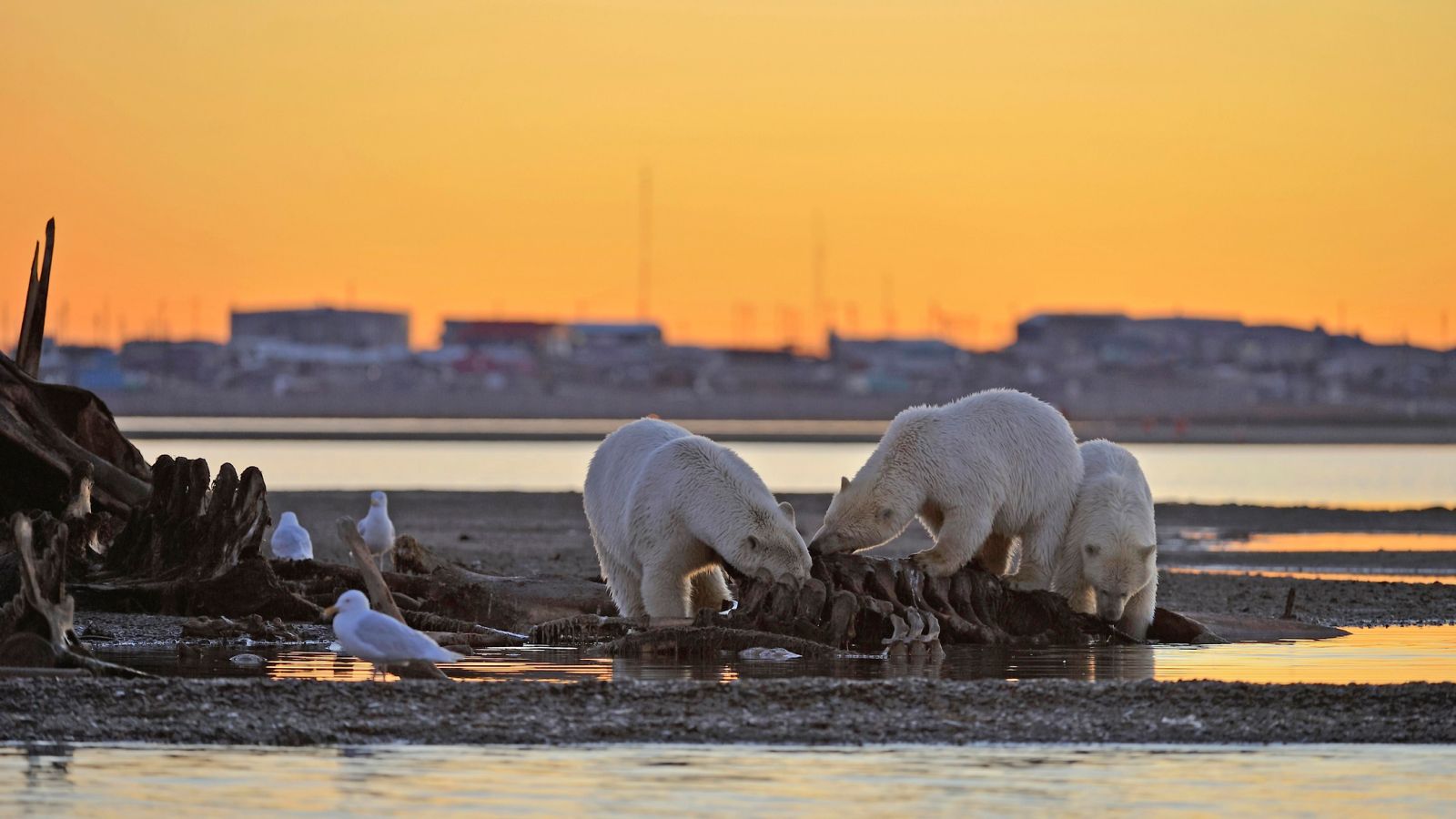
Polar bears are intensely curious animals. That curiosity often brings them into contact with people and can put both species at risk from one another.
As the Arctic climate warms, some polar bears are spending more time on shore, away from the sea ice habitats they rely on to hunt seals. As the bears are under nutritional stress due to ice loss, some wonder if they’re being forced to take more risks around people as they seek food, increasing interactions and conflicts between polar bears and people. But until now, there’re been little research into this relationship.
The project began at the invitation of Parks Canada when their newly constructed field camps at Broad River and Owl River turned out to receive more bear visits than they expected. Those camps had been located away from the coast to reduce the likelihood of polar bear encounters, so answering this immediate question was a priority.
We investigated whether human activity, the length of the ice-free season — or both — were influencing polar bear visits. In approximately 80% of the bear visits, our photos showed enough of the animal that we could rate their body condition using an established fatness index.
We observed 580 bear visits with our cameras, mostly between July and November, when bears are well-known to be abundant in the area. What we found was that human presence at the camps and the CNSC didn’t have any effect on the number of bear visits. The length of the ice-free season each year, however, had a notable effect.
It’s all about ice
The ice-free season can be longer if sea ice breaks up earlier in spring than normal, forms later in fall than normal, or both. During our study period, there was no long-term trend in the ice-free season’s length, but it did vary a lot year to year. We found that the longer western Hudson Bay remained ice-free in a year, the more frequently bears visited our study sites.
Poor body condition is considered an indicator of nutritional stress, and a healthy body condition to survive on-shore fasting is critical for polar bear survival.
But rather than getting visits from hungrier bears that were detectably thinner — which is what we had expected — we found that the more time bears were off the ice, the more likely all bears were to approach our study sites, regardless of their nutritional health.
This result was unexpected since other research shows underweight polar bears are more likely to attack people, which has been taken to mean that those particular bears would take more chances to find food and so be more likely to approach or prey on people.
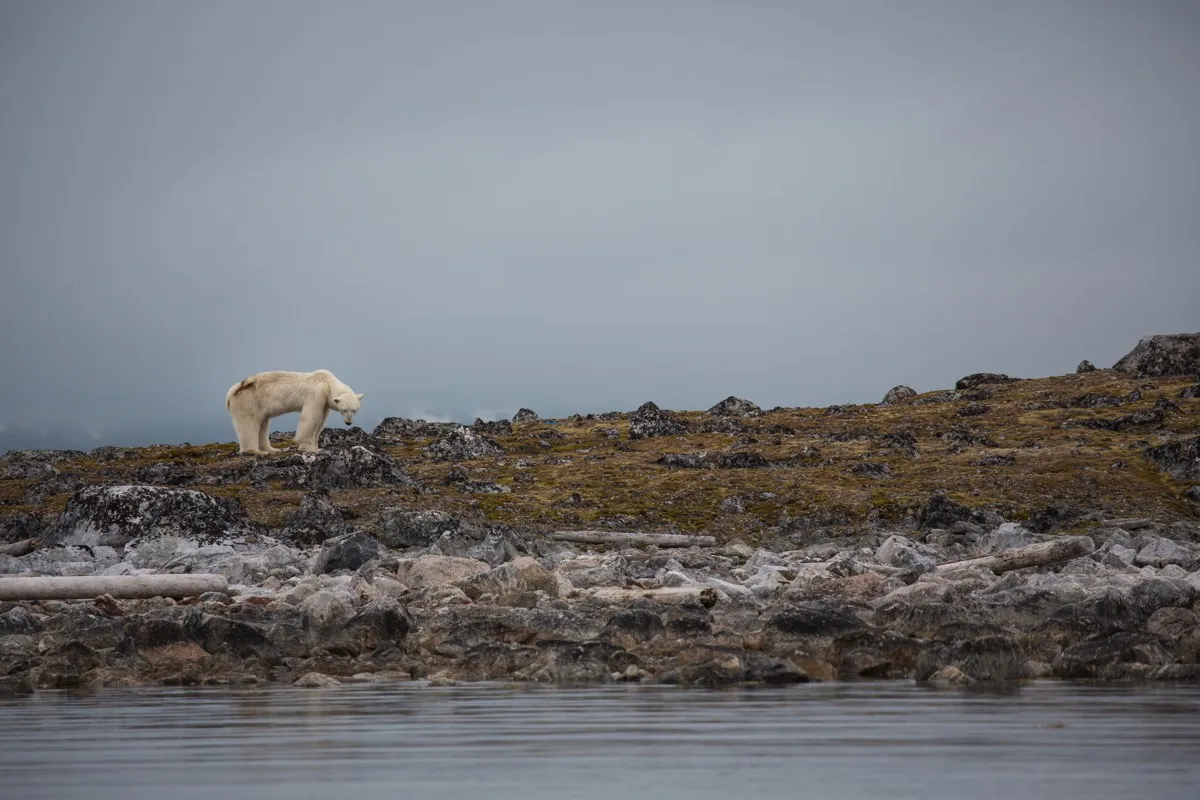
The research suggests that underweight polar bears are more likely to come into conflict with people.
(Image credit: Prisma Bildagentur/UIG via Getty Images)
Instead, what we’re seeing is that body condition may play a different role. Rather than influencing the bears to seek human interactions, body condition might instead influence whether interactions between people and polar bears escalate.
In other words, if polar bears are around people to begin with, a skinny bear might be more likely to aggressively try to obtain human food sources, or even prey on people, than a bear under less nutritional stress.
We were also surprised not to see many lone sub-adult bears in our photos. Those other studies have also shown that they’re usually the ones most likely to come into conflict with people.
These observations, though, are consistent with other research on this sub-population. As the ice-free season has on average lengthened in western Hudson Bay, the production and survival of juvenile bears has dropped. Our unexpected results, then, are probably due to there simply not being many young bears in the population during our study.
Scientific and Indigenous observations
Our findings suggest that sea ice loss probably doesn’t lead to more interactions with people just because polar bears are thinner or hungrier, so we need to better understand what can cause interactions to worsen into attacks.
What does this mean for current approaches to reducing the risk of polar bear-human conflicts? Bringing it back to the Parks Canada’s original question, it appears that the likelihood of bear visits to their camps isn’t affected by anything under human control, but the outcomes of any bear visits that do take place certainly are.
What we found may also help explain why scientific explanations and Indigenous and local observations of polar bear-human interactions have differed. Scientific literature has long maintained that poor body condition drives polar bears into northern communities.
However, documented observations from those communities themselves indicate bears who come into communities are not necessarily in poorer condition than would be expected.
Our findings align more closely with Indigenous observations, highlighting how untested assumptions can, through repetition in scientific literature, solidify into accepted wisdom.
This edited article is republished from The Conversation under a Creative Commons license. Read the original article.
