Close Menu
  • Home
  • UNSUBSCRIBE
  • News
  • Lifestyle
  • Tech
  • Entertainment
  • Sports
  • Travel
Facebook X (Twitter) WhatsApp
Trending
  • Science news this week: Atlantic current edges closer to collapse, scientists make artificial-neuron breakthrough, and a copy of the “Iliad” is found inside an Egyptian mummy
  • Why are some constellations visible for only part of the year?
  • Science history: Chernobyl nuclear power plant melts down, bringing the world to the brink of disaster — April 26, 1986
  • El Niño could be here by May, new forecast reveals —‬ here’s what it means for summer weather
  • ‘A completely new reality’: Bolder measures are needed to prevent extreme water shortages in cities like Phoenix and Las Vegas that depend on the Colorado River
  • New York City is at major risk of flooding that could leave 4.4 million people exposed to extreme damage, study finds
  • ‘Brain-eating’ amoebas are nearly always fatal. New treatments may change that.
  • Building a massive dam between Alaska and Russia could prevent AMOC collapse, scientists say
Facebook X (Twitter) WhatsApp
Baynard Media
  • Home
  • UNSUBSCRIBE
  • News
  • Lifestyle
  • Tech
  • Entertainment
  • Sports
  • Travel
Baynard Media
Home»Lifestyle»Why are some constellations visible for only part of the year?
Lifestyle

Why are some constellations visible for only part of the year?

EditorBy EditorApril 25, 2026No Comments5 Mins Read
Share Facebook Twitter Pinterest LinkedIn Tumblr Reddit Telegram Email
Share
Facebook Twitter LinkedIn Pinterest Email

Some stars and constellations are ever-present in the night sky; Polaris, for example, has served as a steady guiding light for millennia in the Northern Hemisphere.

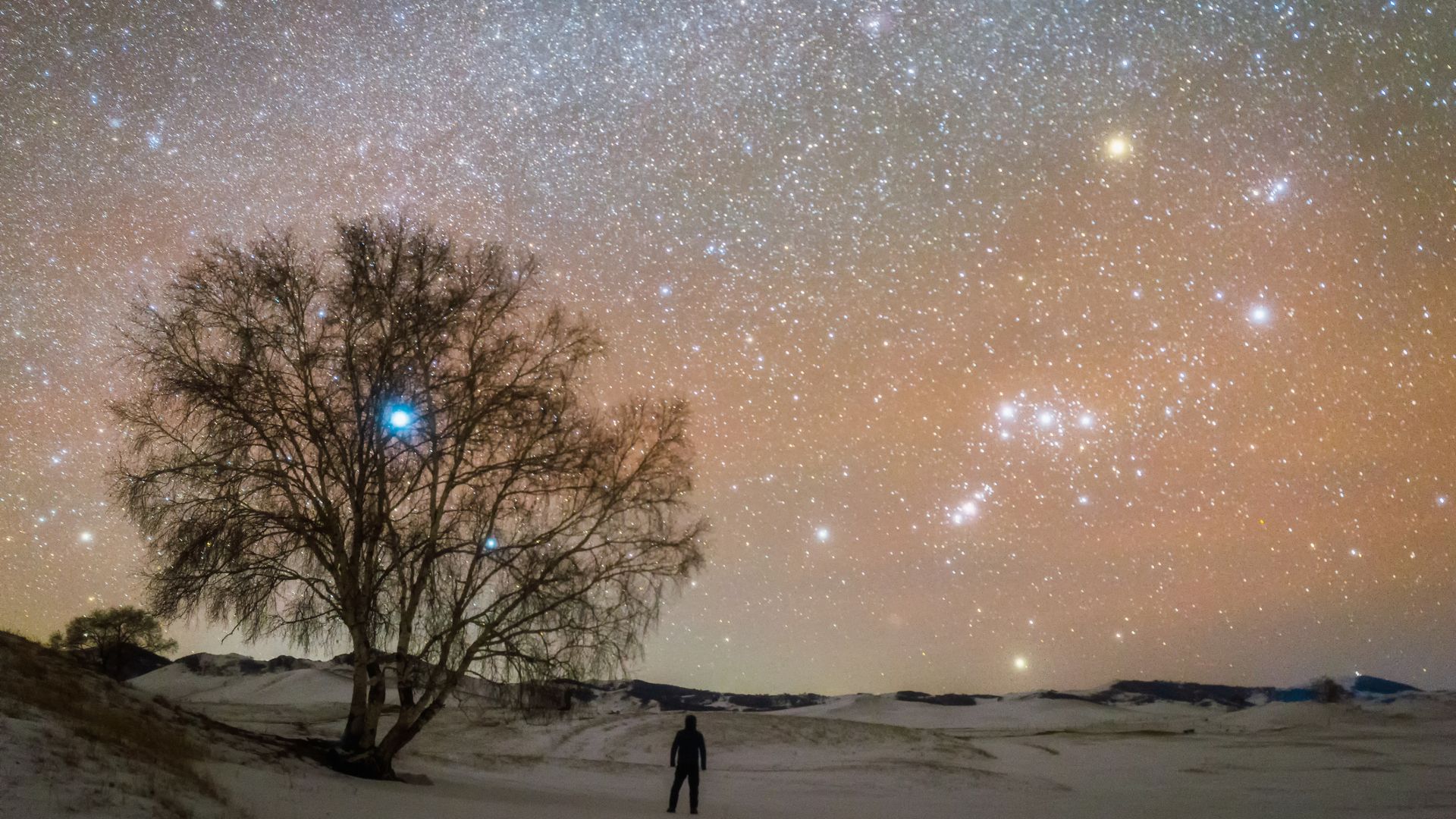
But if you look closely at the sky night after night, you may notice that some stars move east to west from dusk to dawn, as well as change positions from season to season. For instance, Orion disappears from view for part of the year. So why do some constellations stay visible year-round, while others disappear and reappear depending on the season?

It boils down to Earth’s seasonal movements, experts told Live Science. “A lot of what we can and cannot see comes down to the fact that we’re on a rotating globe,” Michael Brown, an observational astronomer at Monash University in Australia, told Live Science.


You may like

To make sense of this, it’s helpful to note that when we look at the night sky, we’re viewing only a section of the universe. “When the Earth turns to face away from the sun, that’s when we have night time,” Valerie Rapson, an astronomer at the State University of New York at Oneonta, told Live Science. “And whatever stars are in that direction … those are the stars we would see.”

In addition, which constellations you’ll see depends on where you are on the globe. Stargazers in the Northern Hemisphere see stars and constellations above the equator, whereas Southern Hemisphere observers see stars and constellations south of the equator.

As our tilted Earth revolves around the sun over a span of a year, different parts of space come into view while others shift away. In the Northern Hemisphere, for example, Orion’s Belt ‪—‬ what looks like a line of three bright and blinking stars in the Orion constellation ‪—‬ is most clearly seen in the winter. But in the summer, as Earth orbits to the other side of the sun, Orion is in the part of space not visible from the Northern Hemisphere because it is obscured by daylight.

Visible yearlong

Some constellations don’t disappear with the seasons. These are called circumpolar constellations, which are positioned near the celestial poles. These constellations are always visible, but will spin and change positions throughout the year, Rapson explained.

For example, in the Northern Hemisphere, there’s Polaris, the North Star, which is almost right above the North Pole. The Big Dipper, a familiar series of stars known as an asterism, in the constellation Ursa Major, spins in Northern Hemisphere skies year-round.
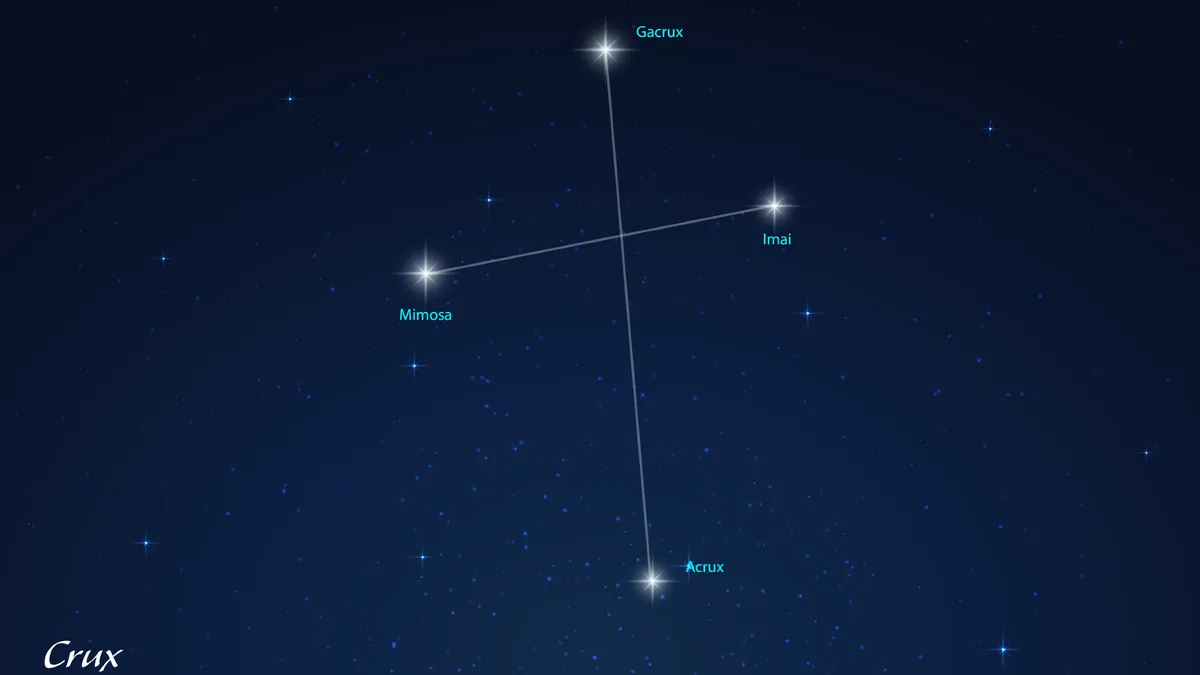
An illustration of a cross made by four different labeled stars in a dark blue night sky.

The Southern Cross can be seen all year round in the Southern Hemisphere. (Image credit: grebeshkovmaxim via Getty Images)

The Southern Hemisphere, where Brown is based, has fewer of these circumpolar constellations. “The south celestial pole [is] a blank bit of sky,” he said, although southern skies do feature the Southern Cross year-round, a constellation of four bright stars.

In total, the International Astronomical Union recognizes 88 constellations in the night sky, and astronomers have mapped these constellations’ regular motions using celestial coordinates. Today, there are interactive digital star charts ‪—‬ like Stellarium ‪—‬ that help stargazers navigate and find particular constellations based on the time of the year.


What to read next

Wobbling Earth

These stars and constellations, however, won’t look this way forever. Earth’s spin has a slight wobble. This means that over thousands of years, constellations and their positions and movements in the skies will change slightly, at least from Earth’s perspective. For example, the timings of sky’s zodiac constellations, constellations found along the equator, are now shifted from what they were many millennia ago due to the Earth’s wobble.
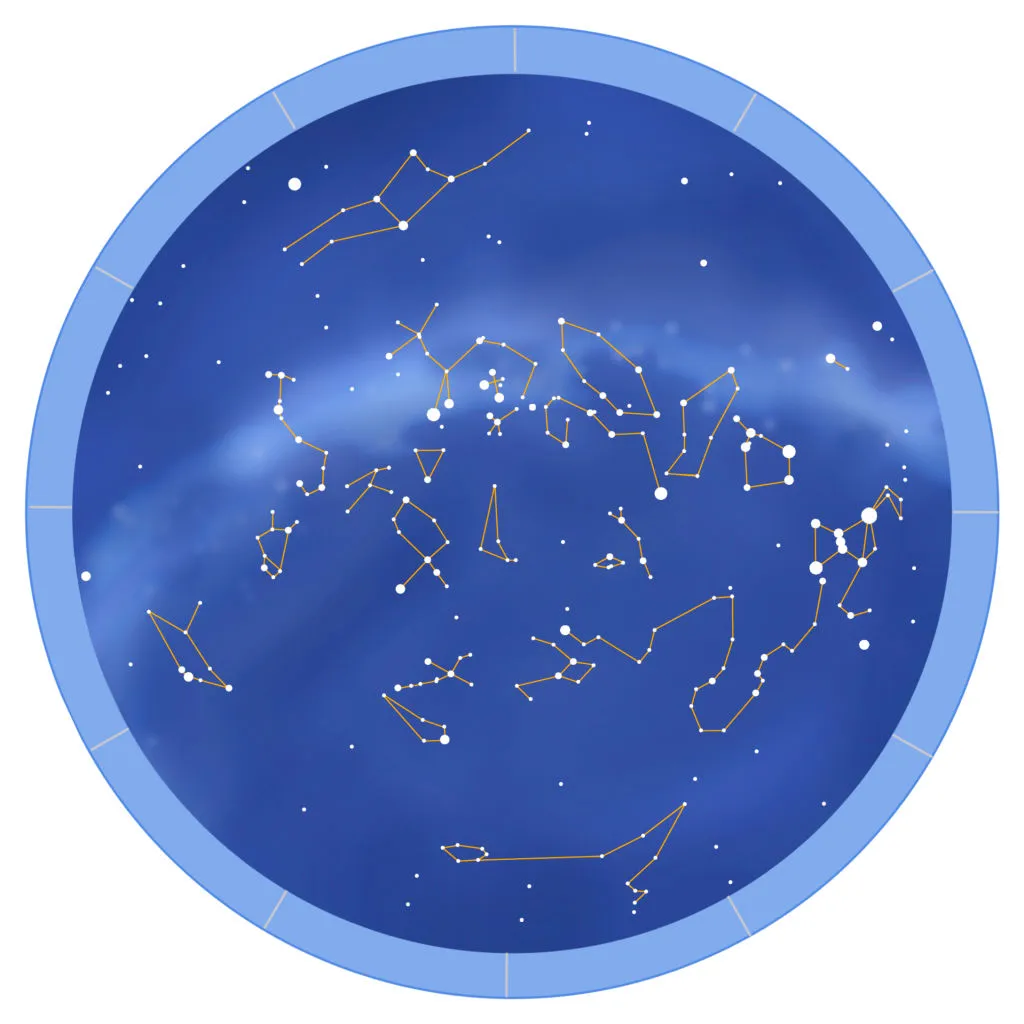
A circular blue chart shows various constellations on it.

An example of a star chart that people can use to find certain constellations in the night sky. This one is for the Northern Hemisphere. (Image credit: QAI Publishing via Getty Images)

The wobble also affects the North Star. Polaris, for instance, wasn’t always the star in this position. In fact, in 2500 B.C., the spot was held by Thuban, a star in the constellation Draco. The north star of the future will change, too. “Five thousand years from now, we will have a totally different North Star, or maybe no technical north star at all, at least not one that lines up perfectly,” Rapson said.

Understanding this nuance and getting the correct timing of when constellations are above the horizon is important for astronomy. Brown, who studies the evolution of galaxies, noted one constellation of interest.

“Sagittarius is the center of our galaxy,” he said. It’s visible primarily in the winter in the Southern Hemisphere (summer in the Northern Hemisphere), and it’s also right next to the Milky Way’s supermassive black hole. “So people who study the Milky Way’s black hole, they study at the particular times of year when [the black hole] is not blocked by the sun,” Brown said.

Learning how the stars change with the seasons, therefore, is an important part of discoveries related to this mysterious celestial object and many others.

“Sometimes what initially seems a little bit confusing can become clearer when we shift our perspective a little bit,” Brown said. By understanding the night sky and deciphering Earth’s movements in relation to the stars, we can understand more about our position and wonders in the universe.


Can you name all the animals, objects and mythological figures hiding in the night sky? Find out with our constellations quiz!

Source link

Share. Facebook Twitter Pinterest LinkedIn Tumblr Email
Previous ArticleScience history: Chernobyl nuclear power plant melts down, bringing the world to the brink of disaster — April 26, 1986
Next Article Science news this week: Atlantic current edges closer to collapse, scientists make artificial-neuron breakthrough, and a copy of the “Iliad” is found inside an Egyptian mummy
Editor
  • Website

Related Posts

Lifestyle

Science news this week: Atlantic current edges closer to collapse, scientists make artificial-neuron breakthrough, and a copy of the “Iliad” is found inside an Egyptian mummy

April 25, 2026
Lifestyle

Science history: Chernobyl nuclear power plant melts down, bringing the world to the brink of disaster — April 26, 1986

April 25, 2026
Lifestyle

El Niño could be here by May, new forecast reveals —‬ here’s what it means for summer weather

April 25, 2026
Add A Comment

Comments are closed.

Categories
  • Entertainment
  • Lifestyle
  • News
  • Sports
  • Tech
  • Travel
Recent Posts
  • Science news this week: Atlantic current edges closer to collapse, scientists make artificial-neuron breakthrough, and a copy of the “Iliad” is found inside an Egyptian mummy
  • Why are some constellations visible for only part of the year?
  • Science history: Chernobyl nuclear power plant melts down, bringing the world to the brink of disaster — April 26, 1986
  • El Niño could be here by May, new forecast reveals —‬ here’s what it means for summer weather
  • ‘A completely new reality’: Bolder measures are needed to prevent extreme water shortages in cities like Phoenix and Las Vegas that depend on the Colorado River
calendar
April 2026
M T W T F S S
 12345
6789101112
13141516171819
20212223242526
27282930  
« Mar    
Recent Posts
  • Science news this week: Atlantic current edges closer to collapse, scientists make artificial-neuron breakthrough, and a copy of the “Iliad” is found inside an Egyptian mummy
  • Why are some constellations visible for only part of the year?
  • Science history: Chernobyl nuclear power plant melts down, bringing the world to the brink of disaster — April 26, 1986
About

Welcome to Baynard Media, your trusted source for a diverse range of news and insights. We are committed to delivering timely, reliable, and thought-provoking content that keeps you informed
and inspired

Categories
  • Entertainment
  • Lifestyle
  • News
  • Sports
  • Tech
  • Travel
Facebook X (Twitter) Pinterest WhatsApp
  • Contact Us
  • About Us
  • Privacy Policy
  • Disclaimer
  • UNSUBSCRIBE
© 2026 copyrights reserved

Type above and press Enter to search. Press Esc to cancel.