
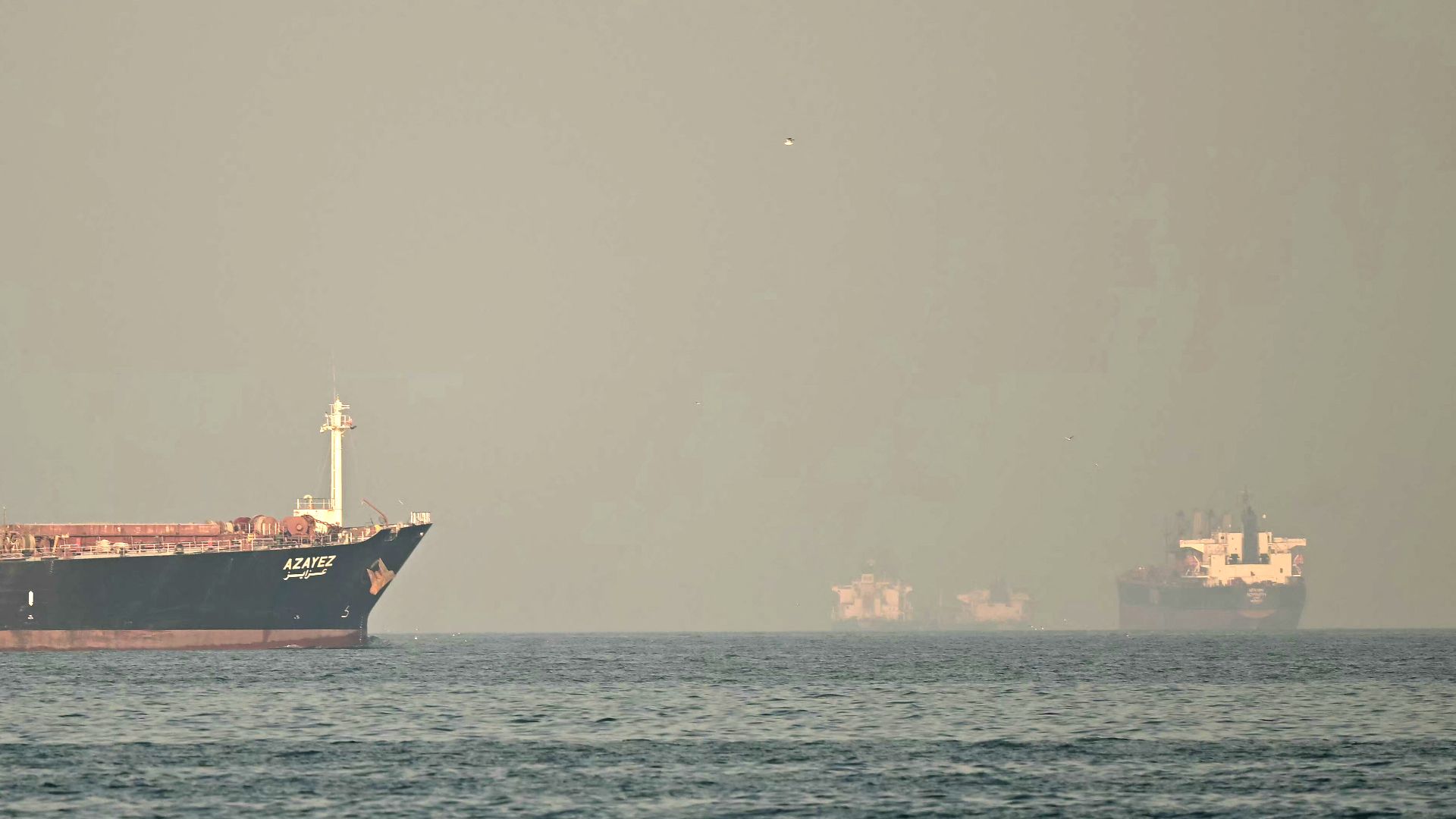
Tehran is moving to restrict — or effectively close — the strait of Hormuz to shipping, as part of the latest escalation in the war involving Iran.
Markets have reacted to the global impact of closing this incredibly busy shipping channel, focusing on the risk to oil and gas flows, the prospect of higher crude prices and the inflationary pressures that would follow.
That concern is justified. But it captures only part of the story. A sustained disruption of traffic through Hormuz would not simply constitute an energy crisis. It would also represent a fertilizer shock (where prices go up dramatically and supply goes down) — and, by extension, a direct risk to global food security.
Article continues below
Modern agriculture runs not only on sunlight and soil, but on natural gas. When German chemists Fritz Haber and Carl Bosch developed their nitrogen fixation method in the early 20th century, they did more than just manufacture ammonia at scale.
They launched a global chemical revolution that remains a cornerstone of modern civilization and agriculture. Through this process, methane is transformed into ammonia, and ammonia into nitrogen fertilizers such as urea — the most widely used nitrogen fertilizer. Those fertilizers allow crops to reach the yields on which today’s global population depends. Without it, harvests of wheat, maize and rice would fall dramatically.
Around a third of globally traded urea passes through the strait of Hormuz. The Persian Gulf sits at the center of this system for two structural reasons. First, it offers access to some of the world’s cheapest natural gas, essential for ammonia production.
Second, over decades, vast capital investments have built ammonia and urea capacity in countries within the region, including Qatar, Saudi Arabia, and the United Arab Emirates. This is aimed at the export market. A significant share of globally traded nitrogen fertilizer — and the liquefied natural gas (LNG) that powers fertilizer plants elsewhere — must therefore travel through the strait of Hormuz. A closure of the strait would threaten not only oil and gas exports but also the physical flow of nitrogen-based fertilizers and what is needed to make them.
The immediate effect would be delays to shipments of ammonia, urea and LNG. They could be stopped completely or become prohibitively expensive through higher freight and insurance costs. But the deeper impact would unfold in the months ahead at farms around the world.

In the northern hemisphere, fertilizer purchases accelerate before planting seasons. A delay of weeks can be disruptive; a disruption of months can make a huge difference. If shipments fail to arrive on time, farmers face difficult choices such as how to pay sharply higher prices, reduce application rates, or alter crop mixes. Because of how crops respond, even modest reductions in nitrogen use can produce disproportionately large declines in yield. That could translate into millions of tons of lost crops. The consequences would ripple through global supply chains into feed markets, livestock production, biofuels and ultimately retail food prices.
Do countries not have their own supplies?
Some countries have supplies of fertilizers, but self-sufficiency is rarer than it appears. India, for instance, relies heavily on LNG imports from the Persian Gulf to run its domestic urea plants. Brazil depends substantially on imported nitrogen and phosphate fertilizers to sustain soybean and maize production.
Even the United States, one of the world’s largest fertilizer producers, imports meaningful volumes of ammonia and urea to help meet regional demand and reduce prices. In sub-Saharan Africa, use of fertilizer is already low. A further rise in prices is likely to reduce use even more, cutting yields and increasing food insecurity.
The system’s fragility extends beyond nitrogen. Sulphur — as an essential nutrient for plant growth — is largely a byproduct of oil and gas processing. If energy shipments through Hormuz are disrupted, sulphur output falls alongside fuel exports. So, the shock would not only reduce fertilizer shipments but also restrict ways to produce them elsewhere.
Meanwhile, the production of synthetic nitrogen tightly coupled to energy markets because it is manufactured continuously from natural gas. A disruption in gas supply or ammonia trade immediately constrains global nitrogen availability. Estimates suggest that without synthetic nitrogen, the world could feed only a fraction of its current population. The strait of Hormuz therefore sits at the intersection of energy and food security.
Changing where fertilizer is produced cannot happen overnight. Financing and constructing new ammonia plants takes years. A double-digit contraction in exports from a key region cannot be swiftly offset. In the interim, prices would rise, trade flows would re-route and planting decisions would be made under uncertainty. Food price inflation, historically correlated with social unrest, could intensify.
Central banks, focused primarily on fuel-driven inflation, could underestimate the contribution of fertilizer scarcity to prices overall. Crucially, fertilizer shocks do not register with the same immediacy as oil shocks. Petrol prices change overnight. Crop yields reveal themselves months later. Yet the latter may prove more destabilizing.
Controls and closure of this narrow maritime chokepoint would reshape the cost-of-living well beyond the Persian Gulf.
If the 20th century taught policymakers to fear oil embargoes, the 21st should teach them to fear a fertilizer shock. Energy markets can absorb shocks through reserves and substitution. But the global food system has far thinner buffers. A prolonged disruption at Hormuz would not simply reprice crude; it would test the resilience of the industrial nitrogen cycle on which modern civilization depends.
Oil powers cars. Nitrogen powers crops. If the strait of Hormuz closes, the most consequential price may not be Brent crude but the cost of feeding the world.
This edited article is republished from The Conversation under a Creative Commons license. Read the original article.
