Close Menu
  • Home
  • UNSUBSCRIBE
  • News
  • Lifestyle
  • Tech
  • Entertainment
  • Sports
  • Travel
Facebook X (Twitter) WhatsApp
Trending
  • John F. Kennedy Jr., Carolyn Bessette Love Story: Fact vs. Fiction
  • Federal prosecutor defends smuggling charges against Abrego Garcia
  • Samsung 85-Inch Class QLED Q8F 4K UHD TV down to $1,399.99 at Amazon — save over $200
  • Gallagher Prem overhaul set to be confirmed by RFU as English rugby’s top tier moves towards franchise league | Rugby Union News
  • Traitors Winner Rob Rausch Buying Maura Higgins Birkin Bag
  • Expansion of County Landfill Turns Into Hot Button Campaign Issue
  • Scientists may have seen a star collapse directly into a black hole without exploding first
  • Samsung Galaxy S26 preorder bonus:Free $100 gift card and storage upgrade at Amazon
Facebook X (Twitter) WhatsApp
Baynard Media
  • Home
  • UNSUBSCRIBE
  • News
  • Lifestyle
  • Tech
  • Entertainment
  • Sports
  • Travel
Baynard Media
Home»Lifestyle»Scientists have developed the world’s first microwave brain microchip, a new type of processor that performs calculations using microwaves and requires very little power.
Lifestyle

Scientists have developed the world’s first microwave brain microchip, a new type of processor that performs calculations using microwaves and requires very little power.

EditorBy EditorNovember 11, 2025No Comments4 Mins Read
Share Facebook Twitter Pinterest LinkedIn Tumblr Reddit Telegram Email
Share
Facebook Twitter LinkedIn Pinterest Email

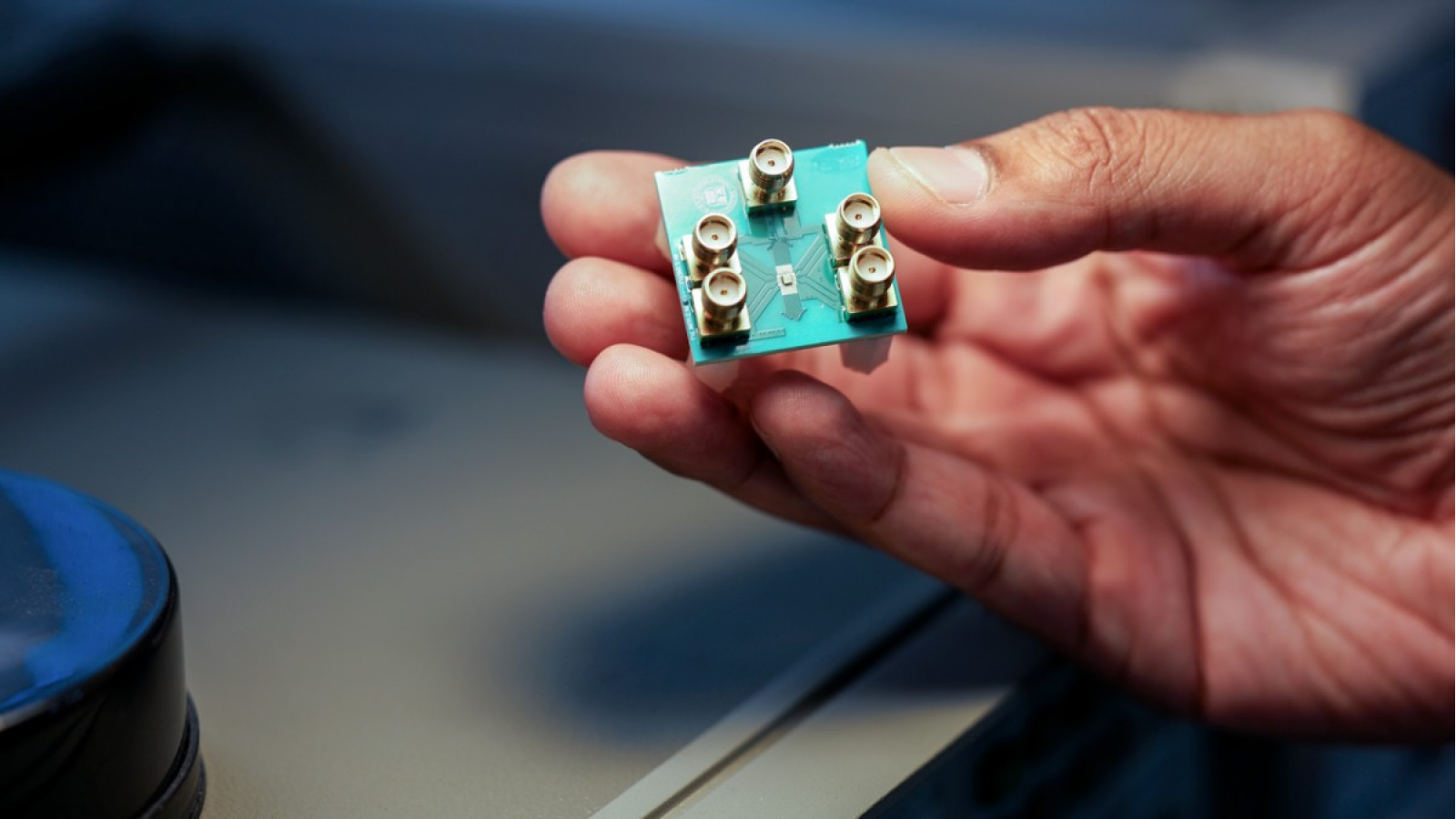
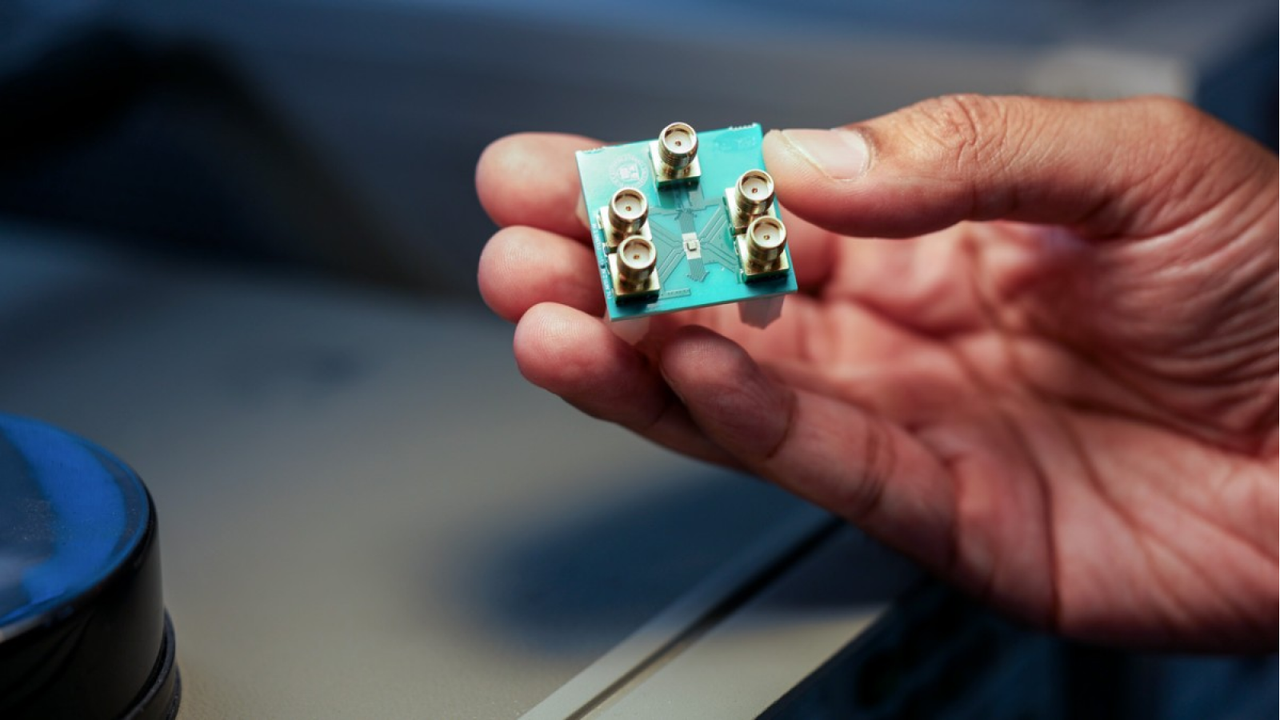
Scientists have developed an entirely new kind of microchip that uses microwaves instead of conventional digital circuitry to perform operations.

The processor, which can perform faster than conventional CPUs, is the world’s first fully functional microwave neural network (MNN) that can fit on a chip, scientists reported in a study published Aug. 14 in the journal Nature Electronics.

High-bandwidth applications, such as radar imaging, demand high-speed processing. Microwaves that operate in the analog spectrum can meet the processing needs of these applications, which is why scientists have pursued this new approach to computing.


You may like

“Because it’s able to distort in a programmable way across a wide band of frequencies instantaneously, it can be repurposed for several computing tasks,” lead study author Bal Govind, a doctoral student at Cornell University, said in a statement. “It bypasses a large number of signal processing steps that digital computers normally have to do.”

The power of microwaves

The chip uses analog waves in the microwave range of the electromagnetic spectrum, within an artificial intelligence (AI) neural network, to give a comb-like pattern in the waveform of the microwaves. The regularly spaced spectral lines in the frequency comb act like a ruler, thus enabling quick and accurate measurements of frequencies.

Neural networks, which underpin the microwave chip, are collections of machine learning algorithms that are inspired by the structure of the human brain. The microwave brain chip uses interconnected electromagnetic nodes within tunable waveguides to identify patterns in datasets and adapt to incoming information.

The microwave brain was created using the MNN, an integrated circuit that processes spectral components (individual frequencies in a signal) by capturing input data features across a broad bandwidth.

Get the world’s most fascinating discoveries delivered straight to your inbox.

The chip is capable of solving simple logic operations and advanced computations, such as recognizing binary sequences or identifying patterns in high-speed data with an 88% accuracy rate. In the study, the scientists noted that they proved this across several wireless signal classification challenges.

By operating in the microwave analog range and applying a probabilistic approach, the chip can process data streams on the order of tens of gigahertz (at least 20 billion operations per second). This speed exceeds that of most home-computer processors, which typically operate between 2.5 and 4 GHz (2.5 billion to 4 billion operations per second).

“Bal threw away a lot of conventional circuit design to achieve this,” co-senior author Alyssa Apsel, director of the School of Electrical and Computer Engineering at Cornell University, said in the statement. “Instead of trying to mimic the structure of digital neural networks exactly, he created something that looks more like a controlled mush of frequency behaviors that can ultimately give you high-performance computation.”


You may like

You need more circuitry, more power and more error correction to maintain accuracy in conventional digital systems, Govind added in the statement. But the probabilistic approach means the researchers maintained high accuracy across both simple and complex computations, without adding more overhead.

The microwave chip’s low power consumption is also notable. It can consume less than 200 milliwatts (less than 0.2 watts), which is approximately the same transmit power as mobile phones. By comparison, most CPUs require an input power of at least 65 W.

This low power usage means the chip could be installed in personal devices or wearable technologies, the scientists said. It is a promising technology for use in edge computing, as it could reduce latency by removing the need to connect to a central server. It could also be useful in AI deployment, as it could offer a high-processing alternative with low-power requirements for training AI models.

The researchers’ next step will be to simplify the design by reducing the number of waveguides and making the chip smaller. A more compact chip could use interconnected combs, which could generate a richer output spectrum and help to train the neural network.

Source link

Share. Facebook Twitter Pinterest LinkedIn Tumblr Email
Previous ArticleDan Helmer reaches settlements in defamation case after campaign loss
Next Article ‘Smallville’ actor Allison Mack details role in NXIVM sex cult in first interview since prison release
Editor
  • Website

Related Posts

Lifestyle

Scientists may have seen a star collapse directly into a black hole without exploding first

February 27, 2026
Lifestyle

Giant ‘spiderwebs’ on Mars contain tiny egg-like structures that scientists ‘can’t quite explain,’ NASA rover reveals

February 27, 2026
Lifestyle

Humans and Neanderthals interbred — but it was mostly male Neanderthals and female humans who coupled up, study finds

February 26, 2026
Add A Comment

Comments are closed.

Categories
  • Entertainment
  • Lifestyle
  • News
  • Sports
  • Tech
  • Travel
Recent Posts
  • John F. Kennedy Jr., Carolyn Bessette Love Story: Fact vs. Fiction
  • Federal prosecutor defends smuggling charges against Abrego Garcia
  • Samsung 85-Inch Class QLED Q8F 4K UHD TV down to $1,399.99 at Amazon — save over $200
  • Gallagher Prem overhaul set to be confirmed by RFU as English rugby’s top tier moves towards franchise league | Rugby Union News
  • Traitors Winner Rob Rausch Buying Maura Higgins Birkin Bag
calendar
February 2026
M T W T F S S
 1
2345678
9101112131415
16171819202122
232425262728  
« Jan    
Recent Posts
  • John F. Kennedy Jr., Carolyn Bessette Love Story: Fact vs. Fiction
  • Federal prosecutor defends smuggling charges against Abrego Garcia
  • Samsung 85-Inch Class QLED Q8F 4K UHD TV down to $1,399.99 at Amazon — save over $200
About

Welcome to Baynard Media, your trusted source for a diverse range of news and insights. We are committed to delivering timely, reliable, and thought-provoking content that keeps you informed
and inspired

Categories
  • Entertainment
  • Lifestyle
  • News
  • Sports
  • Tech
  • Travel
Facebook X (Twitter) Pinterest WhatsApp
  • Contact Us
  • About Us
  • Privacy Policy
  • Disclaimer
  • UNSUBSCRIBE
© 2026 copyrights reserved

Type above and press Enter to search. Press Esc to cancel.