Close Menu
  • Home
  • UNSUBSCRIBE
  • News
  • Lifestyle
  • Tech
  • Entertainment
  • Sports
  • Travel
Facebook X (Twitter) WhatsApp
Trending
  • A mega-bill to rein in ICE in Minnesota heads to the Senate floor
  • ‘Something’s missing’: Most thorough-ever study of the cosmos proves we still can’t explain how the universe is expanding
  • David Axelrod says his Pope Leo XIV meeting was unrelated to Obama
  • Herbicide Use Near Doheny Beach Triggers State Probe
  • How Much Does Portugal D7 Visa Cost?
  • Lynette Hooker search coming to end as Coast Guard probe continues
  • American YouTuber is jailed for 6 months in South Korea on public nuisance charge
  • 73 moon landings? NASA’s ‘Moon Base User’s Guide’ reveals the agency’s ‘most ambitious space project’ will be fraught with challenges
Facebook X (Twitter) WhatsApp
Baynard Media
  • Home
  • UNSUBSCRIBE
  • News
  • Lifestyle
  • Tech
  • Entertainment
  • Sports
  • Travel
Baynard Media
Home»Lifestyle»5,000-year old ‘cultic space’ discovered in Iraq dates to time of the world’s first cities
Lifestyle

5,000-year old ‘cultic space’ discovered in Iraq dates to time of the world’s first cities

EditorBy EditorNovember 2, 2025No Comments4 Mins Read
Share Facebook Twitter Pinterest LinkedIn Tumblr Reddit Telegram Email
Share
Facebook Twitter LinkedIn Pinterest Email

Archaeologists in Iraq have unearthed the remains of a 5,000-year-old building that may have been a temple from the Uruk period, when the first cities in the world were taking off.

The buried “monumental” structure was discovered in September at the Kani Shaie archaeological site in the northern Sulaymaniyah Governorate, in the foothills of the Zagros Mountains in northern Iraq, according to a statement.

“If the monumental nature of this building is confirmed — which we are now investigating in detail — the discovery could transform our understanding of Uruk’s relationship with surrounding regions,” the researchers said in the statement.


You may like

The structure dates from between about 3300 to 3100 B.C. during the Uruk period, which is named after Uruk in southern Mesopotamia.

Ancient Uruk was a city of up to 80,000 people, spread out over an area of up to 990 acres (400 hectares) with a grid-like pattern of streets and zones for different functions, such as administrative and residential neighborhoods, according the late German archaeologist Hans Nissen in his key work “The Early History of the Ancient Near East” (University of Chicago Press, 1988).

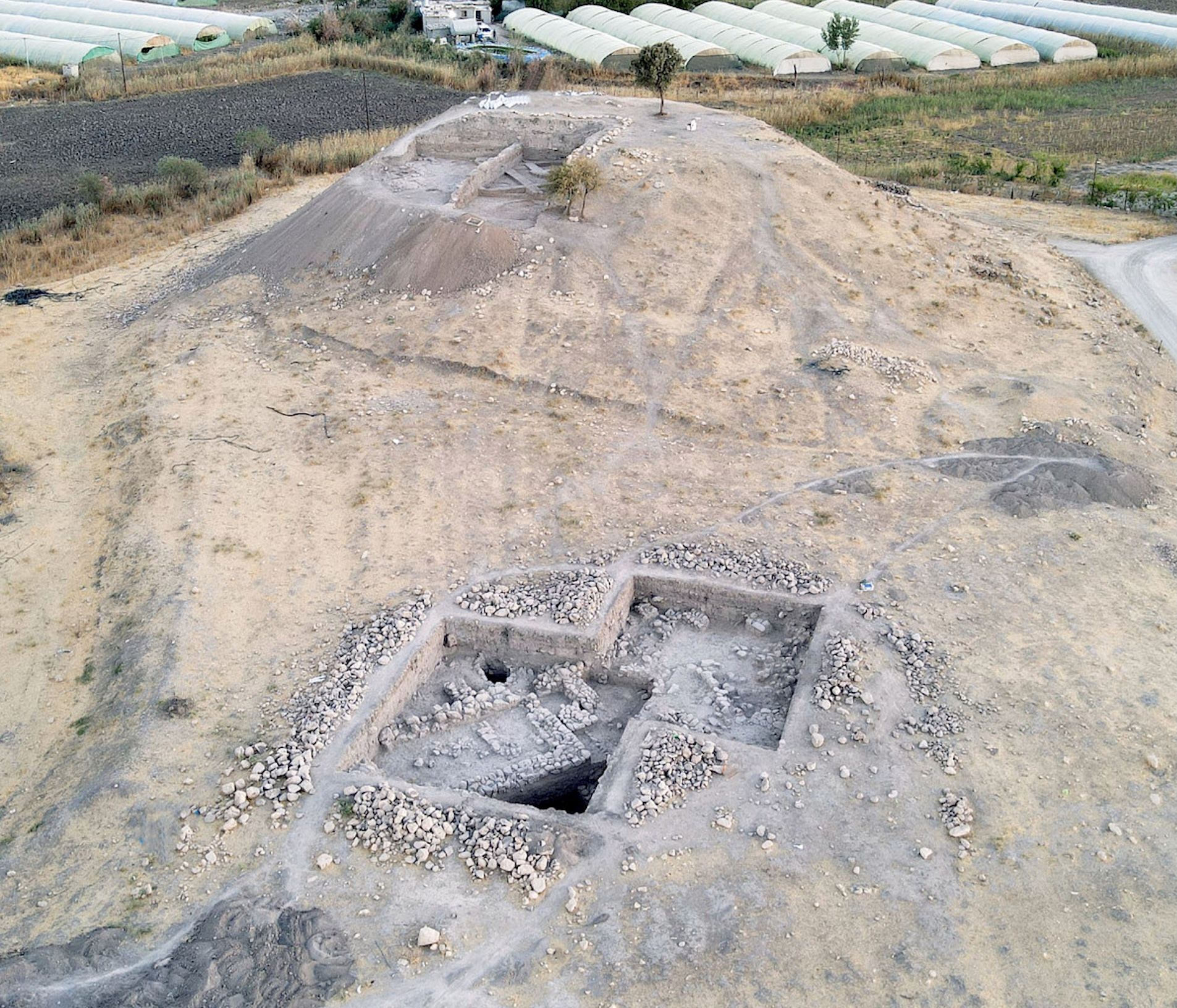
The excavation leaders said in the statement that the structure was found in the top part of a mound of earth at Kani Shaie, and that its architectural style indicated it had been an official building of some sort and possibly a “cultic space” or temple for worship.

Image 1 of 2

a cylinder seal showing its imprint
(Image credit: University of Coimbra)

Among other artifacts, the latest excavations at Kani Shaie unearthed ancient “cylinder seals” associated with administration.

an aerial view of an excavated building showing the floorplan
(Image credit: University of Coimbra)

Archaeologists say the discovery shows the Kani Shaie settlement was integrated with a cultural network centered on the ancient city of Uruk in southern Mesopotamia.

Cylinder seal

The researchers also found fragments of a gold pendant, which may reflect a “social display” of wealth in the community; and “cylinder seals” from the Uruk period, which were associated with administration and political power, the statement said.

Get the world’s most fascinating discoveries delivered straight to your inbox.

In addition, the team discovered ancient “wall cones” — decorative ornaments consisting of cones of baked clay or stone that were pressed point-first into fresh plaster on a wall. The flat parts of the cones were then painted, creating a mosaic effect across the wall that often featured geometric designs, such as triangles and zigzags. The wall cones are further evidence that the building was a “public or ceremonial structure,” the statement said.

Kani Shaie was almost 300 miles (480 kilometers) north of Uruk, which would have been about 15 days’ walk on foot. But the new finds suggest that it was not a peripheral place during the Uruk period, as archaeologists had previously assumed because of its distance. Instead, the settlement seems to have been part of an expansive cultural and political network that stretched across ancient Mesopotamia.

“Kani Shaie is regarded as the most important archaeological site east of the Tigris River for understanding the sequence of human occupation from the Early Bronze Age through to the 3rd millennium BC,” the researchers said.

Image 1 of 2

a group of sheep roam through hills and plains
(Image credit: University of Coimbra)

Archeologists have worked at Kani Shaie in the foothills of the Zagros Mountains since 2013.

an aerial view of an excavated building
(Image credit: University of Coimbra)

The building may have been a “cultic space” or temple for worship, according to the researchers.

Ancient Uruk

Archaeologists have carried out excavations at the site since 2013 and found evidence of occupation since the Chalcolithic period (the “Copper-stone” Age) from about 6500 B.C. in this region until about 2500 B.C.

Uruk (modern Warka in southern Iraq) may have been the first city in the world and it strongly influenced the Sumerians and later Mesopotamian civilizations. The people of Uruk are credited with inventing cuneiform writing, which may have been the first writing system and was used throughout Mesopotamia for thousands of years. They are also credited with developing the first written numbers, which seem to have been used for tallies of farming produce.

Uruk also pioneered a form of the “ziggurat” style of building that would be used for temples by later Mesopotamian civilizations; and it may have been the first place where priests were distinguished with special vestments and religious iconography.


Mesopotamia quiz: Test your knowledge about the ancient civilizations of the Fertile Crescent

Source link

Share. Facebook Twitter Pinterest LinkedIn Tumblr Email
Previous ArticleHakeem Jeffries tells CNN Mamdani not the future of Democratic Party
Next Article Gov. Newsom explains why he imitates President Trump on social media
Editor
  • Website

Related Posts

Lifestyle

‘Something’s missing’: Most thorough-ever study of the cosmos proves we still can’t explain how the universe is expanding

April 15, 2026
Lifestyle

How Much Does Portugal D7 Visa Cost?

April 15, 2026
Lifestyle

73 moon landings? NASA’s ‘Moon Base User’s Guide’ reveals the agency’s ‘most ambitious space project’ will be fraught with challenges

April 15, 2026
Add A Comment

Comments are closed.

Categories
  • Entertainment
  • Lifestyle
  • News
  • Sports
  • Tech
  • Travel
Recent Posts
  • A mega-bill to rein in ICE in Minnesota heads to the Senate floor
  • ‘Something’s missing’: Most thorough-ever study of the cosmos proves we still can’t explain how the universe is expanding
  • David Axelrod says his Pope Leo XIV meeting was unrelated to Obama
  • Herbicide Use Near Doheny Beach Triggers State Probe
  • How Much Does Portugal D7 Visa Cost?
calendar
April 2026
M T W T F S S
 12345
6789101112
13141516171819
20212223242526
27282930  
« Mar    
Recent Posts
  • A mega-bill to rein in ICE in Minnesota heads to the Senate floor
  • ‘Something’s missing’: Most thorough-ever study of the cosmos proves we still can’t explain how the universe is expanding
  • David Axelrod says his Pope Leo XIV meeting was unrelated to Obama
About

Welcome to Baynard Media, your trusted source for a diverse range of news and insights. We are committed to delivering timely, reliable, and thought-provoking content that keeps you informed
and inspired

Categories
  • Entertainment
  • Lifestyle
  • News
  • Sports
  • Tech
  • Travel
Facebook X (Twitter) Pinterest WhatsApp
  • Contact Us
  • About Us
  • Privacy Policy
  • Disclaimer
  • UNSUBSCRIBE
© 2026 copyrights reserved

Type above and press Enter to search. Press Esc to cancel.