Close Menu
  • Home
  • UNSUBSCRIBE
  • News
  • Lifestyle
  • Tech
  • Entertainment
  • Sports
  • Travel
Facebook X (Twitter) WhatsApp
Trending
  • Claude Mythos explained: Is Anthropic’s most powerful AI model really too dangerous to release to the public?
  • ‘What are the odds’: Superbright comet and exploding fireball meteor form near-perfect X over European castle
  • ‘Kraken’ octopus that lived at the time of the dinosaurs was a 62-foot-long apex predator of the ocean
  • ‘A landmark moment for the field’: FDA approves first-ever gene therapy for inherited deafness
  • ‘Strong, undeniable public examples of something positive’: Astronaut Chris Hadfield on why Artemis II hit him hard, the importance of spaceflight, and why we need to send a guitar to the moon
  • Artemis II heat shield aced its blistering reentry, ghostly underwater photo reveals
  • Scientists invent artificial neurons that ‘talk’ to real brain cells, paving way to better brain implants
  • Meet AGI CPU — a specialist processor that engineers believe will power the next wave of AI
Facebook X (Twitter) WhatsApp
Baynard Media
  • Home
  • UNSUBSCRIBE
  • News
  • Lifestyle
  • Tech
  • Entertainment
  • Sports
  • Travel
Baynard Media
Home»Lifestyle»95 million-year-old ‘tiny, tiny skull’ from never-before-seen crocodile-like creature discovered in Montana
Lifestyle

95 million-year-old ‘tiny, tiny skull’ from never-before-seen crocodile-like creature discovered in Montana

EditorBy EditorSeptember 25, 2025No Comments4 Mins Read
Share Facebook Twitter Pinterest LinkedIn Tumblr Reddit Telegram Email
Share
Facebook Twitter LinkedIn Pinterest Email

Around 95 million years ago, small crocodile-like creatures with strange, sheathed teeth burrowed along the shores of the Western Interior Seaway in what is now southwest Montana, a new study suggests.

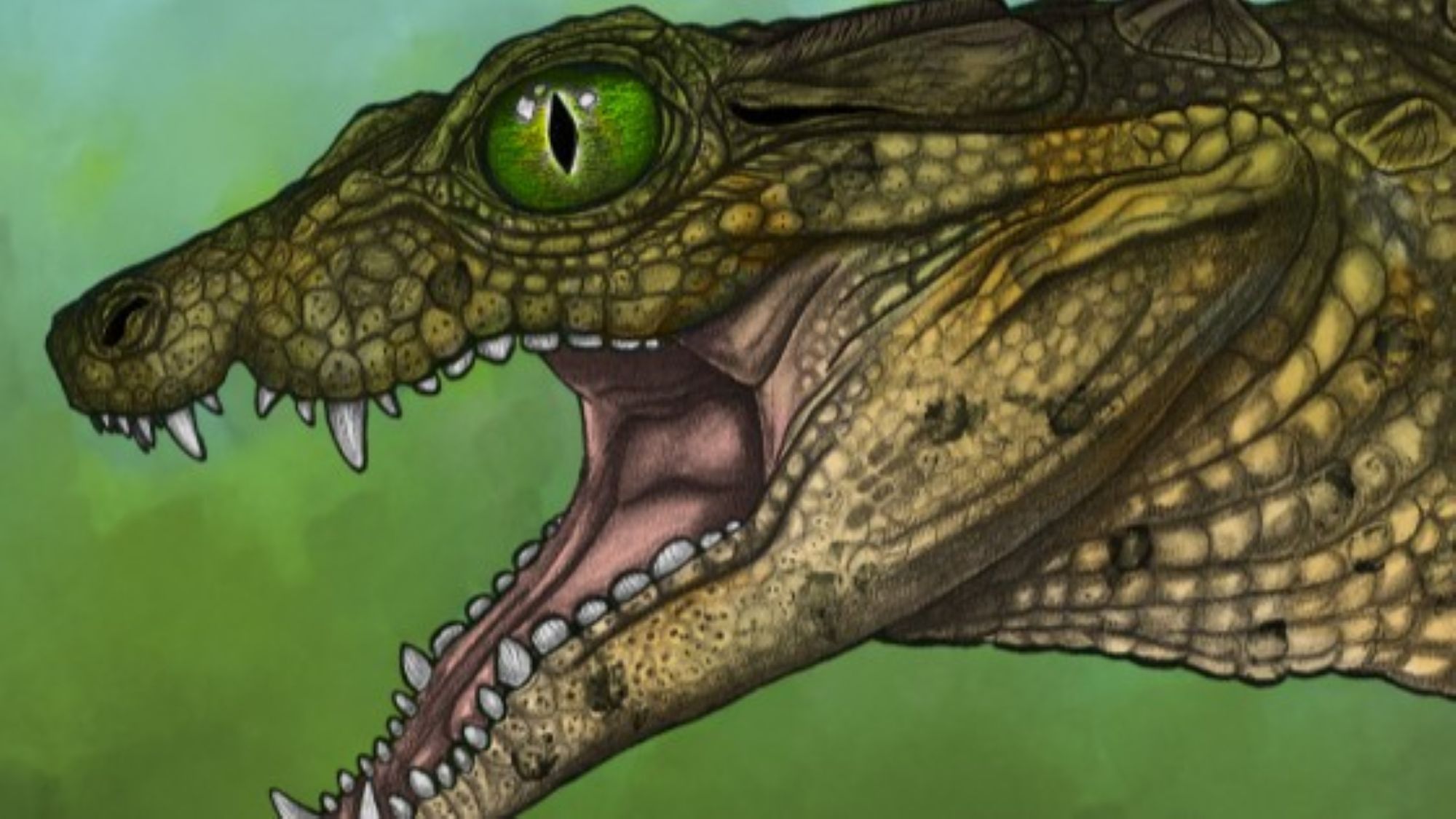
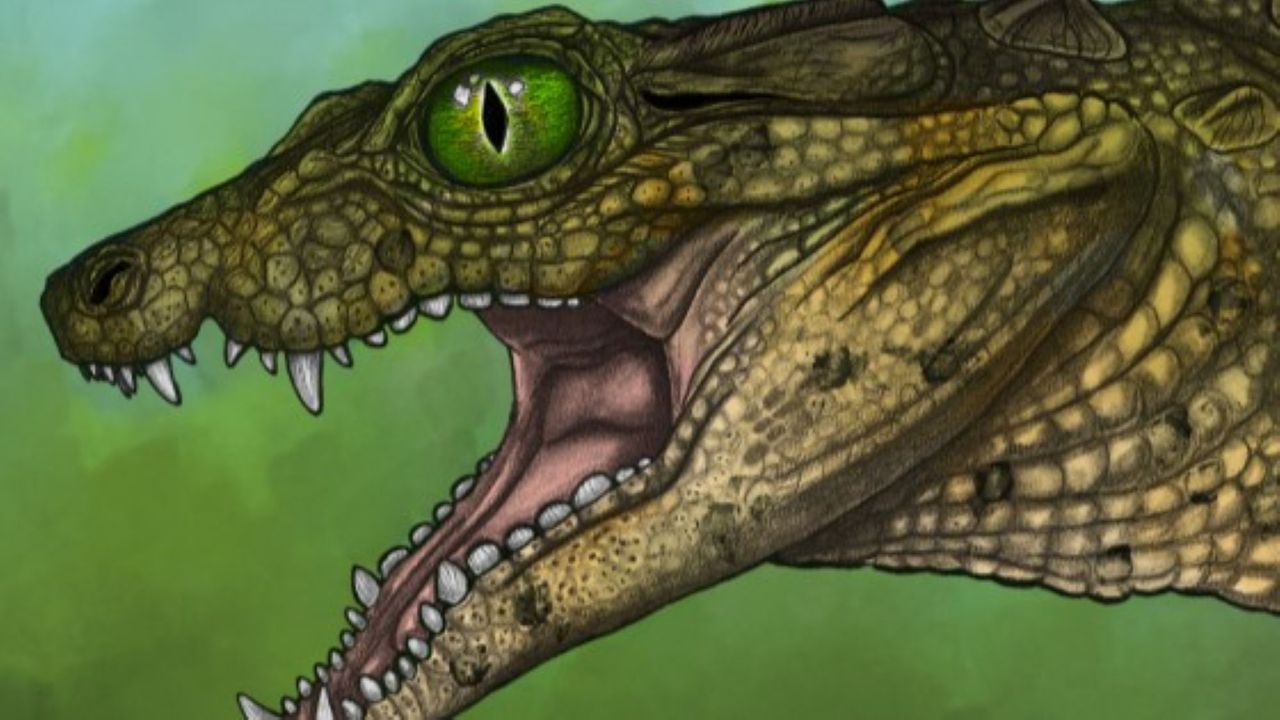
The new research describes the first such creature ever discovered — a teenage croc nicknamed Elton that measured about 2 feet (60 centimeters) long from nose to tail tip. Elton’s fossilized remains were discovered in 2021 during an organized dig in the Blackleaf geological formation, which dates to the middle of the Cretaceous period (145 million to 66 million years ago).

“We have found dinosaurs (in the Blackleaf) before, but this was the second known vertebrate animal we’d ever found in this formation,” lead author Harrison Allen, a doctoral student in paleontology at Stony Brook University in New York, who found the fossil when he was an undergraduate student at Montana State University, said in statement. “It led me down the rabbit hole into this amazing world of prehistoric, extinct crocs and their evolutionary niches.”


You may like

The first fossil Allen noticed was Elton’s skull, which was just 2 inches (5 cm) long and embedded in rock, according to the statement. Allen showed the miniature skull to David Varricchio, a professor of paleobiology, taphonomy and ichnology at Montana State University, who immediately understood the fossil’s significance.

“After the dig, Dr. Varricchio told me why he was so excited the day I found the initial specimen,” Allen said. “It has so much visible anatomy to explore, and he could see it was a tiny, tiny croc skull, fully articulated and preserved — it was a special thing.”

It turns out, Elton belonged to a now-extinct family of crocodile-like creatures, or crocodyliforms, that researchers previously didn’t know existed. This family, called Wannchampsidae, sits within the lineage Neosuchia, which includes all modern crocodilians and their closest extinct relatives. Its members lived in North America during the Cretaceous, and they were much smaller than other neosuchian crocs are; had Elton survived until adulthood, he would have grown to just 3 feet (90 cm) long, according to the statement.

Neosuchians are typically semi-aquatic or marine carnivores with simple, conical teeth — but not Elton. He and fellow members of the newfound species, named Thikarisuchus xenodentes, had an assortment of differently shaped teeth, including sheathed and other specialized fangs, which they used to devour plants and insects, according to the statement.

Get the world’s most fascinating discoveries delivered straight to your inbox.

Elton and his kind also lived on land, and they likely made burrows in the ground, based on how densely packed Elton’s bones were when Allen and his colleagues analyzed them, the statement said.

Shortly after finding Elton’s skull, Allen returned to collect bagfuls of the surrounding sediment to search it for more clues about the animal. He spent hours sifting through the dirt, extracting fragments of bone and reconstructing the Thikarisuchus skeleton bit by bit. He worked with his classmate Dane Johnson, now a paleontology lab and field specialist at the Museum of the Rockies in Montana — often to the tune of Elton John’s 1972 song “Crocodile Rock,” which inspired the name Elton.

To get a clear picture of the fossils, Allen then made CT scans, which helped him distinguish between the bones and chunks of rock that were still stuck to Elton’s remains. “Harrison worked super hard to digitally reconstruct the animal, and it came out beautifully,” Varricchio, who is a co-author of the new study, said in the statement.

A detailed description and pictures of T. xenodentes, as well as a discussion of the newfound species’ position in the evolutionary tree, are included in the study, published Sept. 22 in the Journal of Vertebrate Paleontology. Notably, the researchers highlight a family of ancient crocodyliforms called Atopasauridae that was previously found in Eurasia and looks like Elton, with a small body size and similar dental features.

“It suggests that during the same time period, we’re seeing convergent evolution between two distantly related groups due to similar environmental conditions, prey availability and who-knows-what that prompted crocs on opposite sides of the planet to develop similar features,” Allen said.

Source link

Share. Facebook Twitter Pinterest LinkedIn Tumblr Email
Previous ArticleFox News ‘Antisemitism Exposed’ Newsletter: UN Ambassador Waltz takes on the haters
Next Article Trump says he wants Turkey to stop buying Russian oil
Editor
  • Website

Related Posts

Lifestyle

Claude Mythos explained: Is Anthropic’s most powerful AI model really too dangerous to release to the public?

April 24, 2026
Lifestyle

‘What are the odds’: Superbright comet and exploding fireball meteor form near-perfect X over European castle

April 24, 2026
Lifestyle

‘Kraken’ octopus that lived at the time of the dinosaurs was a 62-foot-long apex predator of the ocean

April 24, 2026
Add A Comment

Comments are closed.

Categories
  • Entertainment
  • Lifestyle
  • News
  • Sports
  • Tech
  • Travel
Recent Posts
  • Claude Mythos explained: Is Anthropic’s most powerful AI model really too dangerous to release to the public?
  • ‘What are the odds’: Superbright comet and exploding fireball meteor form near-perfect X over European castle
  • ‘Kraken’ octopus that lived at the time of the dinosaurs was a 62-foot-long apex predator of the ocean
  • ‘A landmark moment for the field’: FDA approves first-ever gene therapy for inherited deafness
  • ‘Strong, undeniable public examples of something positive’: Astronaut Chris Hadfield on why Artemis II hit him hard, the importance of spaceflight, and why we need to send a guitar to the moon
calendar
April 2026
M T W T F S S
 12345
6789101112
13141516171819
20212223242526
27282930  
« Mar    
Recent Posts
  • Claude Mythos explained: Is Anthropic’s most powerful AI model really too dangerous to release to the public?
  • ‘What are the odds’: Superbright comet and exploding fireball meteor form near-perfect X over European castle
  • ‘Kraken’ octopus that lived at the time of the dinosaurs was a 62-foot-long apex predator of the ocean
About

Welcome to Baynard Media, your trusted source for a diverse range of news and insights. We are committed to delivering timely, reliable, and thought-provoking content that keeps you informed
and inspired

Categories
  • Entertainment
  • Lifestyle
  • News
  • Sports
  • Tech
  • Travel
Facebook X (Twitter) Pinterest WhatsApp
  • Contact Us
  • About Us
  • Privacy Policy
  • Disclaimer
  • UNSUBSCRIBE
© 2026 copyrights reserved

Type above and press Enter to search. Press Esc to cancel.