Close Menu
  • Home
  • UNSUBSCRIBE
  • News
  • Lifestyle
  • Tech
  • Entertainment
  • Sports
  • Travel
Facebook X (Twitter) WhatsApp
Trending
  • Heartbeats physically stop cardiac cancer from growing — hinting that ‘squeezing’ tumors could be a good way to thwart them
  • Gone in 9 seconds: Claude AI deletes an entire company’s database, then confesses
  • ‘It cuts both ways’: Positive tipping points can restore wreaked ecosystems — we just need to trigger them, Earth system scientist Tim Lenton says
  • 1,900-year-old souvenir cup featuring Hadrian’s Wall and Roman forts discovered in Spain
  • First-of-its-kind map of the mouse nose reveals surprises about the sense of smell
  • Some fungi can influence the weather ‪—‬ and now we know how they do it
  • Neanderthals’ brains weren’t to blame for their demise, new study suggests
  • NASA Curiosity rover uncovers rock with 7 new organic molecules on Mars
Facebook X (Twitter) WhatsApp
Baynard Media
  • Home
  • UNSUBSCRIBE
  • News
  • Lifestyle
  • Tech
  • Entertainment
  • Sports
  • Travel
Baynard Media
Home»Lifestyle»4,100-year-old tomb of doctor who treated pharaohs discovered at Saqqara
Lifestyle

4,100-year-old tomb of doctor who treated pharaohs discovered at Saqqara

EditorBy EditorJanuary 7, 2025No Comments3 Mins Read
Share Facebook Twitter Pinterest LinkedIn Tumblr Reddit Telegram Email
Share
Facebook Twitter LinkedIn Pinterest Email

The 4,100-year-old tomb of a doctor who “treated the pharaoh himself” has been discovered at the site of Saqqara in Egypt.

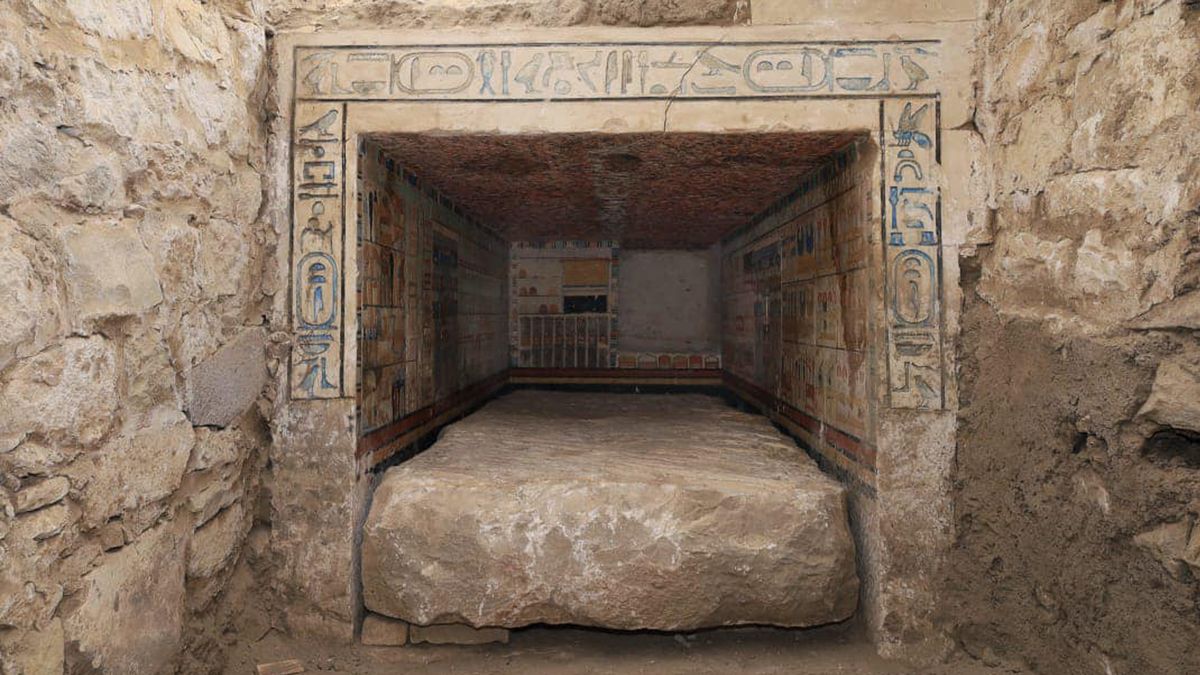
The burial belongs to a doctor named “Tetinebefou,” the Swiss-French team that made the discovery reported in a translated blog post. Although the artifacts in the tomb had been plundered, archaeologists were able to study the site’s wall paintings and hieroglyphic inscriptions, which describe the doctor’s position and depict a variety of objects that may have been used in his medical treatments..

He held the title of “conjurer of the goddess Serqet [also spelled Serket and Selket],” a goddess who was associated with scorpions and was thought to provide protection from their stings. This title meant that “he was a specialist in poisonous bites,” Philippe Collombert, leader of the Swiss-French team and an Egyptologist at the University of Geneva, told Live Science in an email.

The inscriptions also say the doctor was “director of medicinal plants,” a title that has been seen on only one other discovery from ancient Egypt, Collombert said. In addition to these titles, the inscriptions note that he was the “chief dentist,” another title that is rarely seen.

“Evidence for ancient Egyptian ‘dentists’ is exceedingly scarce,” Roger Forshaw, an honorary lecturer at the KNH Centre for Biomedical Egyptology at the University of Manchester who was not involved with the research, told Live Science in an email.

These titles suggest that Tetinebefou was at the top of his profession. “He was certainly the main physician at the royal court, so he would have treated the pharaoh himself,” Collombert said. Tetinebefou’s tomb is decorated with colorful wall paintings that depict a variety of containers, such as jars and what looks like a vase. They also show colorful abstract images and geometric shapes.

Related: Why are so many ancient Egyptians buried at the Saqqara necropolis?

Get the world’s most fascinating discoveries delivered straight to your inbox.

Image 1 of 3

A geometric and hieroglyphic wall painting in a tomb
(Image credit: Courtesy of the Egyptian Ministry of Tourism and Antiquities)

The tomb’s wall paintings still have their vibrant colors.

A wall painting of large containers
(Image credit: Courtesy of the Egyptian Ministry of Tourism and Antiquities)

A section of the wall painting depicts several containers from ancient Egypt.

A wall painting of clay vessels
(Image credit: Courtesy of the Egyptian Ministry of Tourism and Antiquities)

Part of a wall painting in the doctor’s tomb depicts an assortment of vessels.


The walls are “entirely decorated with paintings in bright, fresh colors! It’s easy to forget that they are 4,000 years old!” the team wrote in the blog post.

It’s unclear exactly which pharaohs Tetinebefou served. They may have included Pepi II (who reigned circa 2246 to 2152 B.C.) or one or more pharaohs who ruled a bit later, Collombert said.

While Egypt was united and still building pyramids during the reign of Pepi II, it started to fragment after his rule, with nomarchs (governors) gaining more power. This ushered in a period that Egyptologists call the First Intermediate Period, which lasted from roughly 2150 to 2030 B.C.

No human remains were found in the tomb. Aside from the paintings and inscriptions on the walls, “it had been ransacked almost completely,” Collombert said.

Analysis of the tomb is ongoing.

Source link

Share. Facebook Twitter Pinterest LinkedIn Tumblr Email
Previous ArticleOnePlus 13 arrives. What reviewers are saying.
Next Article Keyshawn Davis to challenge Denys Berinchyk for WBO world lightweight title live on Sky Sports on February 15 | Boxing News
Editor
  • Website

Related Posts

Lifestyle

Heartbeats physically stop cardiac cancer from growing — hinting that ‘squeezing’ tumors could be a good way to thwart them

April 29, 2026
Lifestyle

Gone in 9 seconds: Claude AI deletes an entire company’s database, then confesses

April 29, 2026
Lifestyle

‘It cuts both ways’: Positive tipping points can restore wreaked ecosystems — we just need to trigger them, Earth system scientist Tim Lenton says

April 29, 2026
Add A Comment

Comments are closed.

Categories
  • Entertainment
  • Lifestyle
  • News
  • Sports
  • Tech
  • Travel
Recent Posts
  • Heartbeats physically stop cardiac cancer from growing — hinting that ‘squeezing’ tumors could be a good way to thwart them
  • Gone in 9 seconds: Claude AI deletes an entire company’s database, then confesses
  • ‘It cuts both ways’: Positive tipping points can restore wreaked ecosystems — we just need to trigger them, Earth system scientist Tim Lenton says
  • 1,900-year-old souvenir cup featuring Hadrian’s Wall and Roman forts discovered in Spain
  • First-of-its-kind map of the mouse nose reveals surprises about the sense of smell
calendar
April 2026
M T W T F S S
 12345
6789101112
13141516171819
20212223242526
27282930  
« Mar    
Recent Posts
  • Heartbeats physically stop cardiac cancer from growing — hinting that ‘squeezing’ tumors could be a good way to thwart them
  • Gone in 9 seconds: Claude AI deletes an entire company’s database, then confesses
  • ‘It cuts both ways’: Positive tipping points can restore wreaked ecosystems — we just need to trigger them, Earth system scientist Tim Lenton says
About

Welcome to Baynard Media, your trusted source for a diverse range of news and insights. We are committed to delivering timely, reliable, and thought-provoking content that keeps you informed
and inspired

Categories
  • Entertainment
  • Lifestyle
  • News
  • Sports
  • Tech
  • Travel
Facebook X (Twitter) Pinterest WhatsApp
  • Contact Us
  • About Us
  • Privacy Policy
  • Disclaimer
  • UNSUBSCRIBE
© 2026 copyrights reserved

Type above and press Enter to search. Press Esc to cancel.