Close Menu
  • Home
  • UNSUBSCRIBE
  • News
  • Lifestyle
  • Tech
  • Entertainment
  • Sports
  • Travel
Facebook X (Twitter) WhatsApp
Trending
  • Breakthrough in experimental light-powered quantum computers could mean scaling them up is now far more viable
  • Mount Etna is like no other volcano on Earth, representing ‘a new type of volcanism,’ new research reveals
  • ‘Lifelong monogamy’ and ‘half orphans’: DNA analysis reveals clues about life on the Roman frontier after the fall of Rome
  • Can NASA and SpaceX really build a moon base in the next 10 years?
  • Birds in cities appear to dislike men less than women, and experts have no idea why
  • ‘One of the most rapid transitions that I’ve seen’: NOAA forecaster on how this year’s El Niño could shatter records
  • May’s Flower ‘micromoon’ will look extra small tonight, with a rare Blue Moon following
  • ‘If astrological compatibility exists, its effects should be observable’: TL;DR — it’s not
Facebook X (Twitter) WhatsApp
Baynard Media
  • Home
  • UNSUBSCRIBE
  • News
  • Lifestyle
  • Tech
  • Entertainment
  • Sports
  • Travel
Baynard Media
Home»Lifestyle»2,100-year-old skeleton of warrior nicknamed ‘Lord of Sakar,’ buried in a stunning gold wreath, unearthed in Bulgaria
Lifestyle

2,100-year-old skeleton of warrior nicknamed ‘Lord of Sakar,’ buried in a stunning gold wreath, unearthed in Bulgaria

EditorBy EditorAugust 30, 2025No Comments3 Mins Read
Share Facebook Twitter Pinterest LinkedIn Tumblr Reddit Telegram Email
Share
Facebook Twitter LinkedIn Pinterest Email

Archaeologists have unearthed a dazzling gold wreath in a 2,100-year-old burial mound of a Thracian warrior and his horse. The unique headpiece is part of a set of gold jewelry excavated from the grave of the “Lord of Sakar,” named after the mountain range in southeast Bulgaria where he was found.

“The golden treasures discovered in our lands testify to high craftsmanship, rich spiritual life and prosperous societies,” Evelina Slavcheva, president of the Bulgarian Academy of Sciences, said in a statement.

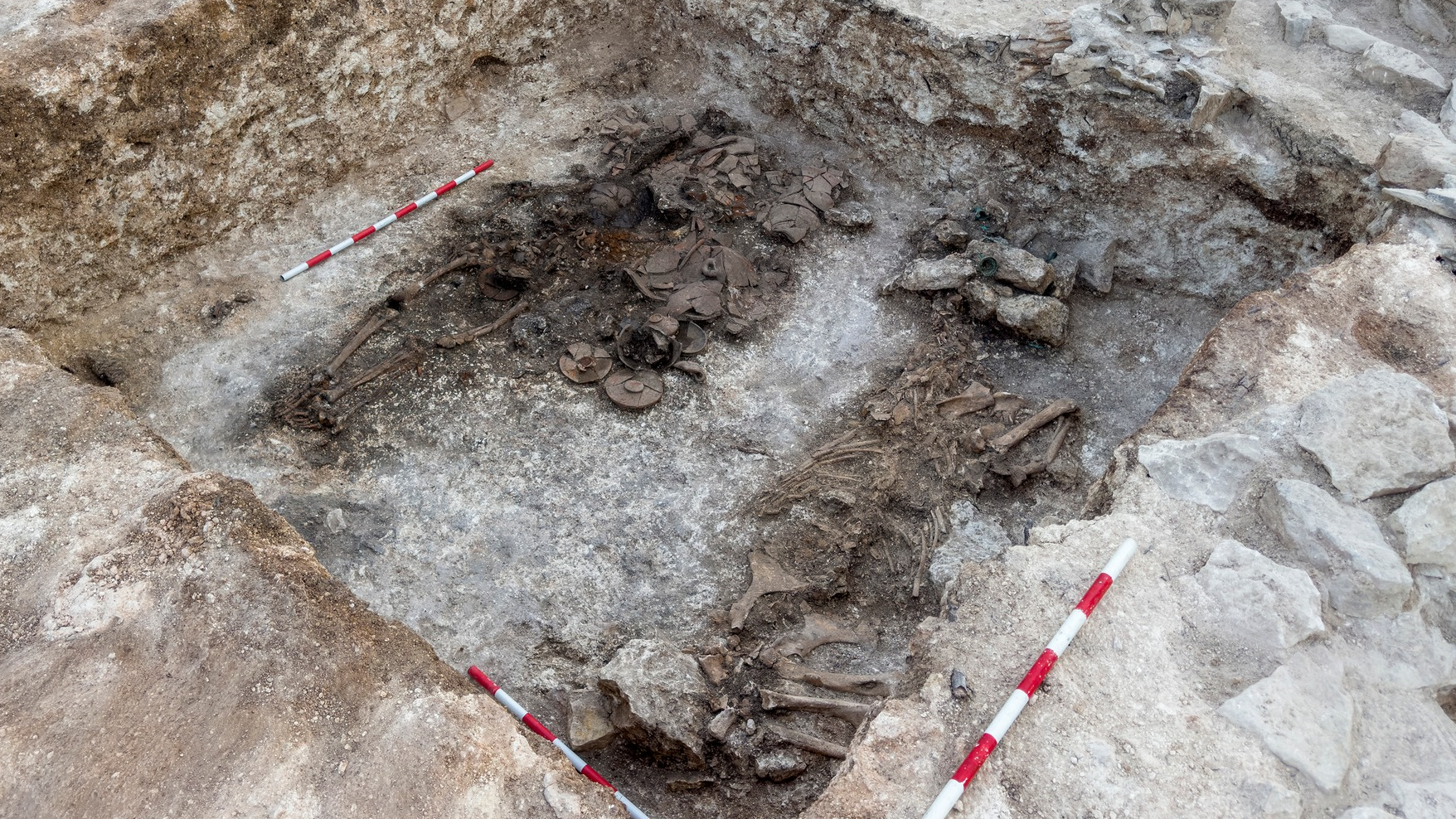
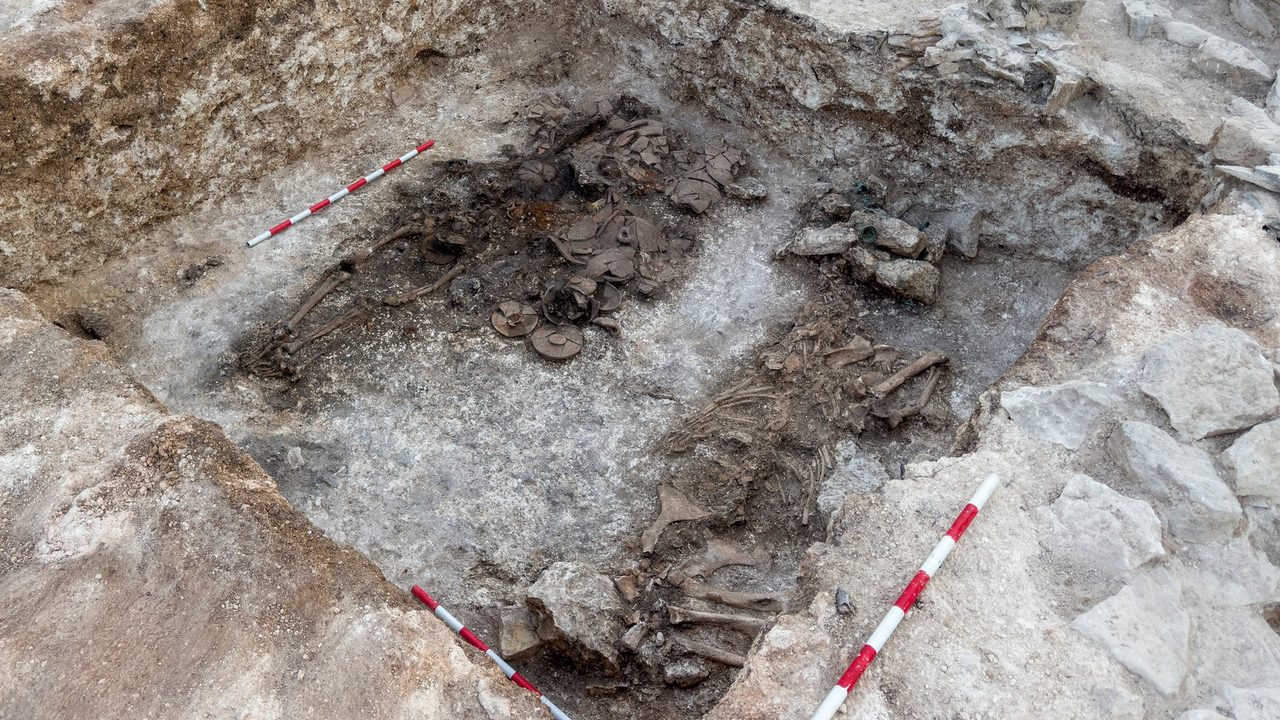
The ancient burial mounds were discovered during digging related to the installation of a solar park in 2024. A team of archaeologists from the Bulgarian Academy of Sciences excavated the burials and found that one contained the bones of a young woman and the other a middle-aged man.


You may like

Both tombs included many gold artifacts, but the man’s grave is the richest ever discovered in Bulgaria, according to a translated social media post from the Municipality of Topolovgrad, where the site is located.

Due to the opulence of the man’s burial, complete with the bones of his war horse, he has been dubbed the Lord of Sakar. He lived during the late Hellenistic period, around 150 to 100 B.C., and may have been a warrior aristocrat, according to the statement. At the beginning of the century, the area of Thrace was partly under Greek rule, but by the end of the century, the Romans had conquered it as part of their empire.

Preliminary research suggests the Lord of Sakar was about 35 to 40 years old when he died. The wreath — made from gilded silver — was found encircling his skull. Other artifacts discovered in his grave included ceramic and glass vessels, iron spears and a shield, silver jewelry and a unique gem-covered knife.

Related: Medieval knight ‘Lancelot’ and his stunning stone tomb found under ice cream shop in Poland

Get the world’s most fascinating discoveries delivered straight to your inbox.

The man’s horse was also honored with numerous grave goods, including a gilded bronze decoration on his harness depicting the mythic hero Hercules defeating a giant. The harness featured other bronze depictions of animals, likely representing more of Hercules’ exploits, as well as a gold headpiece with the image of a snake.

Less is known about the burial mound of the woman, who lived at the beginning of the second century B.C. Archaeologists recovered two pairs of well-preserved leather shoes; a wooden chest covered in gold, silver and jewels; and numerous gold, glass and bronze items. Near this mound was a small sanctuary dated to the second half of the second century B.C., where archaeologists found a large number of regional coins.

The Hellenistic period gold objects were revealed to the public on Aug. 12 at Bulgaria’s National Archaeological Institute with Museum as part of an exhibition called “The Glitter of Hellenistic Gold. The Lord of Sakar.” The exhibition is open through Oct. 17.

Source link

Share. Facebook Twitter Pinterest LinkedIn Tumblr Email
Previous ArticleFlorida looks to extend record number of executions; convicted murderer set to die
Next Article Trump’s legal battle after firing Fed governor
Editor
  • Website

Related Posts

Lifestyle

Breakthrough in experimental light-powered quantum computers could mean scaling them up is now far more viable

May 2, 2026
Lifestyle

Mount Etna is like no other volcano on Earth, representing ‘a new type of volcanism,’ new research reveals

May 2, 2026
Lifestyle

‘Lifelong monogamy’ and ‘half orphans’: DNA analysis reveals clues about life on the Roman frontier after the fall of Rome

May 2, 2026
Add A Comment

Comments are closed.

Categories
  • Entertainment
  • Lifestyle
  • News
  • Sports
  • Tech
  • Travel
Recent Posts
  • Breakthrough in experimental light-powered quantum computers could mean scaling them up is now far more viable
  • Mount Etna is like no other volcano on Earth, representing ‘a new type of volcanism,’ new research reveals
  • ‘Lifelong monogamy’ and ‘half orphans’: DNA analysis reveals clues about life on the Roman frontier after the fall of Rome
  • Can NASA and SpaceX really build a moon base in the next 10 years?
  • Birds in cities appear to dislike men less than women, and experts have no idea why
calendar
May 2026
M T W T F S S
 123
45678910
11121314151617
18192021222324
25262728293031
« Apr    
Recent Posts
  • Breakthrough in experimental light-powered quantum computers could mean scaling them up is now far more viable
  • Mount Etna is like no other volcano on Earth, representing ‘a new type of volcanism,’ new research reveals
  • ‘Lifelong monogamy’ and ‘half orphans’: DNA analysis reveals clues about life on the Roman frontier after the fall of Rome
About

Welcome to Baynard Media, your trusted source for a diverse range of news and insights. We are committed to delivering timely, reliable, and thought-provoking content that keeps you informed
and inspired

Categories
  • Entertainment
  • Lifestyle
  • News
  • Sports
  • Tech
  • Travel
Facebook X (Twitter) Pinterest WhatsApp
  • Contact Us
  • About Us
  • Privacy Policy
  • Disclaimer
  • UNSUBSCRIBE
© 2026 copyrights reserved

Type above and press Enter to search. Press Esc to cancel.