Close Menu
  • Home
  • UNSUBSCRIBE
  • News
  • Lifestyle
  • Tech
  • Entertainment
  • Sports
  • Travel
Facebook X (Twitter) WhatsApp
Trending
  • Chinese medical practitioners used extremely toxic plant as a topical anesthetic 600 years ago, study finds
  • Bead net funerary shroud: A 2,500-year-old beaded veil from Egypt depicting the deceased’s transformation into Osiris
  • Rare genetic disease makes scientists reconsider what the ‘seat of fear’ in the brain really is
  • It’s illegal to repair most of our devices. There’s a surprising reason for that.
  • Jupiter’s Ganymede, the largest moon in the solar system, may be heating up
  • Bizarre patterns on Venus have scientists puzzled
  • Scientists trained an AI model using an IBM quantum computer — and it answered questions correctly that the base model couldn’t
  • How did animals survive the asteroid that killed the dinosaurs?
Facebook X (Twitter) WhatsApp
Baynard Media
  • Home
  • UNSUBSCRIBE
  • News
  • Lifestyle
  • Tech
  • Entertainment
  • Sports
  • Travel
Baynard Media
Home»Lifestyle»Yellowstone’s iconic bison herds have merged into a single entity after 100 years of wandering the park
Lifestyle

Yellowstone’s iconic bison herds have merged into a single entity after 100 years of wandering the park

EditorBy EditorMarch 22, 2025No Comments3 Mins Read
Share Facebook Twitter Pinterest LinkedIn Tumblr Reddit Telegram Email
Share
Facebook Twitter LinkedIn Pinterest Email

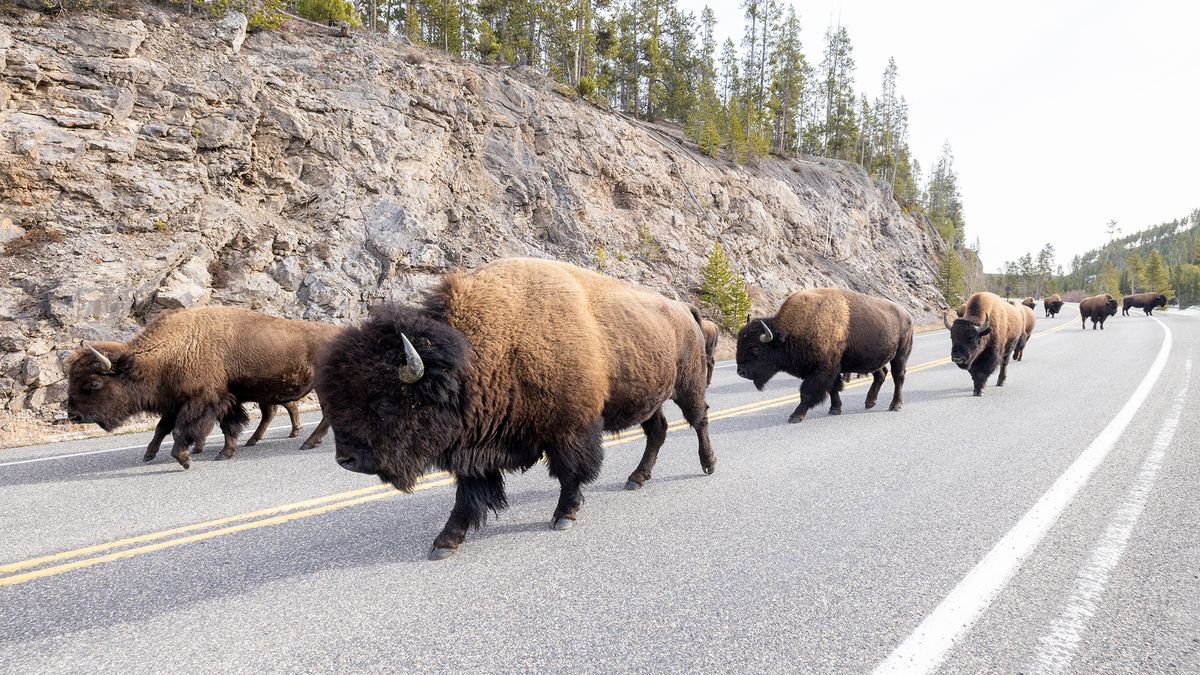
Bison in Yellowstone National Park spent over 100 years as two genetically distinct herds. But now they’re roaming as one interbreeding population, a new study suggests.

Herds of wild bison (Bison bison) have meandered through Yellowstone’s vibrant landscape since prehistoric times. Grazing freely in the expansive grasslands of the park, these are the last free-range bison in the United States.

Although these animals are now abundant in the national park, poaching pushed the local population near extinction by the turn of the 20th century. Park managers tried several methods to help conserve Yellowstone’s bison, halting poaching and even introducing a new herd to the region.

Thanks to conservation efforts, both the native herd and the introduced herd, which consisted of adults from Montana and Texas and calves from Yellowstone’s native herd, were able to thrive. Later genetic analyses showed that descendants of this introduced group remained genetically distinct from the native bison — until now.

In the past 20 years, Yellowstone’s two bison subpopulations have become one large interbreeding herd, according to the new genetic study, published Sept. 13, 2024 in the Journal of Heredity.

“I think the kinds of questions that we ask about this population at Yellowstone can only be answered using genetic technology,” study senior author Jim Derr, a professor at Texas A&M’s College of Veterinary Medicine and Biomedical Sciences, told Live Science. “No observational information is going to help you because you don’t know who’s breeding with who.”

A baby bison calf resting on grass.

Genetic tests revealed Yellowstone’s two breeding herds have become one over the last two decades. (Image credit: National Park Service/Jacob W. Frank)

To reveal the breeding dynamics of the droves of bison in Yellowstone, workers at the National Park Service (NPS) collected tissue samples biopsied from 282 individuals for analysis.

Get the world’s most fascinating discoveries delivered straight to your inbox.

Closely analyzing the bison’s genetic markers gave the researchers clues into their lineage and how the population has changed over time.

Comparing the genetic markers they found in Yellowstone’s current bison population to those from samples taken in the early 2000s, the researchers concluded that the two groups roaming the land interbred frequently enough that they are no longer genetically distinct.

The exact cause of the change isn’t clear, but the researchers say it was likely a gradual shift in behavior over the past 20 or more years. “Part of it is just the bison exploring different areas and figuring their way out and running into each other,” study lead author Sam Stroupe, a postdoctoral research associate at Texas A&M University, told Live Science.

The researchers hope this new analysis will help with ongoing efforts to conserve and manage the herd at Yellowstone.

Staff at the national park have been managing the bison population as two groups since individuals were first brought in from out-of-state in 1907. Having only one herd to look after could make conservation and management of the species easier, the researchers said.

“I think everyone wants bison in Yellowstone National Park to be managed appropriately and to have good stewardship of that herd,” Derr said. “Hopefully we can give them a little bit of insight with this genetic information.”

Source link

Share. Facebook Twitter Pinterest LinkedIn Tumblr Email
Previous Article12-year-old accused of hate crime after 2 Muslim students attacked at Connecticut school
Next Article Celestron Labs CB2000C Advanced Biological Trinocular Microscope review
Editor
  • Website

Related Posts

Lifestyle

Chinese medical practitioners used extremely toxic plant as a topical anesthetic 600 years ago, study finds

May 26, 2026
Lifestyle

Bead net funerary shroud: A 2,500-year-old beaded veil from Egypt depicting the deceased’s transformation into Osiris

May 25, 2026
Lifestyle

Rare genetic disease makes scientists reconsider what the ‘seat of fear’ in the brain really is

May 25, 2026
Add A Comment

Comments are closed.

Categories
  • Entertainment
  • Lifestyle
  • News
  • Sports
  • Tech
  • Travel
Recent Posts
  • Chinese medical practitioners used extremely toxic plant as a topical anesthetic 600 years ago, study finds
  • Bead net funerary shroud: A 2,500-year-old beaded veil from Egypt depicting the deceased’s transformation into Osiris
  • Rare genetic disease makes scientists reconsider what the ‘seat of fear’ in the brain really is
  • It’s illegal to repair most of our devices. There’s a surprising reason for that.
  • Jupiter’s Ganymede, the largest moon in the solar system, may be heating up
calendar
May 2026
M T W T F S S
 123
45678910
11121314151617
18192021222324
25262728293031
« Apr    
Recent Posts
  • Chinese medical practitioners used extremely toxic plant as a topical anesthetic 600 years ago, study finds
  • Bead net funerary shroud: A 2,500-year-old beaded veil from Egypt depicting the deceased’s transformation into Osiris
  • Rare genetic disease makes scientists reconsider what the ‘seat of fear’ in the brain really is
About

Welcome to Baynard Media, your trusted source for a diverse range of news and insights. We are committed to delivering timely, reliable, and thought-provoking content that keeps you informed
and inspired

Categories
  • Entertainment
  • Lifestyle
  • News
  • Sports
  • Tech
  • Travel
Facebook X (Twitter) Pinterest WhatsApp
  • Contact Us
  • About Us
  • Privacy Policy
  • Disclaimer
  • UNSUBSCRIBE
© 2026 copyrights reserved

Type above and press Enter to search. Press Esc to cancel.