Close Menu
  • Home
  • UNSUBSCRIBE
  • News
  • Lifestyle
  • Tech
  • Entertainment
  • Sports
  • Travel
Facebook X (Twitter) WhatsApp
Trending
  • Chinese medical practitioners used extremely toxic plant as a topical anesthetic 600 years ago, study finds
  • Bead net funerary shroud: A 2,500-year-old beaded veil from Egypt depicting the deceased’s transformation into Osiris
  • Rare genetic disease makes scientists reconsider what the ‘seat of fear’ in the brain really is
  • It’s illegal to repair most of our devices. There’s a surprising reason for that.
  • Jupiter’s Ganymede, the largest moon in the solar system, may be heating up
  • Bizarre patterns on Venus have scientists puzzled
  • Scientists trained an AI model using an IBM quantum computer — and it answered questions correctly that the base model couldn’t
  • How did animals survive the asteroid that killed the dinosaurs?
Facebook X (Twitter) WhatsApp
Baynard Media
  • Home
  • UNSUBSCRIBE
  • News
  • Lifestyle
  • Tech
  • Entertainment
  • Sports
  • Travel
Baynard Media
Home»Lifestyle»World’s first light-powered neural processing units (NPUs) could massively reduce energy consumption in AI data centers
Lifestyle

World’s first light-powered neural processing units (NPUs) could massively reduce energy consumption in AI data centers

EditorBy EditorApril 3, 2025No Comments3 Mins Read
Share Facebook Twitter Pinterest LinkedIn Tumblr Reddit Telegram Email
Share
Facebook Twitter LinkedIn Pinterest Email

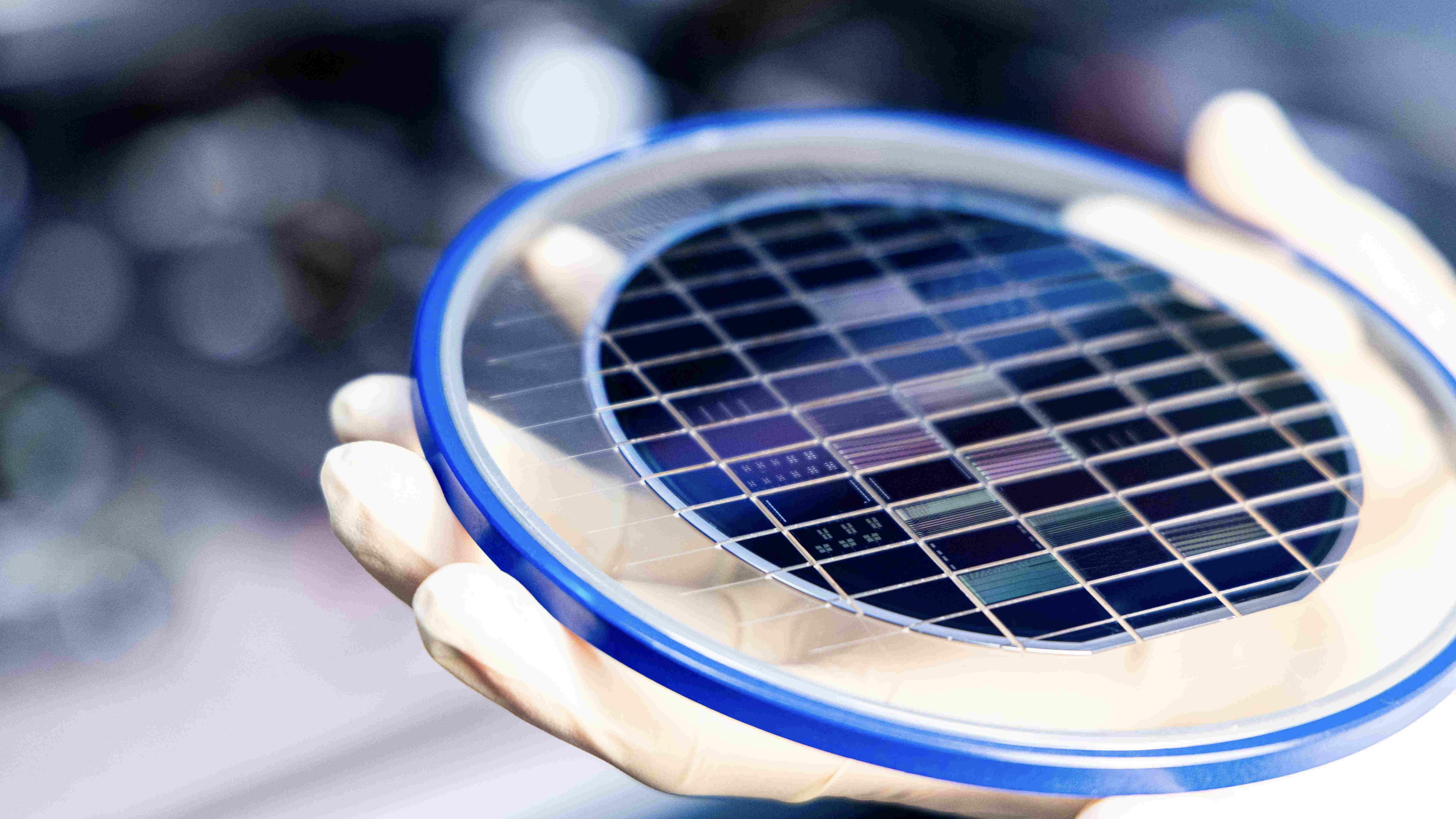
A light-powered computer chip designed to drive artificial intelligence (AI) data centers and make high-performance computing (HPC) more sustainable has entered production.

In a statement published Feb. 24, representatives from quantum computing company Q.ANT said its photonic AI chip could deliver a 30-fold increase in energy efficiency and a 50-fold boost in computing speed compared with conventional, silicon-based computer chips.

Pilot production of the new chip is now underway at IMS Chips in Stuttgart, Germany, where Q.ANT has invested 14 million euros ($15.1 million) to repurpose an existing semiconductor factory to fabricate its new, light-powered chip.

Because the chip is being produced on a repurposed facility instead of a specialist production line, the company believes it can bring the technology to market much more quickly. The chip can also integrate with the existing HPC servers, potentially accelerating adoption, Q.ANT representatives said.

“By 2030, we aim to make our photonic processors a scalable, energy-efficient cornerstone of AI infrastructure,” Michael Förtsch, chief executive of Q.ANT, said in the statement.

Photonic computing

Photonic chips could solve a massive challenge faced by existing processor technology, particularly as AI and other data- and resource-intensive computing applications grow.

Traditional silicon chips control electrical signals using tiny switches called transistors. Photonic chips, by contrast, process data using light particles (photons), which are massless and can travel much faster than electrons do in conventional computer chips.

Get the world’s most fascinating discoveries delivered straight to your inbox.

Photons don’t emit heat in the same way electrons carrying an electrical charge do. As such, using photonic chips in applications involving complex, energy-intensive computations like AI could overcome the limitations of classic silicon chip architecture and thus vastly accelerate the computers’ processing speed and reduce their energy consumption.

Related: ‘Crazy idea’ memory device could slash AI energy consumption by up to 2,500 times

“This comes at a critical time for the computing industry, as the exponential growth of AI and data-intensive applications will soon overwhelm the current data center infrastructure,” Jens Anders, a professor at the University of Stuttgart and director and chief executive of IMS Chips, said in the statement. Anders added that the two companies aimed to establish “a scalable model for energy-efficient computing.”

Q.ANT’s chip is built using thin-film lithium niobate (TFLN), a crystalline compound applied to a wafer that forms the basis of the company’s photonic chip. TFLN is increasingly catching the attention of photonics researchers and quantum scientists for its potential in next-generation computing. When an electric field is applied to the material, it can be used to control the speed and phase of light waves, thereby enabling it to modulate optical signals with extreme precision.

The pilot production line has been set up specifically to manufacture chips that incorporate TFLN, with Q.ANT aiming to fabricate 1,000 wafers per year.

“As AI and data-intensive applications push conventional semiconductor technology to its limits, we need to rethink the way we approach computing at the core,” Förtsch said. “With this pilot line, we are accelerating time to market and laying the foundation for photonic processors to become standard coprocessors in high-performance computing.”

Source link

Share. Facebook Twitter Pinterest LinkedIn Tumblr Email
Previous ArticleThis rare bacterial infection triggers pus-filled sores in the lungs and brain
Next Article How to choose an air purifier: Everything we have learned from years of testing.
Editor
  • Website

Related Posts

Lifestyle

Chinese medical practitioners used extremely toxic plant as a topical anesthetic 600 years ago, study finds

May 26, 2026
Lifestyle

Bead net funerary shroud: A 2,500-year-old beaded veil from Egypt depicting the deceased’s transformation into Osiris

May 25, 2026
Lifestyle

Rare genetic disease makes scientists reconsider what the ‘seat of fear’ in the brain really is

May 25, 2026
Add A Comment

Comments are closed.

Categories
  • Entertainment
  • Lifestyle
  • News
  • Sports
  • Tech
  • Travel
Recent Posts
  • Chinese medical practitioners used extremely toxic plant as a topical anesthetic 600 years ago, study finds
  • Bead net funerary shroud: A 2,500-year-old beaded veil from Egypt depicting the deceased’s transformation into Osiris
  • Rare genetic disease makes scientists reconsider what the ‘seat of fear’ in the brain really is
  • It’s illegal to repair most of our devices. There’s a surprising reason for that.
  • Jupiter’s Ganymede, the largest moon in the solar system, may be heating up
calendar
May 2026
M T W T F S S
 123
45678910
11121314151617
18192021222324
25262728293031
« Apr    
Recent Posts
  • Chinese medical practitioners used extremely toxic plant as a topical anesthetic 600 years ago, study finds
  • Bead net funerary shroud: A 2,500-year-old beaded veil from Egypt depicting the deceased’s transformation into Osiris
  • Rare genetic disease makes scientists reconsider what the ‘seat of fear’ in the brain really is
About

Welcome to Baynard Media, your trusted source for a diverse range of news and insights. We are committed to delivering timely, reliable, and thought-provoking content that keeps you informed
and inspired

Categories
  • Entertainment
  • Lifestyle
  • News
  • Sports
  • Tech
  • Travel
Facebook X (Twitter) Pinterest WhatsApp
  • Contact Us
  • About Us
  • Privacy Policy
  • Disclaimer
  • UNSUBSCRIBE
© 2026 copyrights reserved

Type above and press Enter to search. Press Esc to cancel.