Close Menu
  • Home
  • UNSUBSCRIBE
  • News
  • Lifestyle
  • Tech
  • Entertainment
  • Sports
  • Travel
Facebook X (Twitter) WhatsApp
Trending
  • NASA’s Perseverance rover finds record-breaking trove of carbon molecules at Bright Angel rock formation on Mars
  • Some of the last surviving Neanderthals were remarkably diverse ‪—‬ suggesting inbreeding didn’t doom them
  • 'This is the next jump in technology': World's first sub-1nm chip keeps Moore's Law alive a little longer
  • Scientists find thousands of earthquakes in a perfectly straight line in Alaska, revealing a hidden ‘microplate’
  • ‘You can’t patch your way out of it’: Cheap AI worm can spread between devices without human guidance — but how did scientists create it?
  • Diagnostic dilemma: After taking a medicine for years, a man suddenly had weird changes in his taste that made food disgusting
  • ‘A weird result from an already weird hominin’: Archaeologists discover all Homo naledi skeletons found in South African cave are female
  • China’s Einstein Probe detected a mysterious cosmic explosion — and scientists have no idea what caused it
Facebook X (Twitter) WhatsApp
Baynard Media
  • Home
  • UNSUBSCRIBE
  • News
  • Lifestyle
  • Tech
  • Entertainment
  • Sports
  • Travel
Baynard Media
Home»Lifestyle»Why do iguanas fall from trees in Florida?
Lifestyle

Why do iguanas fall from trees in Florida?

EditorBy EditorDecember 21, 2024No Comments3 Mins Read
Share Facebook Twitter Pinterest LinkedIn Tumblr Reddit Telegram Email
Share
Facebook Twitter LinkedIn Pinterest Email

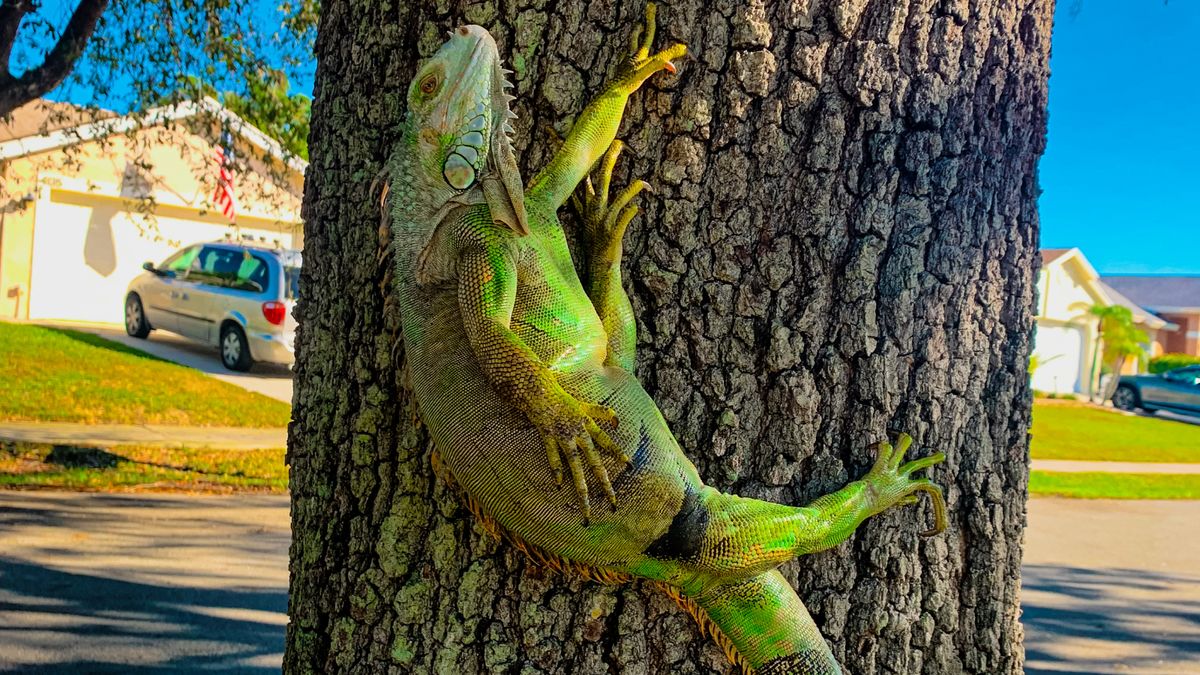
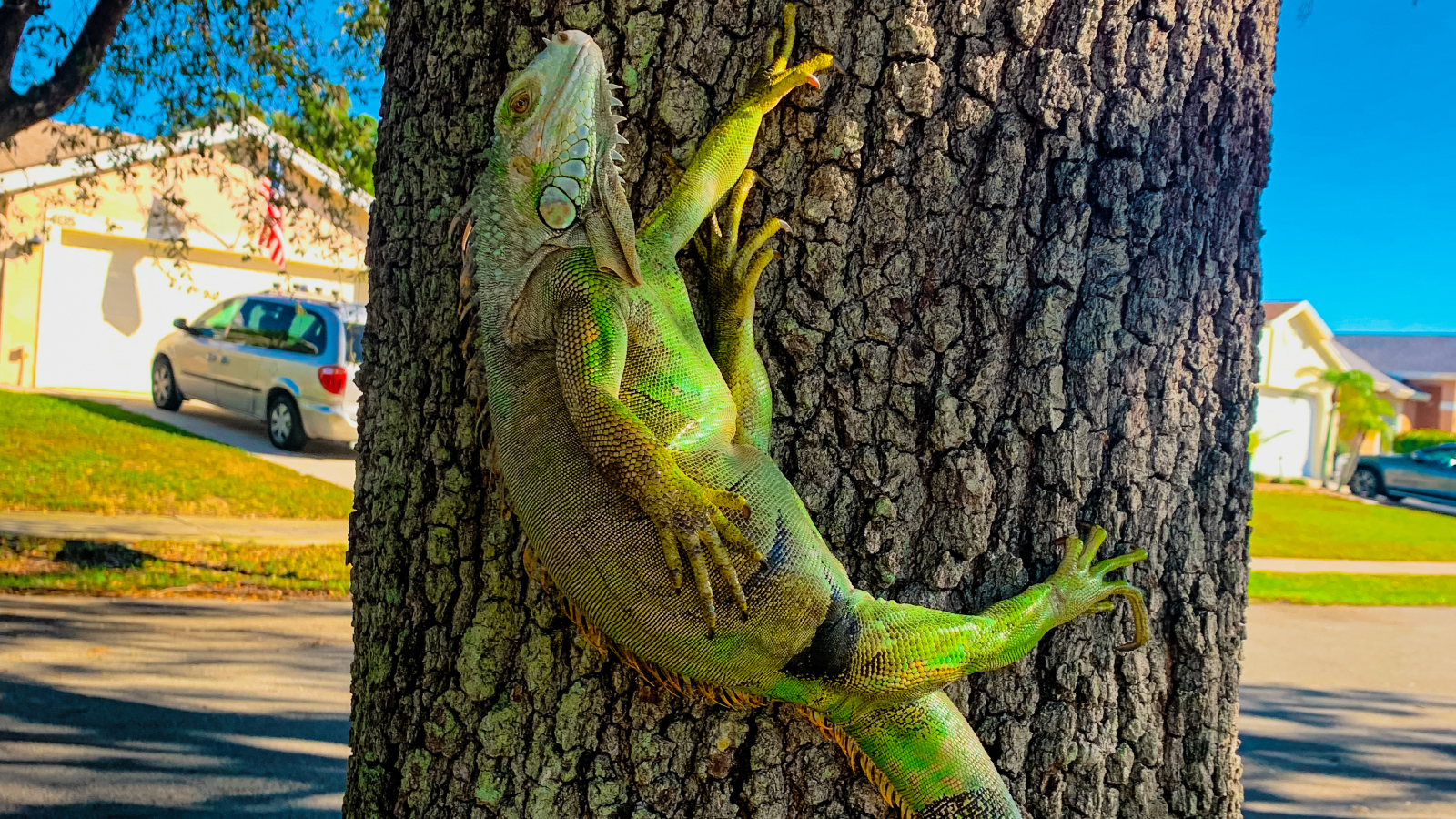
Iguanas falling from trees during cold weather has become so common in Florida, it’s even been included in weather forecasts. But why do these reptiles react this way to the cold?

Since they’re cold-blooded, green iguanas (Iguana iguana) can struggle to maintain their body temperature in colder weather, putting them in a temporary torpor state. This is a type of paralysis that can cause them to lose muscle control — so they fall from their perches. The paralysis typically occurs when the weather dips into the 40s Fahrenheit, said Joe Wasilewski, a conservation biologist at the University of Florida. The cold weather affects other non-native reptiles in Florida too, like pythons and crocodiles, which often can’t survive when the temperature drops.

Non-native species

The original native range of green iguanas extends from southern Mexico to central Brazil and Bolivia, so their optimal body temperature is between about 85 and 95 degrees Fahrenheit (29 to 35 degrees Celsius), Wasilewski told Live Science. When the temperature drops below 50 F (10 F), the iguanas’ metabolism slows down, and they start falling from trees once the temperature hits the low 40s.

“Their body metabolism is built for living in a tropical area,” Wasilewski said. “They’ve been placed in these habitats, south Florida for instance… where once or twice a year we get a cold snap.”

Expanding range

The phenomenon has been more noticeable recently due to booming iguana populations. Iguanas were introduced to Florida in the 1960s, and their populations have grown since the 1990s, partly due to a lack of natural predators.

The falling iguana phenomenon is well known in South Florida because the green iguana population is growing, but also because Florida is likely the northernmost extent of their invasive range, says Wasilewski — so it’s one of the few places where iguanas mostly thrive, but sometimes experience cold weather. This might change though, with temperatures warming due to climate change.

“I’m getting more and more reports of counties north of where their northern extent is, starting to see [iguanas],” said Wasilewski. “As the weather gets warmer they’re going to distribute themselves to more northern counties; however, those more northern counties are going to have more cold snaps than southern Florida, and I don’t think they’ll be able to survive.”

Get the world’s most fascinating discoveries delivered straight to your inbox.

Typically, paralyzed iguanas will come to their senses as the temperature warms, but the falling iguanas can be a hazard, injuring people or damaging cars. The National Weather Service has issued falling iguana warnings, encouraging people to be aware of their surroundings — and to leave a cold-stunned iguana alone if they come across one.

“Staff with the FWC’s Nonnative Fish and Wildlife Program reminds the public that if they encounter a cold stunned iguana, they should not bring it into their homes,” Lisa Thompson, a spokesperson for the Florida Fish & Wildlife Conservation Commission, told Live Science in an email. “Iguanas are wild animals and once they recover and warm-up, they could act defensively.”

Wasilewski recounted once being called to collect cold-stunned iguanas, transporting them in a box while the weather warmed up, and later opening the box to find it full of extremely active and jumping iguanas.

“If nobody bothers them… chances are, they’re gonna warm up and scurry right back up the tree,” Wasileski said.

Source link

Share. Facebook Twitter Pinterest LinkedIn Tumblr Email
Previous ArticleThe best last-minute gifts you can find on Amazon
Next Article Best Garmin deal: Save $100 on Garmin vívoactive 5
Editor
  • Website

Related Posts

Lifestyle

NASA’s Perseverance rover finds record-breaking trove of carbon molecules at Bright Angel rock formation on Mars

June 25, 2026
Lifestyle

Some of the last surviving Neanderthals were remarkably diverse ‪—‬ suggesting inbreeding didn’t doom them

June 25, 2026
Lifestyle

'This is the next jump in technology': World's first sub-1nm chip keeps Moore's Law alive a little longer

June 25, 2026
Add A Comment

Comments are closed.

Categories
  • Entertainment
  • Lifestyle
  • News
  • Sports
  • Tech
  • Travel
Recent Posts
  • NASA’s Perseverance rover finds record-breaking trove of carbon molecules at Bright Angel rock formation on Mars
  • Some of the last surviving Neanderthals were remarkably diverse ‪—‬ suggesting inbreeding didn’t doom them
  • 'This is the next jump in technology': World's first sub-1nm chip keeps Moore's Law alive a little longer
  • Scientists find thousands of earthquakes in a perfectly straight line in Alaska, revealing a hidden ‘microplate’
  • ‘You can’t patch your way out of it’: Cheap AI worm can spread between devices without human guidance — but how did scientists create it?
calendar
June 2026
M T W T F S S
1234567
891011121314
15161718192021
22232425262728
2930  
« May    
Recent Posts
  • NASA’s Perseverance rover finds record-breaking trove of carbon molecules at Bright Angel rock formation on Mars
  • Some of the last surviving Neanderthals were remarkably diverse ‪—‬ suggesting inbreeding didn’t doom them
  • 'This is the next jump in technology': World's first sub-1nm chip keeps Moore's Law alive a little longer
About

Welcome to Baynard Media, your trusted source for a diverse range of news and insights. We are committed to delivering timely, reliable, and thought-provoking content that keeps you informed
and inspired

Categories
  • Entertainment
  • Lifestyle
  • News
  • Sports
  • Tech
  • Travel
Facebook X (Twitter) Pinterest WhatsApp
  • Contact Us
  • About Us
  • Privacy Policy
  • Disclaimer
  • UNSUBSCRIBE
© 2026 copyrights reserved

Type above and press Enter to search. Press Esc to cancel.