Close Menu
  • Home
  • UNSUBSCRIBE
  • News
  • Lifestyle
  • Tech
  • Entertainment
  • Sports
  • Travel
Facebook X (Twitter) WhatsApp
Trending
  • New robotic heart mimics common, mysterious condition to help researchers study it
  • Canon EOS R6 III review: A wildlife wonder
  • Medieval babies and adults buried together in Sweden were not related, archaeologists discover — raising big questions about early Christian burial practices
  • NASA is creating a fifth state of matter on the ISS, thanks to an upgrade to a mini-fridge-sized quantum lab
  • New sodium metal battery design charges in just 4 minutes and retains its capacity for years
  • Quantum computing wielded to create extremely rare material critical to nuclear fusion
  • Scientists build tiny ‘diving suit’ for cockroaches, turning them into search-and-rescue cyborgs
  • Physicists develop the first working model of quantum mechanics using only ‘real’ numbers
Facebook X (Twitter) WhatsApp
Baynard Media
  • Home
  • UNSUBSCRIBE
  • News
  • Lifestyle
  • Tech
  • Entertainment
  • Sports
  • Travel
Baynard Media
Home»Lifestyle»What’s the difference between an active, dormant and extinct volcano?
Lifestyle

What’s the difference between an active, dormant and extinct volcano?

EditorBy EditorDecember 31, 2024No Comments3 Mins Read
Share Facebook Twitter Pinterest LinkedIn Tumblr Reddit Telegram Email
Share
Facebook Twitter LinkedIn Pinterest Email

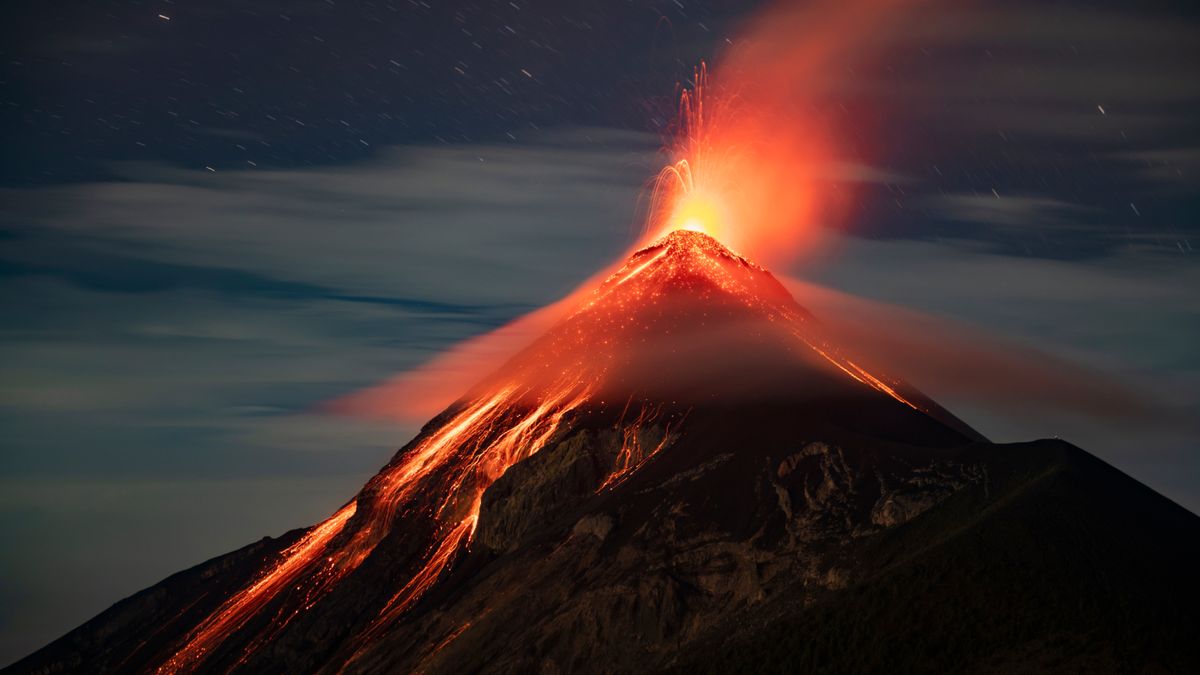
Volcanoes don’t operate on human timescales. They may go quiet for centuries, only to rumble to life with devastating eruptions. Their eruptions may last for days or decades, and it’s often hard to predict in advance how long an event will last.

Officially, volcanologists consider a volcano active if it has erupted sometime during the Holocene Epoch, which started 11,700 years ago at the end of the last ice age. A volcano that hasn’t erupted in the Holocene is considered extinct.

This geologic-timescale-based distinction is somewhat arbitrary, Ben Kennedy, a volcanologist at the University of Canterbury in New Zealand, told Live Science. Volcanoes don’t know or care when the Holocene started. But there is a good, physical reason to consider a volcano extinct after it’s been quiet for more than 11,000 years, Kennedy said.

That time period is “probably roughly on the same timescale as you could keep a magma chamber underground filled with some liquid in it that could erupt,” he said. After so many years, most magma chambers and the volcanic plumbing feeding them will have crystallized into solid rock, he said, making them incapable of eruption.

Related: ‘This could be the origin of the Atlantis legend’: Mountain that sank beneath the waves discovered off Canary Islands

There is an exception, however: very large “supervolcanoes” with giant magma chambers. These are often clearly active volcanic systems that haven’t erupted in the Holocene. The Yellowstone Caldera, for example, has moving magma underpinning it, causing small earthquakes and heating numerous hot springs and geysers. But the last active eruption was 70,000 years ago, according to the U.S. Geological Survey.

Aerial view of Grand Prismatic Spring.

(Image credit: Holger Leue/Getty Images)

“We often call those systems ‘restless,'” Kennedy said. “It’s staying hot, there’s a little bit of magma there and it’s doing something. It’s not necessarily erupting.”

Get the world’s most fascinating discoveries delivered straight to your inbox.

What are ‘dormant’ volcanoes?

An even fuzzier term is “dormant.” This wording is more colloquial than scientific, Kennedy said, because dormant could refer to an active volcano that isn’t currently erupting but could rumble to life any minute. Or it could refer to a very old volcano that’s probably never going to erupt again, but hasn’t passed the 11,000-year threshold to official extinction. “I think we use ‘dormant’ as that overlapping term, but it’s not useful,” Kennedy said.

Many active volcanoes have long dormant periods. Mount St. Helens in Washington, for example, erupted between 1800 and 1857, then went quiet before dramatically blowing its top in 1980. The oft-snowcapped Mount Taranaki in New Zealand hasn’t erupted since 1800 but is expected to do so again — the mountain’s geological history suggests it experiences large eruptions every 500 years or so, with smaller eruptions every 90 years, according to the country’s geological research institute, GNS Science.

Perhaps one of the most dramatic recent volcanic awakenings occurred in Iceland on the Reykjanes Peninsula beginning in December 2023. The Sundhnúkur crater row in western Iceland, which hadn’t been active for 800 years, suddenly began to open a series of rifts, releasing fiery lava flows. Based on the geologic history of the region, volcanologists expect that the volcanic system will continue to erupt for centuries.

Source link

Share. Facebook Twitter Pinterest LinkedIn Tumblr Email
Previous ArticleKristin Cavallari Reveals She’s Dating Athlete After Mark Estes Split
Next Article Grant Bradburn: Glamorgan Cricket sack head coach after allegations of inappropriate behaviour | Cricket News
Editor
  • Website

Related Posts

Lifestyle

New robotic heart mimics common, mysterious condition to help researchers study it

July 11, 2026
Lifestyle

Canon EOS R6 III review: A wildlife wonder

July 10, 2026
Lifestyle

Medieval babies and adults buried together in Sweden were not related, archaeologists discover — raising big questions about early Christian burial practices

July 10, 2026
Add A Comment

Comments are closed.

Categories
  • Entertainment
  • Lifestyle
  • News
  • Sports
  • Tech
  • Travel
Recent Posts
  • New robotic heart mimics common, mysterious condition to help researchers study it
  • Canon EOS R6 III review: A wildlife wonder
  • Medieval babies and adults buried together in Sweden were not related, archaeologists discover — raising big questions about early Christian burial practices
  • NASA is creating a fifth state of matter on the ISS, thanks to an upgrade to a mini-fridge-sized quantum lab
  • New sodium metal battery design charges in just 4 minutes and retains its capacity for years
calendar
July 2026
M T W T F S S
 12345
6789101112
13141516171819
20212223242526
2728293031  
« Jun    
Recent Posts
  • New robotic heart mimics common, mysterious condition to help researchers study it
  • Canon EOS R6 III review: A wildlife wonder
  • Medieval babies and adults buried together in Sweden were not related, archaeologists discover — raising big questions about early Christian burial practices
About

Welcome to Baynard Media, your trusted source for a diverse range of news and insights. We are committed to delivering timely, reliable, and thought-provoking content that keeps you informed
and inspired

Categories
  • Entertainment
  • Lifestyle
  • News
  • Sports
  • Tech
  • Travel
Facebook X (Twitter) Pinterest WhatsApp
  • Contact Us
  • About Us
  • Privacy Policy
  • Disclaimer
  • UNSUBSCRIBE
© 2026 copyrights reserved

Type above and press Enter to search. Press Esc to cancel.