Close Menu
  • Home
  • UNSUBSCRIBE
  • News
  • Lifestyle
  • Tech
  • Entertainment
  • Sports
  • Travel
Facebook X (Twitter) WhatsApp
Trending
  • Denisovan DNA influences the immune systems of modern Oceanians — but researchers aren’t sure why
  • ‘They don’t bear the costs when it comes to pollution’: The environmental costs of AI are astounding, and the world’s poorest will pay for it as the top 1% profits
  • ‘River in the Sky’: China’s doomed plan to create a ‘cloud seeding corridor’ tells us how far the country will go to solve its climate crisis
  • ‘They reliably chose the statistically more favorable option’: A crow researcher explains how these winged geniuses process numbers, and what it could reveal about human math smarts
  • Atlantic ‘cold blob’ is responsible for shifts in the Indian summer monsoon that threaten over 1 billion people
  • China’s secretive Tianwen-2 mission is about to attempt a daring landing on near-Earth asteroid Kamo’oalewa
  • Oldest known plague victims found in a 5,500-year-old burial ground in Siberia — and many of them were children
  • ‘This was a pioneering achievement’: Stone Age people put up posts to observe the solstices near Stonehenge long before the stones of sacred site were placed
Facebook X (Twitter) WhatsApp
Baynard Media
  • Home
  • UNSUBSCRIBE
  • News
  • Lifestyle
  • Tech
  • Entertainment
  • Sports
  • Travel
Baynard Media
Home»Lifestyle»What are the signs that nature is telling us?’ Scientists are triggering earthquakes in the Alps to find out what happens before one hits
Lifestyle

What are the signs that nature is telling us?’ Scientists are triggering earthquakes in the Alps to find out what happens before one hits

EditorBy EditorNovember 3, 2025No Comments4 Mins Read
Share Facebook Twitter Pinterest LinkedIn Tumblr Reddit Telegram Email
Share
Facebook Twitter LinkedIn Pinterest Email

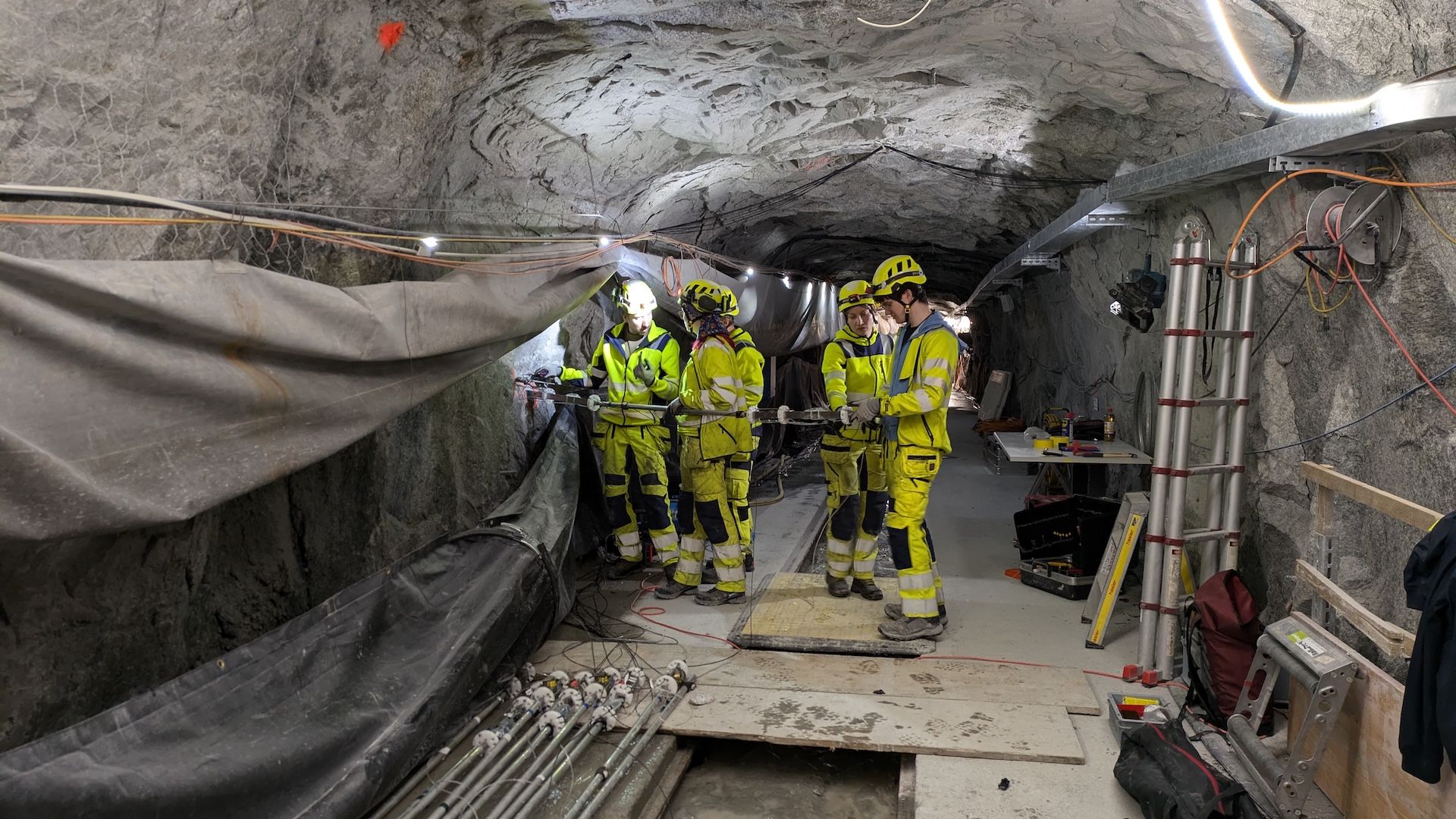
Scientists are deliberately triggering earthquakes from a tunnel deep beneath the Alps. Although it may sound like something out of a James Bond movie, the goal isn’t turmoil and destruction. Rather, researchers with the Fault Activation and Earthquake Rupture (FEAR) project are looking for ways to determine the danger of an earthquake before it strikes.

Despite an increasing amount of monitoring on fault lines worldwide, researchers still don’t understand the immediate triggers of earthquakes. Nor do they know why some ruptures happen on short segments of fault lines while others run for many miles, causing greater destruction. Right now, geoscientists are limited to studying these events only after they happen, Domenico Giardini, professor of seismology and geodynamics at ETH Zürich, told Live Science.

“What are the signs that nature is telling us?” Giardini said. “Invariably, they become clear after the quake, not before, so we are trying to understand much better how to see the signs.”


You may like

That means they must trigger real earthquakes in controlled conditions with thousands of monitors right on a fault — not an easy prospect. But Giardini and his colleagues are taking advantage of the massive power of the Alps themselves. These mountains, on the border of Switzerland and Italy, are deeply faulted; the zigzagging networks of cracks beneath them are the legacy of millions of years of tectonics. Just the compressional force of the towering mountains above is enough to fracture the rocks 0.6 to 1.2 miles (1 to 2 kilometers) below the surface.

A researcher monitors seismological data on multiple screens

A researcher monitors data from the experiments. (Image credit: Bedretto Underground Laboratory for Geosciences and Geoenergies)

The rocks on the sides of these faults do occasionally slip, giving off mostly small quakes. Using a preexisting tunnel that was once used in the construction of a railway project, the FEAR project is getting up close and personal with one of these faults and pumping water into them to trigger it to release earthquakes on a convenient time schedule.

“They would have taken place sooner or later in the history of the Alps, but we make sure they happen next week,” Giardini said.

The process is similar to what happens when oil and gas companies inject wastewater from wells into faulted areas in places like Oklahoma and Texas. This water lubricates the faults, thus reducing the friction required for them to rupture.

The difference is that Giardini and his team have a dense network of seismometers and accelerometers right on the fault, so they can measure exactly how it moves in response to this decrease in friction. The team has already triggered hundreds of thousands of quakes up to magnitude zero. (Because earthquakes are measured on a nonlinear, logarithmic scale, it’s possible to have very small quakes with a magnitude of zero or even with negative magnitudes.)

Next week, the researchers will begin injecting hot water into the fault to see how temperature affects the evolution of an earthquake. And in March, Giardini said, they’ll start triggering earthquakes up to magnitude 1.

The idea is that if they can figure out what parameters trigger a quake of a certain size — if they can, in essence, trigger a quake of whatever size they desire — they’ll eventually be able to measure a dangerous fault in the real world before it breaks and calculate the kinds of stresses needed to trigger a quake of a certain size on that fault.

“A couple years ago [in February 2023], there was a very large quake on the border between Syria and Turkey,” Giardini said. “We know that fault will continue toward the south and toward the north. We want to try to understand, is the next quake going to be a 7 or an 8 or 8.5?”

Already, he said, certain parameters, like the amount of strain in the rocks outside the fault, are proving to be important. The researchers are also starting to understand more about how quakes jump from one fault to a neighboring fault.

“We are seeing examples that we produce ourselves underground that look very much like what happens in nature,” Giardini said.

Source link

Share. Facebook Twitter Pinterest LinkedIn Tumblr Email
Previous ArticleCuisinart’s Friends and Family Sale: Save up to 40% on air fryers, grill and griddles, stand mixers and more
Next Article Two girls thrown off of Ferris wheel at Louisiana fair
Editor
  • Website

Related Posts

Lifestyle

Denisovan DNA influences the immune systems of modern Oceanians — but researchers aren’t sure why

June 18, 2026
Lifestyle

‘They don’t bear the costs when it comes to pollution’: The environmental costs of AI are astounding, and the world’s poorest will pay for it as the top 1% profits

June 18, 2026
Lifestyle

‘River in the Sky’: China’s doomed plan to create a ‘cloud seeding corridor’ tells us how far the country will go to solve its climate crisis

June 18, 2026
Add A Comment

Comments are closed.

Categories
  • Entertainment
  • Lifestyle
  • News
  • Sports
  • Tech
  • Travel
Recent Posts
  • Denisovan DNA influences the immune systems of modern Oceanians — but researchers aren’t sure why
  • ‘They don’t bear the costs when it comes to pollution’: The environmental costs of AI are astounding, and the world’s poorest will pay for it as the top 1% profits
  • ‘River in the Sky’: China’s doomed plan to create a ‘cloud seeding corridor’ tells us how far the country will go to solve its climate crisis
  • ‘They reliably chose the statistically more favorable option’: A crow researcher explains how these winged geniuses process numbers, and what it could reveal about human math smarts
  • Atlantic ‘cold blob’ is responsible for shifts in the Indian summer monsoon that threaten over 1 billion people
calendar
June 2026
M T W T F S S
1234567
891011121314
15161718192021
22232425262728
2930  
« May    
Recent Posts
  • Denisovan DNA influences the immune systems of modern Oceanians — but researchers aren’t sure why
  • ‘They don’t bear the costs when it comes to pollution’: The environmental costs of AI are astounding, and the world’s poorest will pay for it as the top 1% profits
  • ‘River in the Sky’: China’s doomed plan to create a ‘cloud seeding corridor’ tells us how far the country will go to solve its climate crisis
About

Welcome to Baynard Media, your trusted source for a diverse range of news and insights. We are committed to delivering timely, reliable, and thought-provoking content that keeps you informed
and inspired

Categories
  • Entertainment
  • Lifestyle
  • News
  • Sports
  • Tech
  • Travel
Facebook X (Twitter) Pinterest WhatsApp
  • Contact Us
  • About Us
  • Privacy Policy
  • Disclaimer
  • UNSUBSCRIBE
© 2026 copyrights reserved

Type above and press Enter to search. Press Esc to cancel.