Close Menu
  • Home
  • UNSUBSCRIBE
  • News
  • Lifestyle
  • Tech
  • Entertainment
  • Sports
  • Travel
Facebook X (Twitter) WhatsApp
Trending
  • Remnants of ancient galaxy called ‘Loki’ found inside the Milky Way
  • ‘Exceptional’ drilled tooth reveals Neanderthals practiced dentistry in Siberia 60,000 years ago
  • The CDC has taken a back seat in the global hantavirus response — and that could be a problem in future outbreaks, epidemiologist says
  • SpaceX prepares to launch Starship V3, the tallest and most powerful rocket ever built
  • Pollution may fuel depression, anxiety and other mental health problems, emerging research suggests
  • Hantavirus updates: American doctor on cruise speaks out from quarantine; unrelated potential case appears in Illinois
  • Diagnostic dilemma: An infant’s brown eyes turned indigo after COVID antiviral treatment
  • AI self-replication hacks ‘no longer purely theoretical,’ study finds —‬ ‪but experts say it’s too soon to panic
Facebook X (Twitter) WhatsApp
Baynard Media
  • Home
  • UNSUBSCRIBE
  • News
  • Lifestyle
  • Tech
  • Entertainment
  • Sports
  • Travel
Baynard Media
Home»Lifestyle»Whale ‘graveyard’ revealed by rapid retreat of an Arctic glacier
Lifestyle

Whale ‘graveyard’ revealed by rapid retreat of an Arctic glacier

EditorBy EditorJuly 25, 2025No Comments2 Mins Read
Share Facebook Twitter Pinterest LinkedIn Tumblr Reddit Telegram Email
Share
Facebook Twitter LinkedIn Pinterest Email

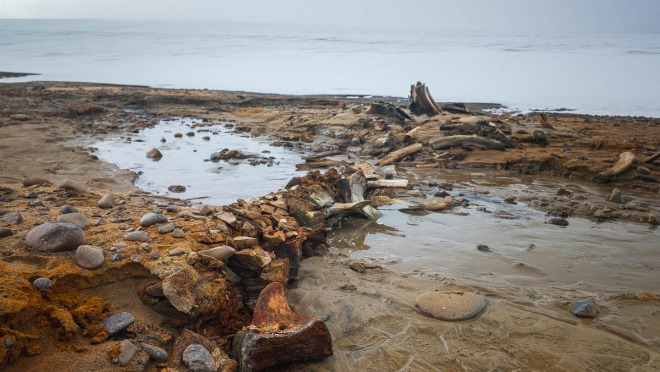
Scientists have discovered that a glacier in the Russian Arctic is retreating extremely quickly — and its rapid retreat has exposed a graveyard of ancient whale bones.

The research expedition landed on Wilczek Island, in the far north of Russia, earlier this year to study permafrost, according to a statement from the Arctic and Antarctic Research Institute (AARI) in Russia.

Using satellite imagery, the team compared current and past positions of the glacier, Nikita Demidov, an AARI geologist, said in the statement. The scientists found that the ice cap on the island had split into two parts over a period of less than 20 years.


You may like

This glacier’s decline is part of a wider shift — a study from February found that, since 2000, glaciers have lost about 5% of their ice globally.

Related: Dramatic transformation of the Arctic landscape may be permanent

Image 1 of 2

Whale bones sit on dirt.
(Image credit: Nikita Demidov, AARI, Alexander Ermolov)

The whale “graveyard” was revealed by the glacier’s retreat.

Two researchers look over a pile of whale remains.
(Image credit: Nikita Demidov, AARI, Alexander Ermolov)

Satellite imagery showed that the glacier split into two parts in less than 20 years, exposing whale remains where it once stood.


The schism in the ice revealed several square miles of the island’s surface, which held a large number of whale bones. Some of the skeletons are well preserved. Demidov noted that the bones are worst preserved near the seashore, where they have had longer to thaw, and are best preserved closest to the glacier.

“The paleontological find indicates an episode of extremely rapid sea level change in the area of the northernmost archipelago of Eurasia, which occurred in the last few thousand years,” he said.

Get the world’s most fascinating discoveries delivered straight to your inbox.

The expedition is being conducted from an Russian ice-strengthened vessel called Professor Molchanov and will continue through August, according to Russian state news agency TASS.

Source link

Share. Facebook Twitter Pinterest LinkedIn Tumblr Email
Previous ArticleEx-Rep George Santos posts theatrical farewell before starting 7-year prison term
Next Article Former Jan. 6 prosecutor and ex-DOJ employees sue Trump administration over firings
Editor
  • Website

Related Posts

Lifestyle

Remnants of ancient galaxy called ‘Loki’ found inside the Milky Way

May 14, 2026
Lifestyle

‘Exceptional’ drilled tooth reveals Neanderthals practiced dentistry in Siberia 60,000 years ago

May 14, 2026
Lifestyle

The CDC has taken a back seat in the global hantavirus response — and that could be a problem in future outbreaks, epidemiologist says

May 13, 2026
Add A Comment

Comments are closed.

Categories
  • Entertainment
  • Lifestyle
  • News
  • Sports
  • Tech
  • Travel
Recent Posts
  • Remnants of ancient galaxy called ‘Loki’ found inside the Milky Way
  • ‘Exceptional’ drilled tooth reveals Neanderthals practiced dentistry in Siberia 60,000 years ago
  • The CDC has taken a back seat in the global hantavirus response — and that could be a problem in future outbreaks, epidemiologist says
  • SpaceX prepares to launch Starship V3, the tallest and most powerful rocket ever built
  • Pollution may fuel depression, anxiety and other mental health problems, emerging research suggests
calendar
May 2026
M T W T F S S
 123
45678910
11121314151617
18192021222324
25262728293031
« Apr    
Recent Posts
  • Remnants of ancient galaxy called ‘Loki’ found inside the Milky Way
  • ‘Exceptional’ drilled tooth reveals Neanderthals practiced dentistry in Siberia 60,000 years ago
  • The CDC has taken a back seat in the global hantavirus response — and that could be a problem in future outbreaks, epidemiologist says
About

Welcome to Baynard Media, your trusted source for a diverse range of news and insights. We are committed to delivering timely, reliable, and thought-provoking content that keeps you informed
and inspired

Categories
  • Entertainment
  • Lifestyle
  • News
  • Sports
  • Tech
  • Travel
Facebook X (Twitter) Pinterest WhatsApp
  • Contact Us
  • About Us
  • Privacy Policy
  • Disclaimer
  • UNSUBSCRIBE
© 2026 copyrights reserved

Type above and press Enter to search. Press Esc to cancel.