Close Menu
  • Home
  • UNSUBSCRIBE
  • News
  • Lifestyle
  • Tech
  • Entertainment
  • Sports
  • Travel
Facebook X (Twitter) WhatsApp
Trending
  • Lemur used in ‘lemur yoga’ session dies of human herpesvirus, study finds
  • ‘A fine line between reducing stigma and trivialising conditions’: Social media, self-diagnosis and the glamorization of ADHD
  • New 2D memory device stores data on just a single electron
  • Before we ban kids from social media completely, here’s what we should try first | Jonathan Bellack and Mariana Olaizola Rosenblat
  • Scientists uncover a better way to beat ‘the bends’ — using deep-diving pigs
  • Mars may have been losing its water more than 4 billion years ago, oldest-known Martian meteorite suggests
  • ‘The lance head was still inside the pelvis’: Mass grave found in Austria may hold casualties of unknown ancient Roman battle
  • ‘Full-on berserker mode’: Archaeologists solve mystery of medieval soldiers with gruesome square holes in their skull
Facebook X (Twitter) WhatsApp
Baynard Media
  • Home
  • UNSUBSCRIBE
  • News
  • Lifestyle
  • Tech
  • Entertainment
  • Sports
  • Travel
Baynard Media
Home»Lifestyle»We finally know where the Yellowstone volcano will erupt next
Lifestyle

We finally know where the Yellowstone volcano will erupt next

EditorBy EditorJanuary 10, 2025No Comments3 Mins Read
Share Facebook Twitter Pinterest LinkedIn Tumblr Reddit Telegram Email
Share
Facebook Twitter LinkedIn Pinterest Email

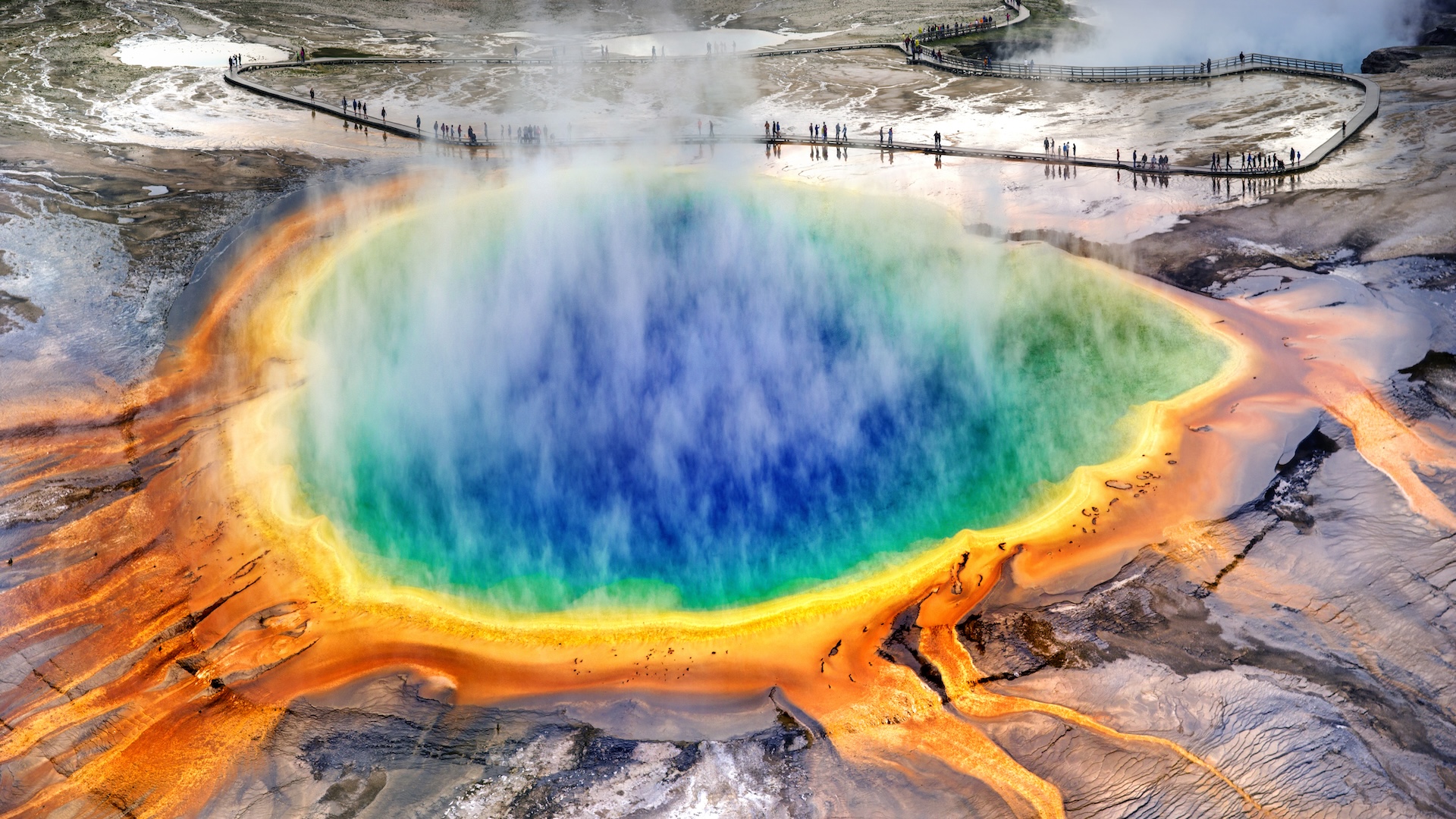
New research has pinpointed where theYellowstone supervolcano will likely erupt. It won’t blow today, but future eruptions will likely center on the northeastern side of the national park, the new study finds.

Not that Yellowstone is likely to still be a national park by the time it erupts. Any such eruption is expected to take place hundreds of thousands of years from now, study co-author Ninfa Bennington, a volcano seismologist at the Hawaiian Volcano Observatory, told Live Science.

The research, published Jan. 1 in the journal Nature, found that rather than being stored in one big blob under Yellowstone, melted magma lurks in four separate reservoirs within the crust of the caldera.

To the west, these reservoirs do not touch the deep mantle rocks that would otherwise heat them from below, keeping them liquid and eruptable. But to the northeast, near a landmark called Sour Creek Dome, deep rocks are heating the magma trapped in the crust. That means that while magma under the western side of Yellowstone will likely start to cool and solidify, the northeast will stay hot.

Previous studies of Yellowstone had used the passage of earthquake waves through the caldera to try to gauge where liquid magma versus solid rock sat beneath the park. But waves can change their behavior based not just on whether they’re traveling through a solid or a liquid, but also on temperature. That means hot, solid rock is hard to differentiate from similarly hot liquid magma.

The new study used a method called magnetotellurics to get a better look. Earth’s rotating core creates a magnetic field that surrounds the planet. Because magma contains magnetic minerals, pockets of subterranean liquid magma create their own mini-magnetic fields detectable at the surface, too. Using instruments deployed around Yellowstone, researchers mapped these mini-fields to find hidden pockets of magma.

They found four pockets together contain more liquid magma than was present during large, caldera-forming eruptions at Yellowstone in the past (one 2.8 million years ago, one 1.3 million years ago and one 640,000 years ago). This magma rests as deep as about 6 or 7 miles (9.6 to 11.2 kilometers) below the surface, Bennington told Live Science. But only in the northeastern region of the caldera is the magma in touch with hot basalt rock from the mantle that will keep the magma liquid in the long term.

Get the world’s most fascinating discoveries delivered straight to your inbox.

Despite the large volume of magma pooling below Yellowstone, the caldera isn’t likely to erupt anytime soon. That’s because the magma sits in pore spaces in solid rock within the caldera, much like water in a sponge. Only when more than 40% of these pore spaces are filled can the magma in the pores link up, get mobile and start erupting, Bennington said. She and her colleagues estimated that the fraction of filled pores was 20% or less, similar to estimates in other studies.

“We have a much lower concentration of magma in these pore spaces, so a lot fewer of the pore spaces are filled with magma,” she said. “What that means is you can’t interconnect these magmas to mobilize and erupt.”

But as hot rock warms the northeastern magma pools over tens of thousands of years, that could eventually change. Exactly how long that will take, or if it will happen before the mantle rocks in the northeastern region of Yellowstone lose contact with its magma reservoir, remains unknown.

Source link

Share. Facebook Twitter Pinterest LinkedIn Tumblr Email
Previous ArticleCES 2025: The Withings Omnia Smart Mirror offered to connect me to a specialist for a health issue
Next Article CES 2025: The Eufy E20 is a robot and stick vacuum all in one
Editor
  • Website

Related Posts

Lifestyle

Lemur used in ‘lemur yoga’ session dies of human herpesvirus, study finds

August 15, 2026
Lifestyle

‘A fine line between reducing stigma and trivialising conditions’: Social media, self-diagnosis and the glamorization of ADHD

August 15, 2026
Lifestyle

New 2D memory device stores data on just a single electron

August 15, 2026
Add A Comment

Comments are closed.

Categories
  • Entertainment
  • Lifestyle
  • News
  • Sports
  • Tech
  • Travel
Recent Posts
  • Lemur used in ‘lemur yoga’ session dies of human herpesvirus, study finds
  • ‘A fine line between reducing stigma and trivialising conditions’: Social media, self-diagnosis and the glamorization of ADHD
  • New 2D memory device stores data on just a single electron
  • Before we ban kids from social media completely, here’s what we should try first | Jonathan Bellack and Mariana Olaizola Rosenblat
  • Scientists uncover a better way to beat ‘the bends’ — using deep-diving pigs
calendar
September 2026
M T W T F S S
 123456
78910111213
14151617181920
21222324252627
282930  
« Aug    
Recent Posts
  • Lemur used in ‘lemur yoga’ session dies of human herpesvirus, study finds
  • ‘A fine line between reducing stigma and trivialising conditions’: Social media, self-diagnosis and the glamorization of ADHD
  • New 2D memory device stores data on just a single electron
About

Welcome to Baynard Media, your trusted source for a diverse range of news and insights. We are committed to delivering timely, reliable, and thought-provoking content that keeps you informed
and inspired

Categories
  • Entertainment
  • Lifestyle
  • News
  • Sports
  • Tech
  • Travel
Facebook X (Twitter) Pinterest WhatsApp
  • Contact Us
  • About Us
  • Privacy Policy
  • Disclaimer
  • UNSUBSCRIBE
© 2026 copyrights reserved

Type above and press Enter to search. Press Esc to cancel.