Close Menu
  • Home
  • UNSUBSCRIBE
  • News
  • Lifestyle
  • Tech
  • Entertainment
  • Sports
  • Travel
Facebook X (Twitter) WhatsApp
Trending
  • NASA celebrates America’s 250th birthday with red, white and blue snaps of the cosmos — Space photo of the week
  • Superintelligent AI in space could explain the Fermi Paradox
  • Diminutive species ‘the Hobbit’ did not hunt or control fire, deepening the mystery of its ancestry, dwarf elephant bones reveal
  • Elite families ruled nomadic Scythian society 2,500 years ago, DNA analysis reveals
  • ‘Machine-gun sun’ could bring auroras to more than a dozen states this Independence Day weekend
  • NASA launches bold mission to rescue Swift space telescope before it falls to Earth
  • ‘It’s more than a hope, it’s a guarantee’: The Vera C. Rubin Observatory’s 10-year movie of the universe is about to ‘blow our minds,’ chief scientist Tony Tyson says
  • 11-year-old boy in Canada dies from rabies after waking up with a bat on his face
Facebook X (Twitter) WhatsApp
Baynard Media
  • Home
  • UNSUBSCRIBE
  • News
  • Lifestyle
  • Tech
  • Entertainment
  • Sports
  • Travel
Baynard Media
Home»Lifestyle»We could nuke ‘city killer’ asteroid 2024 YR4 before it hits the moon — if we act fast, new study warns
Lifestyle

We could nuke ‘city killer’ asteroid 2024 YR4 before it hits the moon — if we act fast, new study warns

EditorBy EditorSeptember 23, 2025No Comments4 Mins Read
Share Facebook Twitter Pinterest LinkedIn Tumblr Reddit Telegram Email
Share
Facebook Twitter LinkedIn Pinterest Email

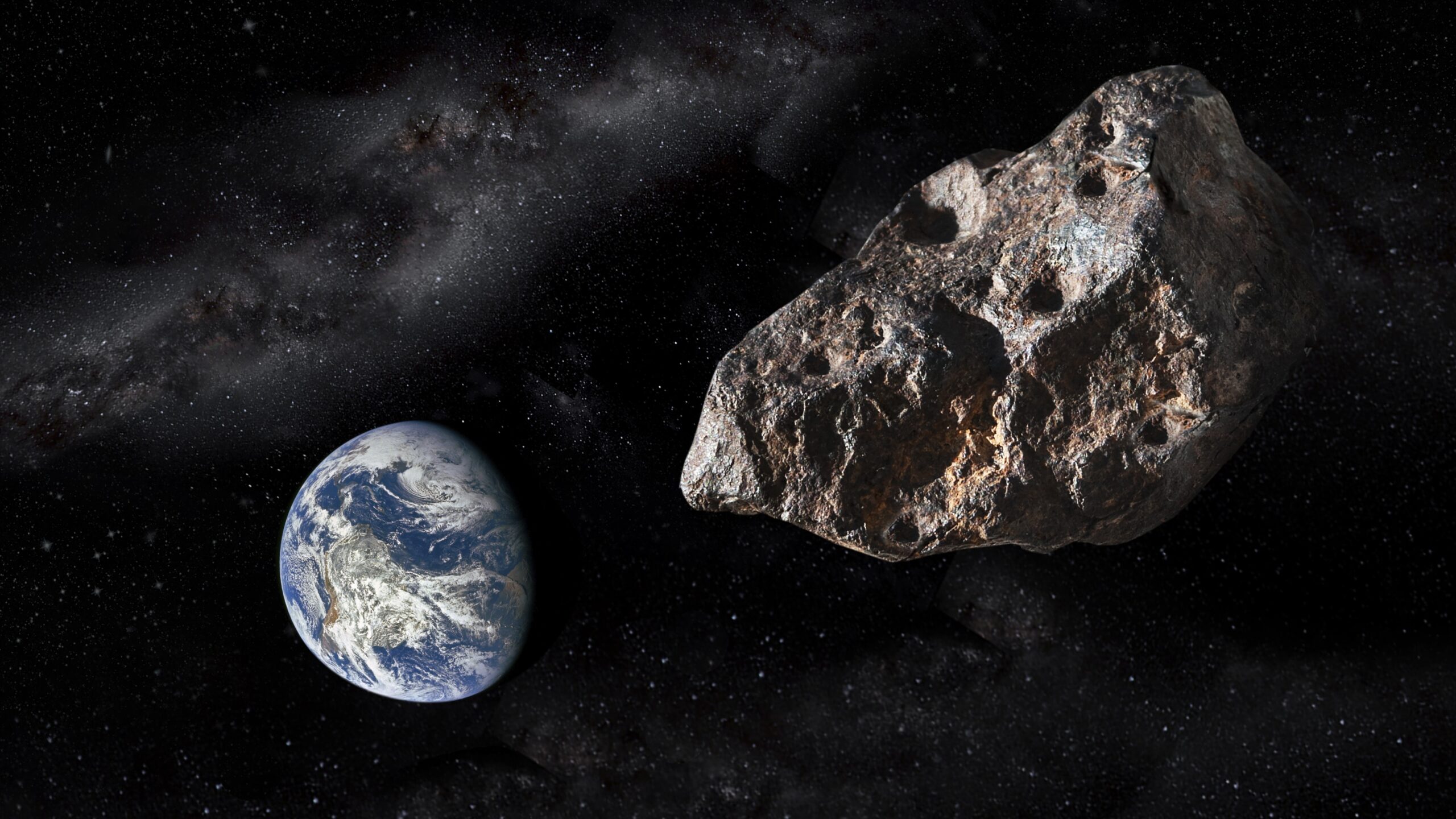
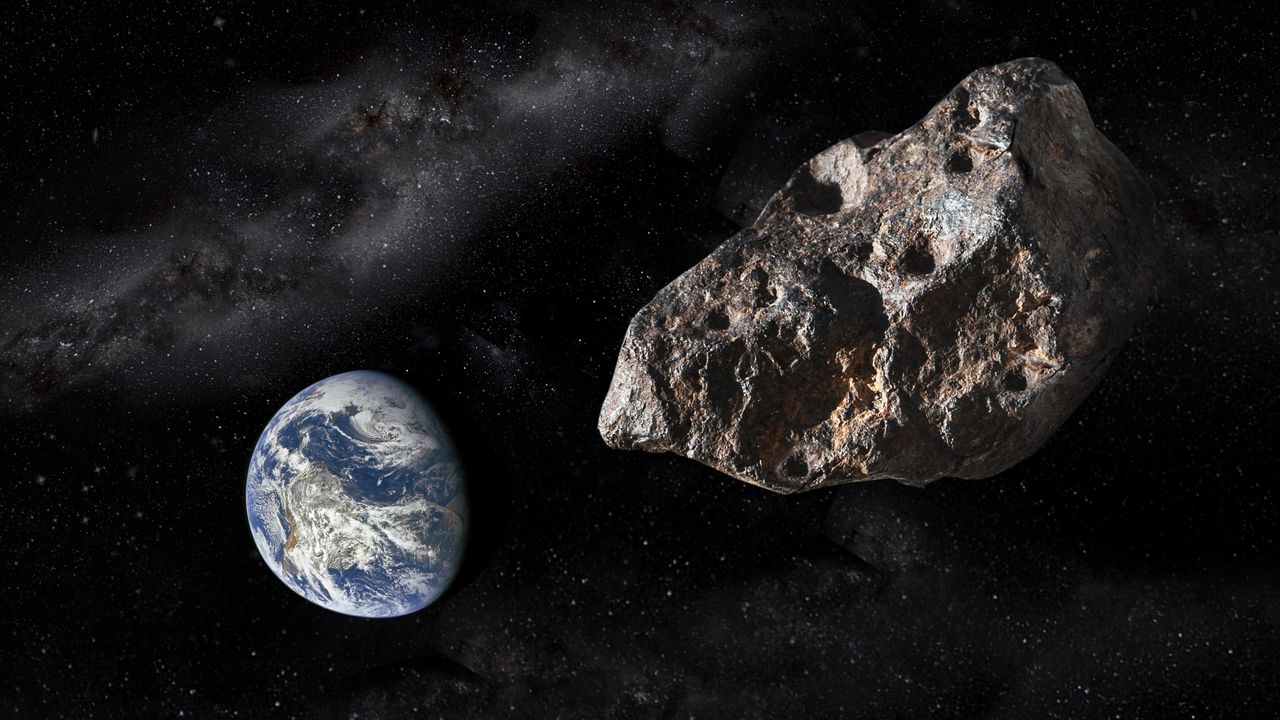
Scientists are considering the possibility of launching a nuclear weapon at an asteroid that could potentially hit the moon in 2032 — but they say more research is needed before taking this forward as an option.

The investigation concerns asteroid 2024 YR4, which reached notoriety shortly after its discovery in December 2024 when scientists (working with limited observations) revealed it had a relatively high chance of impacting Earth in 2032, peaking at 3.1%.

This got media attention as the 180-foot (55 meters) asteroid is large enough to wipe out a city. However, the odds of disaster quickly dropped when subsequent observations showed the asteroid was very unlikely to come near Earth. Its impact probability fell to less than 1 in 360 (0.28%) as of February 2025.


You may like

That’s good news for our planet, but the updated tracking also shows the asteroid has a fairly good chance of crashing into the moon — about 4%. A crash of an object that size, and relatively close to Earth, would almost certainly have some effect on us.

Threats to astronauts, spacecraft

If an asteroid the size of 2024 YR4 crashed into the moon, it would produce lunar “ejecta,” kicking up the regolith — the top layer of dust and small rocks on the surface — which would substantially increase micrometeoroid debris in low Earth orbit.

The flux could be up to 1,000 times “above background levels … possibly threatening astronauts and spacecraft” as little space rocks can puncture spacecraft, spacesuits and similar, the researchers wrote in the new study, which was posted Sept. 15 on the preprint server Arxiv and has not yet been peer-reviewed.

While that’s a threat for satellites and the International Space Station (if it does not deorbit in 2031 as planned), any attempt to divert the asteroid could create an even higher risk, the authors warned. There remains great uncertainty about the asteroid’s exact mass, which means any attempt to nudge it off course would also be far from certain. An ill-planned deflection mission could accidentally push the asteroid toward Earth, the researchers wrote.

Get the world’s most fascinating discoveries delivered straight to your inbox.

Scientists do have diverting experience to draw upon: NASA’s DART mission deflected an asteroid moonlet‘s path in 2022. DART sent a kinetic impactor into the moonlet, called Dimorphos, which slightly altered the little space rock’s path around its parent asteroid, Didymos. But the researchers behind the new study concluded that any attempt at deflecting 2024 YR4 would “appear impractical” because of constraints such as not knowing the object’s mass — and having a very limited window to study the object further before its close flyby in 2032.

Just nuke it

The researchers instead consider the idea of breaking up the asteroid. A DART-style spacecraft could be sent to not move the asteroid but to punch it into pieces, they suggest. This is an untested concept, but NASA has several years to think about it given the launch window for such a mission is between April 2030 and April 2032.

Failing that, NASA could send a nuclear mission, detonating a rocket-propelled nuke on or near the asteroid before its approach. This method is also untested but theoretically possible. There would be slightly less time to get that mission ready, but that could launch between late 2029 and late 2031, according to the researchers.

The paper emphasizes that there’s still a 96% chance that the asteroid breezes by the moon with no issues, but the researchers say this situation as an opportunity to further research asteroid-smashing spacecraft.

They call on other researchers to provide estimated build times for spacecraft, and to create more designs — just in case a more serious threat comes by our planetary neighborhood.

Source link

Share. Facebook Twitter Pinterest LinkedIn Tumblr Email
Previous ArticleOwners of ABC affiliates expect an apology from Jimmy Kimmel
Next Article Ryan Routh’s daughter shouts after his vehicle
Editor
  • Website

Related Posts

Lifestyle

NASA celebrates America’s 250th birthday with red, white and blue snaps of the cosmos — Space photo of the week

July 5, 2026
Lifestyle

Superintelligent AI in space could explain the Fermi Paradox

July 5, 2026
Lifestyle

Diminutive species ‘the Hobbit’ did not hunt or control fire, deepening the mystery of its ancestry, dwarf elephant bones reveal

July 3, 2026
Add A Comment

Comments are closed.

Categories
  • Entertainment
  • Lifestyle
  • News
  • Sports
  • Tech
  • Travel
Recent Posts
  • NASA celebrates America’s 250th birthday with red, white and blue snaps of the cosmos — Space photo of the week
  • Superintelligent AI in space could explain the Fermi Paradox
  • Diminutive species ‘the Hobbit’ did not hunt or control fire, deepening the mystery of its ancestry, dwarf elephant bones reveal
  • Elite families ruled nomadic Scythian society 2,500 years ago, DNA analysis reveals
  • ‘Machine-gun sun’ could bring auroras to more than a dozen states this Independence Day weekend
calendar
July 2026
M T W T F S S
 12345
6789101112
13141516171819
20212223242526
2728293031  
« Jun    
Recent Posts
  • NASA celebrates America’s 250th birthday with red, white and blue snaps of the cosmos — Space photo of the week
  • Superintelligent AI in space could explain the Fermi Paradox
  • Diminutive species ‘the Hobbit’ did not hunt or control fire, deepening the mystery of its ancestry, dwarf elephant bones reveal
About

Welcome to Baynard Media, your trusted source for a diverse range of news and insights. We are committed to delivering timely, reliable, and thought-provoking content that keeps you informed
and inspired

Categories
  • Entertainment
  • Lifestyle
  • News
  • Sports
  • Tech
  • Travel
Facebook X (Twitter) Pinterest WhatsApp
  • Contact Us
  • About Us
  • Privacy Policy
  • Disclaimer
  • UNSUBSCRIBE
© 2026 copyrights reserved

Type above and press Enter to search. Press Esc to cancel.