Close Menu
  • Home
  • UNSUBSCRIBE
  • News
  • Lifestyle
  • Tech
  • Entertainment
  • Sports
  • Travel
Facebook X (Twitter) WhatsApp
Trending
  • Study suggests life on Earth has around 1.8 billion years left — but the biosphere might evolve to survive even longer
  • Ancient-DNA analysis solves 500-year-old mystery of what killed 2 Medici brothers
  • Antarctica’s first dinosaur fossil belonged to a group of the largest land animals ever
  • Scientists propose launching a giant ‘airbag’ into space to protect us from solar superstorms ‪— and experts say it’s ‘quite feasible’
  • Dead-end bitcoin mining wastes as much energy as Switzerland’s entire hydropower generation capacity
  • 66 billion trees have been planted in China’s Great Green Wall — and they appear to be growing faster than natural forests
  • 500-year-old freeze-dried potato snacks discovered in Inca storage room in Peru
  • CERN shuts down Large Hadron Collider until 2030, upgrading the atom smasher to its most powerful form yet
Facebook X (Twitter) WhatsApp
Baynard Media
  • Home
  • UNSUBSCRIBE
  • News
  • Lifestyle
  • Tech
  • Entertainment
  • Sports
  • Travel
Baynard Media
Home»Lifestyle»Watch Kilauea volcano erupt LIVE | Live Science
Lifestyle

Watch Kilauea volcano erupt LIVE | Live Science

EditorBy EditorDecember 25, 2024No Comments2 Mins Read
Share Facebook Twitter Pinterest LinkedIn Tumblr Reddit Telegram Email
Share
Facebook Twitter LinkedIn Pinterest Email

Kīlauea Volcano, Hawaii (Halemaʻumaʻu crater) – YouTube
Kīlauea Volcano, Hawaii (Halemaʻumaʻu crater) - YouTube


Watch On

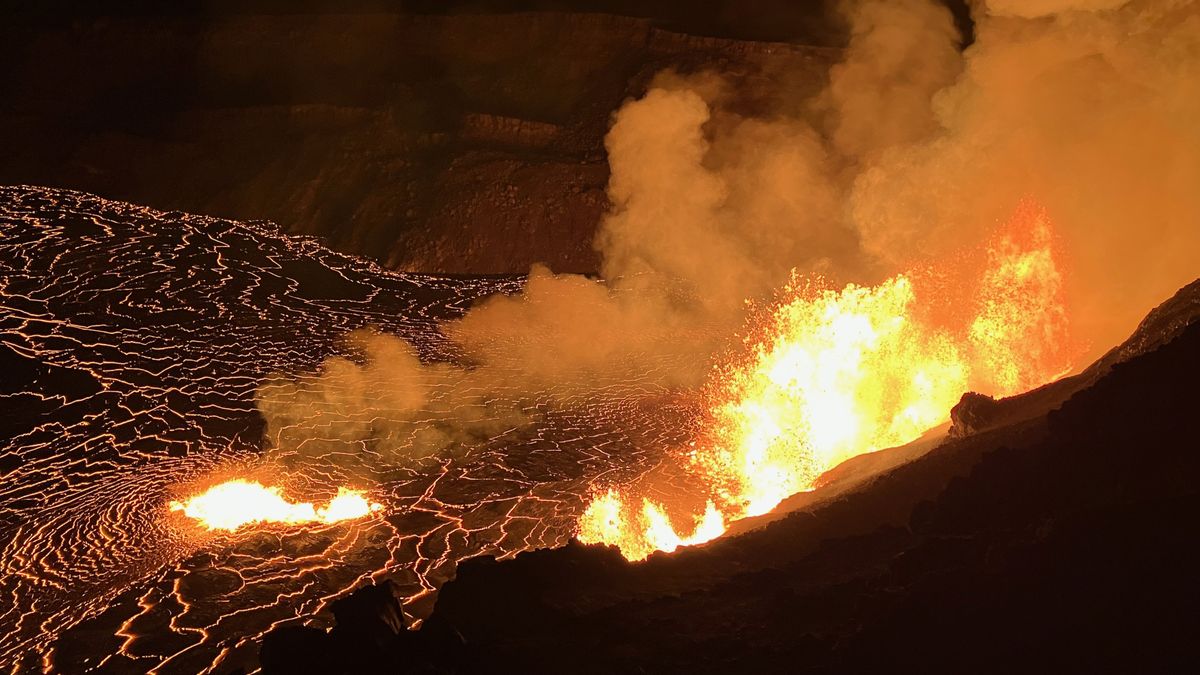
Hawaii’s Kilauea volcano has erupted with giant lava fountains, lava bombs and toxic gas — and you can watch it all happen live.

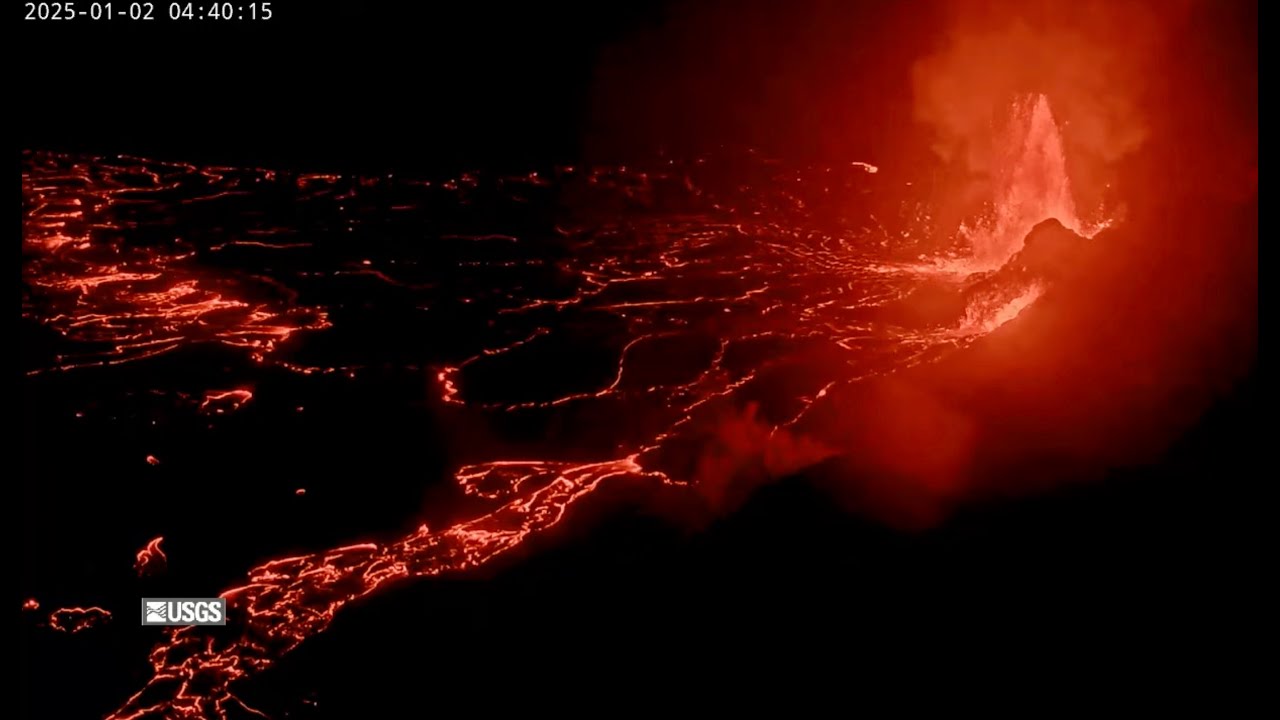
The U.S. Geological Survey (USGS) is live-streaming the eruption on its YouTube channel. Thousands of people have tuned into the live stream, which focuses on the northwest rim of the caldera — the cauldron-like area at the top of a volcano.

Kilauea volcano began erupting at 2.20 a.m. Hawaii standard time (7:20 a.m. EST) on Monday (Dec. 23), according to an update on the USGS website. Soon after the eruption began, Kilauea started blasting out lava and other materials.

“At 4:30 a.m., lava fountains were observed with heights up to 80 meters (262 feet),” USGS representatives wrote. “Molten material, including lava bombs, is being ejected from the vents on the caldera floor up onto the west caldera rim, within the closed area of Hawaiʻi Volcanoes National Park.”

Related: Philippines volcanic eruption: Kanlaon volcano ‘may progress to further explosive eruptions’

Kilauea volcano is one of the world’s most active volcanoes and has erupted almost continuously for more than 30 years. Located on Hawaii’s Big Island, the volcano makes up about 14% of the island’s land area and rises 4,190 feet (1,227 meters) above sea level, Live Science previously reported.

USGS offers various views of the Kilauea summit through live webcams. In some cases, the cameras are recording in places off limits to the general public because they’re unsafe to visit, according to the USGS.

Get the world’s most fascinating discoveries delivered straight to your inbox.

Eruption activity is currently confined to the summit region. As of 6:30 a.m. HST (11:30 a.m. EST), the eruption had stabilized within the crater, and there were no threats to infrastructure.

The USGS Hawaiian Volcano Observatory has lowered the Kilauea’s volcano alert level — from “Warning” to “Watch.” However, USGS noted that volcanic gas created by the eruption is still a hazard.

“The primary hazard of concern at this time is high levels of volcanic gas which can have far-reaching effects down-wind (generally southwest) of the summit,” the USGS wrote.

Source link

Share. Facebook Twitter Pinterest LinkedIn Tumblr Email
Previous ArticleTransfer 360: Vidic's Christmas Day transfer to Man Utd
Next Article The British royal family’s Christmas rituals close out a difficult year
Editor
  • Website

Related Posts

Lifestyle

Study suggests life on Earth has around 1.8 billion years left — but the biosphere might evolve to survive even longer

July 2, 2026
Lifestyle

Ancient-DNA analysis solves 500-year-old mystery of what killed 2 Medici brothers

July 1, 2026
Lifestyle

Antarctica’s first dinosaur fossil belonged to a group of the largest land animals ever

July 1, 2026
Add A Comment

Comments are closed.

Categories
  • Entertainment
  • Lifestyle
  • News
  • Sports
  • Tech
  • Travel
Recent Posts
  • Study suggests life on Earth has around 1.8 billion years left — but the biosphere might evolve to survive even longer
  • Ancient-DNA analysis solves 500-year-old mystery of what killed 2 Medici brothers
  • Antarctica’s first dinosaur fossil belonged to a group of the largest land animals ever
  • Scientists propose launching a giant ‘airbag’ into space to protect us from solar superstorms ‪— and experts say it’s ‘quite feasible’
  • Dead-end bitcoin mining wastes as much energy as Switzerland’s entire hydropower generation capacity
calendar
July 2026
M T W T F S S
 12345
6789101112
13141516171819
20212223242526
2728293031  
« Jun    
Recent Posts
  • Study suggests life on Earth has around 1.8 billion years left — but the biosphere might evolve to survive even longer
  • Ancient-DNA analysis solves 500-year-old mystery of what killed 2 Medici brothers
  • Antarctica’s first dinosaur fossil belonged to a group of the largest land animals ever
About

Welcome to Baynard Media, your trusted source for a diverse range of news and insights. We are committed to delivering timely, reliable, and thought-provoking content that keeps you informed
and inspired

Categories
  • Entertainment
  • Lifestyle
  • News
  • Sports
  • Tech
  • Travel
Facebook X (Twitter) Pinterest WhatsApp
  • Contact Us
  • About Us
  • Privacy Policy
  • Disclaimer
  • UNSUBSCRIBE
© 2026 copyrights reserved

Type above and press Enter to search. Press Esc to cancel.