Close Menu
  • Home
  • UNSUBSCRIBE
  • News
  • Lifestyle
  • Tech
  • Entertainment
  • Sports
  • Travel
Facebook X (Twitter) WhatsApp
Trending
  • Lemur used in ‘lemur yoga’ session dies of human herpesvirus, study finds
  • ‘A fine line between reducing stigma and trivialising conditions’: Social media, self-diagnosis and the glamorization of ADHD
  • New 2D memory device stores data on just a single electron
  • Before we ban kids from social media completely, here’s what we should try first | Jonathan Bellack and Mariana Olaizola Rosenblat
  • Scientists uncover a better way to beat ‘the bends’ — using deep-diving pigs
  • Mars may have been losing its water more than 4 billion years ago, oldest-known Martian meteorite suggests
  • ‘The lance head was still inside the pelvis’: Mass grave found in Austria may hold casualties of unknown ancient Roman battle
  • ‘Full-on berserker mode’: Archaeologists solve mystery of medieval soldiers with gruesome square holes in their skull
Facebook X (Twitter) WhatsApp
Baynard Media
  • Home
  • UNSUBSCRIBE
  • News
  • Lifestyle
  • Tech
  • Entertainment
  • Sports
  • Travel
Baynard Media
Home»Lifestyle»Watch enormous deep-sea spiders crawl around sub-Antarctic seafloor
Lifestyle

Watch enormous deep-sea spiders crawl around sub-Antarctic seafloor

EditorBy EditorMarch 19, 2025No Comments2 Mins Read
Share Facebook Twitter Pinterest LinkedIn Tumblr Reddit Telegram Email
Share
Facebook Twitter LinkedIn Pinterest Email

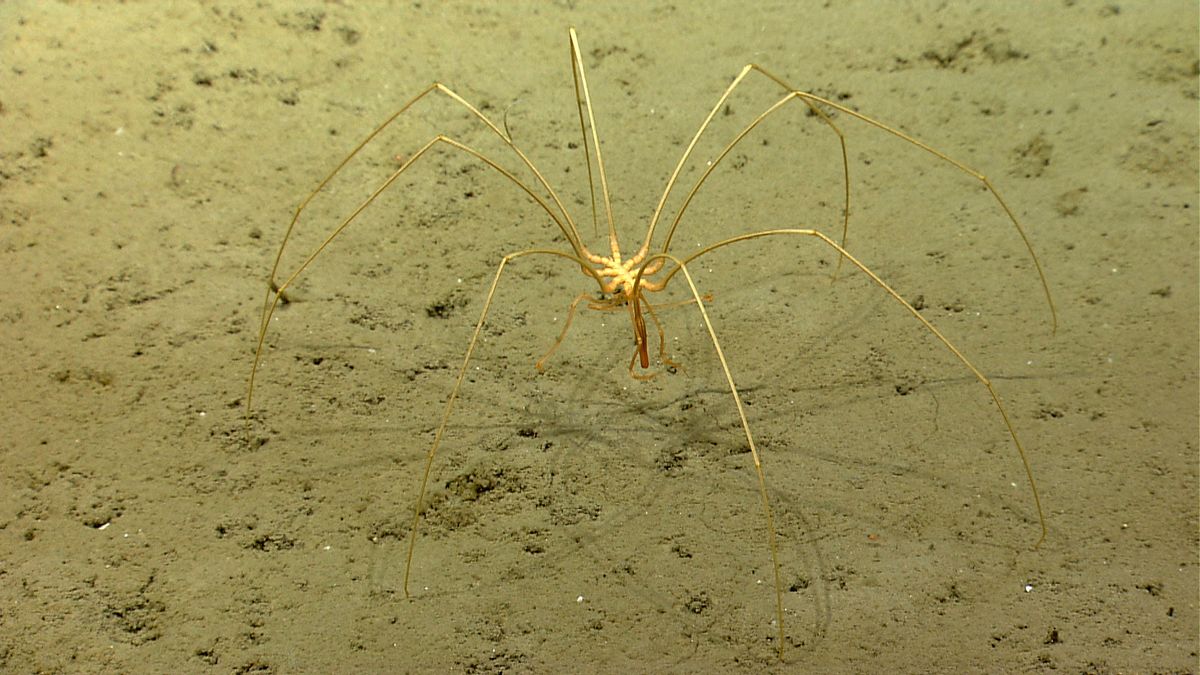
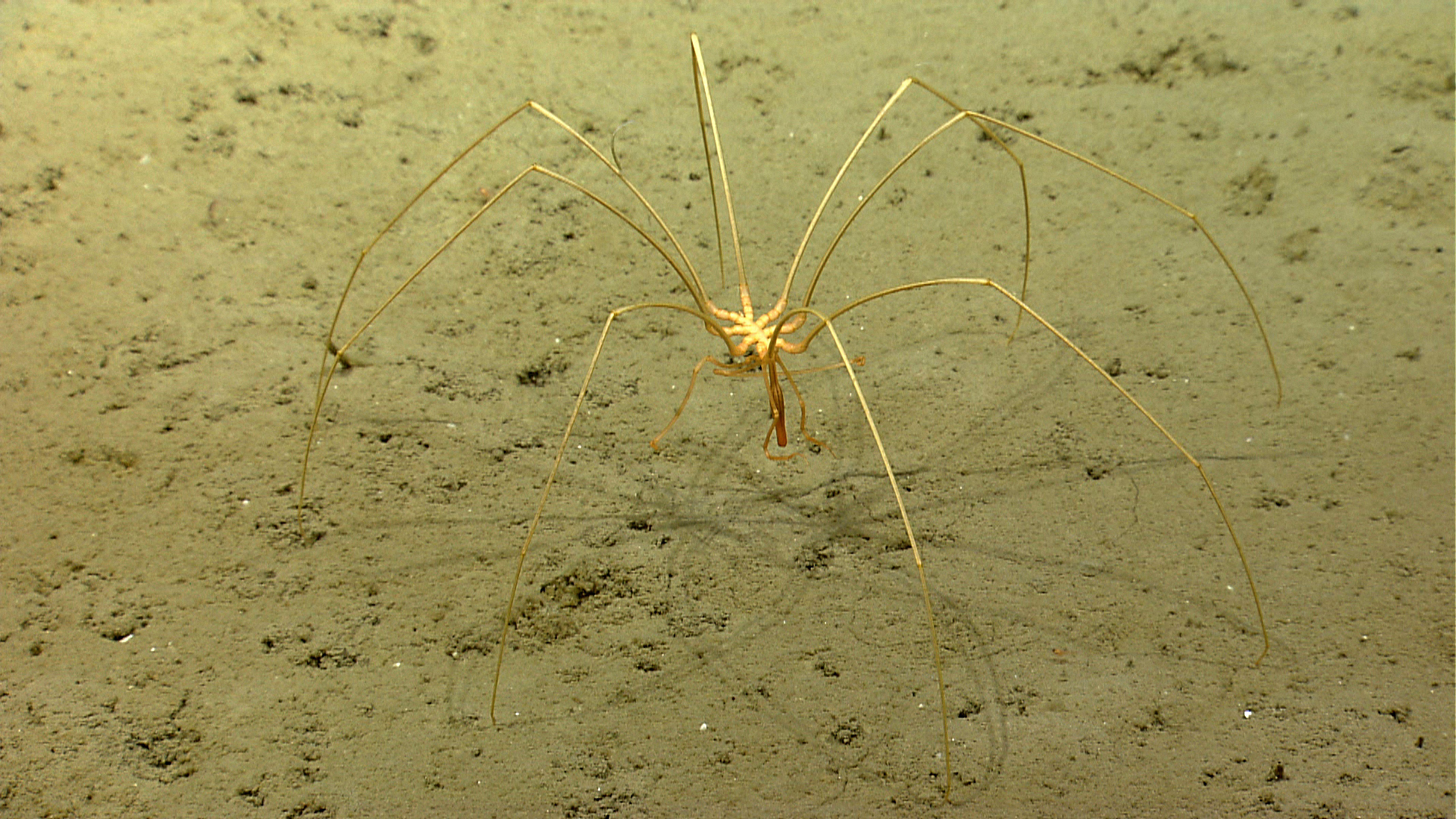
Scientists have captured stunning video of a dinner-plate-size sea spider crawling on the seafloor off the South Sandwich Islands, a chain of volcanic islands near Antarctica in one of the most remote areas of the world.

Sea spiders, also known as pycnogonids, are distant cousins of the creepy-crawly arachnids we see scuttling about on land. These creatures can have leg spans of up to 20 inches (51 centimeters) — nearly double those of the largest land spiders, whose leg spans top out at around 12 inches (30 cm).

According to the Schmidt Ocean Institute, which shared the footage, the spider’s massive size is a result of deep-sea gigantism, the tendency for deep-sea creatures to grow significantly larger than their shallow-water relatives. In this case, the pycnogonid was filmed at a depth of 6,903 feet (2,104 meters).

Related: 32 truly bizarre deep-sea creatures

“Immense pressure and frigid temperatures, while insurmountable obstacles to land-lovers like humans, allow some animals to have very slow metabolisms and the ability to reach gargantuan proportions,” Schmidt Ocean Institute representatives wrote in a Facebook post.

Larger animals can also move faster and farther to find food or to locate a mate, which is important when both are scarce.

Deep-sea gigantism is particularly prevalent toward the poles, where freezing temperatures facilitate slower metabolisms. Schmidt Ocean Institute representatives described sea spiders as both “abundant” and “abundantly large” in polar regions.

Get the world’s most fascinating discoveries delivered straight to your inbox.

There are roughly 1,500 species of sea spider known to science and likely many more yet to be discovered, according to the post. Sea spiders inhabit oceans around the world and range just a few millimeters to the size of a serving platter. The species of spider in the video from the Schmidt Ocean Institute has not been specified.

The largest members of this group are usually found at depths between 7,200 and 13,100 feet (2,200 to 4,000 m), according to the Monterey Bay Aquarium Research Institute.

Instead of spinning webs or creating burrows as land spiders do, sea spiders use a specialized tube-like mouth structure, called a proboscis, to slurp up prey such as sea anemones, jellies and other invertebrates.

This latest footage was taken by remotely operated vehicle pilots as part of the Schmidt Ocean Institute’s South Sandwich Islands expedition, a mission to locate and describe new species in these frigid waters. According to the institute, scientists have discovered only 10% of ocean life.


Source link

Share. Facebook Twitter Pinterest LinkedIn Tumblr Email
Previous ArticleIsraeli military has begun a new ground operation in Gaza after breaking ceasefire
Next Article Art created autonomously by AI cannot be copyrighted, federal appeals court rules
Editor
  • Website

Related Posts

Lifestyle

Lemur used in ‘lemur yoga’ session dies of human herpesvirus, study finds

August 15, 2026
Lifestyle

‘A fine line between reducing stigma and trivialising conditions’: Social media, self-diagnosis and the glamorization of ADHD

August 15, 2026
Lifestyle

New 2D memory device stores data on just a single electron

August 15, 2026
Add A Comment

Comments are closed.

Categories
  • Entertainment
  • Lifestyle
  • News
  • Sports
  • Tech
  • Travel
Recent Posts
  • Lemur used in ‘lemur yoga’ session dies of human herpesvirus, study finds
  • ‘A fine line between reducing stigma and trivialising conditions’: Social media, self-diagnosis and the glamorization of ADHD
  • New 2D memory device stores data on just a single electron
  • Before we ban kids from social media completely, here’s what we should try first | Jonathan Bellack and Mariana Olaizola Rosenblat
  • Scientists uncover a better way to beat ‘the bends’ — using deep-diving pigs
calendar
September 2026
M T W T F S S
 123456
78910111213
14151617181920
21222324252627
282930  
« Aug    
Recent Posts
  • Lemur used in ‘lemur yoga’ session dies of human herpesvirus, study finds
  • ‘A fine line between reducing stigma and trivialising conditions’: Social media, self-diagnosis and the glamorization of ADHD
  • New 2D memory device stores data on just a single electron
About

Welcome to Baynard Media, your trusted source for a diverse range of news and insights. We are committed to delivering timely, reliable, and thought-provoking content that keeps you informed
and inspired

Categories
  • Entertainment
  • Lifestyle
  • News
  • Sports
  • Tech
  • Travel
Facebook X (Twitter) Pinterest WhatsApp
  • Contact Us
  • About Us
  • Privacy Policy
  • Disclaimer
  • UNSUBSCRIBE
© 2026 copyrights reserved

Type above and press Enter to search. Press Esc to cancel.