Close Menu
  • Home
  • UNSUBSCRIBE
  • News
  • Lifestyle
  • Tech
  • Entertainment
  • Sports
  • Travel
Facebook X (Twitter) WhatsApp
Trending
  • Ancient empires quiz: Can you match these lands to the historical powers that ruled them?
  • Socotra Archipelago: The Yemeni islands covered with astonishing cucumber, bottle and dragon’s blood trees
  • The US government wants to mine more lithium, but there may not be enough water to do it, study finds
  • NASA’s Perseverance rover finds record-breaking trove of carbon molecules at Bright Angel rock formation on Mars
  • Some of the last surviving Neanderthals were remarkably diverse ‪—‬ suggesting inbreeding didn’t doom them
  • 'This is the next jump in technology': World's first sub-1nm chip keeps Moore's Law alive a little longer
  • Scientists find thousands of earthquakes in a perfectly straight line in Alaska, revealing a hidden ‘microplate’
  • ‘You can’t patch your way out of it’: Cheap AI worm can spread between devices without human guidance — but how did scientists create it?
Facebook X (Twitter) WhatsApp
Baynard Media
  • Home
  • UNSUBSCRIBE
  • News
  • Lifestyle
  • Tech
  • Entertainment
  • Sports
  • Travel
Baynard Media
Home»Lifestyle»US reports its first New World parasitic screwworm infection in decades
Lifestyle

US reports its first New World parasitic screwworm infection in decades

EditorBy EditorAugust 26, 2025No Comments3 Mins Read
Share Facebook Twitter Pinterest LinkedIn Tumblr Reddit Telegram Email
Share
Facebook Twitter LinkedIn Pinterest Email

A person in Maryland has been confirmed to have an infection with the flesh-eating New World screwworm parasite — the first human case of the infection in the United States since the parasite was eradicated in the U.S. over 60 years ago, according to the U.S. Department of Health and Human Services (HHS).

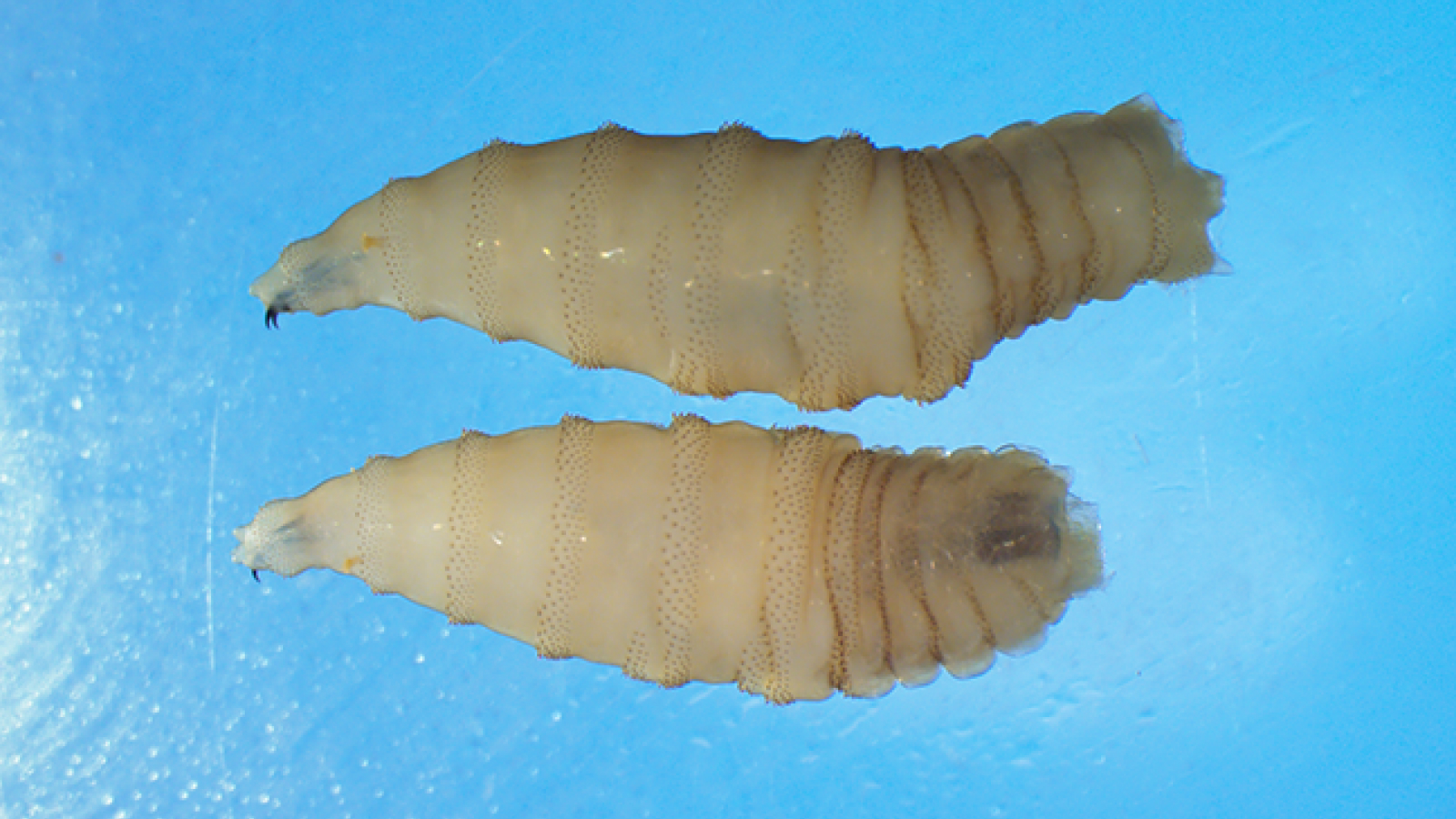
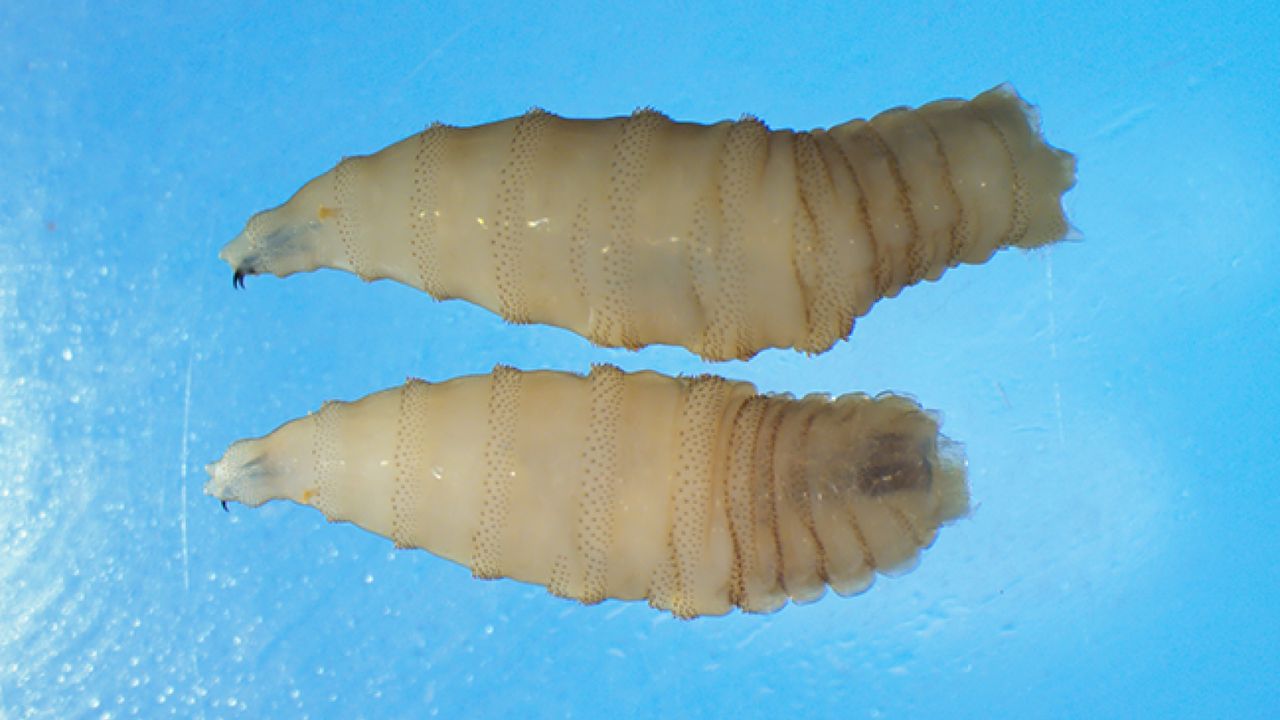
The Maryland patient had returned to the U.States. after traveling to El Salvador, HHS spokesperson Andrew G. Nixon told Reuters in an email, and the Centers for Disease Control and Prevention (CDC) confirmed the infection with the New World screwworm (Cochliomyia hominivorax) via images of the larvae on Aug. 4, according to Axios.

“This is the first human case of travel-associated New World screwworm myiasis (parasitic infestation of fly larvae) from an outbreak-affected country identified in the United States,” Nixon said in an emailed statement to Axios. However, “the risk to public health in the United States from this introduction is very low,” he added.


You may like

C. hominivorax is a species of parasitic fly that lays eggs inside the open wounds, eyes, noses or mouths of warm-blooded animals. Female screwworm flies can lay up to 300 eggs at a time. When the eggs hatch, screwworm larvae use their sharp mouths to burrow into the host’s flesh, which causes a painful infestation called myiasis.

New World screwworms primarily affect cattle and other livestock, but they can also cause infestations in humans. An infestation can be fatal if left untreated, but a doctor can usually treat myiasis by removing the larvae. People who work with livestock, have weakened immune systems, open wounds, or who sleep outdoors are most at risk for developing an infection, according to the CDC. But because screwworm is an insect and not a virus, it’s not contagious, Max Scott, a professor of entomology and plant pathology at North Carolina State University, told NPR.

The New World screwworm is endemic to South America and the Caribbean, and it isn’t typically found in the U.S., according to the CDC. No cases of screwworm infestation have been found in U.S. animals so far. In the 1960s, the U.S. eradicated New World screwworms within the country by releasing male sterile screwworm flies into infested areas. The sterile flies mated with wild female flies, but the eggs didn’t hatch, which caused screwworm populations to decline.

Since 2023, screwworm populations have been increasing in Central America and slowly spreading northward. In November 2024, a screwworm infestation in Mexico prompted the U.S. to temporarily pause livestock imports at the southern border. Imports resumed in January, only to halt again in May. Ports are now reopening in stages, according to the U.S. Department of Agriculture, and a new sterile fly dispersal facility is being constructed in southern Texas.

Get the world’s most fascinating discoveries delivered straight to your inbox.

Source link

Share. Facebook Twitter Pinterest LinkedIn Tumblr Email
Previous ArticleUS Open 2025: Morgan Riddle warms up her own way for tournament
Next Article Authorities say ‘spiritual delusion’ played role in deaths of Ohio husband, child who drowned in lake
Editor
  • Website

Related Posts

Lifestyle

Ancient empires quiz: Can you match these lands to the historical powers that ruled them?

June 26, 2026
Lifestyle

Socotra Archipelago: The Yemeni islands covered with astonishing cucumber, bottle and dragon’s blood trees

June 26, 2026
Lifestyle

The US government wants to mine more lithium, but there may not be enough water to do it, study finds

June 26, 2026
Add A Comment

Comments are closed.

Categories
  • Entertainment
  • Lifestyle
  • News
  • Sports
  • Tech
  • Travel
Recent Posts
  • Ancient empires quiz: Can you match these lands to the historical powers that ruled them?
  • Socotra Archipelago: The Yemeni islands covered with astonishing cucumber, bottle and dragon’s blood trees
  • The US government wants to mine more lithium, but there may not be enough water to do it, study finds
  • NASA’s Perseverance rover finds record-breaking trove of carbon molecules at Bright Angel rock formation on Mars
  • Some of the last surviving Neanderthals were remarkably diverse ‪—‬ suggesting inbreeding didn’t doom them
calendar
June 2026
M T W T F S S
1234567
891011121314
15161718192021
22232425262728
2930  
« May    
Recent Posts
  • Ancient empires quiz: Can you match these lands to the historical powers that ruled them?
  • Socotra Archipelago: The Yemeni islands covered with astonishing cucumber, bottle and dragon’s blood trees
  • The US government wants to mine more lithium, but there may not be enough water to do it, study finds
About

Welcome to Baynard Media, your trusted source for a diverse range of news and insights. We are committed to delivering timely, reliable, and thought-provoking content that keeps you informed
and inspired

Categories
  • Entertainment
  • Lifestyle
  • News
  • Sports
  • Tech
  • Travel
Facebook X (Twitter) Pinterest WhatsApp
  • Contact Us
  • About Us
  • Privacy Policy
  • Disclaimer
  • UNSUBSCRIBE
© 2026 copyrights reserved

Type above and press Enter to search. Press Esc to cancel.