Close Menu
  • Home
  • UNSUBSCRIBE
  • News
  • Lifestyle
  • Tech
  • Entertainment
  • Sports
  • Travel
Facebook X (Twitter) WhatsApp
Trending
  • How did animals survive the asteroid that killed the dinosaurs?
  • ‘We can identify these really early, before the clinical diagnosis’: Epigenetic markers may help explain why Native Hawaiians are aging faster
  • Catapult the cow: 6 medieval castles that were never conquered
  • China launches ‘human artificial embryos’ to space for the first time
  • NASA’s Psyche spacecraft beams back blue images of Mars on its way to a metal asteroid
  • Science news this week: Laotian ‘death jar’, climate change threatens rice crops, and an asthma drug treats tough cancer
  • DNA sequencing is rewriting our understanding of historic outbreaks, but it can’t tell the whole story
  • AI-generated images are making it impossible to distinguish truth from fiction. We need laws and AI watermarks to protect our shared reality.
Facebook X (Twitter) WhatsApp
Baynard Media
  • Home
  • UNSUBSCRIBE
  • News
  • Lifestyle
  • Tech
  • Entertainment
  • Sports
  • Travel
Baynard Media
Home»Lifestyle»‘Triple conjunction’ 2025: See the moon, Venus and the bright star Regulus in an ultraclose alignment in the sky tomorrow
Lifestyle

‘Triple conjunction’ 2025: See the moon, Venus and the bright star Regulus in an ultraclose alignment in the sky tomorrow

EditorBy EditorSeptember 18, 2025No Comments3 Mins Read
Share Facebook Twitter Pinterest LinkedIn Tumblr Reddit Telegram Email
Share
Facebook Twitter LinkedIn Pinterest Email

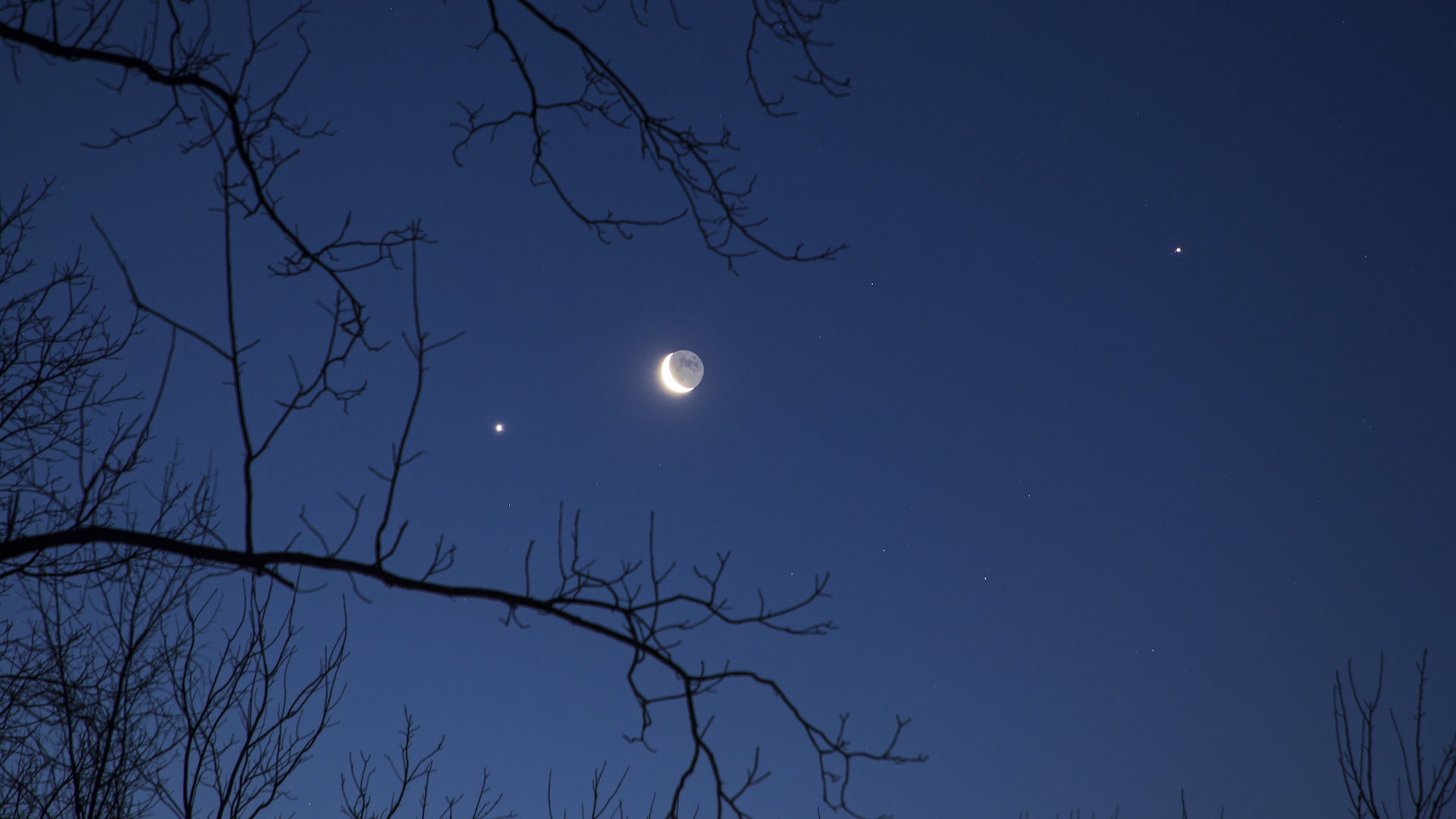
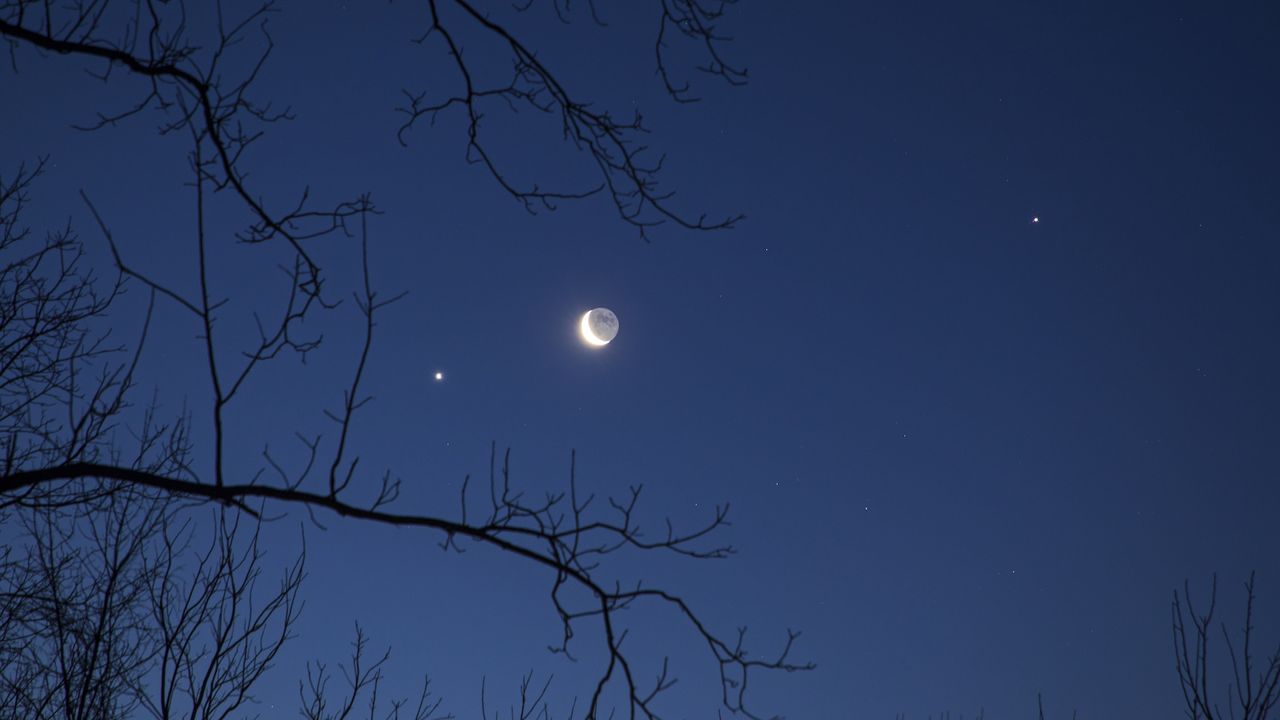
One of the best naked-eye stargazing sights of the year is on offer to skywatchers this week — if you can rise before the sun Friday (Sept. 19). Just before sunrise, the crescent moon, the brilliant planet Venus and the bright star Regulus (the brightest star in the constellation Leo) will cluster together on the east-northeast horizon.

There will be barely half a degree between each of the three objects, which is less than the width of a little finger held up against the sky. This triple conjunction of naked-eye objects is a rare sight worth trying to see.

Visible low in the eastern sky about 90 minutes before sunrise, the waning crescent moon will be about 6% illuminated. The slender moon itself will be a gorgeous sight, thanks to the bonus “Earthshine” — the sun’s light reflecting off Earth back onto the moon to illuminate its dark side. The dazzling sight will be visible both to the naked eye and in simple stargazing binoculars.


You may like

Venus and Regulus will be close by, although their exact locations in the sky will depend on your vantage point. For example, on the east coast of North America, stargazers will see an almost perfect alignment of the crescent moon, Venus and Regulus in a straight line covering barely a degree of sky. On the west coast of North America, it will be more of a close clustering, with a vague triangle formed by the moon, Venus and Regulus.

In terms of brightness, there will be a distinct pecking order. The moon will far outshine everything, followed by dazzling Venus and then Regulus, which will appear faint by comparison. In fact, Venus (magnitude -3.8) will be about 110 times brighter than Regulus (magnitude 1.3). (In astronomy, a low or negative magnitude corresponds to a brighter object.)

Those in northeastern Canada, Greenland, Western Europe and North Africa will see an even closer conjunction, with the moon occulting (moving in front of to block) Venus for a short time. According to In-The-Sky.org, the position of these three objects will vary according to the observer’s location because the moon will be so close to Earth that its position in the sky will vary by as much as 2 degrees across the world. It also means that lunar occultations are only visible from part of Earth’s surface at any given time.

In the days after the close conjunction, the crescent moon will shrink and become an invisible new moon on Sept. 21, causing a partial solar eclipse that will be visible from New Zealand, Antarctica and the western South Pacific. On Sept. 22, the autumn equinox will bring roughly equal day and night to the entire globe, heralding the arrival of longer nights for stargazing in the Northern Hemisphere. Venus will remain as a bright “Morning Star” for the rest of the month.

Get the world’s most fascinating discoveries delivered straight to your inbox.

Source link

Share. Facebook Twitter Pinterest LinkedIn Tumblr Email
Previous ArticleUS designates Iran-backed Iraq militias as terrorist organizations
Next Article Trump meets Prime Minister Starmer during U.K. visit
Editor
  • Website

Related Posts

Lifestyle

How did animals survive the asteroid that killed the dinosaurs?

May 24, 2026
Lifestyle

‘We can identify these really early, before the clinical diagnosis’: Epigenetic markers may help explain why Native Hawaiians are aging faster

May 24, 2026
Lifestyle

Catapult the cow: 6 medieval castles that were never conquered

May 24, 2026
Add A Comment

Comments are closed.

Categories
  • Entertainment
  • Lifestyle
  • News
  • Sports
  • Tech
  • Travel
Recent Posts
  • How did animals survive the asteroid that killed the dinosaurs?
  • ‘We can identify these really early, before the clinical diagnosis’: Epigenetic markers may help explain why Native Hawaiians are aging faster
  • Catapult the cow: 6 medieval castles that were never conquered
  • China launches ‘human artificial embryos’ to space for the first time
  • NASA’s Psyche spacecraft beams back blue images of Mars on its way to a metal asteroid
calendar
May 2026
M T W T F S S
 123
45678910
11121314151617
18192021222324
25262728293031
« Apr    
Recent Posts
  • How did animals survive the asteroid that killed the dinosaurs?
  • ‘We can identify these really early, before the clinical diagnosis’: Epigenetic markers may help explain why Native Hawaiians are aging faster
  • Catapult the cow: 6 medieval castles that were never conquered
About

Welcome to Baynard Media, your trusted source for a diverse range of news and insights. We are committed to delivering timely, reliable, and thought-provoking content that keeps you informed
and inspired

Categories
  • Entertainment
  • Lifestyle
  • News
  • Sports
  • Tech
  • Travel
Facebook X (Twitter) Pinterest WhatsApp
  • Contact Us
  • About Us
  • Privacy Policy
  • Disclaimer
  • UNSUBSCRIBE
© 2026 copyrights reserved

Type above and press Enter to search. Press Esc to cancel.