Close Menu
  • Home
  • UNSUBSCRIBE
  • News
  • Lifestyle
  • Tech
  • Entertainment
  • Sports
  • Travel
Facebook X (Twitter) WhatsApp
Trending
  • Military spending boosts fortunes of Minnesota companies
  • Countries with the Lowest IQ, Updated July 2024
  • Pope Leo fires back at Trump, says peace message is rooted in the Gospel
  • Resnick: RSCCD – A Crisis of Leadership, Accountability and Trust
  • Human ancestors butchered and ate elephants 1.8 million years ago, helping to fuel their large brains
  • AI is persuasive and leans left, AFPI analyst says in a new report
  • Trump assails Pope Leo as ‘weak’ and ‘terrible’ after pontiff’s Iran war criticism
  • Living in Brazil: A Guide for Beginners
Facebook X (Twitter) WhatsApp
Baynard Media
  • Home
  • UNSUBSCRIBE
  • News
  • Lifestyle
  • Tech
  • Entertainment
  • Sports
  • Travel
Baynard Media
Home»Lifestyle»Thousands of strange, blobby creatures are washing up on California beaches
Lifestyle

Thousands of strange, blobby creatures are washing up on California beaches

EditorBy EditorApril 4, 2025No Comments3 Mins Read
Share Facebook Twitter Pinterest LinkedIn Tumblr Reddit Telegram Email
Share
Facebook Twitter LinkedIn Pinterest Email

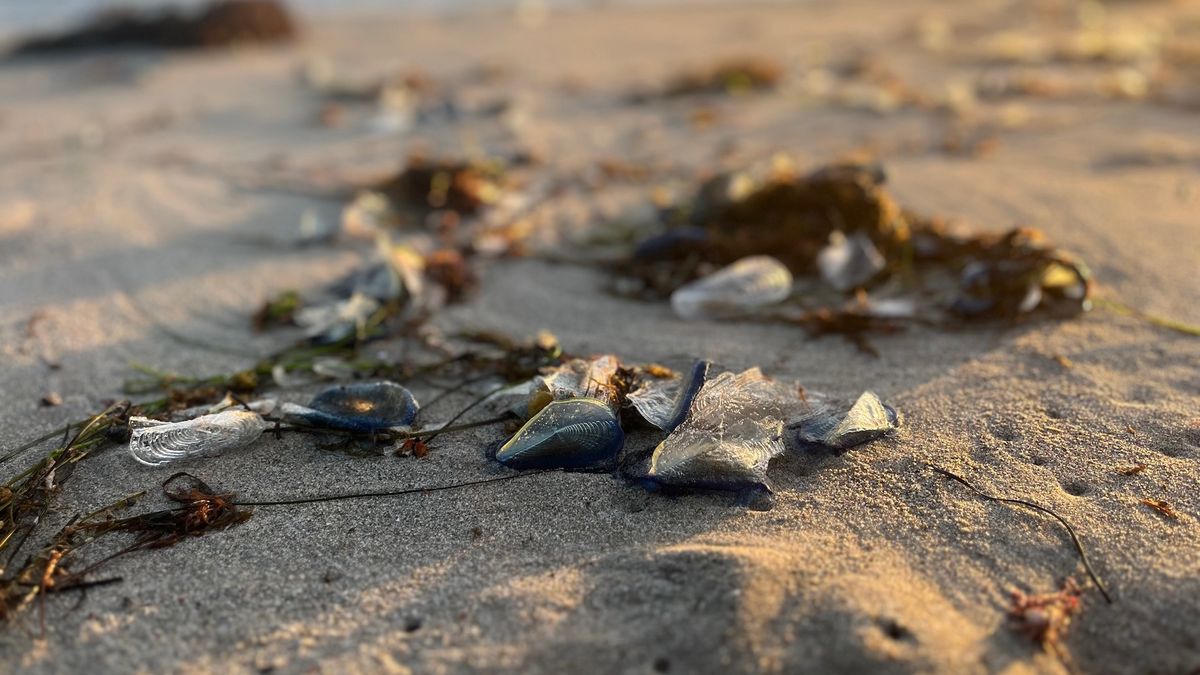
Rubbery blue sea creatures are washing up on California beaches by the thousands.

The translucent blobs, known as by-the-wind sailors (Velella velella), began piling up Sunday (March 30) along several beaches in the San Francisco Bay Area. Although the animals look like jellyfish, they’re more closely related to the Portuguese man o’ war (Physalia physalis).

Each creature, which can grow up to 4 inches (10 centimeters) long, is actually a colony of hundreds of smaller organisms with specialized functions. The velellas’ S-shaped sails crest the surface of the ocean, carrying them through the warm waters they call home, while their short tentacles hang below the water to catch their prey.

By-the-wind sailors’ stings are relatively mild compared with those of their more dangerous cousins, though experts recommend that you avoid touching your face or eyes after coming into contact with one.

Related: The weirdest creatures to wash ashore

These blobs have turned up en masse on beaches around the world before, usually in the spring and early summer. The creatures typically live in the open ocean, but large storms blowing in over the coast can propel them onto shore.

“This time of year the ocean along the west coast transitions into upwelling season,” Jennifer Stock, an education specialist at Greater Farallones National Marine Sanctuary in California, told SFGate. Upwelling occurs when cold, nutrient-rich water rises from deep in the ocean.

Get the world’s most fascinating discoveries delivered straight to your inbox.

“The true start/end of that season shifts every year based on a wide set of variables, but the presence of velellas indicates a shift in winds and currents, and the velellas, which are propelled by wind/current alone, get directed to the beaches,” Stock said.

a close-up of a by-the-wind sailor

Each by-the-wind sailor (Velella velella) is actually a colony of hundreds of smaller organisms with specialized functions. (Image credit: STRINGER via Getty Images)

Because the velellas can’t steer themselves, they get stranded on the beach until either the tide carries them back out to sea or they die. Recent northward winds and storms have carried the animals to the Bay Area over the past week — and experts predict more could wash up in the coming days.

“I would say if we get a nice high pressure system, which is generally associated with nice clear skies, but also upwelling, it’s going to really concentrate them just offshore,” Raphael Kudela, an oceanographer at the University of California, Santa Cruz, told KQED. “And then all we need is a break in that — a low [pressure system] coming through or the high weakening — and then we would probably see a nice big raft of them come washing into the beaches.”

“It’s kind of cool to see,” Kudela added. “They’re really beautiful.”

Source link

Share. Facebook Twitter Pinterest LinkedIn Tumblr Email
Previous ArticleHuge magma eruptions may have torn South America and Africa apart during the breakup of supercontinent Pangaea
Next Article Estrogen may spur the body to make opioids after injury
Editor
  • Website

Related Posts

Lifestyle

Countries with the Lowest IQ, Updated July 2024

April 13, 2026
Lifestyle

Human ancestors butchered and ate elephants 1.8 million years ago, helping to fuel their large brains

April 13, 2026
Lifestyle

Living in Brazil: A Guide for Beginners

April 13, 2026
Add A Comment

Comments are closed.

Categories
  • Entertainment
  • Lifestyle
  • News
  • Sports
  • Tech
  • Travel
Recent Posts
  • Military spending boosts fortunes of Minnesota companies
  • Countries with the Lowest IQ, Updated July 2024
  • Pope Leo fires back at Trump, says peace message is rooted in the Gospel
  • Resnick: RSCCD – A Crisis of Leadership, Accountability and Trust
  • Human ancestors butchered and ate elephants 1.8 million years ago, helping to fuel their large brains
calendar
April 2026
M T W T F S S
 12345
6789101112
13141516171819
20212223242526
27282930  
« Mar    
Recent Posts
  • Military spending boosts fortunes of Minnesota companies
  • Countries with the Lowest IQ, Updated July 2024
  • Pope Leo fires back at Trump, says peace message is rooted in the Gospel
About

Welcome to Baynard Media, your trusted source for a diverse range of news and insights. We are committed to delivering timely, reliable, and thought-provoking content that keeps you informed
and inspired

Categories
  • Entertainment
  • Lifestyle
  • News
  • Sports
  • Tech
  • Travel
Facebook X (Twitter) Pinterest WhatsApp
  • Contact Us
  • About Us
  • Privacy Policy
  • Disclaimer
  • UNSUBSCRIBE
© 2026 copyrights reserved

Type above and press Enter to search. Press Esc to cancel.