Close Menu
  • Home
  • UNSUBSCRIBE
  • News
  • Lifestyle
  • Tech
  • Entertainment
  • Sports
  • Travel
Facebook X (Twitter) WhatsApp
Trending
  • ‘Geminid Symphony’ and ‘Galactic Gandalf’: See the breathtaking views of our home galaxy from the 2026 Milky Way Photographer of the Year contest
  • Japan’s ‘crawling’ moon robot LEV-2 passed its historic first lunar mission with flying colors
  • Artificial turf contains 400 chemicals tied to cancer and hormone disruption. But is it unsafe?
  • ‘Just defies belief’: 5 million-year-old whale graveyard stretches for 750 miles in the Indian Ocean
  • New blood tests look for many cancers, aiming to catch them early. But do they actually work?
  • In a first, scientists translated an entire viral genome so a quantum computer could read and analyze it
  • Diagnostic dilemma: Man who donated his body after death had rare ‘triple penis’
  • Scientists discover giant, fan-shaped structure deep beneath the East Antarctic Ice Sheet
Facebook X (Twitter) WhatsApp
Baynard Media
  • Home
  • UNSUBSCRIBE
  • News
  • Lifestyle
  • Tech
  • Entertainment
  • Sports
  • Travel
Baynard Media
Home»Lifestyle»This robot ‘cannibal’ can consume other smaller robots — watch it grow bigger and stronger
Lifestyle

This robot ‘cannibal’ can consume other smaller robots — watch it grow bigger and stronger

EditorBy EditorJuly 23, 2025No Comments3 Mins Read
Share Facebook Twitter Pinterest LinkedIn Tumblr Reddit Telegram Email
Share
Facebook Twitter LinkedIn Pinterest Email

Robots that Grow by Consuming Other Robots – YouTube
Robots that Grow by Consuming Other Robots - YouTube


Watch On

Scientists have created a prototype robot that can grow, heal and improve itself by integrating material from its environment or by “consuming” other robots. It’s a big step forward in developing robot autonomy, the researchers say.

The researchers coined the term “robot metabolism” to describe the process that enables machinery to absorb and reuse parts from its surroundings. The scientists published their work July 16 in the journal Science Advances.

“True autonomy means robots must not only think for themselves but also physically sustain themselves,” study lead author Philippe Martin Wyder, professor of engineering at Columbia University, said in a statement.


You may like

“Just as biological life absorbs and integrates resources, these robots grow, adapt, and repair using materials from their environment or from other robots.”

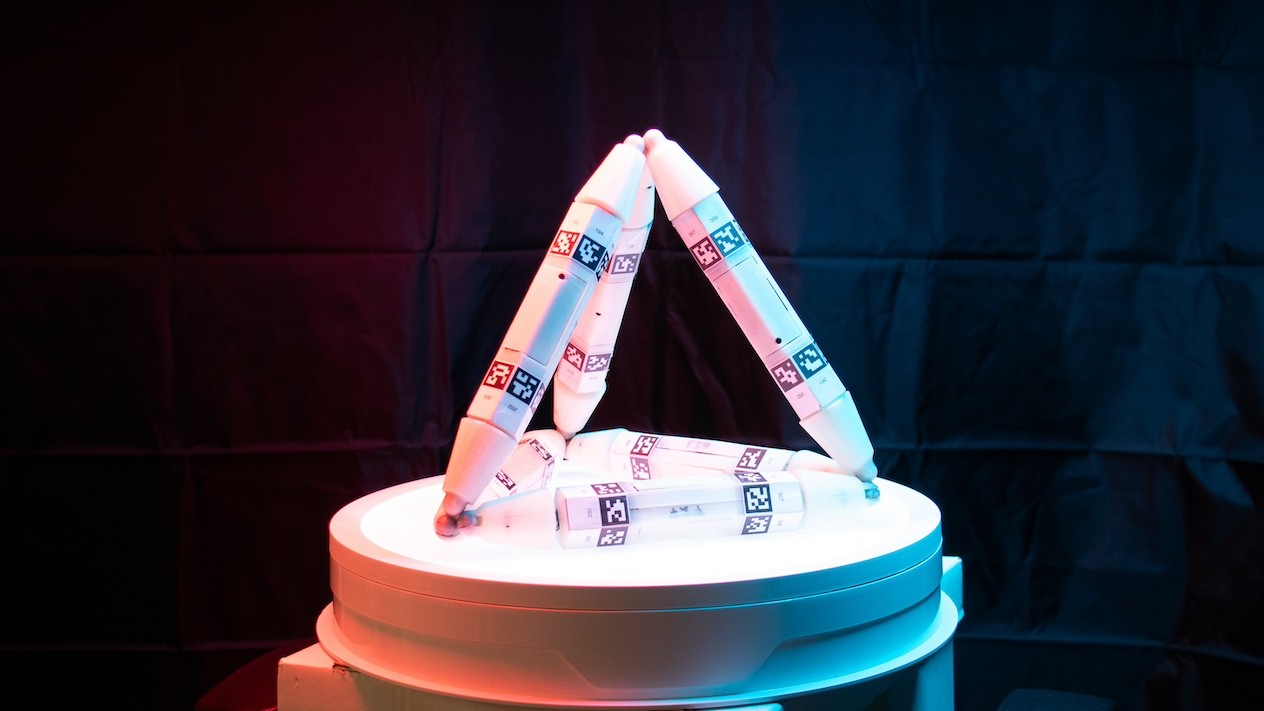
The robots are made from “truss links” — six-sided elongated rods with magnetic connectors that can contract and expand with other modules.

These modules can be assembled and disassembled as well. The magnets enable the robots to form increasingly complex structures in what their makers hope can be a “self-sustaining machine ecology.”

Related: Watch humanlike robot with bionic muscles dangle as it twitches, shrugs and clenches its fists in creepy video

Get the world’s most fascinating discoveries delivered straight to your inbox.

There are two rules for robot metabolism, the scientists said in the study. First, a robot must grow completely on its own, or be assisted by other robots with similar components. Second, the only external provisions granted to the truss links are materials and energy. Truss links use a mix of automated and controlled behaviors. Shape-shifting, cannibalizing robots

‘Bad sci-fi scenarios’

In a controlled environment, scientists laid truss links across an environment to observe how the robot connects with other modules.

The researchers noted how the truss links first assembled themselves in 2D shapes but later integrated new parts to become a 3D tetrahedron that could navigate the uneven testing ground. The robot did this by integrating an additional link to use as a walking stick, the researchers said in the study.

“Robot minds have moved forward by leaps and bounds in the past decade through machine learning, but robot bodies are still monolithic, unadaptive, and unrecyclable. Biological bodies, in contrast, are all about adaptation — lifeforms can grow, heal and adapt,” study co-lead author Hod Lipson, chair of the department of mechanical engineering at Columbia University, said in the statement.

“In large part, this ability stems from the modular nature of biology that can use and reuse modules (amino acids) from other lifeforms,” Lispon added. “Ultimately, we’ll have to get robots to do the same — to learn to use and reuse parts from other robots.”

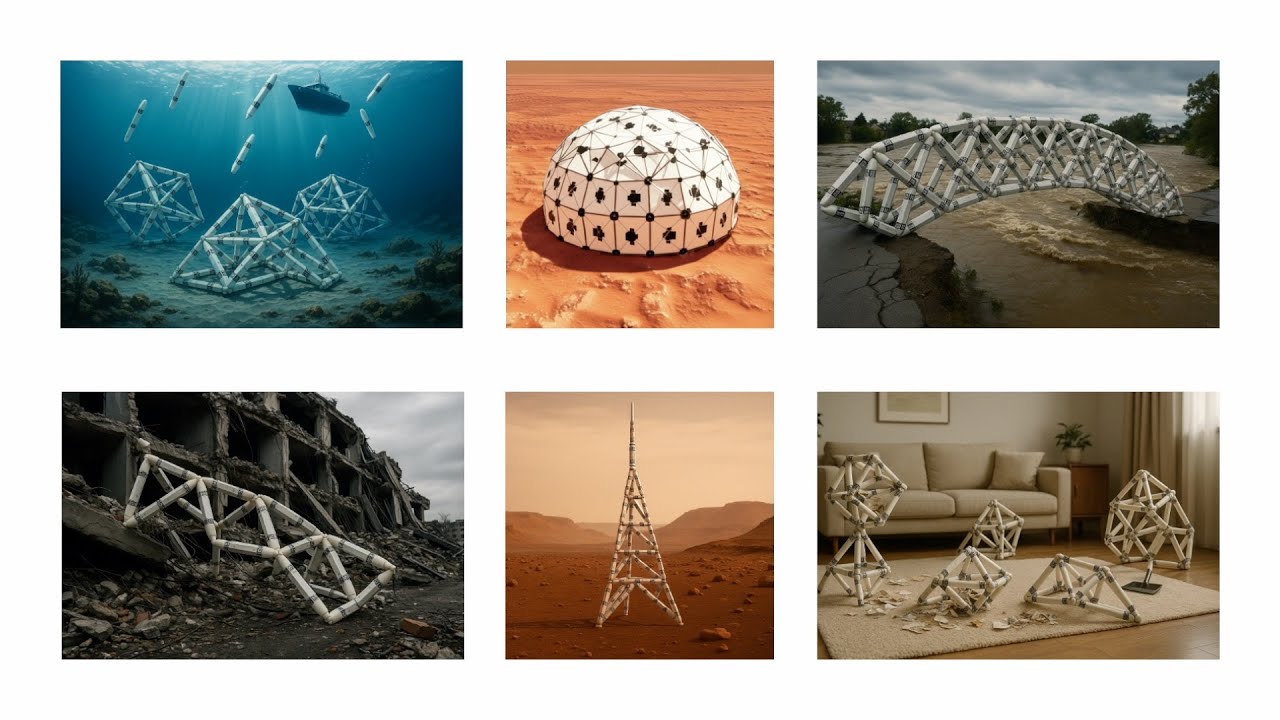
The researchers said they envisioned a future in which machines can maintain themselves, without the assistance of humans. By being able to grow and adapt to different tasks and environments, these robots could play important roles in.disaster recovery and space exploration, for example.

“The image of self-reproducing robots conjures some bad sci-fi scenarios,” Lipson said. “But the reality is that as we hand off more and more of our lives to robots, from driverless cars to automated manufacturing, and even defense and space exploration. Who is going to take care of these robots? We can’t rely on humans to maintain these machines. Robots must ultimately learn to take care of themselves.”

Source link

Share. Facebook Twitter Pinterest LinkedIn Tumblr Email
Previous ArticleAnti-corruption bill sparks widespread protests across Ukraine as Zelenskyy points to Russia
Next Article Gaza baby dies as starvation spreads
Editor
  • Website

Related Posts

Lifestyle

‘Geminid Symphony’ and ‘Galactic Gandalf’: See the breathtaking views of our home galaxy from the 2026 Milky Way Photographer of the Year contest

June 11, 2026
Lifestyle

Japan’s ‘crawling’ moon robot LEV-2 passed its historic first lunar mission with flying colors

June 11, 2026
Lifestyle

Artificial turf contains 400 chemicals tied to cancer and hormone disruption. But is it unsafe?

June 11, 2026
Add A Comment

Comments are closed.

Categories
  • Entertainment
  • Lifestyle
  • News
  • Sports
  • Tech
  • Travel
Recent Posts
  • ‘Geminid Symphony’ and ‘Galactic Gandalf’: See the breathtaking views of our home galaxy from the 2026 Milky Way Photographer of the Year contest
  • Japan’s ‘crawling’ moon robot LEV-2 passed its historic first lunar mission with flying colors
  • Artificial turf contains 400 chemicals tied to cancer and hormone disruption. But is it unsafe?
  • ‘Just defies belief’: 5 million-year-old whale graveyard stretches for 750 miles in the Indian Ocean
  • New blood tests look for many cancers, aiming to catch them early. But do they actually work?
calendar
June 2026
M T W T F S S
1234567
891011121314
15161718192021
22232425262728
2930  
« May    
Recent Posts
  • ‘Geminid Symphony’ and ‘Galactic Gandalf’: See the breathtaking views of our home galaxy from the 2026 Milky Way Photographer of the Year contest
  • Japan’s ‘crawling’ moon robot LEV-2 passed its historic first lunar mission with flying colors
  • Artificial turf contains 400 chemicals tied to cancer and hormone disruption. But is it unsafe?
About

Welcome to Baynard Media, your trusted source for a diverse range of news and insights. We are committed to delivering timely, reliable, and thought-provoking content that keeps you informed
and inspired

Categories
  • Entertainment
  • Lifestyle
  • News
  • Sports
  • Tech
  • Travel
Facebook X (Twitter) Pinterest WhatsApp
  • Contact Us
  • About Us
  • Privacy Policy
  • Disclaimer
  • UNSUBSCRIBE
© 2026 copyrights reserved

Type above and press Enter to search. Press Esc to cancel.