Close Menu
  • Home
  • UNSUBSCRIBE
  • News
  • Lifestyle
  • Tech
  • Entertainment
  • Sports
  • Travel
Facebook X (Twitter) WhatsApp
Trending
  • ‘Nations need to prepare now’: Key Atlantic ocean current is much closer to collapse than scientists thought
  • Neanderthal toddlers grew faster than modern humans, probably because of the harsh environment they evolved in
  • NASA shuts off another Voyager 1 instrument as humanity’s most distant spacecraft prepares for risky ‘Big Bang’ maneuver to save power
  • Florida is facing its most intense drought in 15 years. Here’s how it got so bad and how long it will last.
  • New blood test aims to spot liver scarring when it’s still reversible and before it paves the way to cancer
  • ‘We’re the best servants anyone could dream of!’: AI superintelligence has no need to enslave humans because we’re already bowing to it
  • Glowing ring of plankton surrounding New Zealand islands linked to deadly underwater plateau — Earth from space
  • Omar files new financial form in response to Trump, GOP critics
Facebook X (Twitter) WhatsApp
Baynard Media
  • Home
  • UNSUBSCRIBE
  • News
  • Lifestyle
  • Tech
  • Entertainment
  • Sports
  • Travel
Baynard Media
Home»Lifestyle»There’s liquid on Titan, Saturn’s largest moon. But something’s missing and scientists are confused
Lifestyle

There’s liquid on Titan, Saturn’s largest moon. But something’s missing and scientists are confused

EditorBy EditorApril 27, 2025No Comments3 Mins Read
Share Facebook Twitter Pinterest LinkedIn Tumblr Reddit Telegram Email
Share
Facebook Twitter LinkedIn Pinterest Email

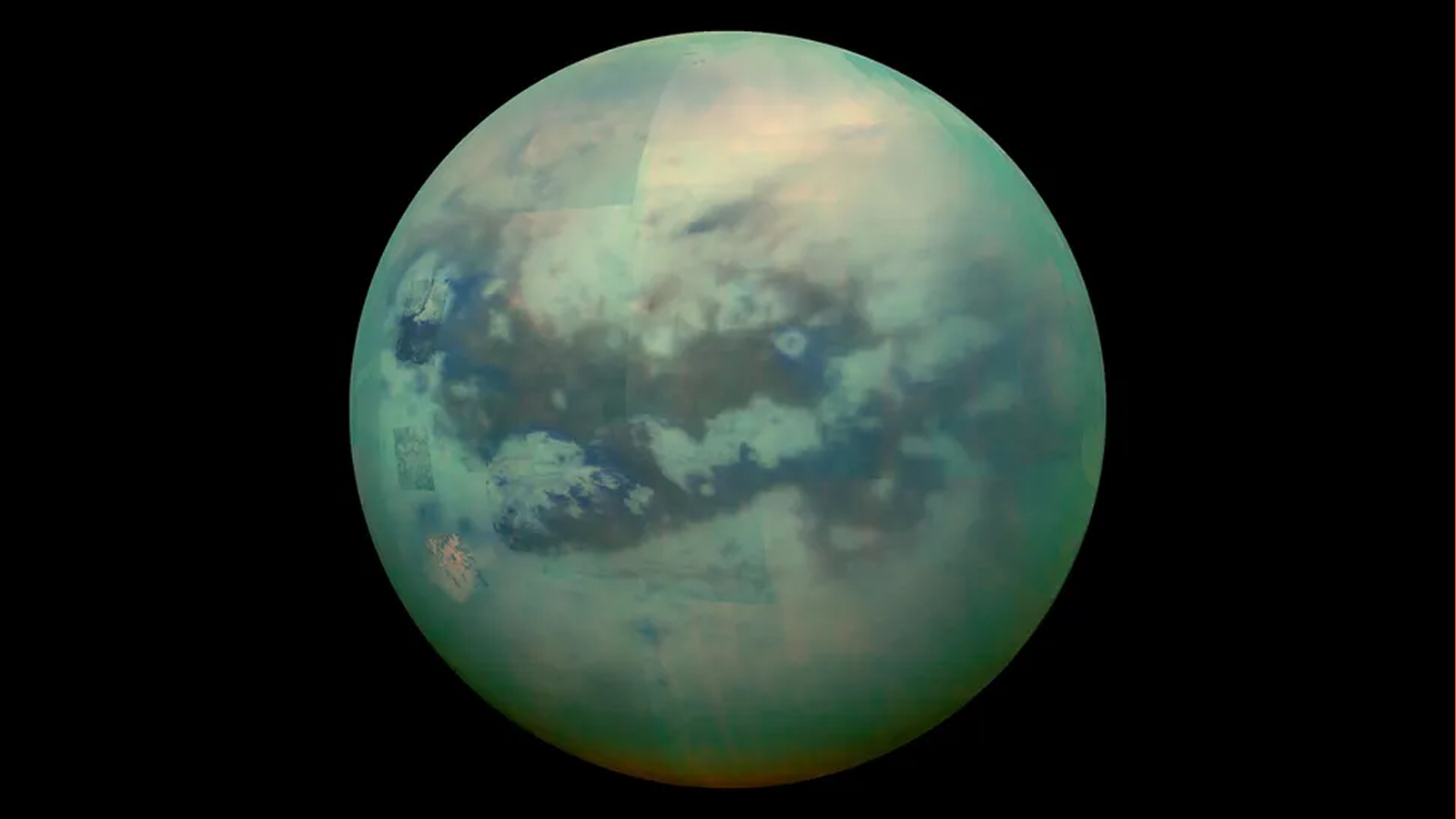
Scientists have known for a while that Saturn’s largest moon, Titan, has rivers and seas of liquid methane on its surface. But it’s strangely lacking in deltas, a new study suggests.

On Earth, large rivers create deltas with sediment-filled wetlands. Deltas form when the mouth of a river empties into another body of water. Besides Earth, Titan is the only planetary body in our solar system with liquid flowing on the surface.

Researchers recently looked for deltas on the big Saturn satellite but came up empty.

“We take it for granted that if you have rivers and sediments, you get deltas,” study leader Sam Birch, an assistant professor in the Department of Earth, Environmental and Planetary Sciences at Brown University in Rhode Island, said in a statement.

“But Titan is weird. It’s a playground for studying processes we thought we understood,” he added.

Related: Space photo of the week: Look into Titan’s ‘eye,’ 20 years after the Huygens spacecraft’s historic landing on Saturn’s largest moon

The researchers were hoping to find deltas on Titan, because these landforms feature lots of sediment. The sediment in deltas tends to come from a large area, and deltas gather it in one place. Studying such sediment could reveal insights about Titan’s climate and tectonic histories — and perhaps even possible signs of alien life.

Get the world’s most fascinating discoveries delivered straight to your inbox.

“It’s kind of disappointing as a geomorphologist, because deltas should preserve so much of Titan’s history,” Birch said.

We know that Titan’s surface has flowing liquid methane, because NASA’s Cassini spacecraft spotted evidence of the stuff on multiple flybys. Cassini used synthetic aperture radar (SAR) to look through Titan’s thick atmosphere during these close encounters and found channels and large flat areas that are consistent with large bodies of liquid.

But shallow liquid methane is largely transparent in Cassini’s SAR data. Scientists have therefore had a hard time studying Titan’s coastal features, because it’s hard to make out where the coast ends and the sea floor starts.

So, Birch’s team came up with a computer model that simulates what Cassini’s SAR would see when looking at Earth. But the model replaced the water in Earth’s rivers and oceans with Titan’s liquid methane.

“We basically made synthetic SAR images of Earth that assume properties of Titan’s liquid instead of Earth’s,” Birch said. “Once we see SAR images of a landscape we know very well, we can go back to Titan and understand a bit better what we’re looking at.”

three zoomed-in satellite images of a coastal region on earth stacked on top of each other

Earth as seen by the radar instrument on NASA’s Cassini Saturn probe. In order to understand what landforms on Titan could be seen by Cassini’s radar, researchers looked at well-known Earth landforms through Cassini’s perspective. The bottom image is how the U.S. Gulf Coast would have looked to Cassini. (Image credit: Birch Lab/Brown University)

The synthetic SAR images of Earth that they created “resolved large deltas and many other large coastal landscapes,” according to the researchers.

They say that new analysis of the Cassini SAR data also revealed other mysteries. For example, Titan’s coasts appear to have pits of unknown origin deep within lakes and seas, and deep channels cut across the moon’s sea floors offer no clue to how they got there.

“This is really not what we expected,” Birch said. “But Titan does this to us a lot. I think that’s what makes it such an engaging place to study.”

The new study was published in the Journal of Geophysical Research: Planets on March 25.

Originally posted on Space.com.

Source link

Share. Facebook Twitter Pinterest LinkedIn Tumblr Email
Previous ArticleClimate change is spoiling food faster, making hundreds of millions of people sick around the world
Next Article Can you burp in space?
Editor
  • Website

Related Posts

Lifestyle

‘Nations need to prepare now’: Key Atlantic ocean current is much closer to collapse than scientists thought

April 22, 2026
Lifestyle

Neanderthal toddlers grew faster than modern humans, probably because of the harsh environment they evolved in

April 21, 2026
Lifestyle

NASA shuts off another Voyager 1 instrument as humanity’s most distant spacecraft prepares for risky ‘Big Bang’ maneuver to save power

April 21, 2026
Add A Comment

Comments are closed.

Categories
  • Entertainment
  • Lifestyle
  • News
  • Sports
  • Tech
  • Travel
Recent Posts
  • ‘Nations need to prepare now’: Key Atlantic ocean current is much closer to collapse than scientists thought
  • Neanderthal toddlers grew faster than modern humans, probably because of the harsh environment they evolved in
  • NASA shuts off another Voyager 1 instrument as humanity’s most distant spacecraft prepares for risky ‘Big Bang’ maneuver to save power
  • Florida is facing its most intense drought in 15 years. Here’s how it got so bad and how long it will last.
  • New blood test aims to spot liver scarring when it’s still reversible and before it paves the way to cancer
calendar
April 2026
M T W T F S S
 12345
6789101112
13141516171819
20212223242526
27282930  
« Mar    
Recent Posts
  • ‘Nations need to prepare now’: Key Atlantic ocean current is much closer to collapse than scientists thought
  • Neanderthal toddlers grew faster than modern humans, probably because of the harsh environment they evolved in
  • NASA shuts off another Voyager 1 instrument as humanity’s most distant spacecraft prepares for risky ‘Big Bang’ maneuver to save power
About

Welcome to Baynard Media, your trusted source for a diverse range of news and insights. We are committed to delivering timely, reliable, and thought-provoking content that keeps you informed
and inspired

Categories
  • Entertainment
  • Lifestyle
  • News
  • Sports
  • Tech
  • Travel
Facebook X (Twitter) Pinterest WhatsApp
  • Contact Us
  • About Us
  • Privacy Policy
  • Disclaimer
  • UNSUBSCRIBE
© 2026 copyrights reserved

Type above and press Enter to search. Press Esc to cancel.