Close Menu
  • Home
  • UNSUBSCRIBE
  • News
  • Lifestyle
  • Tech
  • Entertainment
  • Sports
  • Travel
Facebook X (Twitter) WhatsApp
Trending
  • ‘Insect apocalypse’ is already fueling malnutrition in some regions, first-of-its-kind study reveals
  • Hantavirus LIVE: American passengers from cruise head to specialized facilities in Nebraska
  • New ‘trick’ fixes major flaw in neutral-atom quantum computers — inching us closer to a superpowerful system
  • A 2025 Alaskan tsunami was one of the largest on record, new research finds
  • Lion’s head pendant: An ancient Egyptian board game piece that was later repurposed into a magical religious object with baboons
  • Are we more closely related to cats or dogs?
  • Declassified Apollo 12 images show UFOs on the moon — Space photo of the week
  • ‘More than 100 million years of evolution’: How snakes evolved and lost their legs
Facebook X (Twitter) WhatsApp
Baynard Media
  • Home
  • UNSUBSCRIBE
  • News
  • Lifestyle
  • Tech
  • Entertainment
  • Sports
  • Travel
Baynard Media
Home»Lifestyle»There’s a speed limit to human thought — and it’s ridiculously low
Lifestyle

There’s a speed limit to human thought — and it’s ridiculously low

EditorBy EditorJanuary 10, 2025No Comments3 Mins Read
Share Facebook Twitter Pinterest LinkedIn Tumblr Reddit Telegram Email
Share
Facebook Twitter LinkedIn Pinterest Email

How fast do humans think? According to a new study, it’s slower than you might expect.

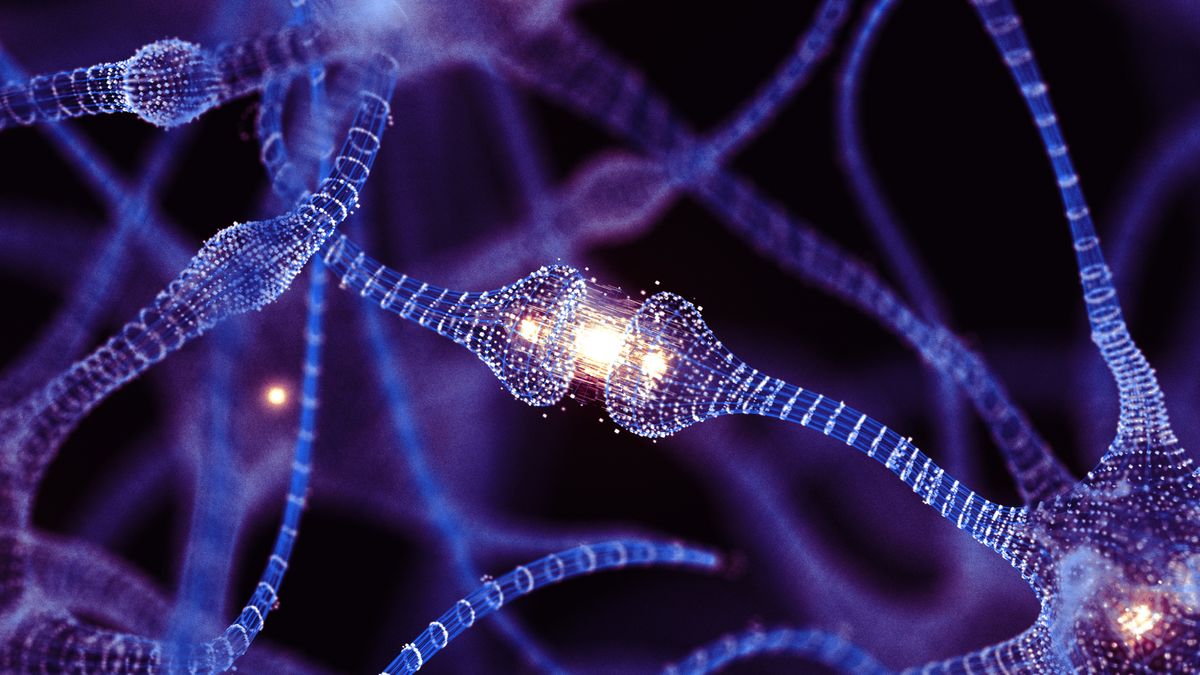
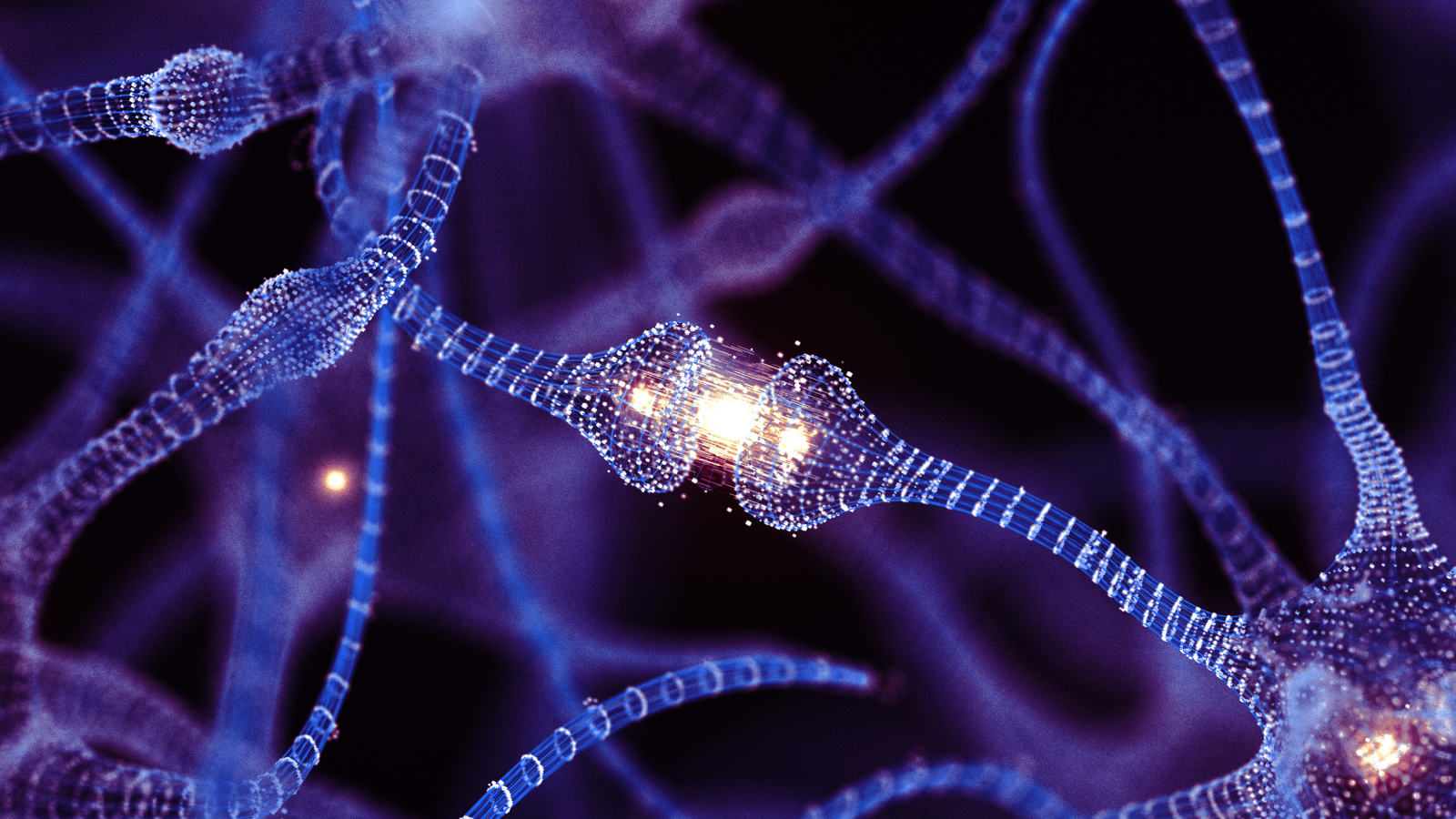
The peripheral nervous system — the network of nerves that deliver information between the brain and the body — takes in environmental information at over a billion bits per second, a speed comparable to a lightning-fast internet connection. But people think and process that information at just 10 bits per second, researchers report in the study.

This vast gulf hints at major unexplored questions in neuroscience and human cognition.

“That number is ridiculously small compared with any information rate we encounter in daily life,” the researchers wrote in the study, published Dec. 17 in the journal Neuron. “For example, we get anxious when the speed of the home WiFi network drops below 100 megabits per second because that might compromise our enjoyment of Netflix shows. Meanwhile, even if we stay awake during the show, our brain will never extract more than 10 bits per second of that giant bitstream.”

Study co-authors Jieyu Zheng and Markus Meister of Caltech determined this speed limit by calculating the number of bits required to perform a task, such as solving a Rubik’s Cube or memorizing the order of a deck of cards, and dividing it by the time it took to perform each task. For record-holding memory experts who can finish those tasks in seconds, the rate at which they processed information was roughly 10 bits per second.

The study raises several questions about how and why human brains filter out all of the extra information taken in by the nervous system. A single neuron can fire fast enough to transmit information at 10 bits per second.

“That one single neuron can perform as well as a monkey,” Zheng told Live Science. “You just need one neuron to encode a yes or no decision, and that is enough for you to output that behavior. So why do we need billions of neurons to do this while we still output at 10 bits per second?”

Get the world’s most fascinating discoveries delivered straight to your inbox.

The study also proposes an explanation for why humans can’t follow multiple trains of thought at once, like listening to several simultaneous conversations at a party. Evolutionary history may be responsible for this single-minded focus, the researchers proposed. The first nervous systems in early animals were only responsible for guiding an organism toward food or away from danger, so they needed to make only one decision at a time: which direction to move. More abstract thought follows similar “paths” and may have inherited the constraint of processing just one path at a time, the study authors suggested.

The team proposed that the brain operates in two simultaneous modes: an “outer brain” that takes in millions of bits of data and an “inner brain” that focuses on one small portion of that data at a time. To determine how the outer and inner brain communicate with each other, researchers will have to study individuals’ brains while they perform complex tasks, such as driving a car, that require people to frequently shift their attention to different aspects of the task, Zheng said.

“How does [the inner brain] do task control?” Zheng said. “How does it choose which 10 bits per second we are paying attention to? We are really hoping that people can go deeper into this.”

Source link

Share. Facebook Twitter Pinterest LinkedIn Tumblr Email
Previous ArticleLA fires: Los Angeles Lakers game postponed by NBA along with Los Angeles Kings’ NHL fixture | Basketball News
Next Article Vance will resign his Senate seat as inauguration approaches
Editor
  • Website

Related Posts

Lifestyle

‘Insect apocalypse’ is already fueling malnutrition in some regions, first-of-its-kind study reveals

May 11, 2026
Lifestyle

Hantavirus LIVE: American passengers from cruise head to specialized facilities in Nebraska

May 11, 2026
Lifestyle

New ‘trick’ fixes major flaw in neutral-atom quantum computers — inching us closer to a superpowerful system

May 11, 2026
Add A Comment

Comments are closed.

Categories
  • Entertainment
  • Lifestyle
  • News
  • Sports
  • Tech
  • Travel
Recent Posts
  • ‘Insect apocalypse’ is already fueling malnutrition in some regions, first-of-its-kind study reveals
  • Hantavirus LIVE: American passengers from cruise head to specialized facilities in Nebraska
  • New ‘trick’ fixes major flaw in neutral-atom quantum computers — inching us closer to a superpowerful system
  • A 2025 Alaskan tsunami was one of the largest on record, new research finds
  • Lion’s head pendant: An ancient Egyptian board game piece that was later repurposed into a magical religious object with baboons
calendar
May 2026
M T W T F S S
 123
45678910
11121314151617
18192021222324
25262728293031
« Apr    
Recent Posts
  • ‘Insect apocalypse’ is already fueling malnutrition in some regions, first-of-its-kind study reveals
  • Hantavirus LIVE: American passengers from cruise head to specialized facilities in Nebraska
  • New ‘trick’ fixes major flaw in neutral-atom quantum computers — inching us closer to a superpowerful system
About

Welcome to Baynard Media, your trusted source for a diverse range of news and insights. We are committed to delivering timely, reliable, and thought-provoking content that keeps you informed
and inspired

Categories
  • Entertainment
  • Lifestyle
  • News
  • Sports
  • Tech
  • Travel
Facebook X (Twitter) Pinterest WhatsApp
  • Contact Us
  • About Us
  • Privacy Policy
  • Disclaimer
  • UNSUBSCRIBE
© 2026 copyrights reserved

Type above and press Enter to search. Press Esc to cancel.