Close Menu
  • Home
  • UNSUBSCRIBE
  • News
  • Lifestyle
  • Tech
  • Entertainment
  • Sports
  • Travel
Facebook X (Twitter) WhatsApp
Trending
  • ‘The biggest El Niño event since the 1870s’: ‘Super’ El Niño is now the most likely scenario by the end of this year ‪—‬ and the humanitarian cost could be huge
  • Antarctica’s sudden sea ice loss is one of the most extreme and confusing events in the modern climate record. Scientists now know why it’s happening.
  • ‘I heard gasps’: Artemis II astronauts reveal inside story of their mind-bending solar eclipse
  • A pill can stop people from developing COVID after being exposed to the virus, trial finds
  • ‘There are 4 people in those pixels’: Earth-based telescope snapped Artemis II crew orbiting the moon
  • High-status Roman woman was buried in a lead coffin with jet hairpins and exotic resins, archaeologists find
  • Dreame FP10 Air Purifier review: Pet-friendly and low-maintenance
  • ‘Extreme’ crystal that formed in 1945 nuclear bomb test is unlike anything scientists have seen
Facebook X (Twitter) WhatsApp
Baynard Media
  • Home
  • UNSUBSCRIBE
  • News
  • Lifestyle
  • Tech
  • Entertainment
  • Sports
  • Travel
Baynard Media
Home»Lifestyle»Student accidentally creates ‘shape-recovering liquid’ that’s an exception to the laws of thermodynamics
Lifestyle

Student accidentally creates ‘shape-recovering liquid’ that’s an exception to the laws of thermodynamics

EditorBy EditorApril 18, 2025No Comments3 Mins Read
Share Facebook Twitter Pinterest LinkedIn Tumblr Reddit Telegram Email
Share
Facebook Twitter LinkedIn Pinterest Email

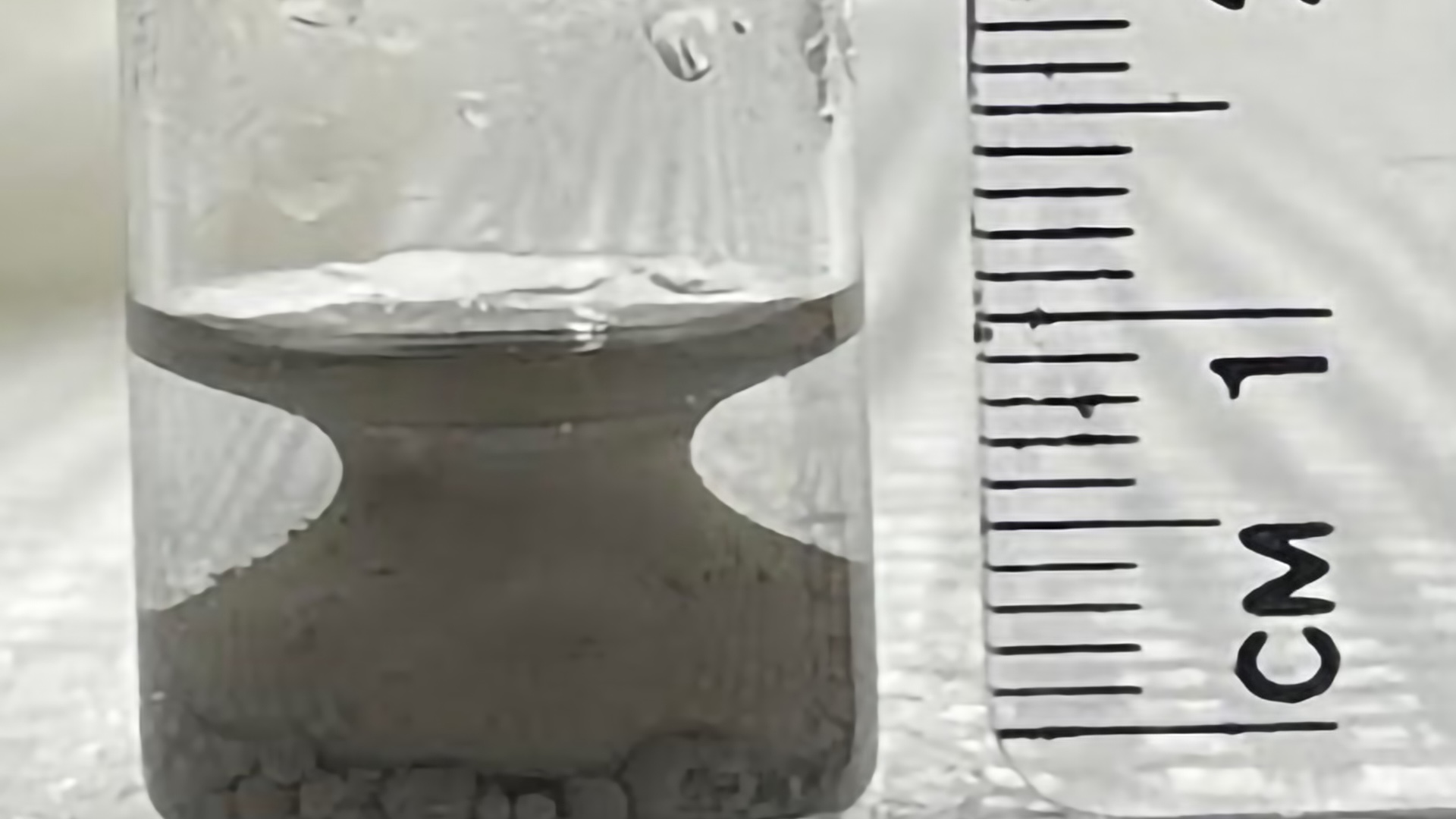
Researchers have discovered a “shape-recovering liquid” that appears to defy the laws of thermodynamics. The liquid, which is made up of oil, water and magnetized particles,consistently separates into a form resembling a Grecian urn.

This discovery began when Anthony Raykh, a polymer science and engineering graduate student at the University of Massachusetts Amherst, was studying a mixture of oil, water and nickel particles in a vial. He shook the vial to create an emulsion — or a blend of liquids that don’t mix. But instead of separating into a clear top and bottom, the mixture formed the shape of a Grecian urn. Even after shaking the vial over and over, it kept returning to this shape.

“That’s really odd,” study co-author Thomas Russell, a professor of polymer science and engineering at University of Massachusetts Amherst, told Live Science. It’s strange, he explained, because typically when a mixture of liquids that don’t blend return to equilibrium before emulsion, they want to minimize the interfacial area, or the boundary between the two liquids. This tendency to minimize the interfacial area is governed by the laws of thermodynamics, which describe how temperature, heat, work and energy are related in physical systems.

In typical emulsions of oil and water, the liquids form spherical droplets, which have minimal surface area. In comparison, the Grecian urn shape has a higher surface area. This higher surface area, which seems to contradict the laws of nature, puzzled the researchers.

After investigating this odd behavior, they found that interactions between the nickel particles “sort of took over” to create what appeared to be a violation of the laws of thermodynamics, Russell said. The particles created magnetic dipoles, a phenomenon where their magnetic poles attract each other, creating a field of “chains” on the liquid’s surface. This interaction interferes with how the emulsion separates.

While Russell said researchers have previously examined the segregation of particles in oil-water mixtures — as Raykh had been doing — nobody else had conducted the same experiment. So, no other researchers had observed or reported the higher interfacial energy seen with the Grecian urn shape.

While at first glance this mixture seems to defy the laws of thermodynamics, Russell clarified that it’s just a strange case of them. The scientists realized that the particles’ magnetic interference played a role, as its influence created a higher interfacial energy, which resulted in the higher surface area-shape. And in general, the laws of thermodynamics apply to systems overall, not to the interactions between individual particles, Russell said.

Get the world’s most fascinating discoveries delivered straight to your inbox.

The researchers published their findings on April 4 in the journal Nature Physics.

Source link

Share. Facebook Twitter Pinterest LinkedIn Tumblr Email
Previous ArticleScientists hijacked the human eye to get it to see a brand-new color. It’s called ‘olo.’
Next Article Is getting an IUD painful?
Editor
  • Website

Related Posts

Lifestyle

‘The biggest El Niño event since the 1870s’: ‘Super’ El Niño is now the most likely scenario by the end of this year ‪—‬ and the humanitarian cost could be huge

May 15, 2026
Lifestyle

Antarctica’s sudden sea ice loss is one of the most extreme and confusing events in the modern climate record. Scientists now know why it’s happening.

May 15, 2026
Lifestyle

‘I heard gasps’: Artemis II astronauts reveal inside story of their mind-bending solar eclipse

May 15, 2026
Add A Comment

Comments are closed.

Categories
  • Entertainment
  • Lifestyle
  • News
  • Sports
  • Tech
  • Travel
Recent Posts
  • ‘The biggest El Niño event since the 1870s’: ‘Super’ El Niño is now the most likely scenario by the end of this year ‪—‬ and the humanitarian cost could be huge
  • Antarctica’s sudden sea ice loss is one of the most extreme and confusing events in the modern climate record. Scientists now know why it’s happening.
  • ‘I heard gasps’: Artemis II astronauts reveal inside story of their mind-bending solar eclipse
  • A pill can stop people from developing COVID after being exposed to the virus, trial finds
  • ‘There are 4 people in those pixels’: Earth-based telescope snapped Artemis II crew orbiting the moon
calendar
May 2026
M T W T F S S
 123
45678910
11121314151617
18192021222324
25262728293031
« Apr    
Recent Posts
  • ‘The biggest El Niño event since the 1870s’: ‘Super’ El Niño is now the most likely scenario by the end of this year ‪—‬ and the humanitarian cost could be huge
  • Antarctica’s sudden sea ice loss is one of the most extreme and confusing events in the modern climate record. Scientists now know why it’s happening.
  • ‘I heard gasps’: Artemis II astronauts reveal inside story of their mind-bending solar eclipse
About

Welcome to Baynard Media, your trusted source for a diverse range of news and insights. We are committed to delivering timely, reliable, and thought-provoking content that keeps you informed
and inspired

Categories
  • Entertainment
  • Lifestyle
  • News
  • Sports
  • Tech
  • Travel
Facebook X (Twitter) Pinterest WhatsApp
  • Contact Us
  • About Us
  • Privacy Policy
  • Disclaimer
  • UNSUBSCRIBE
© 2026 copyrights reserved

Type above and press Enter to search. Press Esc to cancel.