Close Menu
  • Home
  • UNSUBSCRIBE
  • News
  • Lifestyle
  • Tech
  • Entertainment
  • Sports
  • Travel
Facebook X (Twitter) WhatsApp
Trending
  • Do you really have to wash rice before you cook it?
  • Neuroscientists are searching for the ‘cellular substrate of loneliness’
  • Bow-Wow, Ding-Dong, Pooh-Pooh: Expert explains early theories of how human language evolved — and their silly names
  • Famous child mummies in Andes may belong to kids who were sacrificed to ‘ritually anchor’ the Inca’s presence as their empire expanded
  • Artemis II crew captures rare double auroras on the dark side of Earth as they zoom toward the moon — Space photo of the week
  • Has all the water on Earth been peed before?
  • ‘This might be the point of no return’: Experts on the current measles outbreak and where we go from here
  • NASA’s experimental X-59 jet breaks sound barrier for 1st time in step toward ‘quiet supersonic’ technology
Facebook X (Twitter) WhatsApp
Baynard Media
  • Home
  • UNSUBSCRIBE
  • News
  • Lifestyle
  • Tech
  • Entertainment
  • Sports
  • Travel
Baynard Media
Home»Lifestyle»Strongest solar flare of 2025 erupts — and it could bring auroras to half the US on Wednesday
Lifestyle

Strongest solar flare of 2025 erupts — and it could bring auroras to half the US on Wednesday

EditorBy EditorNovember 12, 2025No Comments3 Mins Read
Share Facebook Twitter Pinterest LinkedIn Tumblr Reddit Telegram Email
Share
Facebook Twitter LinkedIn Pinterest Email

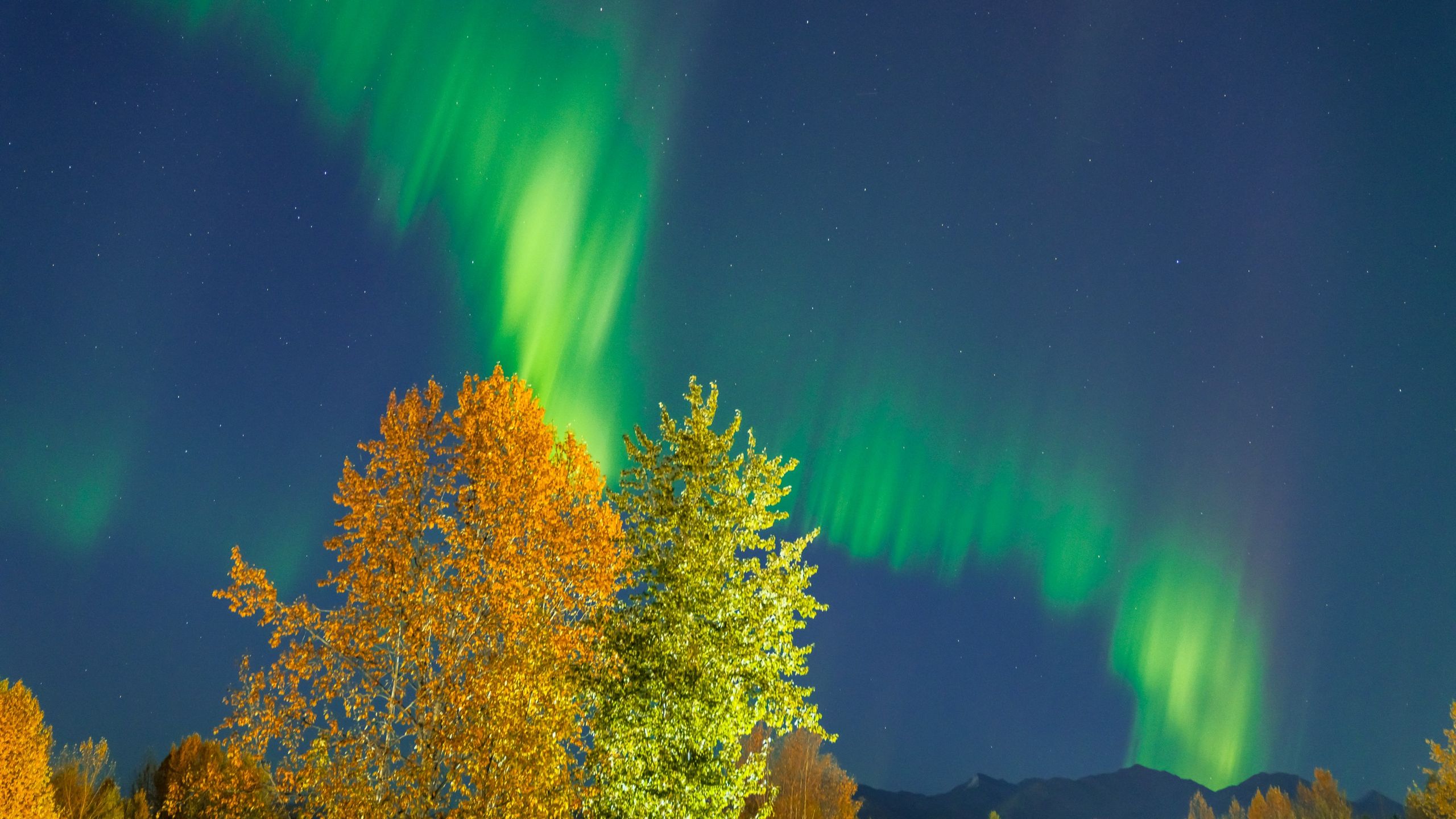
Three powerful outbursts of solar plasma are barrelling toward Earth, with dazzling auroras possible across the northern half of the United States over the coming nights.

Minor auroral activity is possible at high latitudes tonight (Nov. 11), but Wednesday (Nov. 12) could bring the Northern Lights as far south as northern California and Alabama, according to an alert from the National Oceanic and Atmospheric Administration (NOAA). There could also be a strong showing of auroras on Thursday (Nov. 13), NOAA added, though that forecast may change as more data comes in over the coming days.

The three solar outbursts headed our way — known as coronal mass ejections (CMEs) — were all launched from a particularly active sunspot called AR4274, which is currently aimed toward Earth. The first two CMEs erupted on Nov. 9 and Nov. 10, respectively, and were each triggered by powerful X-class solar flares — the most powerful class of solar flare on NOAA’s space weather prediction scale.


You may like

These flares were categorized as class X1.7 and X1.2, and the resulting CMEs have a chance to combine with or “cannibalize” each other as they speed toward Earth, according to Live Science’s sister site Space.com. These first two CMEs are expected to hit sometime tonight.

The third, and most powerful CME, was launched on Tuesday morning following the eruption of a gargantuan X5.1 solar flare — almost five times the intensity of the two preceding flares, and the single strongest solar flare of 2025 so far. The powerful flare triggered radio blackouts over Europe and Africa shortly after it erupted, according to Space.com.

A map of tonight's aurora forecast

NOAA predicts strong auroral activity across the northern United States over the next two to three nights. (Image credit: NOAA)

‘Severe’ storms possible

The monster CME accompanying this flare is predicted to hit Earth sometime on Wednesday (Nov. 12), according to NOAA. Combined with the effects of the two prior outbursts, this could cause serious disturbances to Earth’s magnetic field. NOAA predicts the resulting geomagnetic storm could reach “severe” G4 levels — the second highest level on the agency’s scale.

Besides plunging the Northern Lights to much lower latitudes than usual, G4-class geomagnetic storms can cause power grid fluctuations, low-frequency radio disturbances, and GPS errors, according to NOAA.

Get the world’s most fascinating discoveries delivered straight to your inbox.

There is nothing that an average person needs to do to prepare for a geomagnetic storm. However, if you wish to go aurora hunting over the coming nights, find a dark sky location as far from artificial lights as possible and allow about 20 minutes for your eyes to adjust. You don’t need any special equipment to see the aurora, but the colors can sometimes look even more vibrant through a digital camera or phone screen, as they have a large aperture to let in light.

Solar flares, CMEs, and geomagnetic storms all become more common — and more intense — during solar maximum, the peak of the sun’s roughly 11-year activity cycle. Astronomers suspect we are seeing the current solar cycle’s maximum play out right now, though the peak of activity may have already occurred last year.

Source link

Share. Facebook Twitter Pinterest LinkedIn Tumblr Email
Previous ArticleAntonio Brown pleads not guilty to attempted murder in Miami shooting
Next Article Sean Duffy on controllers who took sick time
Editor
  • Website

Related Posts

Lifestyle

Do you really have to wash rice before you cook it?

June 15, 2026
Lifestyle

Neuroscientists are searching for the ‘cellular substrate of loneliness’

June 14, 2026
Lifestyle

Bow-Wow, Ding-Dong, Pooh-Pooh: Expert explains early theories of how human language evolved — and their silly names

June 14, 2026
Add A Comment

Comments are closed.

Categories
  • Entertainment
  • Lifestyle
  • News
  • Sports
  • Tech
  • Travel
Recent Posts
  • Do you really have to wash rice before you cook it?
  • Neuroscientists are searching for the ‘cellular substrate of loneliness’
  • Bow-Wow, Ding-Dong, Pooh-Pooh: Expert explains early theories of how human language evolved — and their silly names
  • Famous child mummies in Andes may belong to kids who were sacrificed to ‘ritually anchor’ the Inca’s presence as their empire expanded
  • Artemis II crew captures rare double auroras on the dark side of Earth as they zoom toward the moon — Space photo of the week
calendar
June 2026
M T W T F S S
1234567
891011121314
15161718192021
22232425262728
2930  
« May    
Recent Posts
  • Do you really have to wash rice before you cook it?
  • Neuroscientists are searching for the ‘cellular substrate of loneliness’
  • Bow-Wow, Ding-Dong, Pooh-Pooh: Expert explains early theories of how human language evolved — and their silly names
About

Welcome to Baynard Media, your trusted source for a diverse range of news and insights. We are committed to delivering timely, reliable, and thought-provoking content that keeps you informed
and inspired

Categories
  • Entertainment
  • Lifestyle
  • News
  • Sports
  • Tech
  • Travel
Facebook X (Twitter) Pinterest WhatsApp
  • Contact Us
  • About Us
  • Privacy Policy
  • Disclaimer
  • UNSUBSCRIBE
© 2026 copyrights reserved

Type above and press Enter to search. Press Esc to cancel.