Close Menu
  • Home
  • UNSUBSCRIBE
  • News
  • Lifestyle
  • Tech
  • Entertainment
  • Sports
  • Travel
Facebook X (Twitter) WhatsApp
Trending
  • Flesh-eating screwworm found in Texas cow. Are humans at risk?
  • New Velociraptor cousin was a ‘4-winged’ dragon that hunted prey from the trees of ancient China, fossil find hints
  • AI models are teaching each other ‘violent and antisocial’ traits through hidden data signals, study finds — and scientists can’t figure out why
  • Scientists race to collect the last seeds from a critically endangered tree before it goes extinct
  • What’s the deepest cave in the world?
  • ‘Crystals’ of space-time could be the origins of certain rare black holes, theoretical study hints
  • AI could consume up 3% of world’s electricity the UN warns
  • Kaleidoscopic meteorite could be a piece of a ‘lost world’ from the early solar system — Space photo of the week
Facebook X (Twitter) WhatsApp
Baynard Media
  • Home
  • UNSUBSCRIBE
  • News
  • Lifestyle
  • Tech
  • Entertainment
  • Sports
  • Travel
Baynard Media
Home»Lifestyle»‘Stranded’ NASA astronauts are finally coming home: Here’s when they’ll be back on Earth
Lifestyle

‘Stranded’ NASA astronauts are finally coming home: Here’s when they’ll be back on Earth

EditorBy EditorMarch 17, 2025No Comments3 Mins Read
Share Facebook Twitter Pinterest LinkedIn Tumblr Reddit Telegram Email
Share
Facebook Twitter LinkedIn Pinterest Email

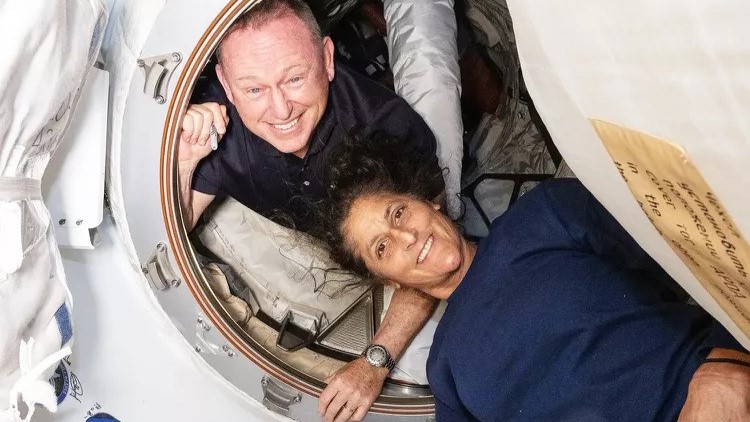
A pair of NASA astronauts stuck aboard the International Space Station (ISS) for more than nine months will return to Earth on Tuesday (March 18) at the earliest, NASA has said.

Astronauts Butch Wilmore and Suni Williams will depart the space station aboard a SpaceX Dragon capsule on Tuesday morning and splash down near Florida by the evening, if the weather permits.

Wilmore and Williams arrived at the ISS in June as part of Boeing’s first Starliner Crew Test Flight. But a number of issues with Boeing’s spacecraft — including five helium leaks and five failures of its reaction control system (RCS) thrusters — led to the mission being abandoned and the duo’s time in space extended from eight days to nearly 300.

Their return, part of NASA’s scheduled rotation between the ISS’s Crew-9 and Crew-10 missions, was originally scheduled for Wednesday (March 19), but has been bumped forward to 5:57 pm ET on Tuesday (March 18) due to favorable weather conditions, according to NASA.

“The updated return target continues to allow the space station crew members time to complete handover duties while providing operational flexibility ahead of less favorable weather conditions expected for later in the week,” NASA wrote in an announcement on Sunday (March 16).

Related: NASA offers SpaceX $843 million to destroy the International Space Station

If everything goes according to plan, Wilmore and Williams will ride home on the Crew-9 Dragon capsule, called “Freedom”, alongside fellow NASA astronaut Nick Hague and Roscosmos cosmonaut Aleksandr Gorbunov — half of the usual Crew-9 crew to allow space for the Starliner duo.

Get the world’s most fascinating discoveries delivered straight to your inbox.

The Starliner astronauts’ 300 consecutive days in space is nowhere near the current record of 437 days set by Russian Cosmonaut Valeri Polyakov in 1995, but it’s still a long, and completely unexpected extension of the astronauts’ shift aboard the ISS.

And it’s also one that can have deleterious effects on the human body, causing the heart, bones and muscles to shrink over time under low gravity. These are well known side effects of long-term spaceflight that all astronauts must face, and not related to the extension of Wilmore and Williams’ mission. To mitigate them, the astronauts have been doing two hours of resistance and endurance training every day.

“Mission managers will continue monitoring weather conditions in the area, as Dragon’s undocking depends on various factors, including spacecraft readiness, recovery team readiness, weather, sea states, and other factors,” NASA wrote in its update. “NASA and SpaceX will confirm the specific splashdown location closer to the Crew-9 return.”

For those who want to watch Wilmore and Williams on their return, NASA will stream the event beginning on Monday (March 17) at 10:45 p.m. ET as the hatches close between Freedom and the ISS. The stream will then resume two hours later for undocking, which is expected at 1:05 a.m. ET. Live coverage will resume in the evening when the astronauts begin to reenter Earth’s atmosphere, currently scheduled for 5:11 p.m. ET.

Source link

Share. Facebook Twitter Pinterest LinkedIn Tumblr Email
Previous ArticleTrump officials raise the stakes in showdowns with judges
Next Article March 29 solar eclipse: Where and when to see the rare sunrise solar eclipse from North America
Editor
  • Website

Related Posts

Lifestyle

Flesh-eating screwworm found in Texas cow. Are humans at risk?

June 8, 2026
Lifestyle

New Velociraptor cousin was a ‘4-winged’ dragon that hunted prey from the trees of ancient China, fossil find hints

June 8, 2026
Lifestyle

AI models are teaching each other ‘violent and antisocial’ traits through hidden data signals, study finds — and scientists can’t figure out why

June 8, 2026
Add A Comment

Comments are closed.

Categories
  • Entertainment
  • Lifestyle
  • News
  • Sports
  • Tech
  • Travel
Recent Posts
  • Flesh-eating screwworm found in Texas cow. Are humans at risk?
  • New Velociraptor cousin was a ‘4-winged’ dragon that hunted prey from the trees of ancient China, fossil find hints
  • AI models are teaching each other ‘violent and antisocial’ traits through hidden data signals, study finds — and scientists can’t figure out why
  • Scientists race to collect the last seeds from a critically endangered tree before it goes extinct
  • What’s the deepest cave in the world?
calendar
June 2026
M T W T F S S
1234567
891011121314
15161718192021
22232425262728
2930  
« May    
Recent Posts
  • Flesh-eating screwworm found in Texas cow. Are humans at risk?
  • New Velociraptor cousin was a ‘4-winged’ dragon that hunted prey from the trees of ancient China, fossil find hints
  • AI models are teaching each other ‘violent and antisocial’ traits through hidden data signals, study finds — and scientists can’t figure out why
About

Welcome to Baynard Media, your trusted source for a diverse range of news and insights. We are committed to delivering timely, reliable, and thought-provoking content that keeps you informed
and inspired

Categories
  • Entertainment
  • Lifestyle
  • News
  • Sports
  • Tech
  • Travel
Facebook X (Twitter) Pinterest WhatsApp
  • Contact Us
  • About Us
  • Privacy Policy
  • Disclaimer
  • UNSUBSCRIBE
© 2026 copyrights reserved

Type above and press Enter to search. Press Esc to cancel.