Close Menu
  • Home
  • UNSUBSCRIBE
  • News
  • Lifestyle
  • Tech
  • Entertainment
  • Sports
  • Travel
Facebook X (Twitter) WhatsApp
Trending
  • OpenAI’s internal AI model just solved an 80-year-old math problem ‪—‬ and mathematicians verified it
  • Skeletal remains of Queen Elisenda, one of the most powerful rulers in medieval Europe, unearthed in Barcelona — along with several others who bore unexplained stab wounds
  • Tests that measure ‘biological age’ aren’t helpful for tracking your health, scientists say
  • Japan hits 6G key milestone with high-frequency speeds topping 100 Gbps
  • War has brought Iran’s water crisis to a breaking point: ‘Things will collapse unless there is meaningful structural change’
  • Fingal’s Cave: Scotland’s ‘cave of melody’ where eerie echoes bounce off pillars of solidified lava
  • Controversial ‘JuMBO’ planets discovered by James Webb telescope may not be an illusion after all
  • Scientists found the optimal robot body, and it has 20 legs ‪—‬ watch it scale walls and move through trees
Facebook X (Twitter) WhatsApp
Baynard Media
  • Home
  • UNSUBSCRIBE
  • News
  • Lifestyle
  • Tech
  • Entertainment
  • Sports
  • Travel
Baynard Media
Home»Lifestyle»Stone man disease: A rare condition that causes a person to grow a second skeleton
Lifestyle

Stone man disease: A rare condition that causes a person to grow a second skeleton

EditorBy EditorNovember 28, 2024No Comments3 Mins Read
Share Facebook Twitter Pinterest LinkedIn Tumblr Reddit Telegram Email
Share
Facebook Twitter LinkedIn Pinterest Email

Disease name: Fibrodysplasia ossificans progressiva (FOP), also known as “stone man disease” or “Münchmeyer disease”

Affected populations: FOP is an extremely rare disease that is estimated to affect around 1 in 1 million people. It does not affect one demographic more than others; anyone may develop FOP, regardless of their sex, race or ethnicity.

Causes: FOP is caused by a mutation in a gene called ACVR1, which is involved in a cellular process that regulates the formation of the skeleton in the womb and then orchestrates skeletal repairs throughout life. The mutation causes the ACVR1 gene to become more active, leading to inappropriate bone formation.

In most cases, this mutation occurs randomly in people who have no family history of the disease. However, in rarer instances, patients may inherit the mutation from one parent who is affected by the condition. Only one copy of the mutated gene is required to cause FOP.

Related: Céline Dion’s muscle spasms caused by rare disorder: What is stiff-person syndrome?

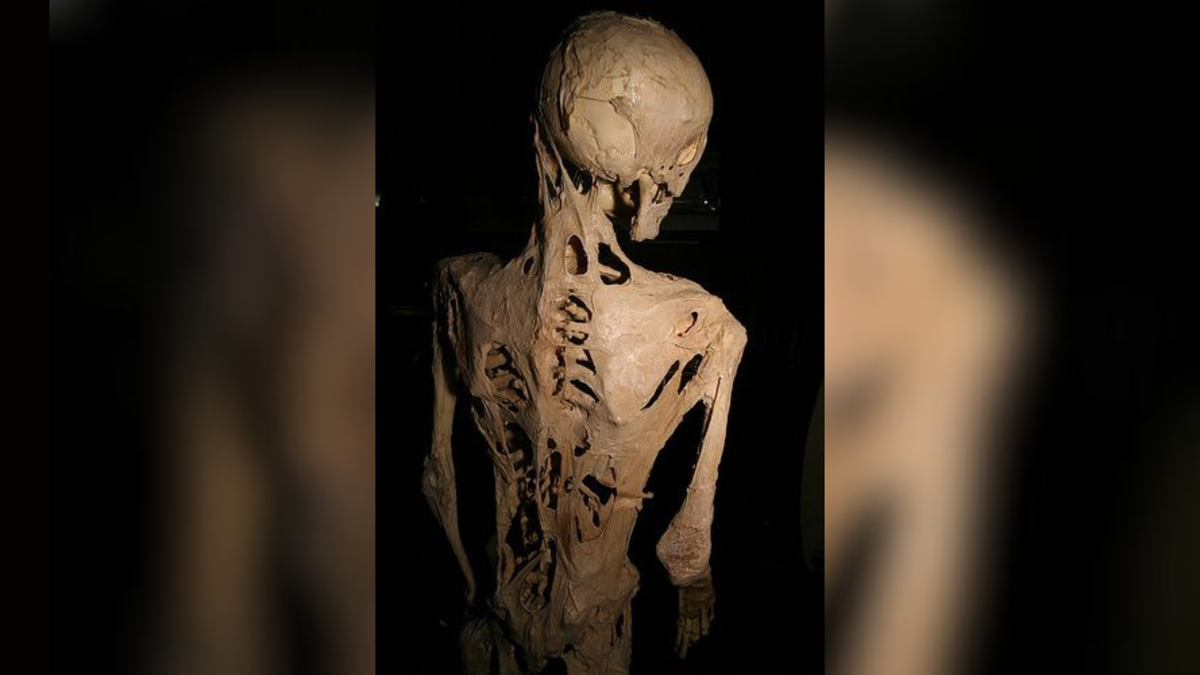
Symptoms: FOP causes the body’s muscle and connective tissue to be gradually replaced with bone tissue. This essentially forms a second skeleton that impedes the person’s movement. One of the first signs that someone has FOP is that they have shortened and turned-in big toes from birth. Around 50% of patients will also have similarly malformed thumbs.

Symptoms of FOP usually start during childhood, with some of the earliest affected areas normally being the neck, back, chest, arms and legs. Patients may also experience “flare-ups,” which are episodes of tissue swelling, pain and stiffness that worsen the condition. These flare-ups can occur spontaneously, or they may be triggered by some sort of trauma, such as an injury, surgery or a viral infection, like the flu. Other symptoms of FOP include difficult speaking or eating (if the mouth is affected and cannot open properly), as well as hearing loss and spinal deformity.

Get the world’s most fascinating discoveries delivered straight to your inbox.

Composite image showing a baby's back on the left-hand side and a child on the right-hand side, both with FOP. The background is an enlarged version of the image that is blurred.

An early flare-up of FOP in an infant’s back (left) and excess bone formation in a young man’s back (right). (Image credit: Kitterman J, et al.  J Neurol (2012) 259:2636-2643.)

By age 30, most patients with FOP are completely unable to move. The average life expectancy of people with the disease is around 56 years. The most common cause of death is cardiorespiratory failure due to patients losing the ability to breathe.

Treatments: Painkillers and anti-inflammatory drugs, such as corticosteroids, can help manage patients’ symptoms. Patients may also be advised to take extra precautions to minimize the risk of injury and infection, and they may engage in occupational therapy to help them carry out daily activities.

Doctors can’t conduct surgery to remove excess bone tissue, as this could inadvertently trigger further flare-ups of the condition.

In 2023, the U.S. Food and Drug Administration approved an oral drug called palovarotene (brand name: Sohonos) for the treatment of FOP in females 8 years and older and males 10 years and older. This approval followed a clinical trial in 107 patients with the condition. Those treated with the drug showed a reduction in excessive bone formation — around 54% lower than controls.

This article is for informational purposes only and is not meant to offer medical advice.

Ever wonder why some people build muscle more easily than others or why freckles come out in the sun? Send us your questions about how the human body works to community@livescience.com with the subject line “Health Desk Q,” and you may see your question answered on the website!

Source link

Share. Facebook Twitter Pinterest LinkedIn Tumblr Email
Previous ArticleBottas rules out Red Bull switch | 'Someone in organisation is against me'
Next Article Bears coach Matt Eberflus explains decision to not call timeout in final seconds as fans clamor for firing
Editor
  • Website

Related Posts

Lifestyle

OpenAI’s internal AI model just solved an 80-year-old math problem ‪—‬ and mathematicians verified it

May 30, 2026
Lifestyle

Skeletal remains of Queen Elisenda, one of the most powerful rulers in medieval Europe, unearthed in Barcelona — along with several others who bore unexplained stab wounds

May 29, 2026
Lifestyle

Tests that measure ‘biological age’ aren’t helpful for tracking your health, scientists say

May 29, 2026
Add A Comment

Comments are closed.

Categories
  • Entertainment
  • Lifestyle
  • News
  • Sports
  • Tech
  • Travel
Recent Posts
  • OpenAI’s internal AI model just solved an 80-year-old math problem ‪—‬ and mathematicians verified it
  • Skeletal remains of Queen Elisenda, one of the most powerful rulers in medieval Europe, unearthed in Barcelona — along with several others who bore unexplained stab wounds
  • Tests that measure ‘biological age’ aren’t helpful for tracking your health, scientists say
  • Japan hits 6G key milestone with high-frequency speeds topping 100 Gbps
  • War has brought Iran’s water crisis to a breaking point: ‘Things will collapse unless there is meaningful structural change’
calendar
May 2026
M T W T F S S
 123
45678910
11121314151617
18192021222324
25262728293031
« Apr    
Recent Posts
  • OpenAI’s internal AI model just solved an 80-year-old math problem ‪—‬ and mathematicians verified it
  • Skeletal remains of Queen Elisenda, one of the most powerful rulers in medieval Europe, unearthed in Barcelona — along with several others who bore unexplained stab wounds
  • Tests that measure ‘biological age’ aren’t helpful for tracking your health, scientists say
About

Welcome to Baynard Media, your trusted source for a diverse range of news and insights. We are committed to delivering timely, reliable, and thought-provoking content that keeps you informed
and inspired

Categories
  • Entertainment
  • Lifestyle
  • News
  • Sports
  • Tech
  • Travel
Facebook X (Twitter) Pinterest WhatsApp
  • Contact Us
  • About Us
  • Privacy Policy
  • Disclaimer
  • UNSUBSCRIBE
© 2026 copyrights reserved

Type above and press Enter to search. Press Esc to cancel.