Close Menu
  • Home
  • UNSUBSCRIBE
  • News
  • Lifestyle
  • Tech
  • Entertainment
  • Sports
  • Travel
Facebook X (Twitter) WhatsApp
Trending
  • Why Pink, Family Moved From Hollywood to New York
  • 6 U.S. service members killed since Iran mission start
  • The DJI Osmo Pocket 3 is $100 off for a limited time
  • F1 2026 rules: Explaining new cars, engines, modes and racing ahead of Australian GP first race with Bernie Collins | F1 News
  • Evil Dead Actor Shares News
  • Iranian women’s soccer team refuses to sing national anthem at Asian Cup
  • A new iPad Air is coming: How and when to preorder
  • Amy Broadhurst: The new mother on returning to GB to chase Olympic glory, beating Imane Khelif and being ‘Baby Canelo’ | Boxing News
Facebook X (Twitter) WhatsApp
Baynard Media
  • Home
  • UNSUBSCRIBE
  • News
  • Lifestyle
  • Tech
  • Entertainment
  • Sports
  • Travel
Baynard Media
Home»Lifestyle»Space photo of the week: The tilted spiral galaxy that took Hubble 23 years to capture
Lifestyle

Space photo of the week: The tilted spiral galaxy that took Hubble 23 years to capture

EditorBy EditorJanuary 12, 2025No Comments2 Mins Read
Share Facebook Twitter Pinterest LinkedIn Tumblr Reddit Telegram Email
Share
Facebook Twitter LinkedIn Pinterest Email

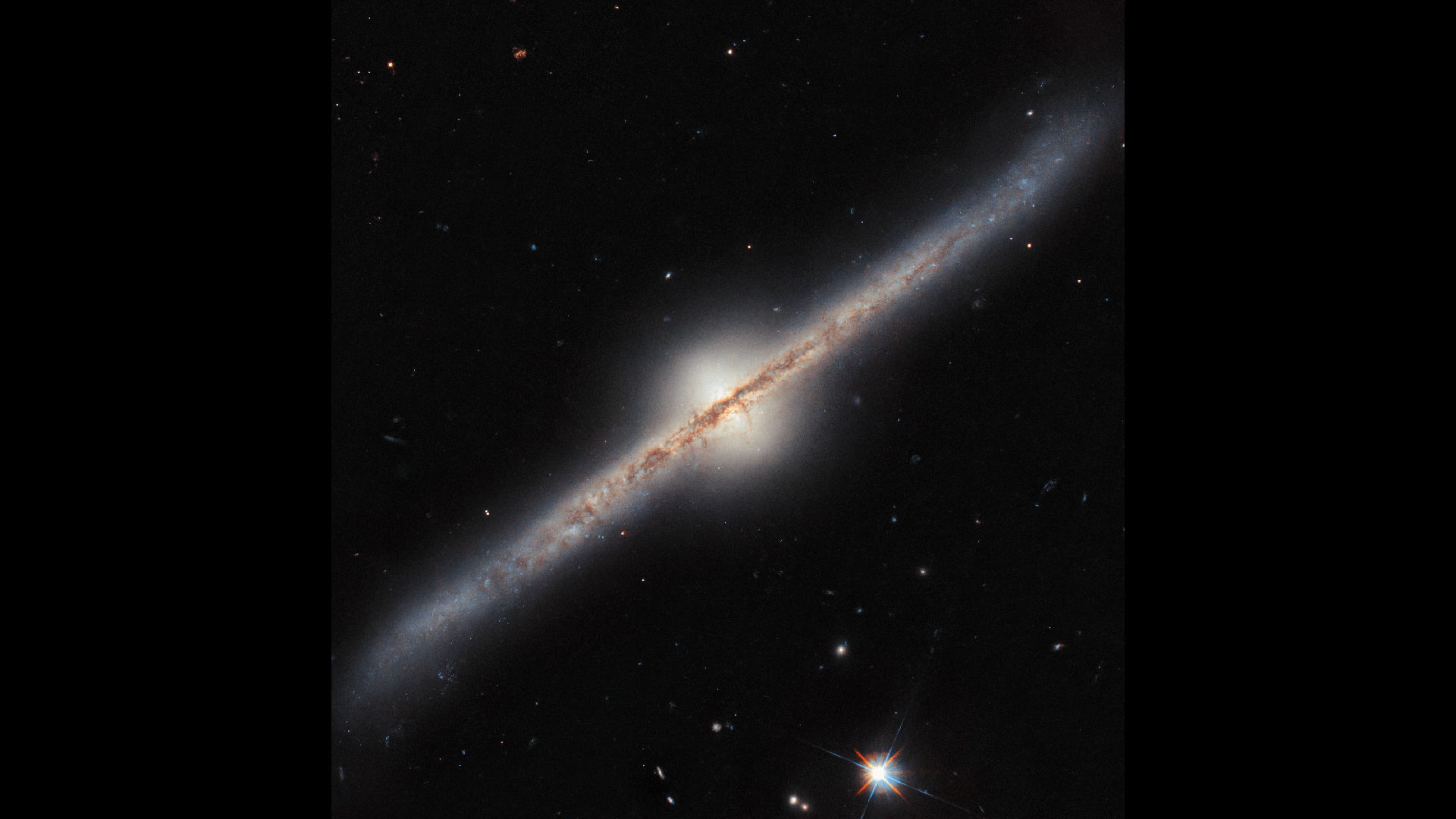
What it is: Spiral galaxy UGC 10043

Where it is: 150 million light-years away in the constellation Serpens

When it was shared: December 12, 2024

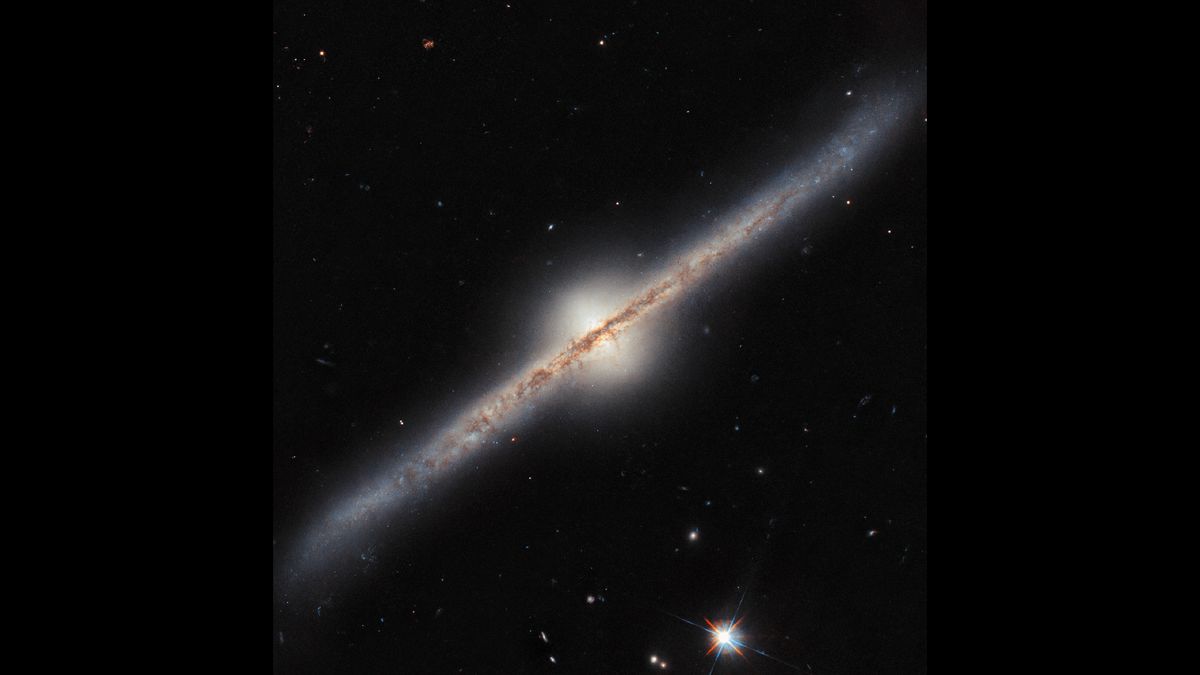
Why it’s so special: This image of a spiral galaxy taken by the Hubble Space Telescope is a portrait more than two decades in the making.

Like most full-color images of space objects, it’s a composite of images taken in different wavelengths of light. What sets this image apart, however, is that the data used to create it was collected during observation sessions in 2000 and 2023 — 23 years apart. That’s one advantage of having a space telescope in orbit for so long: Hubble was launched from the space shuttle Discovery on April 24, 1990, and its long service has enabled it to capture a huge amount of data about every corner of the cosmos.

But besides the prolonged methods used to create it, it’s also an unusual image on its face. Spiral galaxies — which account for about 60% of all galaxies in the universe, according to the European Space Agency — are, by chance, typically seen face-on when viewed from the solar system. That’s why spiral galaxies are typically associated with vivid spiral arms, which can only be seen from a face-on vantage. However, UGC 10043 is viewed edge-on, with its rings seemingly flattened into a line. This unique angle gives astronomers the chance to see how spiral galaxies are structured in 3D.

Related: Space photo of the week: Hubble celebrates 10 years of hunting giants

Get the world’s most fascinating discoveries delivered straight to your inbox.

This image of UGC 10043 reveals obvious lanes of dust, which would likely look like spiral arms if the galaxy was seen face-on. Here, they appear to block the collective glow of the stars that make up the galaxy itself. They also contain dark clouds, which are star-forming regions.

At the center of the image is a bulge of light — the galaxy’s bright core. All galaxies have one, but UGC 10043’s is unusually large. Astronomers think it may be because UGC 10043 has collided with a dwarf galaxy nearby, leaving it with extra dust and gas that has fueled it to create new stars. A collision could also explain why the galaxy’s disk is slightly warped, bending up at one end and down at the other.

For more sublime space images, check out our Space Photo of the Week archives.

Source link

Share. Facebook Twitter Pinterest LinkedIn Tumblr Email
Previous Article2TB of cloud storage for just $70.
Next Article Australian Open: Aryna Sabalenka makes winning start as Hady Habib makes history for Lebanon in Melbourne | Tennis News
Editor
  • Website

Related Posts

Lifestyle

Lady of Elche: A 2,400-year-old bust of a mysterious ‘highborn’ woman from pre-Roman Spain

March 2, 2026
Lifestyle

Do you weigh more when an elevator goes up or when it comes down?

March 2, 2026
Lifestyle

‘Equinox effect’ could supercharge auroras this March

March 1, 2026
Add A Comment

Comments are closed.

Categories
  • Entertainment
  • Lifestyle
  • News
  • Sports
  • Tech
  • Travel
Recent Posts
  • Why Pink, Family Moved From Hollywood to New York
  • 6 U.S. service members killed since Iran mission start
  • The DJI Osmo Pocket 3 is $100 off for a limited time
  • F1 2026 rules: Explaining new cars, engines, modes and racing ahead of Australian GP first race with Bernie Collins | F1 News
  • Evil Dead Actor Shares News
calendar
March 2026
M T W T F S S
 1
2345678
9101112131415
16171819202122
23242526272829
3031  
« Feb    
Recent Posts
  • Why Pink, Family Moved From Hollywood to New York
  • 6 U.S. service members killed since Iran mission start
  • The DJI Osmo Pocket 3 is $100 off for a limited time
About

Welcome to Baynard Media, your trusted source for a diverse range of news and insights. We are committed to delivering timely, reliable, and thought-provoking content that keeps you informed
and inspired

Categories
  • Entertainment
  • Lifestyle
  • News
  • Sports
  • Tech
  • Travel
Facebook X (Twitter) Pinterest WhatsApp
  • Contact Us
  • About Us
  • Privacy Policy
  • Disclaimer
  • UNSUBSCRIBE
© 2026 copyrights reserved

Type above and press Enter to search. Press Esc to cancel.