Close Menu
  • Home
  • UNSUBSCRIBE
  • News
  • Lifestyle
  • Tech
  • Entertainment
  • Sports
  • Travel
Facebook X (Twitter) WhatsApp
Trending
  • New robotic heart mimics common, mysterious condition to help researchers study it
  • Canon EOS R6 III review: A wildlife wonder
  • Medieval babies and adults buried together in Sweden were not related, archaeologists discover — raising big questions about early Christian burial practices
  • NASA is creating a fifth state of matter on the ISS, thanks to an upgrade to a mini-fridge-sized quantum lab
  • New sodium metal battery design charges in just 4 minutes and retains its capacity for years
  • Quantum computing wielded to create extremely rare material critical to nuclear fusion
  • Scientists build tiny ‘diving suit’ for cockroaches, turning them into search-and-rescue cyborgs
  • Physicists develop the first working model of quantum mechanics using only ‘real’ numbers
Facebook X (Twitter) WhatsApp
Baynard Media
  • Home
  • UNSUBSCRIBE
  • News
  • Lifestyle
  • Tech
  • Entertainment
  • Sports
  • Travel
Baynard Media
Home»Lifestyle»Socotra Archipelago: The Yemeni islands covered with astonishing cucumber, bottle and dragon’s blood trees
Lifestyle

Socotra Archipelago: The Yemeni islands covered with astonishing cucumber, bottle and dragon’s blood trees

EditorBy EditorJune 26, 2026No Comments3 Mins Read
Share Facebook Twitter Pinterest LinkedIn Tumblr Reddit Telegram Email
Share
Facebook Twitter LinkedIn Pinterest Email

QUICK FACTS

Name: Socotra Archipelago

Location: Northwest Indian Ocean, off the coasts of Yemen and Somalia

Coordinates: 12.48, 53.85

Why it’s incredible: It is a biodiversity hotspot that hosts hundreds of species found nowhere else on Earth.

The Socotra Archipelago is a cluster of four islands and two rocky islets belonging to Yemen. It is nicknamed the “Galápagos of the Indian Ocean” due to its staggering biodiversity, which includes hundreds of species that aren’t found anywhere else in the world.

Located about 250 miles (400 kilometers) south of the Arabian Peninsula and 140 miles (220 km) east of the Horn of Africa, the Socotra Archipelago is home to around 60,000 people. As of 2023, visitors could reach it only via a weekly flight from Abu Dhabi, United Arab Emirates, that had to be booked through WhatsApp and was often canceled without reason.

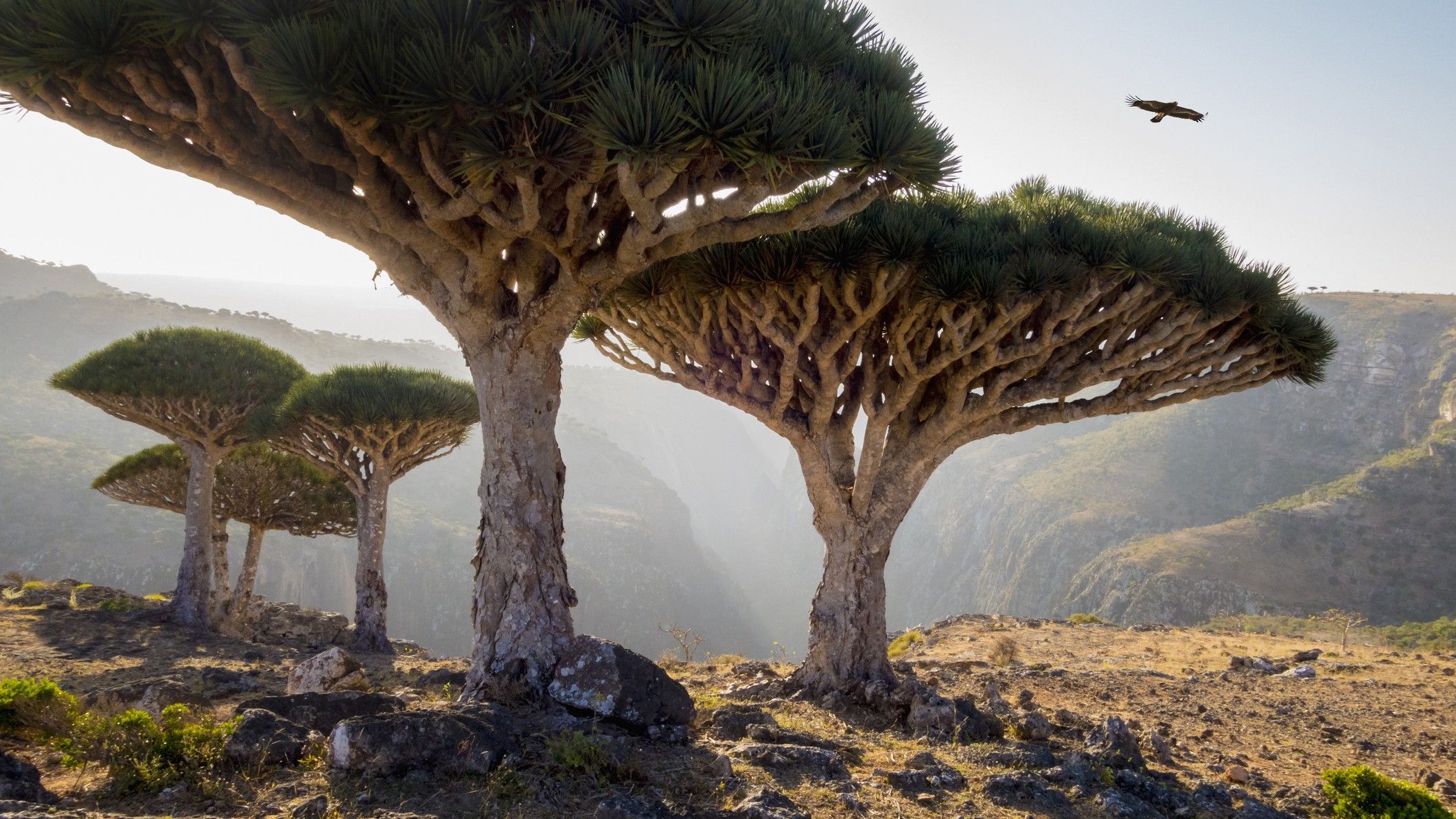
The archipelago has one main island, Socotra, which makes up 95% of the landmass, along with three smaller islands and two islets. The main island hosts snow-white sand dunes, a central mountain range, and limestone plateaus peppered with drought-resistant cucumber trees (Dendrosicyos socotranus) and umbrella-shaped dragon’s blood trees (Dracaena cinnabari) that do not exist elsewhere on Earth. The dragon’s blood tree gets its name from its crimson resin, which is used for natural medicine and as a pigment.

A flowering bottle tree and a cucumber tree on Socotar Island in Yemen.

The bottle tree (Adenium obesum socotranum; left image) and the cucumber tree (Dendrosicyos socotranus; right image)from the Socotar Archipelago aren’t found anywhere else in the world.

(Image credit: Jeremy Woodhouse (left) and zanskar (right) via Getty Images))

Socotra was recognized as a UNESCO World Heritage Site in 2008, thanks to its unique plants and animals, which have evolved in isolation for at least 15 million years. Socotra is a leftover fragment from when Arabia and Africa pulled apart around 30 million years ago. The split opened the Red Sea and the Gulf of Aden, which connects the Red Sea and the Arabian Sea.

More than one-third of Socotra’s plants, 90% of its reptiles and 95% of its land snail species are found exclusively in the archipelago, according to UNESCO. The marine life in Socotra is also incredibly diverse; it includes sea turtles, whale sharks (Rhincodon typus) and more than 250 species of reef-building corals.


You may like

The archipelago is tricky to get to, and pirates sometimes hijack vessels in the surrounding seas. Due to Yemen’s ongoing civil war, many governments, including the U.S., advise against all travel to the country, including Socotra, citing threats of terrorism, unrest, crime, health risks, kidnapping and landmines.

Discover more incredible places, where we highlight the fantastic history and science behind some of the most dramatic landscapes on Earth.

Get the world’s most fascinating discoveries delivered straight to your inbox.

TOPICS

incredible places

biodiversity

Source link

Share. Facebook Twitter Pinterest LinkedIn Tumblr Email
Previous ArticleThe US government wants to mine more lithium, but there may not be enough water to do it, study finds
Next Article Ancient empires quiz: Can you match these lands to the historical powers that ruled them?
Editor
  • Website

Related Posts

Lifestyle

New robotic heart mimics common, mysterious condition to help researchers study it

July 11, 2026
Lifestyle

Canon EOS R6 III review: A wildlife wonder

July 10, 2026
Lifestyle

Medieval babies and adults buried together in Sweden were not related, archaeologists discover — raising big questions about early Christian burial practices

July 10, 2026
Add A Comment

Comments are closed.

Categories
  • Entertainment
  • Lifestyle
  • News
  • Sports
  • Tech
  • Travel
Recent Posts
  • New robotic heart mimics common, mysterious condition to help researchers study it
  • Canon EOS R6 III review: A wildlife wonder
  • Medieval babies and adults buried together in Sweden were not related, archaeologists discover — raising big questions about early Christian burial practices
  • NASA is creating a fifth state of matter on the ISS, thanks to an upgrade to a mini-fridge-sized quantum lab
  • New sodium metal battery design charges in just 4 minutes and retains its capacity for years
calendar
July 2026
M T W T F S S
 12345
6789101112
13141516171819
20212223242526
2728293031  
« Jun    
Recent Posts
  • New robotic heart mimics common, mysterious condition to help researchers study it
  • Canon EOS R6 III review: A wildlife wonder
  • Medieval babies and adults buried together in Sweden were not related, archaeologists discover — raising big questions about early Christian burial practices
About

Welcome to Baynard Media, your trusted source for a diverse range of news and insights. We are committed to delivering timely, reliable, and thought-provoking content that keeps you informed
and inspired

Categories
  • Entertainment
  • Lifestyle
  • News
  • Sports
  • Tech
  • Travel
Facebook X (Twitter) Pinterest WhatsApp
  • Contact Us
  • About Us
  • Privacy Policy
  • Disclaimer
  • UNSUBSCRIBE
© 2026 copyrights reserved

Type above and press Enter to search. Press Esc to cancel.