
Close Menu
  • Home
  • UNSUBSCRIBE
  • News
  • Lifestyle
  • Tech
  • Entertainment
  • Sports
  • Travel
Facebook X (Twitter) WhatsApp
Trending
  • Lemur used in ‘lemur yoga’ session dies of human herpesvirus, study finds
  • ‘A fine line between reducing stigma and trivialising conditions’: Social media, self-diagnosis and the glamorization of ADHD
  • New 2D memory device stores data on just a single electron
  • Before we ban kids from social media completely, here’s what we should try first | Jonathan Bellack and Mariana Olaizola Rosenblat
  • Scientists uncover a better way to beat ‘the bends’ — using deep-diving pigs
  • Mars may have been losing its water more than 4 billion years ago, oldest-known Martian meteorite suggests
  • ‘The lance head was still inside the pelvis’: Mass grave found in Austria may hold casualties of unknown ancient Roman battle
  • ‘Full-on berserker mode’: Archaeologists solve mystery of medieval soldiers with gruesome square holes in their skull
Facebook X (Twitter) WhatsApp
Baynard Media
  • Home
  • UNSUBSCRIBE
  • News
  • Lifestyle
  • Tech
  • Entertainment
  • Sports
  • Travel
Baynard Media
Home»Lifestyle»Sneaky bamboo can control the genes of the pandas eating it, scientists discover
Lifestyle

Sneaky bamboo can control the genes of the pandas eating it, scientists discover

EditorBy EditorFebruary 28, 2025No Comments3 Mins Read
Share Facebook Twitter Pinterest LinkedIn Tumblr Reddit Telegram Email
Share
Facebook Twitter LinkedIn Pinterest Email

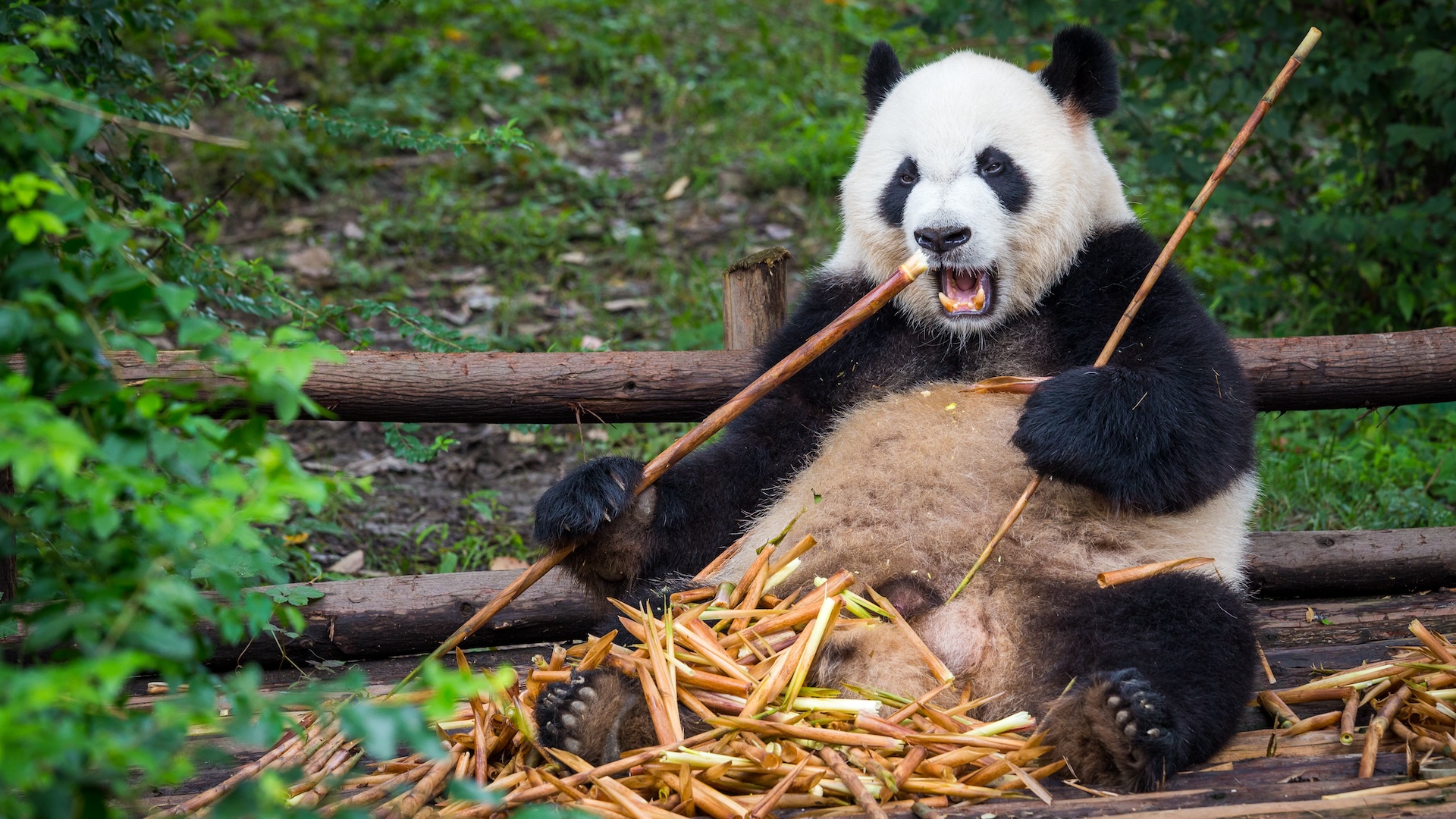
Genetic material from bamboo has been found in the blood of giant pandas, which may alter the feeding habits of these iconic bears.

According to a new paper published Friday (Feb. 28) in the journal Frontiers in Veterinary Science, scientists have discovered microRNA — small pieces of genetic information that play a crucial role in switching genes on and off — from bamboo lurking in pandas’ blood. They say that this microRNA, or miRNA, may influence the expression of genes affecting the pandas’ smell, taste and dopamine pathways.

“We showed that plant-derived miRNAs are present in the blood of giant pandas,” Feng Li, a researcher at China West Normal University, said in a statement.

“Our study proved that bamboo used as food for giant pandas does affect the change of giant pandas’ feeding habits.”

When pandas eat their bamboo diet, they absorb small pieces of genetic material from the bamboo into their bodies, just like we do with the plants we eat.

RNA is a single-stranded molecule made of the same molecular letters as our DNA. DNA, meanwhile, is a two-stranded instruction manual which consists of individual genes that tell our cells how to make specific proteins. miRNA are tiny scraps of RNA that can influence whether these genes are turned on or off, and how much of their products should be made, Li told Live Science in an email.

In the new study, Li and colleagues describe how they analyzed the blood from seven pandas, one of which was a juvenile, and found the presence of 57 miRNAs likely originating from their bamboo diet.

Get the world’s most fascinating discoveries delivered straight to your inbox.

Related: Giant panda babies are born ‘undercooked’ and no one knows why

The researchers found that these miRNAs influenced the expression of genes related to the pandas’ feeding habits, including taste and smell signaling, digestion and dopamine pathways “which make certain activities, like eating fatty and sugary food or having sex, feel enjoyable). This indicates that these bamboo miRNAs may have influenced the food preferences of pandas, helping them find eating bamboo more appealing, and making them more suited to a life eating nearly nothing but bamboo.

“Bamboo miRNAs are not just dietary remnants but active regulators enabling giant pandas to thrive on an unlikely diet, bridging the gap between their carnivorous ancestry and herbivorous lifestyle,” Li told Live Science.

Additionally, the miRNAs were found to influence the ability of the pandas to sniff out fresh bamboo, and also helped them to absorb more calories from the nutrient-poor bamboo into their digestive system.

The discovery that miRNA from plants can have such an impact on the gene expression of animals could pave the way to a variety of treatments for both animals and humans alike, ”with “potential biomedical applications for treating inflammation and metabolic disorders,” Li explained. Previous research has also found that miRNA from the plants we eat can affect gene expression in humans and other mammals, potentially playing a role in regulating immune activity and, according to Li, “enhancing animals’ disease resistance.”.

Li and his team hope to extend the research beyond the seven pandas involved in their study to investigate the wider prevalence and impact of these molecules. “The giant panda is a very precious national treasure in our country, and blood samples are not easy to get,” Li said. “If possible, we hope to collect blood samples of young pandas who have not yet eaten bamboo for research, and perhaps get more surprising results.”

Source link

Share. Facebook Twitter Pinterest LinkedIn Tumblr Email
Previous ArticleNorth Korea’s Kim orders nuclear readiness after missile test, state media says
Next Article Migrants in limbo in Panama jungle camp after being deported from U.S.
Editor
  • Website

Related Posts

Lifestyle

Lemur used in ‘lemur yoga’ session dies of human herpesvirus, study finds

August 15, 2026
Lifestyle

‘A fine line between reducing stigma and trivialising conditions’: Social media, self-diagnosis and the glamorization of ADHD

August 15, 2026
Lifestyle

New 2D memory device stores data on just a single electron

August 15, 2026
Add A Comment

Comments are closed.

Categories
  • Entertainment
  • Lifestyle
  • News
  • Sports
  • Tech
  • Travel
Recent Posts
  • Lemur used in ‘lemur yoga’ session dies of human herpesvirus, study finds
  • ‘A fine line between reducing stigma and trivialising conditions’: Social media, self-diagnosis and the glamorization of ADHD
  • New 2D memory device stores data on just a single electron
  • Before we ban kids from social media completely, here’s what we should try first | Jonathan Bellack and Mariana Olaizola Rosenblat
  • Scientists uncover a better way to beat ‘the bends’ — using deep-diving pigs
calendar
August 2026
M T W T F S S
 12
3456789
10111213141516
17181920212223
24252627282930
31  
« Jul    
Recent Posts
  • Lemur used in ‘lemur yoga’ session dies of human herpesvirus, study finds
  • ‘A fine line between reducing stigma and trivialising conditions’: Social media, self-diagnosis and the glamorization of ADHD
  • New 2D memory device stores data on just a single electron
About

Welcome to Baynard Media, your trusted source for a diverse range of news and insights. We are committed to delivering timely, reliable, and thought-provoking content that keeps you informed
and inspired

Categories
  • Entertainment
  • Lifestyle
  • News
  • Sports
  • Tech
  • Travel
Facebook X (Twitter) Pinterest WhatsApp
  • Contact Us
  • About Us
  • Privacy Policy
  • Disclaimer
  • UNSUBSCRIBE
© 2026 copyrights reserved

Type above and press Enter to search. Press Esc to cancel.