Close Menu
  • Home
  • UNSUBSCRIBE
  • News
  • Lifestyle
  • Tech
  • Entertainment
  • Sports
  • Travel
Facebook X (Twitter) WhatsApp
Trending
  • OpenAI’s internal AI model just solved an 80-year-old math problem ‪—‬ and mathematicians verified it
  • Skeletal remains of Queen Elisenda, one of the most powerful rulers in medieval Europe, unearthed in Barcelona — along with several others who bore unexplained stab wounds
  • Tests that measure ‘biological age’ aren’t helpful for tracking your health, scientists say
  • Japan hits 6G key milestone with high-frequency speeds topping 100 Gbps
  • War has brought Iran’s water crisis to a breaking point: ‘Things will collapse unless there is meaningful structural change’
  • Fingal’s Cave: Scotland’s ‘cave of melody’ where eerie echoes bounce off pillars of solidified lava
  • Controversial ‘JuMBO’ planets discovered by James Webb telescope may not be an illusion after all
  • Scientists found the optimal robot body, and it has 20 legs ‪—‬ watch it scale walls and move through trees
Facebook X (Twitter) WhatsApp
Baynard Media
  • Home
  • UNSUBSCRIBE
  • News
  • Lifestyle
  • Tech
  • Entertainment
  • Sports
  • Travel
Baynard Media
Home»Lifestyle»Shattered 1,800-year-old sword was ‘ritually sacrificed’ and may be from Vandal warrior’s grave
Lifestyle

Shattered 1,800-year-old sword was ‘ritually sacrificed’ and may be from Vandal warrior’s grave

EditorBy EditorFebruary 19, 2025No Comments2 Mins Read
Share Facebook Twitter Pinterest LinkedIn Tumblr Reddit Telegram Email
Share
Facebook Twitter LinkedIn Pinterest Email

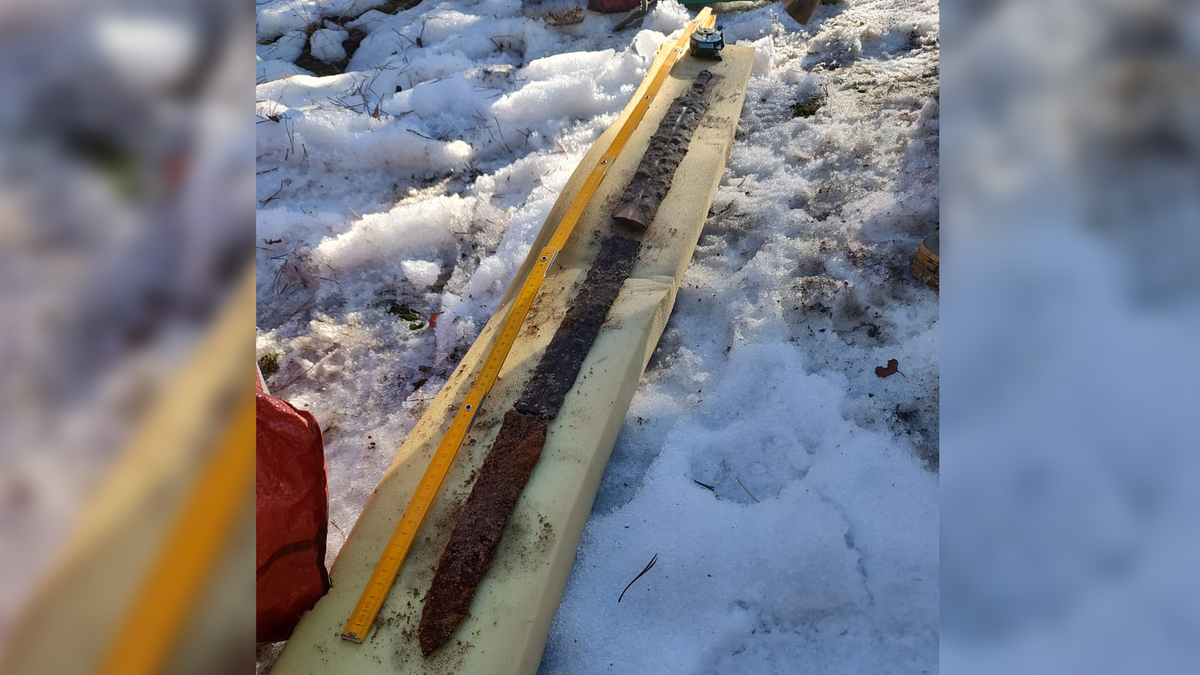
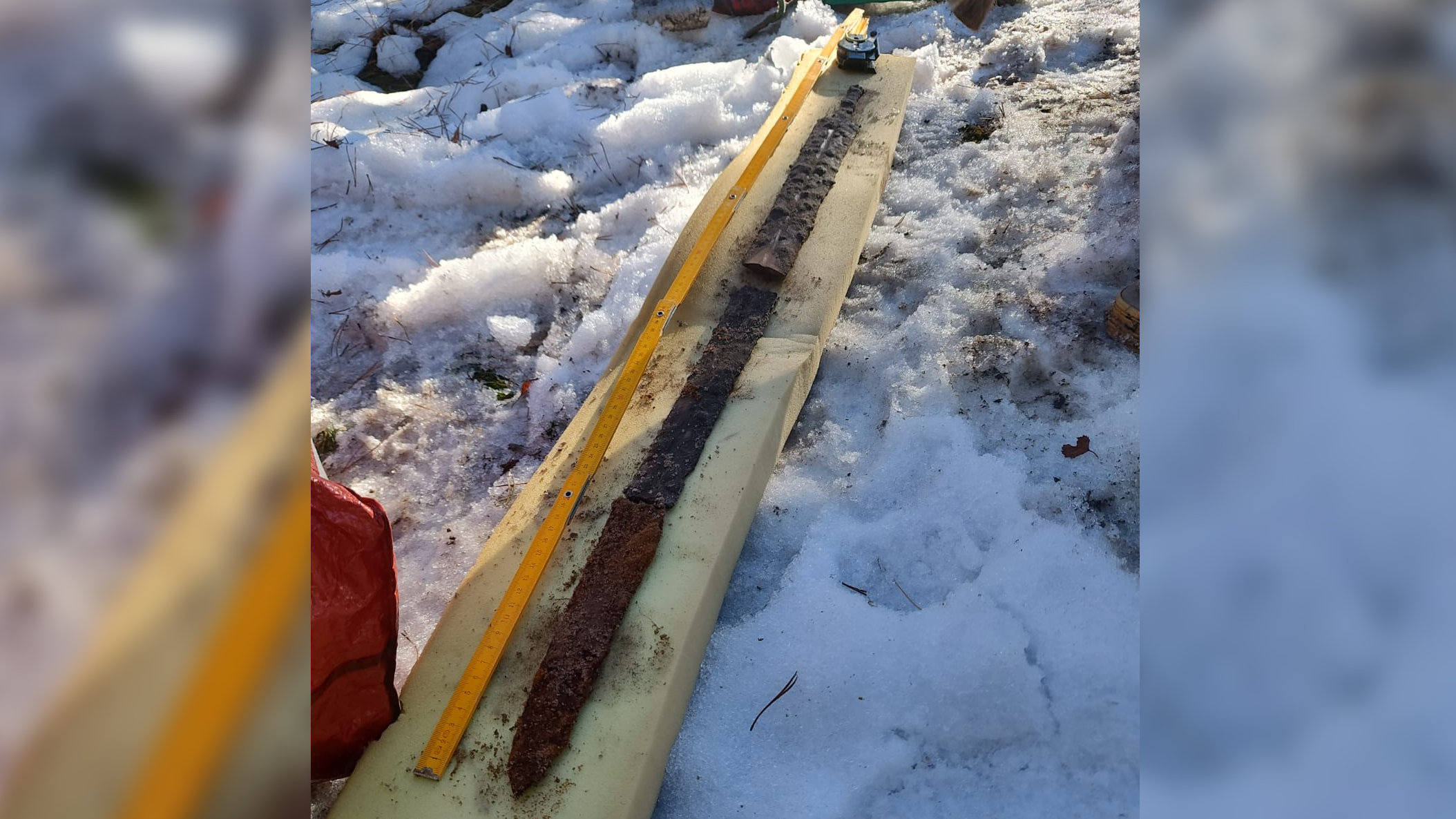
Metal detectorists searching for World War II artifacts in a forest in Poland stumbled upon something far older: a nearly 2,000-year-old sword purposefully broken into three pieces. The weapon may have been a funeral offering for a fallen member of the Vandals, a Germanic tribe renowned for sacking Rome in the fifth century.

In January, two detectorists with the Inventum Association history club discovered the sword in the Jura, a hilly and forested region of southern Poland. A preliminary analysis by experts at the nearby Częstochowa Museum suggests the weapon was a double-edged spatha, a broadsword most commonly used by Germanic horse-mounted warriors during the time of the Roman Empire. From the third century B.C. to the fifth century A.D., Poland was inhabited by people of the Przeworsk culture, which included the Vandals.

“The sword was owned by an influential person from the Vandal tribes,” Mariusz Włudarz, president of the Inventum Association, told Live Science in a translated email. “The sword was broken into three pieces during the funeral ceremony of the warrior and placed on a cremation pyre.”

Related: Ritually bent Bronze Age sword unearthed in Danish bog is ‘very rare find’

Deliberately damaged weapons — including bent or broken swords, notched blades and flattened shields — are often found in Przeworsk graves. This practice may have originated with the Celts and is sometimes called ritual killing or sacrificing of weapons.

“Currently, research on this sword is underway and is being conducted in the Częstochowa Museum,” Włudarz said. Inventum Association detectorists hope to help by further searching the find spot, whose specific location is being kept secret while analysis is ongoing.

“After initial research, the sword will undergo conservation and will probably be exhibited in the Mokra Museum,” Włudarz said.

Get the world’s most fascinating discoveries delivered straight to your inbox.


Roman emperor quiz: Test your knowledge on the rulers of the ancient empire

Source link

Share. Facebook Twitter Pinterest LinkedIn Tumblr Email
Previous ArticleEuropa League last-16 draw: Date, start time, how to follow, Man Utd, Spurs and Rangers to discover opponents | Football News
Next Article What Brian Laundrie Said Happened to Gabby Petito When She Died
Editor
  • Website

Related Posts

Lifestyle

OpenAI’s internal AI model just solved an 80-year-old math problem ‪—‬ and mathematicians verified it

May 30, 2026
Lifestyle

Skeletal remains of Queen Elisenda, one of the most powerful rulers in medieval Europe, unearthed in Barcelona — along with several others who bore unexplained stab wounds

May 29, 2026
Lifestyle

Tests that measure ‘biological age’ aren’t helpful for tracking your health, scientists say

May 29, 2026
Add A Comment

Comments are closed.

Categories
  • Entertainment
  • Lifestyle
  • News
  • Sports
  • Tech
  • Travel
Recent Posts
  • OpenAI’s internal AI model just solved an 80-year-old math problem ‪—‬ and mathematicians verified it
  • Skeletal remains of Queen Elisenda, one of the most powerful rulers in medieval Europe, unearthed in Barcelona — along with several others who bore unexplained stab wounds
  • Tests that measure ‘biological age’ aren’t helpful for tracking your health, scientists say
  • Japan hits 6G key milestone with high-frequency speeds topping 100 Gbps
  • War has brought Iran’s water crisis to a breaking point: ‘Things will collapse unless there is meaningful structural change’
calendar
May 2026
M T W T F S S
 123
45678910
11121314151617
18192021222324
25262728293031
« Apr    
Recent Posts
  • OpenAI’s internal AI model just solved an 80-year-old math problem ‪—‬ and mathematicians verified it
  • Skeletal remains of Queen Elisenda, one of the most powerful rulers in medieval Europe, unearthed in Barcelona — along with several others who bore unexplained stab wounds
  • Tests that measure ‘biological age’ aren’t helpful for tracking your health, scientists say
About

Welcome to Baynard Media, your trusted source for a diverse range of news and insights. We are committed to delivering timely, reliable, and thought-provoking content that keeps you informed
and inspired

Categories
  • Entertainment
  • Lifestyle
  • News
  • Sports
  • Tech
  • Travel
Facebook X (Twitter) Pinterest WhatsApp
  • Contact Us
  • About Us
  • Privacy Policy
  • Disclaimer
  • UNSUBSCRIBE
© 2026 copyrights reserved

Type above and press Enter to search. Press Esc to cancel.