
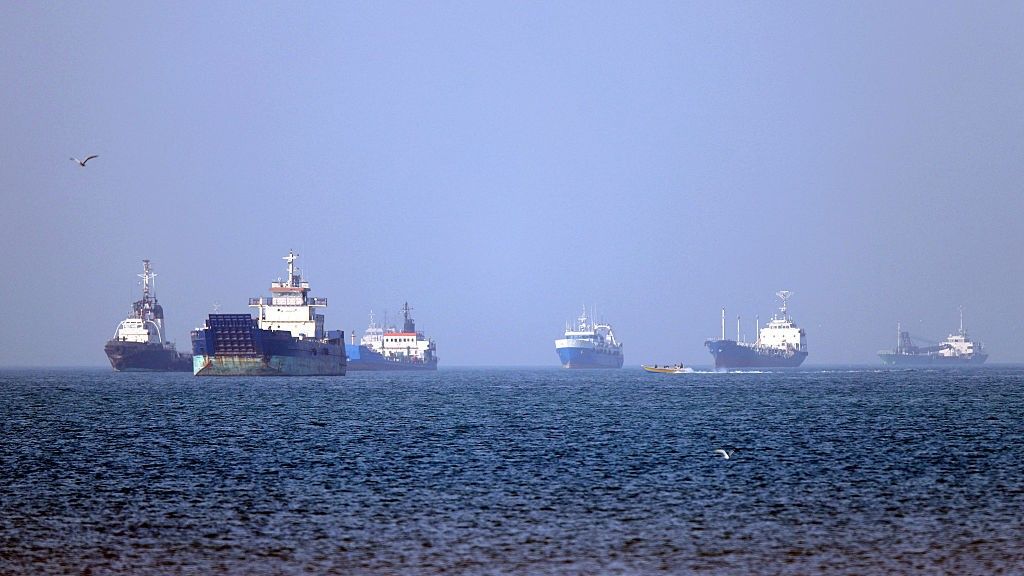
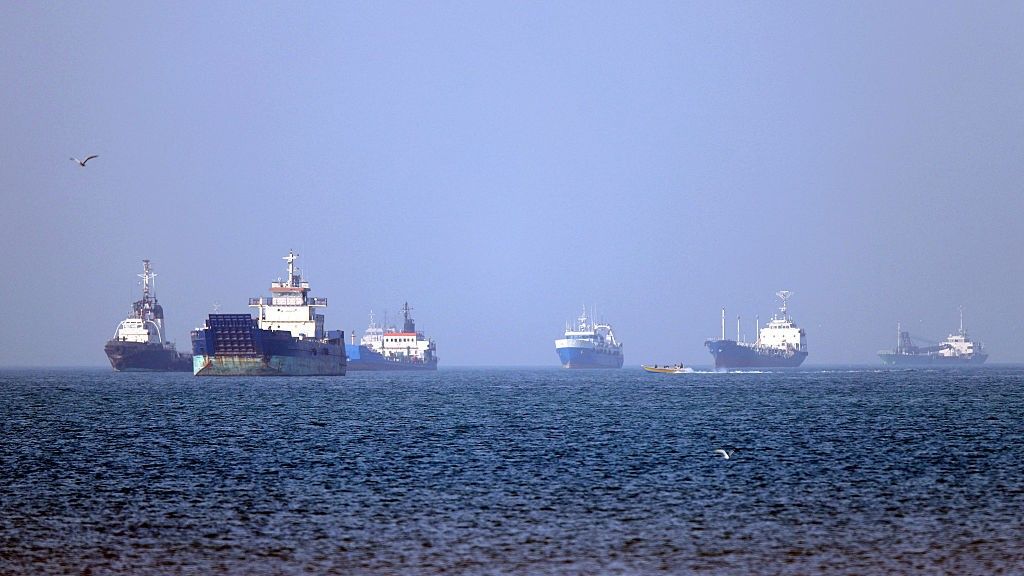
An ecological “superspreader” event may be imminent as more than 1,500 ships continue to idle in the closed Strait of Hormuz, with the potential to cause serious impacts for human health and global marine ecosystems, scientists warn.
In a study published July 22 in the journal Biological Invasions, scientists explain how the hundreds of stranded commercial vessels sitting idle on both sides of the strait are being colonized by marine microbes, algae, seaweed, barnacles and other invertebrates. The problem is that once these ships start moving again, these organisms will be spread all around the world.
“The unprecedented scale and duration of this spring and summer mass lay-up of large commercial ships has created ideal conditions for a marine invasive species ‘super-spreader’ event,” Mario Tamburri, a professor at the University of Maryland Center for Environmental Science and first author of the study, said in a statement.
The Iran War is already having devastating impacts around the world. After the U.S. and Israel launched strikes on Iran on Feb. 28, Tehran retaliated by restricting shipping traffic through the Strait of Hormuz — a critical shipping route that connects the Persian Gulf and the Gulf of Oman and facilitates the transport of 20% of the world’s oil supply, according to the U.S. Energy Information Administration.
But the economic impacts of the waterway’s prolonged closure are only part of the story.
While it’s common for cargo ships to linger for a day or two at most ports, the study authors say these organisms — which are arriving from all over the world and are now mixing and spreading among the other stationary vessels — really begin to flourish after about 10 days of inactivity.
When ships are idle for longer than 10 days, these organisms start to colonize “aggressively” as the special coatings that protect ships from contamination start to work less effectively, the researchers write. And once these organisms are brought into new environments, they can wreak havoc on local ecosystems.
Get the world’s most fascinating discoveries delivered straight to your inbox.
“Marine invasions are hard to predict but it is possible for several species to establish themselves in new habitats and with some causing significant environmental and economic impacts,” Tamburri told Live Science in an email.
Tamburri pointed to the example of zebra mussels (Dreissena polymorpha) in the Great Lakes. The mollusks, which are native to Europe and Asia, are thought to have been introduced to the U.S. in the 1980s via water discharged from large European cargo ships, according to the U.S. Geological Survey.
The impacts of these invasive animals are widespread: They filter out algae that native species need for food and attach to native mussels, preventing them from moving, feeding or reproducing, according to the National Park Service (NPS). They also clog pipes and water supply systems, which cost millions of dollars to fix.
Each female zebra mussel can produce thousands of eggs, so once populations are established, there is “very little” that can be done to remove them, the NPS notes.
In addition to outcompeting native species for space and resources, invasive species can spread disease.
“One of the less perceptible concerns from biological invasions is the potential spread of infective stages of parasites and diseases that are either entrained within ship ballast tanks or associated with organisms attached to ship hulls,” April Blakeslee, an associate professor of biology at East Carolina University, told Live Science in an email. Parasites and diseases introduced by ships could then spill over to native species, which could affect ecologically and/or commercially valuable species, or possibly pose concerns for human health, Blakeslee added.
In other words, these species could spread diseases with the potential to infect local wildlife and humans, as well as fisheries and aquaculture.
Tamburri said the areas most at risk are first ports of call with similar temperatures and salt levels to the Gulf region, particularly ports in India, Singapore, Greece, Spain, the Netherlands and several ports in the Middle East.
So what can be done to stop this “superspreading” event before it happens? According to the researchers, cleaning ships in the water before they leave the Gulf region could significantly reduce the spread of these organisms. Estimating the risks posed by specific ships before departure and setting up monitoring networks and early detection systems at high-risk ports may also limit the damage.
“While the human and economic consequences of events like the war in the Middle East will always remain the highest priority, ecological impacts cannot be overlooked,” the researchers wrote.
TOPICS
