
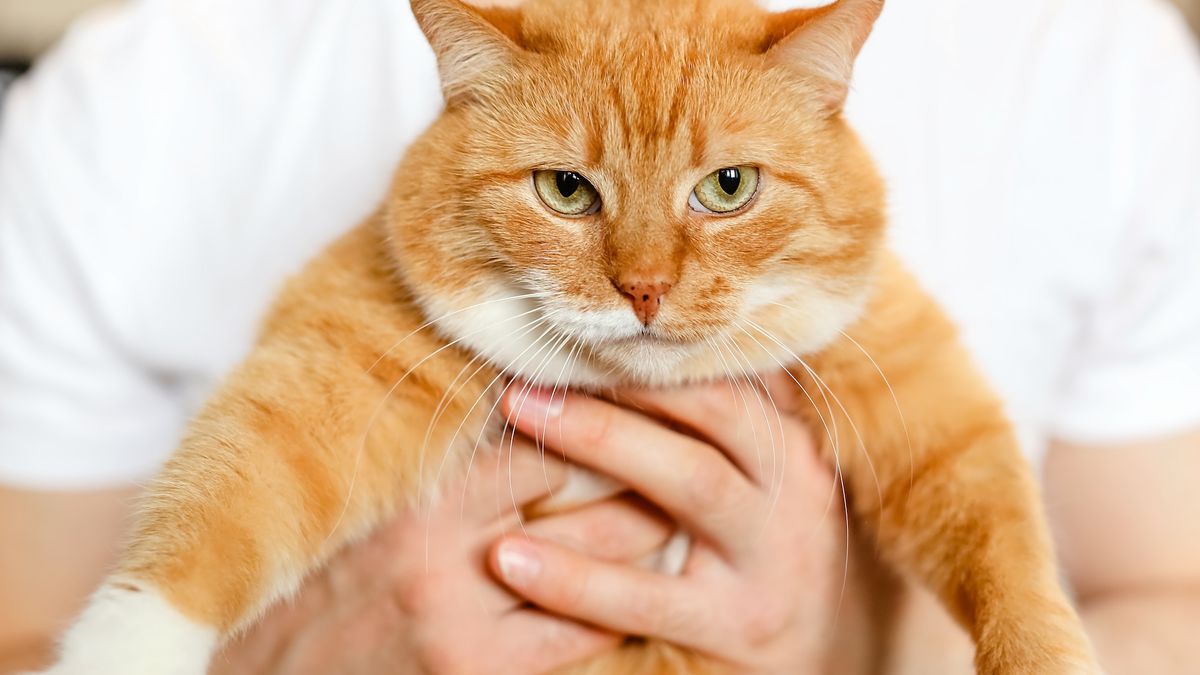
Garfield, star of the eponymous comic strip created by Jim Davis in 1978, is, like many of the cats that roam our homes, orange. He is orange in the same way that some people are redheaded, some horses are brown, or some dogs are Irish setters, but there is one important difference.
For all other animals, including redheaded humans, we know what causes this characteristic color, but surprisingly, we didn’t know what causes it in cats — and felines in general — until now.
Two papers have just been published on bioRxiv — one of the most popular pre-publication repositories of unreviewed articles — that explain the genetics behind orange cats. One comes from Greg Barsh’s lab at Stanford University, California. The other is from Hiroyuki Sasaki’s lab at Kyushu University, Japan.
Eumelanin and feomelanin: the two mammal pigments
Mammals have only two pigments, which are two colors of melanin: eumelanin (dark brown, blackish) and pheomelanin (yellowish, reddish or orange). Redheads only produce pheomelanin, while dark-skinned people accumulate mainly eumelanin. All other skin and hair colors fall somewhere in between, thanks to as many as 700 genes that regulate pigmentation in animals.
In primates, horses, rodents, dogs, cows and many other animals, melanin production and the decision to produce eumelanin or pheomelanin is in the hands of a membrane protein called MC1R. This controls the skin cells known as melanocytes that release melanin. If a melanocyte-stimulating hormone (alpha-MSH) is released, melanocytes start producing eumelanin. If an antagonist, such as agouti-signaling protein or beta-defensin in dogs, comes into play, the production of dark eumelanin stops, and melanocytes produce orange pheomelanin instead.

However, cats are another matter altogether. Anyone who keeps a cat around the house knows that they are very peculiar animals, very special in every way, and this extends to their pigmentation.
Related: Over 40% of pet cats play fetch — but scientists aren’t quite sure why
In cats, eumelanin or pheomelanin production is not controlled by the MC1R receptor. Instead, it is in the hands of a locus (whose gene was, until now, unknown) called “orange”. A locus is a physical location in the genome whose effects are known (e. g. black or orange coat), but not the details of the precise DNA sequence it contains, nor the gene to which it belongs.
For this reason, we usually first identify the locus and then, over time, we discover and describe the associated gene in detail. The orange locus in cats can come in two versions: an ‘O’ variant that supports the production of pheomelanin (orange), and an ‘o’ variant that is responsible for producing eumelanin (black).
One detail to note is that the orange locus is on the X chromosome. Female cats are XX and male cats are XY, like all other mammals. And as with all female mammals, all cells throughout development will randomly inactivate one of the two copies of the X chromosome. Oo female cats — carrying the O variant on one X chromosome and the o variant on the other — will generate areas of their body that are orange (in areas where they have inactivated the ‘o’ allele) and others that are black (when inactivating the ‘O’ allele).
This means that when we see a bicolor (black/orange) or tricolor (black/orange/white) cat, or one of its more diluted versions, we know that it must be a female, and its pigmentation pattern will be completely unique.
Male cats are either orange or black (they have only one X chromosome), but cannot be bicolored or tricolored, unless they carry a chromosomal alteration equivalent to Klinefelter’s syndrome in humans (where males are born with an extra X chromosome).
Calico cats
Females can therefore have the unique mosaic patterns so prized by cat lovers. When coinciding with another mutation that affects the proliferation and differentiation of melanocytes (producing white patches, without pigmentation), this generates a tricolor cat, commonly known as a calico.
Each calico is unique, as the inactivation of one of the X chromosomes in each pigment cell occurs randomly during development. The earlier this inactivation occurs during development, the larger the resulting spot. The later it occurs, the smaller the spots.
The feline orange coat gene
Until now, we did not know which gene was hidden behind the orange locus in felines. Barsh and Sasaki‘s recent work has identified that it is not the cat homologue of MC1R, but a different one: the Arhgap36 gene. Male cats with orange coats, as well as the orange spots of calico cats, carry a mutation in this gene that blocks the production of eumelanin and allows the production of pheomelanin.
These two studies are a wonderful example of good, basic, solid research, which only aims to satisfy scientific curiosity without knowing its immediate applications, and to understand, in this case, why that naughty cat Garfield is orange.
This edited article is republished from The Conversation under a Creative Commons license. Read the original article.
