Close Menu
  • Home
  • UNSUBSCRIBE
  • News
  • Lifestyle
  • Tech
  • Entertainment
  • Sports
  • Travel
Facebook X (Twitter) WhatsApp
Trending
  • OpenAI’s internal AI model just solved an 80-year-old math problem ‪—‬ and mathematicians verified it
  • Skeletal remains of Queen Elisenda, one of the most powerful rulers in medieval Europe, unearthed in Barcelona — along with several others who bore unexplained stab wounds
  • Tests that measure ‘biological age’ aren’t helpful for tracking your health, scientists say
  • Japan hits 6G key milestone with high-frequency speeds topping 100 Gbps
  • War has brought Iran’s water crisis to a breaking point: ‘Things will collapse unless there is meaningful structural change’
  • Fingal’s Cave: Scotland’s ‘cave of melody’ where eerie echoes bounce off pillars of solidified lava
  • Controversial ‘JuMBO’ planets discovered by James Webb telescope may not be an illusion after all
  • Scientists found the optimal robot body, and it has 20 legs ‪—‬ watch it scale walls and move through trees
Facebook X (Twitter) WhatsApp
Baynard Media
  • Home
  • UNSUBSCRIBE
  • News
  • Lifestyle
  • Tech
  • Entertainment
  • Sports
  • Travel
Baynard Media
Home»Lifestyle»Scientists finally know how long a day on Uranus is — 40 years after Voyager 2 first tried to calculate it
Lifestyle

Scientists finally know how long a day on Uranus is — 40 years after Voyager 2 first tried to calculate it

EditorBy EditorApril 9, 2025No Comments3 Mins Read
Share Facebook Twitter Pinterest LinkedIn Tumblr Reddit Telegram Email
Share
Facebook Twitter LinkedIn Pinterest Email

A day on Uranus is about half a minute longer than previously thought, according to new research.

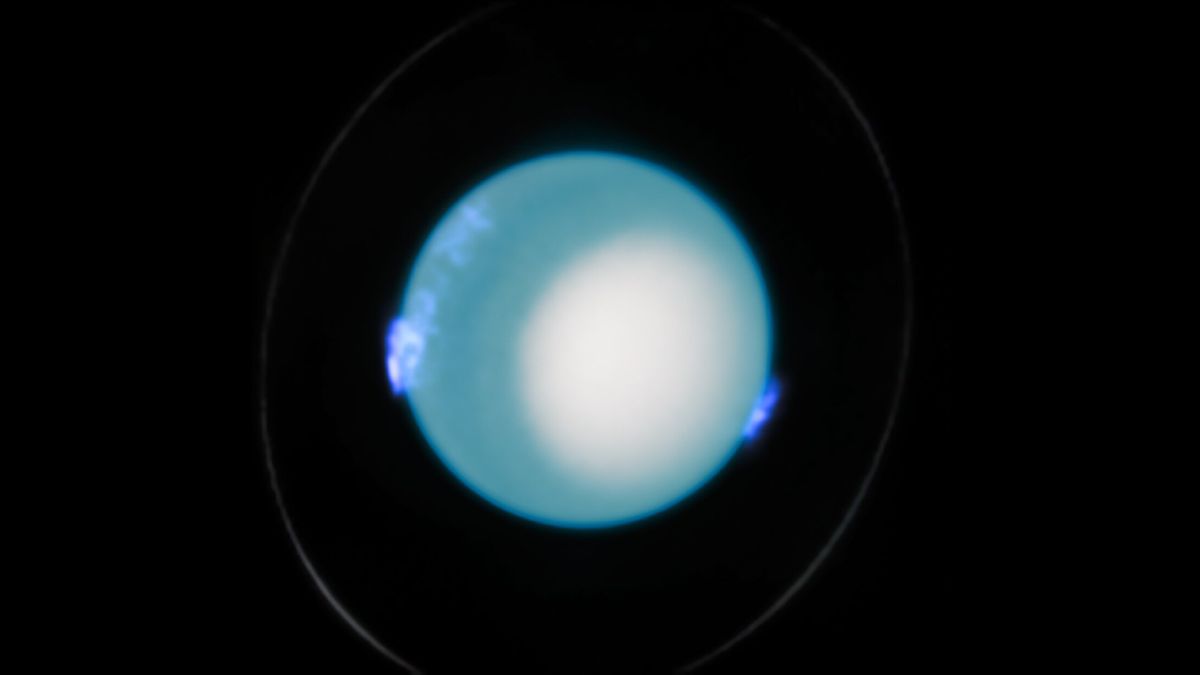
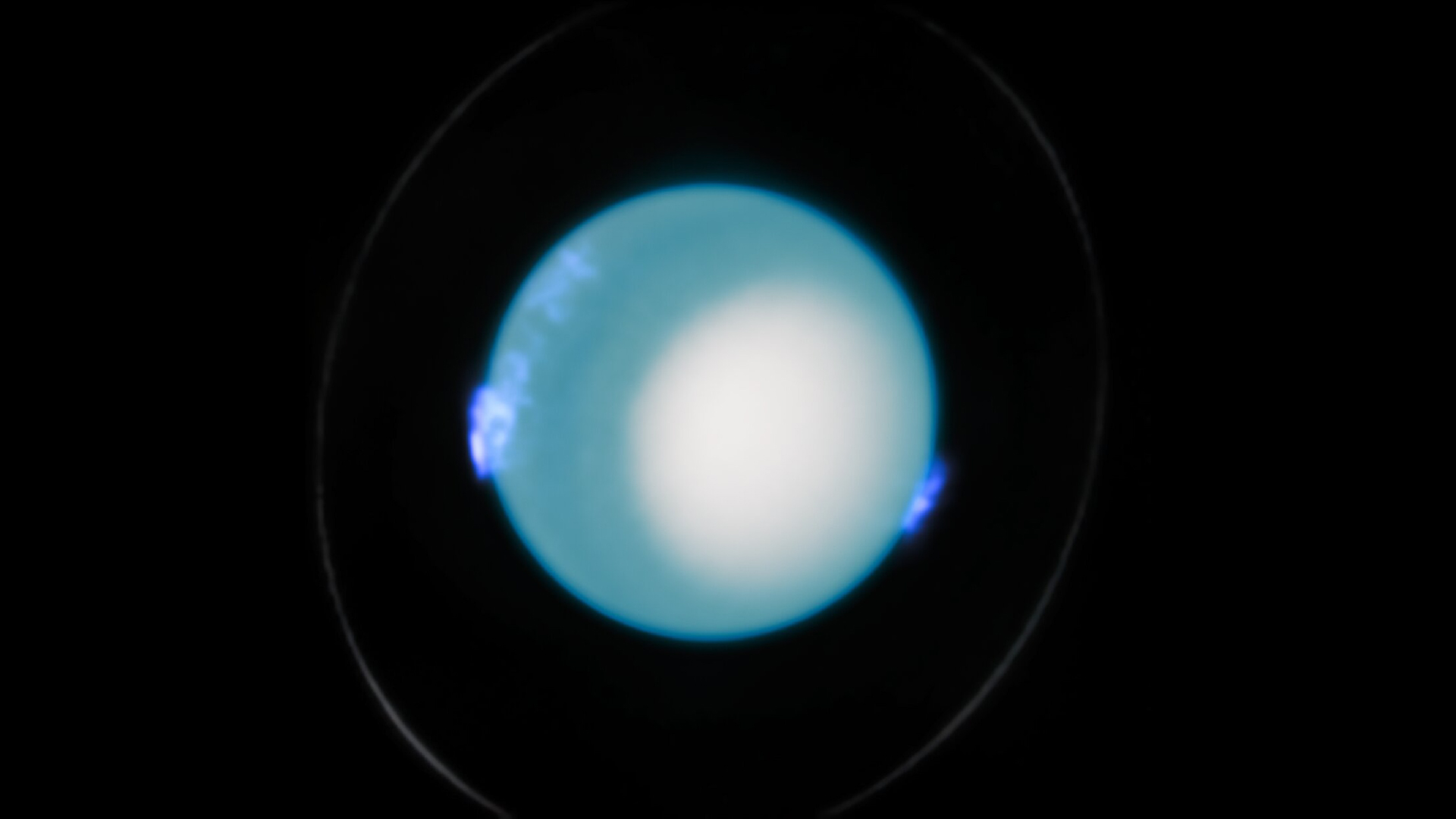
An analysis of 11 years of Hubble Space Telescope observations shows that Uranus‘ day lasts 17 hours, 14 minutes, and 52 seconds. That’s 28 seconds longer than NASA’s Voyager 2 spacecraft estimated when it passed Uranus in 1986. Researchers reported the updated estimate April 7 in the journal Nature Astronomy.

Nearly 40 years ago, Voyager 2 became the first spacecraft to observe Uranus up-close. Using radio signals from the planet’s auroras and magnetic field data collected by the spacecraft, astronomers at the time found that Uranus’ day lasted approximately 17 hours, 14 minutes and 24 seconds.

Researchers used that rotation period to define a coordinate system for the planet. But the measured period came with an inherent uncertainty of about 36 seconds, which gradually added up as each Uranian day passed. Within a few years, the uncertainty made it impossible to accurately determine the orientation of the planet’s magnetic axis.

To get more reliable estimates of the planet’s rotational period, the authors of the new study tracked the movement of auroras at Uranus’ magnetic poles from six sets of Hubble observations taken between 2011 and 2022. This helped them refine the locations of the planet’s magnetic poles, which they used to work out a more accurate estimate of Uranus’ rotational period. The new measurement has an uncertainty of less than 0.04 seconds, according to the team.

“The continuous observations from Hubble were crucial,” first study author Laurent Lamy, an astronomer at the Paris Observatory, said in a statement. “Without this wealth of data, it would have been impossible to detect the periodic signal with the level of accuracy we achieved.”

Related: ‘Hidden’ rings of Uranus revealed in dazzling new James Webb telescope images

Get the world’s most fascinating discoveries delivered straight to your inbox.

The 28-second difference is within the margin of error of Voyager 2’s calculation, but the new duration has a much lower uncertainty. “It’s not so much that it’s changed,” Tim Bedding, an astronomer at the University of Sydney in Australia, told New Scientist. “It’s now accurate enough to be more useful.”

With this smaller uncertainty, the coordinate system based on the new measurement of Uranus’ rotational period should hold up for several decades, the team said. Future missions to Uranus, such as the proposed Uranus Orbiter and Probe, could rely on this coordinate system when selecting an atmospheric entry site, the researchers wrote in the study.

“With this new longitude system, we can now compare auroral observations spanning nearly 40 years and even plan for the upcoming Uranus mission,” Lamy said in the statement.

Source link

Share. Facebook Twitter Pinterest LinkedIn Tumblr Email
Previous Article‘If it weren’t for that asteroid, they might still share this planet’: Dinosaurs weren’t doomed before the asteroid hit, new study suggests
Next Article Diagnostic dilemma: A scientist caught plague from bacteria thought to be ‘noninfectious’
Editor
  • Website

Related Posts

Lifestyle

OpenAI’s internal AI model just solved an 80-year-old math problem ‪—‬ and mathematicians verified it

May 30, 2026
Lifestyle

Skeletal remains of Queen Elisenda, one of the most powerful rulers in medieval Europe, unearthed in Barcelona — along with several others who bore unexplained stab wounds

May 29, 2026
Lifestyle

Tests that measure ‘biological age’ aren’t helpful for tracking your health, scientists say

May 29, 2026
Add A Comment

Comments are closed.

Categories
  • Entertainment
  • Lifestyle
  • News
  • Sports
  • Tech
  • Travel
Recent Posts
  • OpenAI’s internal AI model just solved an 80-year-old math problem ‪—‬ and mathematicians verified it
  • Skeletal remains of Queen Elisenda, one of the most powerful rulers in medieval Europe, unearthed in Barcelona — along with several others who bore unexplained stab wounds
  • Tests that measure ‘biological age’ aren’t helpful for tracking your health, scientists say
  • Japan hits 6G key milestone with high-frequency speeds topping 100 Gbps
  • War has brought Iran’s water crisis to a breaking point: ‘Things will collapse unless there is meaningful structural change’
calendar
May 2026
M T W T F S S
 123
45678910
11121314151617
18192021222324
25262728293031
« Apr    
Recent Posts
  • OpenAI’s internal AI model just solved an 80-year-old math problem ‪—‬ and mathematicians verified it
  • Skeletal remains of Queen Elisenda, one of the most powerful rulers in medieval Europe, unearthed in Barcelona — along with several others who bore unexplained stab wounds
  • Tests that measure ‘biological age’ aren’t helpful for tracking your health, scientists say
About

Welcome to Baynard Media, your trusted source for a diverse range of news and insights. We are committed to delivering timely, reliable, and thought-provoking content that keeps you informed
and inspired

Categories
  • Entertainment
  • Lifestyle
  • News
  • Sports
  • Tech
  • Travel
Facebook X (Twitter) Pinterest WhatsApp
  • Contact Us
  • About Us
  • Privacy Policy
  • Disclaimer
  • UNSUBSCRIBE
© 2026 copyrights reserved

Type above and press Enter to search. Press Esc to cancel.