Close Menu
  • Home
  • UNSUBSCRIBE
  • News
  • Lifestyle
  • Tech
  • Entertainment
  • Sports
  • Travel
Facebook X (Twitter) WhatsApp
Trending
  • New robotic heart mimics common, mysterious condition to help researchers study it
  • Canon EOS R6 III review: A wildlife wonder
  • Medieval babies and adults buried together in Sweden were not related, archaeologists discover — raising big questions about early Christian burial practices
  • NASA is creating a fifth state of matter on the ISS, thanks to an upgrade to a mini-fridge-sized quantum lab
  • New sodium metal battery design charges in just 4 minutes and retains its capacity for years
  • Quantum computing wielded to create extremely rare material critical to nuclear fusion
  • Scientists build tiny ‘diving suit’ for cockroaches, turning them into search-and-rescue cyborgs
  • Physicists develop the first working model of quantum mechanics using only ‘real’ numbers
Facebook X (Twitter) WhatsApp
Baynard Media
  • Home
  • UNSUBSCRIBE
  • News
  • Lifestyle
  • Tech
  • Entertainment
  • Sports
  • Travel
Baynard Media
Home»Lifestyle»Scientists asked ChatGPT to solve a math problem from more than 2,000 years ago — how it answered it surprised them
Lifestyle

Scientists asked ChatGPT to solve a math problem from more than 2,000 years ago — how it answered it surprised them

EditorBy EditorSeptember 27, 2025No Comments4 Mins Read
Share Facebook Twitter Pinterest LinkedIn Tumblr Reddit Telegram Email
Share
Facebook Twitter LinkedIn Pinterest Email

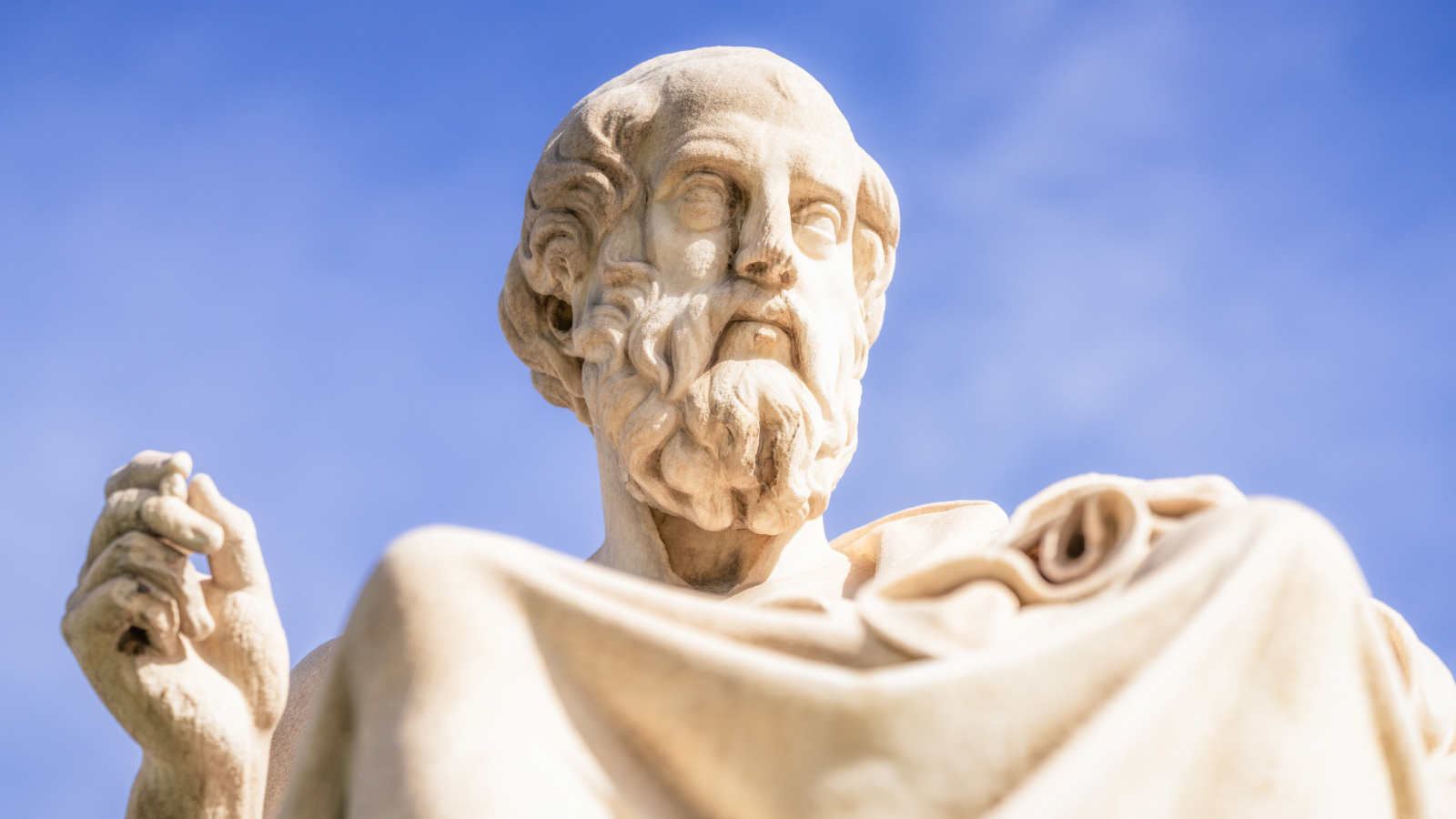
The Greek philosopher Plato wrote about Socrates challenging a student with the “doubling the square” problem in about 385 B.C.E. When asked to double the area of a square, the student doubled the length of each side, unaware that each side of the new square should be the length of the original’s diagonal.

Scientists at Cambridge University and Jerusalem’s Hebrew University selected the problem to pose to ChatGPT because of its non-obvious solution. Since Plato’s writing 2,400 years ago, scholars have used the doubling the square problem to argue whether the mathematical knowledge needed to solve it is already within us, released through reason, or only accessible through experience.

Because ChatGPT, like other large language models (LLMs), is trained mostly on text rather than images, they reasoned there was a low chance that the answer to the doubling the square problem would exist in training data. This means that if it arrived at the correct solution unaided, one could argue that mathematical ability is learned and not innate.


You may like

The answer came when the team went further. As described in a study published Sept. 17 in the journal International Journal of Mathematical Education in Science and Technology, they asked the chatbot to double the area of a rectangle using similar reasoning. It responded that because the diagonal of a rectangle can’t be used to double its size, there was no solution in geometry.

However, visiting University of Cambridge scholar Nadav Marco from the Hebrew University of Jerusalem, and professor of mathematics education Andreas Stylianides, knew that a geometric solution existed.

Marco said the chances of the false claim existing in ChatGPT’s training data was “vanishingly small,” which means it was improvising responses based on previous discussion about the doubling the square problem — a clear indication of generated rather than innate learning.

“When we face a new problem, our instinct is often to try things out based on our past experience,” Marco said Sept. 18 in a statement. “In our experiment, ChatGPT seemed to do something similar. Like a learner or scholar, it appeared to come up with its own hypotheses and solutions.”

Get the world’s most fascinating discoveries delivered straight to your inbox.

Machines that think?

The study shines new light on questions about the artificial intelligence (AI) version of “reasoning” and “thinking,” the scientists said.

Because it seemed to improvise responses and even make mistakes like Socrates’ student, Marco and Stylianides suggested ChatGPT might be using a concept we already know from education called a zone of proximal development (ZPD), which describes the gap between what we know and what we might eventually know with the right educational guidance.

ChatGPT, they said, might be using a similar framework spontaneously, solving novel problems that aren’t represented in training data simply thanks to the right prompts.


You may like

It’s a stark example of the longstanding black box issue in AI, where the programming or “reasoning” a system goes through to reach a conclusion is invisible and untraceable, but the researchers said that their work ultimately highlights the opportunity to make AI work better for us.

“Unlike proofs found in reputable textbooks, students cannot assume that ChatGPT’s proofs are valid,” Stylianides said in the statement. “Understanding and evaluating AI-generated proofs are emerging as key skills that need to be embedded in the mathematics curriculum.”

It’s a core skill they want students to master in educational contexts, something they said calls for better prompt engineering – for example, telling AI “I want us to explore this problem together” rather than ‘”tell me the answer.”

The team are cautious about the results, warning us not to over-interpret them and conclude that LLMs “work things out” like we do. But, Marco did label ChatGPT’s behavior as “learner-like.”

The researchers see scope for future research in several areas. Newer models can be tested on a wider set of mathematical problems, and there’s also potential to combine ChatGPT with dynamic geometry systems or theorem provers, creating richer digital environments that support intuitive exploration, for instance, in the way teachers and students use AI to work together in classrooms.

Source link

Share. Facebook Twitter Pinterest LinkedIn Tumblr Email
Previous ArticleTrump admin partners with Musk’s xAI
Next Article Protest in Des Moines after ICE detains superintendent
Editor
  • Website

Related Posts

Lifestyle

New robotic heart mimics common, mysterious condition to help researchers study it

July 11, 2026
Lifestyle

Canon EOS R6 III review: A wildlife wonder

July 10, 2026
Lifestyle

Medieval babies and adults buried together in Sweden were not related, archaeologists discover — raising big questions about early Christian burial practices

July 10, 2026
Add A Comment

Comments are closed.

Categories
  • Entertainment
  • Lifestyle
  • News
  • Sports
  • Tech
  • Travel
Recent Posts
  • New robotic heart mimics common, mysterious condition to help researchers study it
  • Canon EOS R6 III review: A wildlife wonder
  • Medieval babies and adults buried together in Sweden were not related, archaeologists discover — raising big questions about early Christian burial practices
  • NASA is creating a fifth state of matter on the ISS, thanks to an upgrade to a mini-fridge-sized quantum lab
  • New sodium metal battery design charges in just 4 minutes and retains its capacity for years
calendar
July 2026
M T W T F S S
 12345
6789101112
13141516171819
20212223242526
2728293031  
« Jun    
Recent Posts
  • New robotic heart mimics common, mysterious condition to help researchers study it
  • Canon EOS R6 III review: A wildlife wonder
  • Medieval babies and adults buried together in Sweden were not related, archaeologists discover — raising big questions about early Christian burial practices
About

Welcome to Baynard Media, your trusted source for a diverse range of news and insights. We are committed to delivering timely, reliable, and thought-provoking content that keeps you informed
and inspired

Categories
  • Entertainment
  • Lifestyle
  • News
  • Sports
  • Tech
  • Travel
Facebook X (Twitter) Pinterest WhatsApp
  • Contact Us
  • About Us
  • Privacy Policy
  • Disclaimer
  • UNSUBSCRIBE
© 2026 copyrights reserved

Type above and press Enter to search. Press Esc to cancel.