Close Menu
  • Home
  • UNSUBSCRIBE
  • News
  • Lifestyle
  • Tech
  • Entertainment
  • Sports
  • Travel
Facebook X (Twitter) WhatsApp
Trending
  • Lemur used in ‘lemur yoga’ session dies of human herpesvirus, study finds
  • ‘A fine line between reducing stigma and trivialising conditions’: Social media, self-diagnosis and the glamorization of ADHD
  • New 2D memory device stores data on just a single electron
  • Before we ban kids from social media completely, here’s what we should try first | Jonathan Bellack and Mariana Olaizola Rosenblat
  • Scientists uncover a better way to beat ‘the bends’ — using deep-diving pigs
  • Mars may have been losing its water more than 4 billion years ago, oldest-known Martian meteorite suggests
  • ‘The lance head was still inside the pelvis’: Mass grave found in Austria may hold casualties of unknown ancient Roman battle
  • ‘Full-on berserker mode’: Archaeologists solve mystery of medieval soldiers with gruesome square holes in their skull
Facebook X (Twitter) WhatsApp
Baynard Media
  • Home
  • UNSUBSCRIBE
  • News
  • Lifestyle
  • Tech
  • Entertainment
  • Sports
  • Travel
Baynard Media
Home»Lifestyle»Science history: Astronomers spot first known planet around a sunlike star, raising hopes for extraterrestrial life — Nov. 1, 1995
Lifestyle

Science history: Astronomers spot first known planet around a sunlike star, raising hopes for extraterrestrial life — Nov. 1, 1995

EditorBy EditorNovember 1, 2025No Comments4 Mins Read
Share Facebook Twitter Pinterest LinkedIn Tumblr Reddit Telegram Email
Share
Facebook Twitter LinkedIn Pinterest Email

Quick facts

Milestone: Discovery of a Jupiter-size planet around a distant, sunlike star

When: Nov. 1, 1995

Where: Haute-Provence Observatory, France

Who: Michel Mayor and Didier Queloz

In September 1994, a pair of Swiss astronomers at a little observatory nestled in the south of France began training their telescopes on a star about 50 light-years from Earth — and created the field of exoplanet research.

The duo, Michel Mayor and Didier Queloz, had finally found something they’d spent 18 months searching for: a planet orbiting a star like our own.

The discovery was the first step in a much more ambitious goal: to prove we are not alone in the universe. Carl Sagan and other astronomers had begun searching for intelligent life as early as the 1960s, but many of those efforts were focused on finding radio signals or other deliberate communications from intelligent, technological life-forms.


You may like

But by the 1980s, astronomers realized they could find potentially habitable planets by looking at the light from their companion stars. Astronomers had found hints of a planet circling a pulsar — an ultradense, magnetized star that beams radiation like a lighthouse. But the extreme, destructive conditions surrounding a pulsar made it highly unlikely that life could exist there.

And back in 1987, a Canadian team of astronomers thought they had spotted a planet around another star, only to conclude five years later that the signal did not indicate a planet. (Their first hypothesis was ultimately confirmed in 2003.)

So Queloz and Mayor, who were astronomers at the Geneva Observatory at the time, began looking for anomalies in the trajectories of nearly 150 smaller, more ordinary stars.

After months of observations, they noticed a handful of stars with significant deviations, or wobbles, in their trajectories. They zeroed in on one of those stars: Pegasi 51, located about 50 light-years from Earth in the constellation Pegasus. The middle-age, main sequence star looked a lot like our sun, and the wobble of the star’s velocity suggested it was being tugged back and forth by a planet.

Get the world’s most fascinating discoveries delivered straight to your inbox.

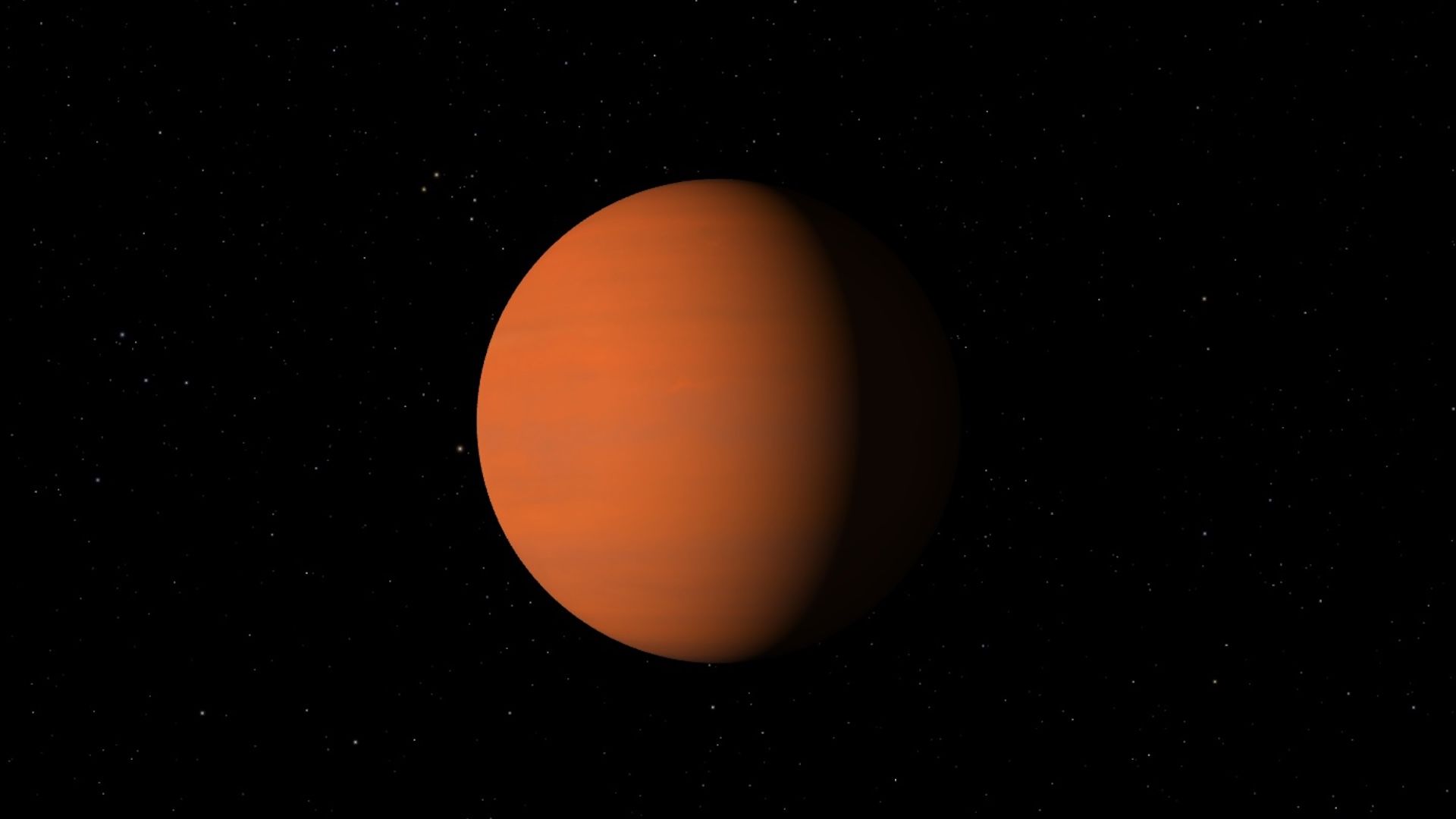
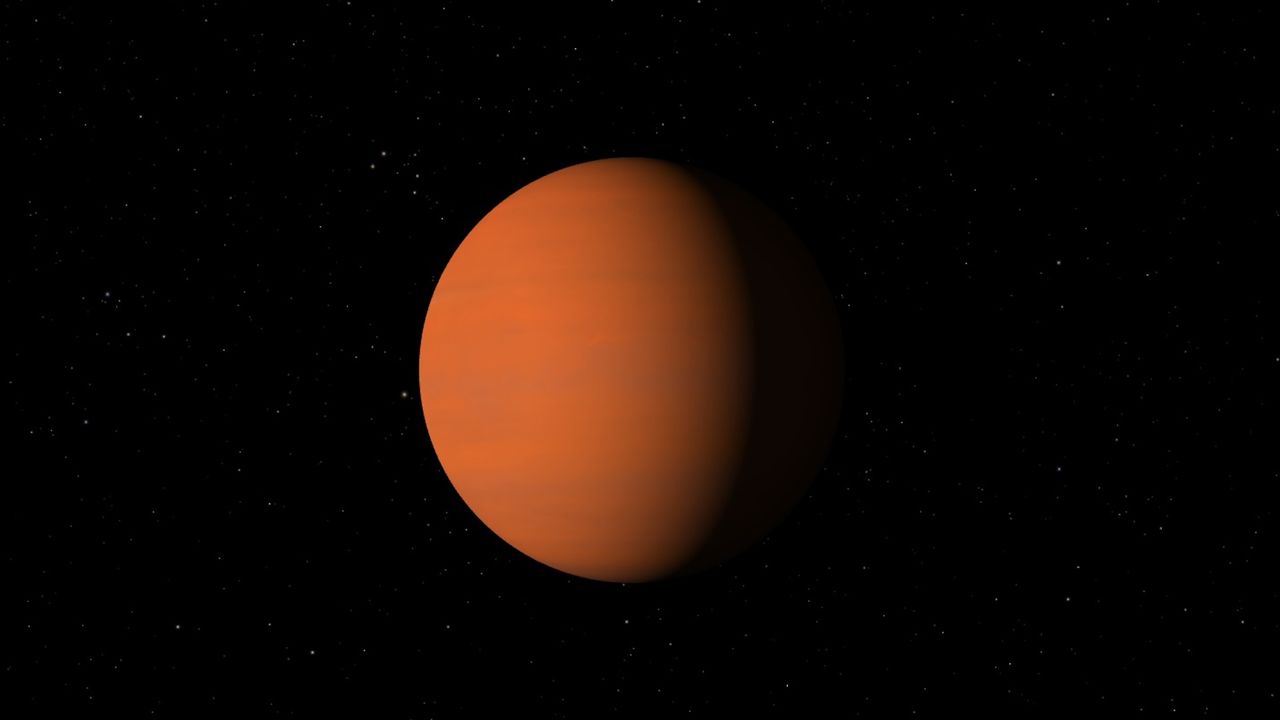
An analysis of the star’s light unmasked the planet, which scientists dubbed 51 Pegasi b, or Dimidium. The astronomers found that the planet was likely a “hot Jupiter” — a giant gas planet that orbits very close to its star. Dimidium, the team found, was a gas giant bigger in diameter than Jupiter with about half its mass. It orbited just 5 million miles (8 million kilometers) from its star. That close orbit meant the planet completed a revolution around its star every 4.2 days. Soon after, scientists at the Lick Observatory in California confirmed the discovery.

On Nov. 1, 1995, Queloz and Mayor described their findings in the journal Nature — and opened the floodgates to exoplanet discovery. Soon after, dozens of exoplanets were found, setting off a race to search for planets that could harbor life and ushering in new techniques to discover them. In 2004, astronomers using the Very Large Telescope in Chile captured the first photographic evidence of an exoplanet orbiting a distant star, with hundreds of others soon to follow.

In 2019, Mayor and Queloz won the Nobel Prize in physics for their work on Dimidium, sharing their prize with Canadian physicist James Peebles, who helped quantify how much of the universe was made of dark energy and dark matter.

Over the next three decades, astronomers would find many more hot Jupiters, hell planets, super-Earths, water worlds and desert planets in the cosmos. To date, we know of at least 6,000 exoplanets — and though none has been found to harbor life so far, we’ve had a few promising candidates.

Source link

Share. Facebook Twitter Pinterest LinkedIn Tumblr Email
Previous ArticleDodgers survive elimination after Tyler Glasnow’s late-game brilliance
Next Article Judge orders SNAP benefits to be paid
Editor
  • Website

Related Posts

Lifestyle

Lemur used in ‘lemur yoga’ session dies of human herpesvirus, study finds

August 15, 2026
Lifestyle

‘A fine line between reducing stigma and trivialising conditions’: Social media, self-diagnosis and the glamorization of ADHD

August 15, 2026
Lifestyle

New 2D memory device stores data on just a single electron

August 15, 2026
Add A Comment

Comments are closed.

Categories
  • Entertainment
  • Lifestyle
  • News
  • Sports
  • Tech
  • Travel
Recent Posts
  • Lemur used in ‘lemur yoga’ session dies of human herpesvirus, study finds
  • ‘A fine line between reducing stigma and trivialising conditions’: Social media, self-diagnosis and the glamorization of ADHD
  • New 2D memory device stores data on just a single electron
  • Before we ban kids from social media completely, here’s what we should try first | Jonathan Bellack and Mariana Olaizola Rosenblat
  • Scientists uncover a better way to beat ‘the bends’ — using deep-diving pigs
calendar
September 2026
M T W T F S S
 123456
78910111213
14151617181920
21222324252627
282930  
« Aug    
Recent Posts
  • Lemur used in ‘lemur yoga’ session dies of human herpesvirus, study finds
  • ‘A fine line between reducing stigma and trivialising conditions’: Social media, self-diagnosis and the glamorization of ADHD
  • New 2D memory device stores data on just a single electron
About

Welcome to Baynard Media, your trusted source for a diverse range of news and insights. We are committed to delivering timely, reliable, and thought-provoking content that keeps you informed
and inspired

Categories
  • Entertainment
  • Lifestyle
  • News
  • Sports
  • Tech
  • Travel
Facebook X (Twitter) Pinterest WhatsApp
  • Contact Us
  • About Us
  • Privacy Policy
  • Disclaimer
  • UNSUBSCRIBE
© 2026 copyrights reserved

Type above and press Enter to search. Press Esc to cancel.