Close Menu
  • Home
  • UNSUBSCRIBE
  • News
  • Lifestyle
  • Tech
  • Entertainment
  • Sports
  • Travel
Facebook X (Twitter) WhatsApp
Trending
  • Sea ice loss in the Arctic has triggered a critical tipping point that’s destroying the food chain
  • ‘A disease anywhere can be a disease everywhere tomorrow morning’: Public health expert on Ebola and the threat of future outbreaks
  • Thanks to natural selection, Indigenous Andeans may digest potatoes better than anyone else in the world, study finds
  • Doctors need to understand patients' lived experiences to treat them well — but medical schools may stop requiring that training
  • This yeast-based 3D printed biomaterial could one day replace your wallpaper and drapes
  • Flesh-eating screwworm found in Texas cow. Are humans at risk?
  • New Velociraptor cousin was a ‘4-winged’ dragon that hunted prey from the trees of ancient China, fossil find hints
  • AI models are teaching each other ‘violent and antisocial’ traits through hidden data signals, study finds — and scientists can’t figure out why
Facebook X (Twitter) WhatsApp
Baynard Media
  • Home
  • UNSUBSCRIBE
  • News
  • Lifestyle
  • Tech
  • Entertainment
  • Sports
  • Travel
Baynard Media
Home»Lifestyle»Savonoski Crater: The mysterious, perfectly round hole in Alaska that scientists can’t explain
Lifestyle

Savonoski Crater: The mysterious, perfectly round hole in Alaska that scientists can’t explain

EditorBy EditorFebruary 21, 2025No Comments3 Mins Read
Share Facebook Twitter Pinterest LinkedIn Tumblr Reddit Telegram Email
Share
Facebook Twitter LinkedIn Pinterest Email

QUICK FACTS

Name: Savonoski Crater

Location: Katmai National Park and Reserve, Alaska

Coordinates: 58.261063215437424, -154.97429850785483

Why it’s incredible: The crater is perfectly round, and nobody can tell for sure how it formed.

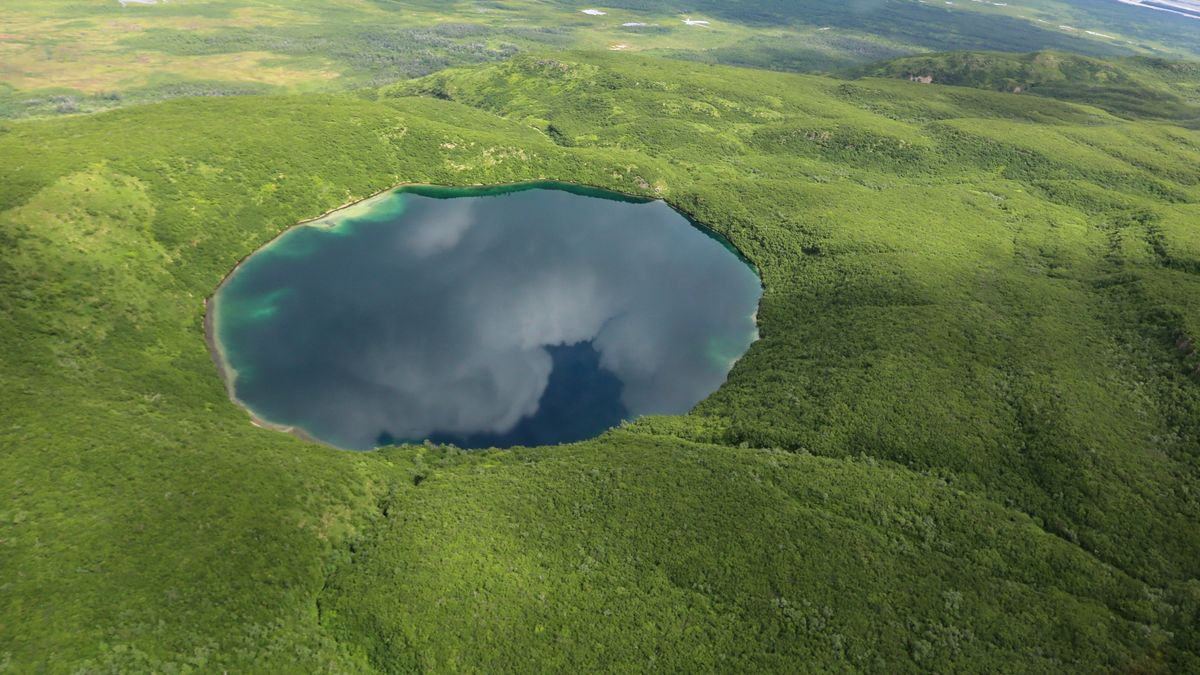
The Savonoski Crater is a round hole in southwestern Alaska that scientists have long struggled to explain due to a lack of geological evidence. However, there is a scientific explanation for this lack of evidence, so we can confidently say that the hole is neither supernatural nor an alien creation.

The crater measures roughly 1,600 feet (500 meters) across and 360 feet (110 m) deep, according to a 1978 article published on the University of Alaska Fairbanks’ website. It is half-filled with water from rainfall and snow melt.

Related: Earthquakes at massive Alaska volcano Mount Spurr ramp up again — and there’s now a 50-50 chance of an eruption

From the air, the Savonoski Crater looks like it could have been created by a meteorite impact. Impact craters are typically circular and deep, so Savonoski fits the bill — but geologists have yet to find proof of a space rock hitting Earth in this location.

Extensive surveys in the 1960s and 1970s failed to find evidence of meteoritic material or any shocked rocks within the crater that would have confirmed an impact-related origin. Researchers also failed to find any rock fragments around the crater to indicate that a meteorite sprayed material away from its landing spot.

Alternatively, the crater could be a volcanic maar — a depression formed when magma rises from deep inside Earth’s crust and reaches the water table. The intruding magma brings the water to a boil, and the resulting steam builds up so much pressure underground that it eventually triggers an explosion.

Volcanic maars often leave broad craters that fill up with groundwater. For example, the 330-foot-deep (100 m) eastern Ukinrek maar in Alaska formed during a 10-day-long eruption in 1977 and has since partially filled with water, according to the U.S. Geological Survey.

Get the world’s most fascinating discoveries delivered straight to your inbox.

View of Ukinrek Maars in Alaska. We see a crater filled with water and a lake in the distance.

A view of Ukinrek Maars in Alaska. The eastern maar (front) is typical of volcanic maars in that it is a deep, round crater filled with water. (Image credit: Nye, C. via USGS)

However, there are no known volcanic landforms in the immediate vicinity of Savonoski Crater and no signs of a magma source beneath the hole, according to the surveys from the 1960s and 1970s. A potential volcanic origin for the crater therefore remains mysterious.

Scientists agree that the Savonoski Crater is either a meteorite impact crater or a volcanic maar, but a definitive answer will only come with much more extensive research, according to the surveys.

The crater has undergone at least one glaciation event since it formed, meaning it was swallowed by an ice sheet when glaciers last covered southwestern Alaska between 23,000 and 14,700 years ago. This glaciation swept away any obvious evidence of the crater’s origin, according to the University of Alaska Fairbanks — but clues may still be hidden inside the crater, should scientists decide to drill into its center, researchers noted in the surveys.


Discover more incredible places, where we highlight the fantastic history and science behind some of the most dramatic landscapes on Earth.

Source link

Share. Facebook Twitter Pinterest LinkedIn Tumblr Email
Previous ArticleWhy Lana Condor’s Home Served as Her Perfect 2nd Wedding Venue
Next Article Senate’s ‘vote-a-rama’ and Mexican troops at border: Morning Rundown
Editor
  • Website

Related Posts

Lifestyle

Sea ice loss in the Arctic has triggered a critical tipping point that’s destroying the food chain

June 9, 2026
Lifestyle

‘A disease anywhere can be a disease everywhere tomorrow morning’: Public health expert on Ebola and the threat of future outbreaks

June 8, 2026
Lifestyle

Thanks to natural selection, Indigenous Andeans may digest potatoes better than anyone else in the world, study finds

June 8, 2026
Add A Comment

Comments are closed.

Categories
  • Entertainment
  • Lifestyle
  • News
  • Sports
  • Tech
  • Travel
Recent Posts
  • Sea ice loss in the Arctic has triggered a critical tipping point that’s destroying the food chain
  • ‘A disease anywhere can be a disease everywhere tomorrow morning’: Public health expert on Ebola and the threat of future outbreaks
  • Thanks to natural selection, Indigenous Andeans may digest potatoes better than anyone else in the world, study finds
  • Doctors need to understand patients' lived experiences to treat them well — but medical schools may stop requiring that training
  • This yeast-based 3D printed biomaterial could one day replace your wallpaper and drapes
calendar
June 2026
M T W T F S S
1234567
891011121314
15161718192021
22232425262728
2930  
« May    
Recent Posts
  • Sea ice loss in the Arctic has triggered a critical tipping point that’s destroying the food chain
  • ‘A disease anywhere can be a disease everywhere tomorrow morning’: Public health expert on Ebola and the threat of future outbreaks
  • Thanks to natural selection, Indigenous Andeans may digest potatoes better than anyone else in the world, study finds
About

Welcome to Baynard Media, your trusted source for a diverse range of news and insights. We are committed to delivering timely, reliable, and thought-provoking content that keeps you informed
and inspired

Categories
  • Entertainment
  • Lifestyle
  • News
  • Sports
  • Tech
  • Travel
Facebook X (Twitter) Pinterest WhatsApp
  • Contact Us
  • About Us
  • Privacy Policy
  • Disclaimer
  • UNSUBSCRIBE
© 2026 copyrights reserved

Type above and press Enter to search. Press Esc to cancel.