Close Menu
  • Home
  • UNSUBSCRIBE
  • News
  • Lifestyle
  • Tech
  • Entertainment
  • Sports
  • Travel
Facebook X (Twitter) WhatsApp
Trending
  • New robotic heart mimics common, mysterious condition to help researchers study it
  • Canon EOS R6 III review: A wildlife wonder
  • Medieval babies and adults buried together in Sweden were not related, archaeologists discover — raising big questions about early Christian burial practices
  • NASA is creating a fifth state of matter on the ISS, thanks to an upgrade to a mini-fridge-sized quantum lab
  • New sodium metal battery design charges in just 4 minutes and retains its capacity for years
  • Quantum computing wielded to create extremely rare material critical to nuclear fusion
  • Scientists build tiny ‘diving suit’ for cockroaches, turning them into search-and-rescue cyborgs
  • Physicists develop the first working model of quantum mechanics using only ‘real’ numbers
Facebook X (Twitter) WhatsApp
Baynard Media
  • Home
  • UNSUBSCRIBE
  • News
  • Lifestyle
  • Tech
  • Entertainment
  • Sports
  • Travel
Baynard Media
Home»Lifestyle»‘Royal Egyptian inscription’ of Ramesses III’s name is first of its kind discovered in Jordan
Lifestyle

‘Royal Egyptian inscription’ of Ramesses III’s name is first of its kind discovered in Jordan

EditorBy EditorApril 25, 2025No Comments3 Mins Read
Share Facebook Twitter Pinterest LinkedIn Tumblr Reddit Telegram Email
Share
Facebook Twitter LinkedIn Pinterest Email

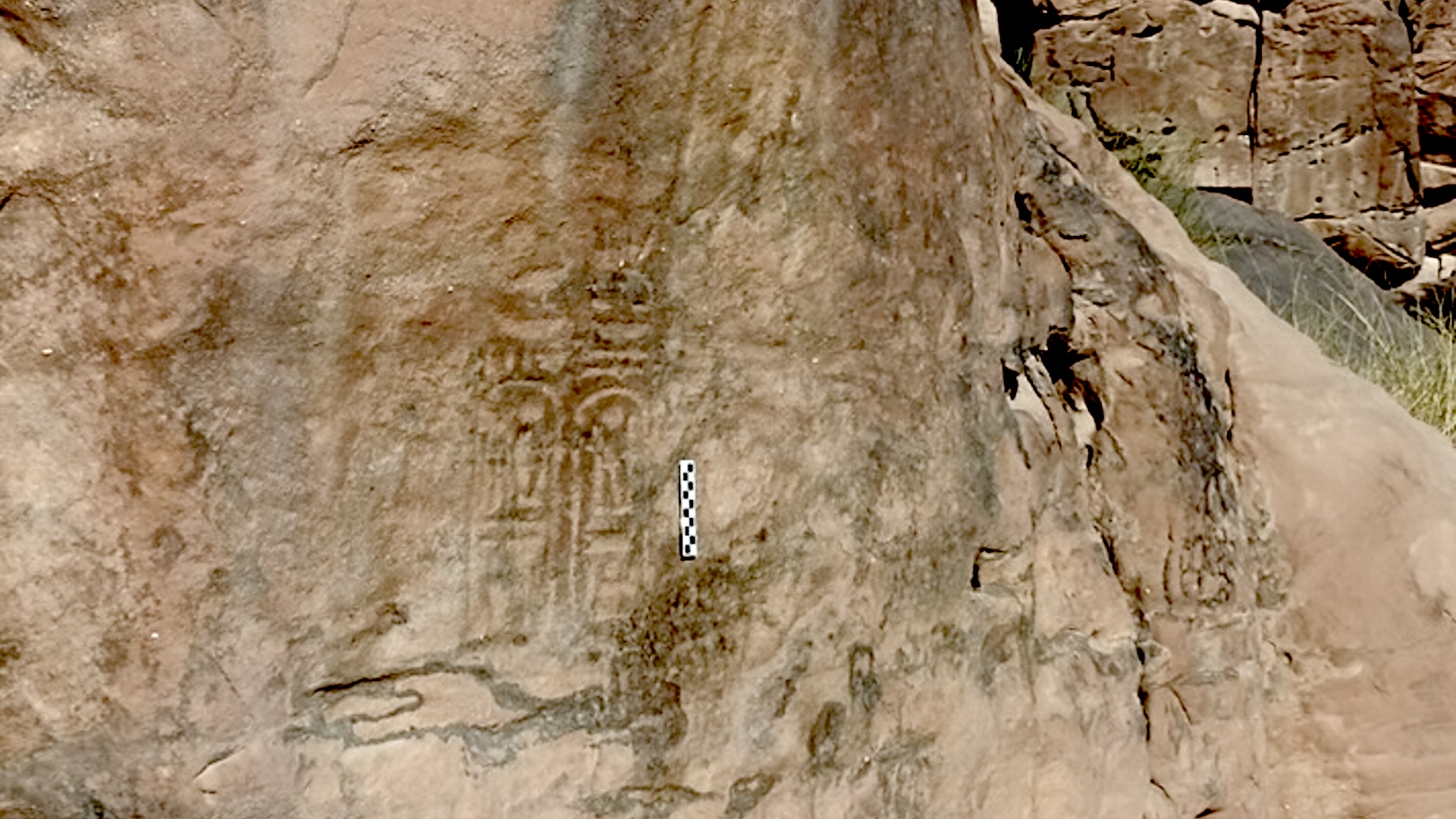
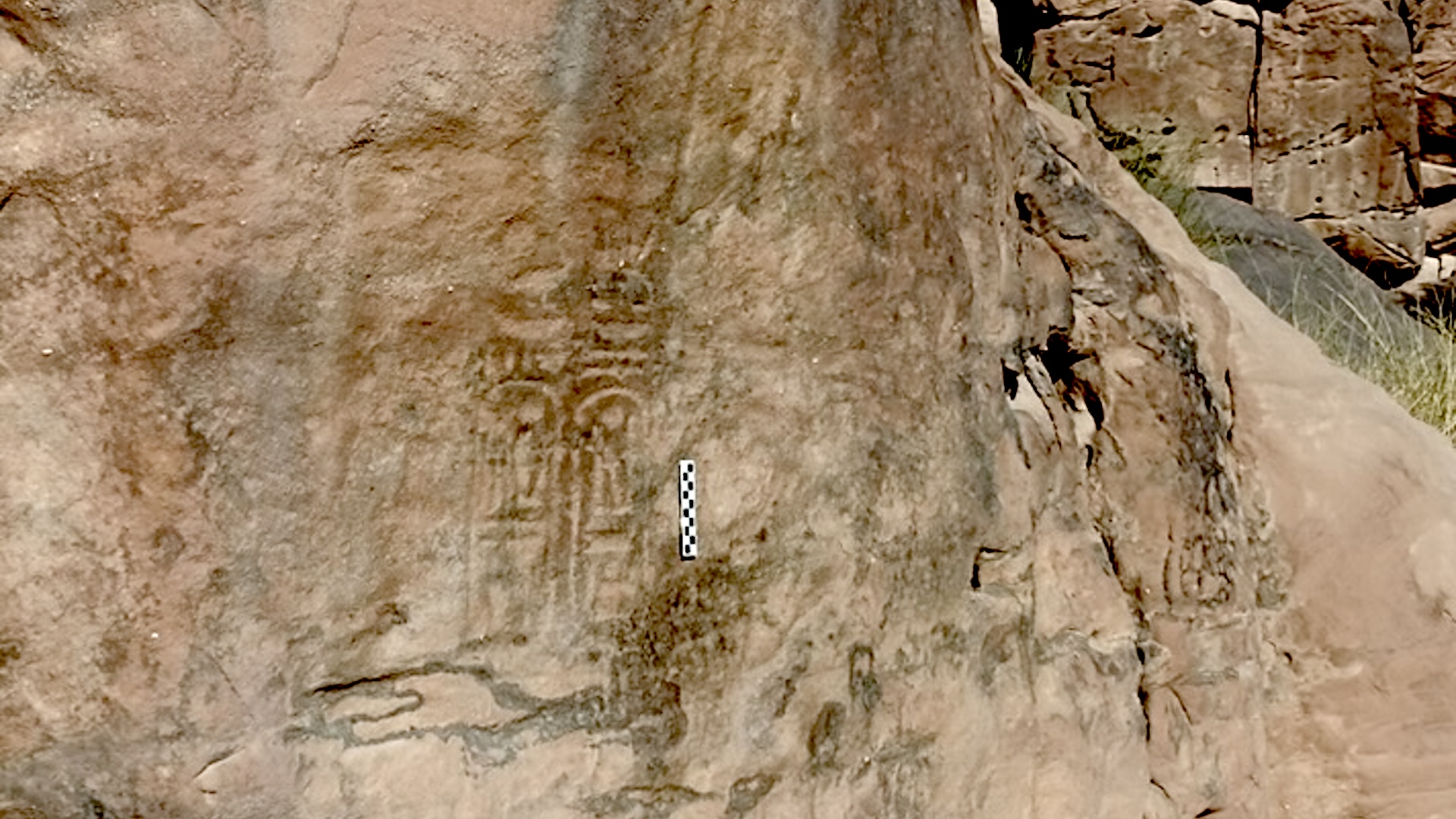
Archaeologists in Jordan have documented a carved inscription bearing the name of Ramesses III, an Egyptian pharaoh who reigned around 3,200 years ago, Jordan’s Ministry of Tourism and Antiquities said in a translated statement.

Ramesses III (reign circa 1184 to 1153 B.C.) ruled at a tumultuous time in the region’s history. A number of major powers in the region — such as the Mycenaeans (who were based in Greece and the Aegean islands) and the Hittites (who were based in Turkey) — collapsed, and a group known as the “Sea People” invaded parts of the Middle East, including Egypt. Historical records say Ramesses III defeated the Sea People’s invasion of Egypt and campaigned in the eastern Mediterranean, maintaining Egypt’s empire.

The inscription, which would have been carved by Ramesses III’s army, is in the Wadi Rum protected area, a desert in southern Jordan that contains numerous archaeological remains. Although the existence of the inscription was known to a few people, it wasn’t until the past year that it was scientifically documented.

The inscription is “near a natural spring, in a location that is extremely difficult to access,” archaeologist Ali Al-Manaser told Live Science in an email. He is the head of the Department of Cultural Resources Management and Museology at Hashemite University in Jordan and helped document the inscription.

“This discovery is particularly significant as the inscription is the first of its kind found in Jordan — a royal Egyptian inscription carved into a fixed, large stone that is part of a mountain formation,” Manaser said. “Previously, another Egyptian inscription was discovered in the northern region of Jordan; however, it was inscribed on a moveable rock. In contrast, this newly documented inscription is on an immovable, prominent rock face.”

Zahi Hawass, a former minister of antiquities in Egypt who is working with researchers in Jordan, said the inscription gives the name of Ramesses III and calls him “Sa-Re,” which means “son of Re” (also spelled Ra), a sun god of Egypt. The name was inscribed when Ramesses III led an army that passed by the area, Hawass told Live Science in an email.

He noted that the army of Ramesses III also carved an inscription with the pharaoh’s name at Tayma, a settlement in what is now northwestern Saudi Arabia.

Get the world’s most fascinating discoveries delivered straight to your inbox.

Ramesses III likely went through Jordan to maintain access to precious goods, Manaser said. The pharaoh “would have sought to secure these trade routes to maintain Egypt’s access to resources like copper, which was abundant in the southeast of Jordan,” Manaser said.

No related artifacts were found beside the inscription. However, the archaeological exploration of nearby areas is ongoing, and it’s possible that more evidence of Ramesses III’s campaigns in the region will be found in the future, Manaser said.

Source link

Share. Facebook Twitter Pinterest LinkedIn Tumblr Email
Previous ArticleCloudy with a chance of mushballs: Jupiter’s monster storms include softball size hailstones made of ammonia
Next Article ‘We’re already on the precipice of disaster’: Deadly measles outbreaks could explode across the US in the next 25 years if vaccinations fall, model predicts
Editor
  • Website

Related Posts

Lifestyle

New robotic heart mimics common, mysterious condition to help researchers study it

July 11, 2026
Lifestyle

Canon EOS R6 III review: A wildlife wonder

July 10, 2026
Lifestyle

Medieval babies and adults buried together in Sweden were not related, archaeologists discover — raising big questions about early Christian burial practices

July 10, 2026
Add A Comment

Comments are closed.

Categories
  • Entertainment
  • Lifestyle
  • News
  • Sports
  • Tech
  • Travel
Recent Posts
  • New robotic heart mimics common, mysterious condition to help researchers study it
  • Canon EOS R6 III review: A wildlife wonder
  • Medieval babies and adults buried together in Sweden were not related, archaeologists discover — raising big questions about early Christian burial practices
  • NASA is creating a fifth state of matter on the ISS, thanks to an upgrade to a mini-fridge-sized quantum lab
  • New sodium metal battery design charges in just 4 minutes and retains its capacity for years
calendar
July 2026
M T W T F S S
 12345
6789101112
13141516171819
20212223242526
2728293031  
« Jun    
Recent Posts
  • New robotic heart mimics common, mysterious condition to help researchers study it
  • Canon EOS R6 III review: A wildlife wonder
  • Medieval babies and adults buried together in Sweden were not related, archaeologists discover — raising big questions about early Christian burial practices
About

Welcome to Baynard Media, your trusted source for a diverse range of news and insights. We are committed to delivering timely, reliable, and thought-provoking content that keeps you informed
and inspired

Categories
  • Entertainment
  • Lifestyle
  • News
  • Sports
  • Tech
  • Travel
Facebook X (Twitter) Pinterest WhatsApp
  • Contact Us
  • About Us
  • Privacy Policy
  • Disclaimer
  • UNSUBSCRIBE
© 2026 copyrights reserved

Type above and press Enter to search. Press Esc to cancel.