Close Menu
  • Home
  • UNSUBSCRIBE
  • News
  • Lifestyle
  • Tech
  • Entertainment
  • Sports
  • Travel
Facebook X (Twitter) WhatsApp
Trending
  • Lemur used in ‘lemur yoga’ session dies of human herpesvirus, study finds
  • ‘A fine line between reducing stigma and trivialising conditions’: Social media, self-diagnosis and the glamorization of ADHD
  • New 2D memory device stores data on just a single electron
  • Before we ban kids from social media completely, here’s what we should try first | Jonathan Bellack and Mariana Olaizola Rosenblat
  • Scientists uncover a better way to beat ‘the bends’ — using deep-diving pigs
  • Mars may have been losing its water more than 4 billion years ago, oldest-known Martian meteorite suggests
  • ‘The lance head was still inside the pelvis’: Mass grave found in Austria may hold casualties of unknown ancient Roman battle
  • ‘Full-on berserker mode’: Archaeologists solve mystery of medieval soldiers with gruesome square holes in their skull
Facebook X (Twitter) WhatsApp
Baynard Media
  • Home
  • UNSUBSCRIBE
  • News
  • Lifestyle
  • Tech
  • Entertainment
  • Sports
  • Travel
Baynard Media
Home»Lifestyle»Rare star spotted in its original galaxy could answer a key question about the ingredients of life: Space photo of the week
Lifestyle

Rare star spotted in its original galaxy could answer a key question about the ingredients of life: Space photo of the week

EditorBy EditorMarch 22, 2026No Comments2 Mins Read
Share Facebook Twitter Pinterest LinkedIn Tumblr Reddit Telegram Email
Share
Facebook Twitter LinkedIn Pinterest Email

Quick Facts

What it is: Star PicII-503 inside the Pictor II dwarf galaxy

Where it is: 150,000 light-years from Earth in the Pictor constellation

When it was shared: March 16, 2026

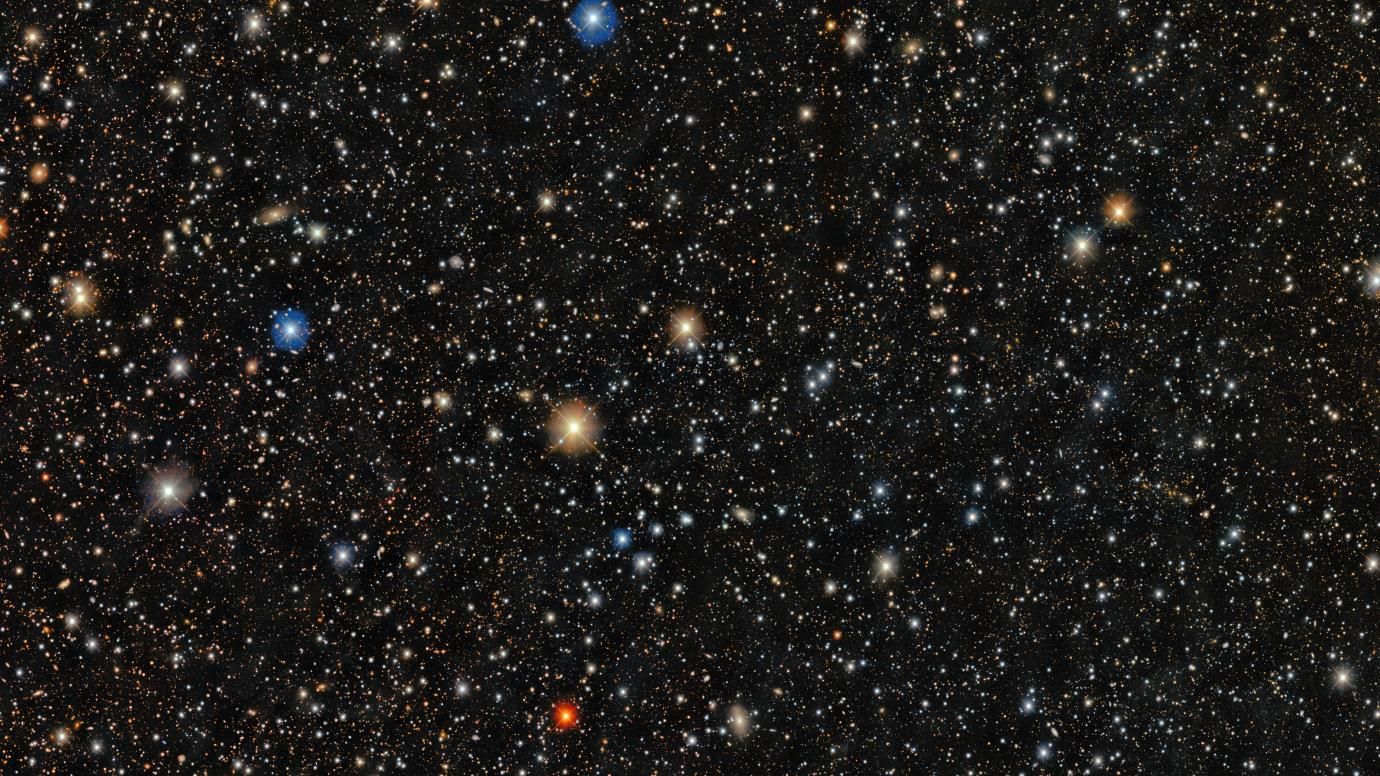
This gorgeous snap, taken by the Dark Energy Camera (DECam) mounted atop the Víctor M. Blanco 4-meter (13 feet) Telescope in Chile, shows a glistening field of stars inside the dwarf galaxy Pictor II, which is more than 10 billion years old.

But it isn’t just a pretty picture. Nestled inside this image is the star PicII-503, a stellar furnace so ancient that it’s classed as a Population II, or second-generation, star, making it among the oldest stars in the universe.

Population II stars formed when the cosmos was young and stars had yet to fuse heavier elements into existence, meaning they are composed primarily of hydrogen and helium. This means that PicII-503 has roughly only 1-40,000th of the iron contained within our much younger sun.

Article continues below


You may like

But what the star lacks in iron it makes up for in carbon. Like many Pop II stars, PicII-503 is unusually rich in the stuff, having a carbon-to-iron ratio that’s more than 1,500 times the ratio in the sun, researchers said in a statement.

A field of stars against a black background.

PicII-503’s location inside Pictor II (Image credit: CTIO/NOIRLab/DOE/NSF/AURA Image processing: Image Processing: T.A. Rector (University of Alaska Anchorage/NSF NOIRLab), M. Zamani & D. de Martin (NSF NOIRLab) Acknowledgment: PI: Anirudh Chiti, Alex Drlica-Wagner)

Astronomers have proposed many theories why this may be the case but because many Pop II stars are spotted after they’ve migrated away from their birthplaces, these suggestions have been hard to verify.

But PicII-503 is still located within its primordial dwarf galaxy, so astronomers acted as “stellar archeologists,” using the star’s composition to test their theories. The star’s carbon-rich makeup lends credence to an idea that, during the violent supernova explosion at the end of a star’s life, lightweight carbon in the star’s outer shell is flung farther away than other elements.

That could also explain why carbon ends up everywhere in the universe, making it an extremely suitable element to act as the key building block for life.

Get the world’s most fascinating discoveries delivered straight to your inbox.


Source link

Share. Facebook Twitter Pinterest LinkedIn Tumblr Email
Previous ArticleSchumer calls Trump’s plan to deploy ICE agents to US airports ‘impulsive’
Next Article Inside a Minneapolis child care center during ICE surge
Editor
  • Website

Related Posts

Lifestyle

Lemur used in ‘lemur yoga’ session dies of human herpesvirus, study finds

August 15, 2026
Lifestyle

‘A fine line between reducing stigma and trivialising conditions’: Social media, self-diagnosis and the glamorization of ADHD

August 15, 2026
Lifestyle

New 2D memory device stores data on just a single electron

August 15, 2026
Add A Comment

Comments are closed.

Categories
  • Entertainment
  • Lifestyle
  • News
  • Sports
  • Tech
  • Travel
Recent Posts
  • Lemur used in ‘lemur yoga’ session dies of human herpesvirus, study finds
  • ‘A fine line between reducing stigma and trivialising conditions’: Social media, self-diagnosis and the glamorization of ADHD
  • New 2D memory device stores data on just a single electron
  • Before we ban kids from social media completely, here’s what we should try first | Jonathan Bellack and Mariana Olaizola Rosenblat
  • Scientists uncover a better way to beat ‘the bends’ — using deep-diving pigs
calendar
September 2026
M T W T F S S
 123456
78910111213
14151617181920
21222324252627
282930  
« Aug    
Recent Posts
  • Lemur used in ‘lemur yoga’ session dies of human herpesvirus, study finds
  • ‘A fine line between reducing stigma and trivialising conditions’: Social media, self-diagnosis and the glamorization of ADHD
  • New 2D memory device stores data on just a single electron
About

Welcome to Baynard Media, your trusted source for a diverse range of news and insights. We are committed to delivering timely, reliable, and thought-provoking content that keeps you informed
and inspired

Categories
  • Entertainment
  • Lifestyle
  • News
  • Sports
  • Tech
  • Travel
Facebook X (Twitter) Pinterest WhatsApp
  • Contact Us
  • About Us
  • Privacy Policy
  • Disclaimer
  • UNSUBSCRIBE
© 2026 copyrights reserved

Type above and press Enter to search. Press Esc to cancel.