Close Menu
  • Home
  • UNSUBSCRIBE
  • News
  • Lifestyle
  • Tech
  • Entertainment
  • Sports
  • Travel
Facebook X (Twitter) WhatsApp
Trending
  • Aspen trees provide a natural buffer against wildfires, even as fire season intensifies, study shows
  • Ancient bullets reveal where a Roman camp hid in the Pyrenees of Spain before being ambushed
  • First deaths from Cyclospora outbreak reported in Michigan
  • Scientists uncover big clue as to how Antarctica’s mysterious Blood Falls came to be
  • ‘Poop pills’ may ease insomnia by reprogramming the gut microbiome, early study hints
  • Did fungi give mammals an evolutionary edge after the dinosaur-killing asteroid hit? New evidence revives a provocative hypothesis
  • Diagnostic dilemma: Rare ‘spinal stroke’ struck an 8-year-old and temporarily paralyzed her
  • Buck Moon 2026: July’s full moon rises tonight, setting up a month of solar and lunar eclipses
Facebook X (Twitter) WhatsApp
Baynard Media
  • Home
  • UNSUBSCRIBE
  • News
  • Lifestyle
  • Tech
  • Entertainment
  • Sports
  • Travel
Baynard Media
Home»Lifestyle»Rare ‘planetary parade’ will return to the evening sky this week
Lifestyle

Rare ‘planetary parade’ will return to the evening sky this week

EditorBy EditorFebruary 24, 2026No Comments3 Mins Read
Share Facebook Twitter Pinterest LinkedIn Tumblr Reddit Telegram Email
Share
Facebook Twitter LinkedIn Pinterest Email

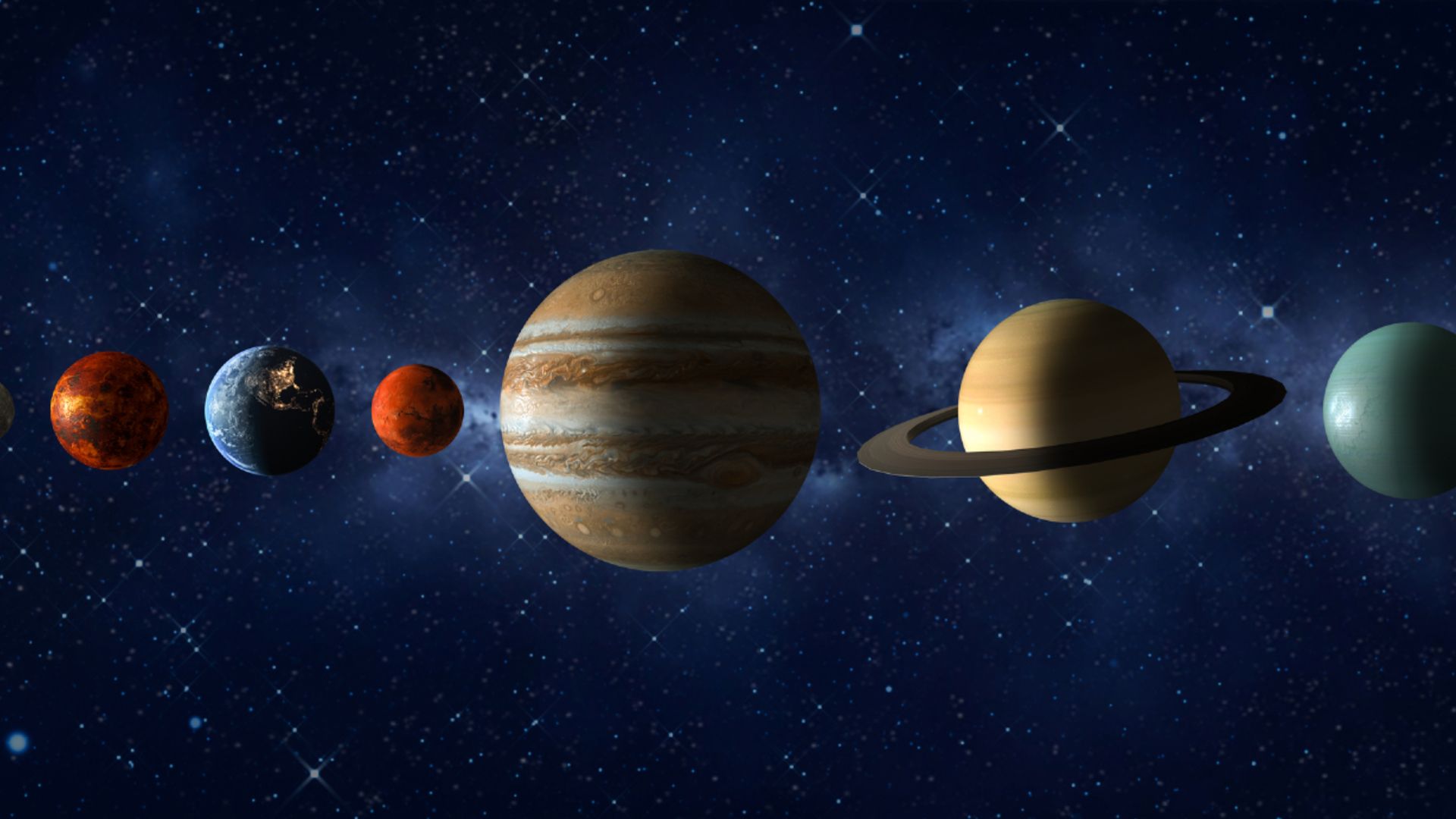
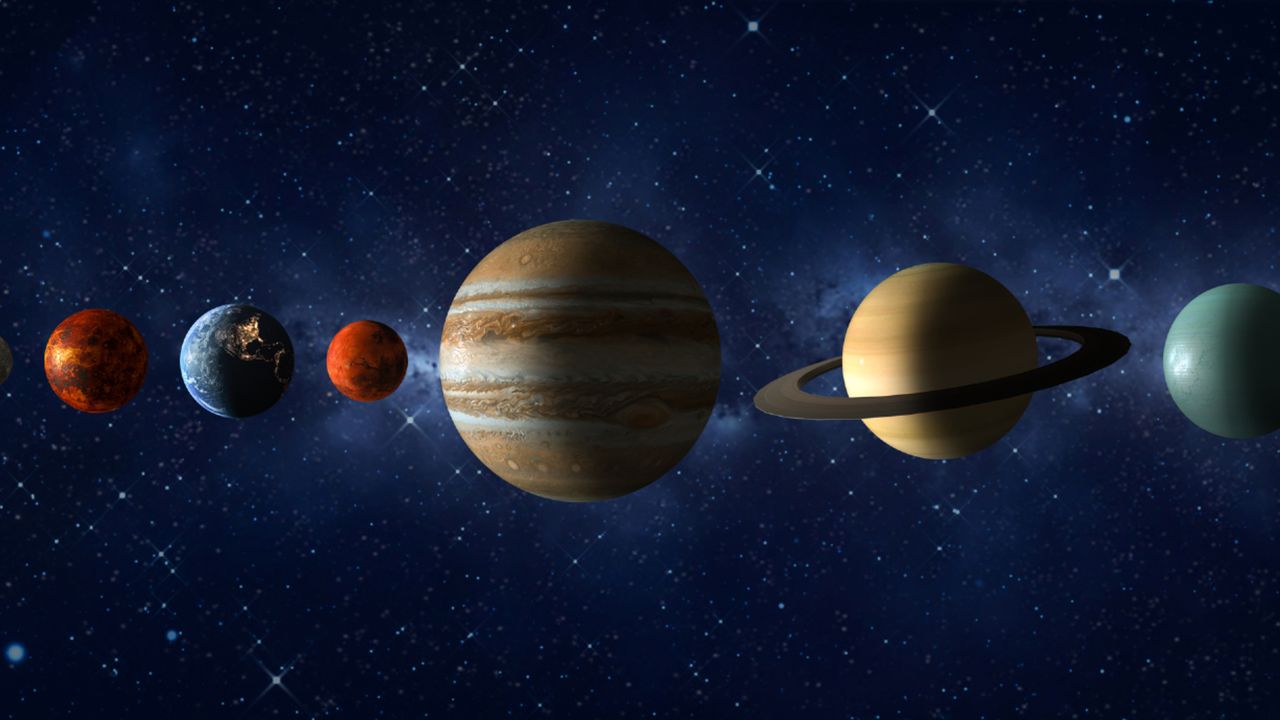
A planetary parade is about to bring six of Earth’s neighbors into the night sky at once — but it won’t be easy to see.

If you can find an unobstructed view due west and clear skies on Saturday, Feb. 28, you may see the two inner planets, Venus and Mercury, close to Saturn, with Neptune, Uranus and Jupiter also in the night sky, according to NASA.

The window will be tight, with Venus, Mercury, Saturn and Neptune appearing only briefly after sunset. Venus, Mercury and Saturn should all be visible to the naked eye, though a pair of stargazing binoculars may be helpful. Venus and Mercury will be closest to the horizon during twilight, with Saturn above.


You may like

Neptune will be right next to Saturn, but a 6-inch (15 centimeters) skywatching telescope will be required to get a good view of Neptune (and, in twilight, even that’s unlikely). These four planets will be in the sky about half an hour after sunset and remain so for around 45 minutes.

Once you’ve observed Venus, Mercury, Saturn and Neptune, look high in the south for Jupiter in the constellation Gemini. It will shine very brightly, so it should be easy to find. The three stars of Orion’s Belt will be roughly halfway between the other four planets and Jupiter. The giant planet will also appear as a steady, whitish light that doesn’t twinkle as stars do.

Uranus, the Pleiades and a total lunar eclipse

The seventh planet, Uranus, will also be in the night sky, but it will be best seen with binoculars or a small telescope. To find it, use Orion’s Belt again, following its three stars — Alnitak, Alnilam and Mintaka — upward, until you get to the shimmering sight of the Pleiades open cluster (also called “The Seven Sisters” or M45). Uranus will be just below the Pleiades, in the constellation Taurus.

As a bonus, on Feb. 28, the moon will also be in the night sky alongside another famous star cluster. About 92%-illuminated, the waxing gibbous moon will move close to the Beehive Cluster (also called M44 and NGC 2632), a bright cluster of around 1,000 stars that’s about 577 light-years from the solar system.

Get the world’s most fascinating discoveries delivered straight to your inbox.

As the planetary parade fades, something arguably more spectacular takes its place: a total lunar eclipse on March 3 as the full “Worm Moon” passes through Earth’s dark shadow. During this event, also dubbed a “blood moon,” the lunar surface will turn a reddish-copper color for 58 minutes, with the best views of the entire eclipse sequence from the western U.S. (including Alaska and Hawaii), the Pacific islands, New Zealand, Australia and East Asia.

Source link

Share. Facebook Twitter Pinterest LinkedIn Tumblr Email
Previous ArticleThis tool delivers expert-level AI results in seconds
Next Article We have no idea what tear gas does to kids’ health
Editor
  • Website

Related Posts

Lifestyle

Aspen trees provide a natural buffer against wildfires, even as fire season intensifies, study shows

August 4, 2026
Lifestyle

Ancient bullets reveal where a Roman camp hid in the Pyrenees of Spain before being ambushed

August 4, 2026
Lifestyle

First deaths from Cyclospora outbreak reported in Michigan

August 3, 2026
Add A Comment

Comments are closed.

Categories
  • Entertainment
  • Lifestyle
  • News
  • Sports
  • Tech
  • Travel
Recent Posts
  • Aspen trees provide a natural buffer against wildfires, even as fire season intensifies, study shows
  • Ancient bullets reveal where a Roman camp hid in the Pyrenees of Spain before being ambushed
  • First deaths from Cyclospora outbreak reported in Michigan
  • Scientists uncover big clue as to how Antarctica’s mysterious Blood Falls came to be
  • ‘Poop pills’ may ease insomnia by reprogramming the gut microbiome, early study hints
calendar
August 2026
M T W T F S S
 12
3456789
10111213141516
17181920212223
24252627282930
31  
« Jul    
Recent Posts
  • Aspen trees provide a natural buffer against wildfires, even as fire season intensifies, study shows
  • Ancient bullets reveal where a Roman camp hid in the Pyrenees of Spain before being ambushed
  • First deaths from Cyclospora outbreak reported in Michigan
About

Welcome to Baynard Media, your trusted source for a diverse range of news and insights. We are committed to delivering timely, reliable, and thought-provoking content that keeps you informed
and inspired

Categories
  • Entertainment
  • Lifestyle
  • News
  • Sports
  • Tech
  • Travel
Facebook X (Twitter) Pinterest WhatsApp
  • Contact Us
  • About Us
  • Privacy Policy
  • Disclaimer
  • UNSUBSCRIBE
© 2026 copyrights reserved

Type above and press Enter to search. Press Esc to cancel.