Close Menu
  • Home
  • UNSUBSCRIBE
  • News
  • Lifestyle
  • Tech
  • Entertainment
  • Sports
  • Travel
Facebook X (Twitter) WhatsApp
Trending
  • Thanks to natural selection, Indigenous Andeans may digest potatoes better than anyone else in the world, study finds
  • Doctors need to understand patients' lived experiences to treat them well — but medical schools may stop requiring that training
  • This yeast-based 3D printed biomaterial could one day replace your wallpaper and drapes
  • Flesh-eating screwworm found in Texas cow. Are humans at risk?
  • New Velociraptor cousin was a ‘4-winged’ dragon that hunted prey from the trees of ancient China, fossil find hints
  • AI models are teaching each other ‘violent and antisocial’ traits through hidden data signals, study finds — and scientists can’t figure out why
  • Scientists race to collect the last seeds from a critically endangered tree before it goes extinct
  • What’s the deepest cave in the world?
Facebook X (Twitter) WhatsApp
Baynard Media
  • Home
  • UNSUBSCRIBE
  • News
  • Lifestyle
  • Tech
  • Entertainment
  • Sports
  • Travel
Baynard Media
Home»Lifestyle»Rare fresco discovered in Pompeii shows type of woman who ‘breaks free from male order to dance freely, go hunting and eat raw meat in the mountains’
Lifestyle

Rare fresco discovered in Pompeii shows type of woman who ‘breaks free from male order to dance freely, go hunting and eat raw meat in the mountains’

EditorBy EditorFebruary 27, 2025No Comments4 Mins Read
Share Facebook Twitter Pinterest LinkedIn Tumblr Reddit Telegram Email
Share
Facebook Twitter LinkedIn Pinterest Email

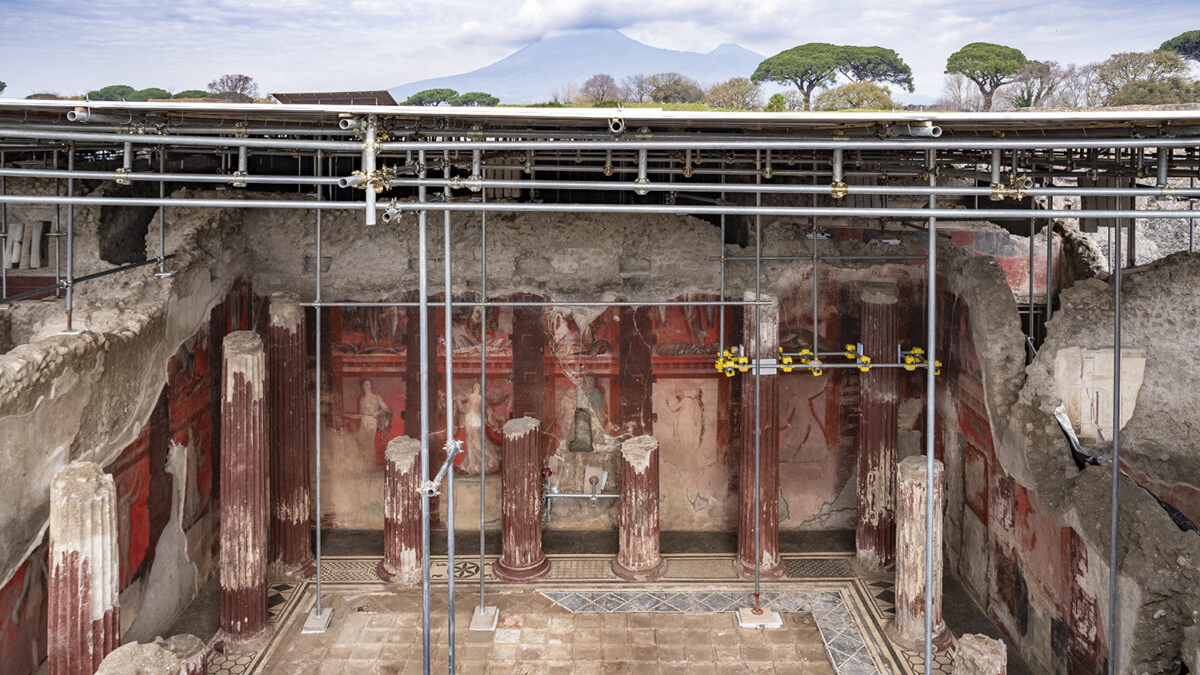
Archaeologists at Pompeii have discovered an enormous, extremely rare wall painting depicting an ancient mystery cult, at the center of which is a woman being initiated under the cover of night. The find was announced by the Pompeii Archaeological Park on Wednesday (Feb. 26) as they revealed the newly excavated House of Thiasus.

The wall painting, which is nearly life-size, runs the length of three walls along a large banquet hall, while the fourth wall opens onto a garden. Against a bright red background, there are numerous figures of maenads — female followers of Dionysus, the god of wine — who are depicted as hunters, carrying swords in their hands and slaughtered goats on their shoulders. The fresco also depicts young satyrs, part-goat and part-human creatures, playing the flute and performing a sacrifice of wine.

At the center of the fresco is an old satyr with a young woman who is about to be initiated into the Dionysian mystery cult. The ancient cult, which dates back at least to the classical Greeks of the fifth century B.C., is called a “mystery” because the initiation and practices were kept secret from outsiders. But the fresco has given experts a new clue to what went on in the rites: Roman initiates may have hunted like the Greek ones before them. The murals suggest these mystery rites echoed that ancient connection between Dionysus and wild animals.

Although many aspects of the Dionysian mysteries have been lost due to secrecy, historical accounts suggest that they involved heavy use of wine and other intoxicating substances, like opium, to induce trance-like states in followers. Dionysus was also known as a re-born god and became associated with resurrection, something that may have been promised to those initiated into the mysteries.

Related: Pompeii victims aren’t who we thought they were, DNA analysis reveals

The only other example of a large fresco depicting the Dionysian rites was discovered in 1909 in a house in the suburbs of Pompeii known as the Villa of the Mysteries. These murals also depict satyrs, maenads and a woman being initiated into the cult in preparation for marriage, but they lack any hunting imagery.

Close-up of a frescoed wall; it has a red background and shows a cornucopia with fruit and shells spilling out in the foreground. A pig carcass hangs from above.

A close-up of part of the fresco showing shellfish and butchered animals (Image credit: Parco archeologico di Pompei)

Both examples of Dionysus-themed frescoes, however, reveal the “wild, untameable side of women,” Gabriel Zuchtriegel, the director of Pompeii Archaeological Park, said in the statement. This is the kind of woman who “breaks free from male order to dance freely, go hunting and eat raw meat in the mountains and the woods,” he said.

Get the world’s most fascinating discoveries delivered straight to your inbox.

The murals of the Dionysian mysteries in both the Villa of the Mysteries and the newly discovered House of Thiasus date to the middle of the first century B.C., meaning they were over a century old when Mount Vesuvius erupted in A.D. 79, preserving the paintings for two millennia. They also suggest a growing religious crisis, Zuchtriegel said, as festivals celebrating Dionysus were ostensibly banned as part of a clamp down on secret rituals in Italy in 186 B.C. The two murals suggest that the ban was widely ignored — at least in the region.

“The discovery we are showing is historic,” Italian Minister of Culture Alessandro Giuli said in the statement. The fresco “is an exceptional historical document and, together with the fresco of the Villa of the Mysteries, is one-of-a-kind, making Pompeii an extraordinary testament to an aspect of classical Mediterranean life that is largely unknown.”

The House of Thiasus, named after the word for a group of Dionysian revelers, is now on display as part of the tours of the ongoing excavations at Pompeii.

Source link

Share. Facebook Twitter Pinterest LinkedIn Tumblr Email
Previous ArticleMaryland judge declares mistrial in parking dispute shooting that killed 3
Next Article What to know on Alex Cooper, Alix Earle after ‘Hot Mess’ reportedly podcast dropped by Unwell Network
Editor
  • Website

Related Posts

Lifestyle

Thanks to natural selection, Indigenous Andeans may digest potatoes better than anyone else in the world, study finds

June 8, 2026
Lifestyle

Doctors need to understand patients' lived experiences to treat them well — but medical schools may stop requiring that training

June 8, 2026
Lifestyle

This yeast-based 3D printed biomaterial could one day replace your wallpaper and drapes

June 8, 2026
Add A Comment

Comments are closed.

Categories
  • Entertainment
  • Lifestyle
  • News
  • Sports
  • Tech
  • Travel
Recent Posts
  • Thanks to natural selection, Indigenous Andeans may digest potatoes better than anyone else in the world, study finds
  • Doctors need to understand patients' lived experiences to treat them well — but medical schools may stop requiring that training
  • This yeast-based 3D printed biomaterial could one day replace your wallpaper and drapes
  • Flesh-eating screwworm found in Texas cow. Are humans at risk?
  • New Velociraptor cousin was a ‘4-winged’ dragon that hunted prey from the trees of ancient China, fossil find hints
calendar
June 2026
M T W T F S S
1234567
891011121314
15161718192021
22232425262728
2930  
« May    
Recent Posts
  • Thanks to natural selection, Indigenous Andeans may digest potatoes better than anyone else in the world, study finds
  • Doctors need to understand patients' lived experiences to treat them well — but medical schools may stop requiring that training
  • This yeast-based 3D printed biomaterial could one day replace your wallpaper and drapes
About

Welcome to Baynard Media, your trusted source for a diverse range of news and insights. We are committed to delivering timely, reliable, and thought-provoking content that keeps you informed
and inspired

Categories
  • Entertainment
  • Lifestyle
  • News
  • Sports
  • Tech
  • Travel
Facebook X (Twitter) Pinterest WhatsApp
  • Contact Us
  • About Us
  • Privacy Policy
  • Disclaimer
  • UNSUBSCRIBE
© 2026 copyrights reserved

Type above and press Enter to search. Press Esc to cancel.