Close Menu
  • Home
  • UNSUBSCRIBE
  • News
  • Lifestyle
  • Tech
  • Entertainment
  • Sports
  • Travel
Facebook X (Twitter) WhatsApp
Trending
  • George Kittle’s wife shares live reaction to Achilles injury
  • ‘The scientific cost would be severe’: A Trump Greenland takeover would put climate research at risk
  • Headlines Across OC as Angel Stadium Sale Debate Intensifies
  • Anti-Islam activists clash with pro-Muslim counter-protesters in Dearborn, Michigan
  • Best monitor deal: Get the 45-inch LG Ultragear gaming monitor for its lowest price yet
  • Slovakia U21 0 – 4 England U21
  • 13 Top Sleep Products That Transform Your Bedtime Routine for Better Rest
  • Firefighters rescue puppies from burning house
Facebook X (Twitter) WhatsApp
Baynard Media
  • Home
  • UNSUBSCRIBE
  • News
  • Lifestyle
  • Tech
  • Entertainment
  • Sports
  • Travel
Baynard Media
Home»Lifestyle»Rainbow-on-a-chip’ could help keep AI energy demands in check — and it was created by accident
Lifestyle

Rainbow-on-a-chip’ could help keep AI energy demands in check — and it was created by accident

EditorBy EditorOctober 19, 2025No Comments4 Mins Read
Share Facebook Twitter Pinterest LinkedIn Tumblr Reddit Telegram Email
Share
Facebook Twitter LinkedIn Pinterest Email

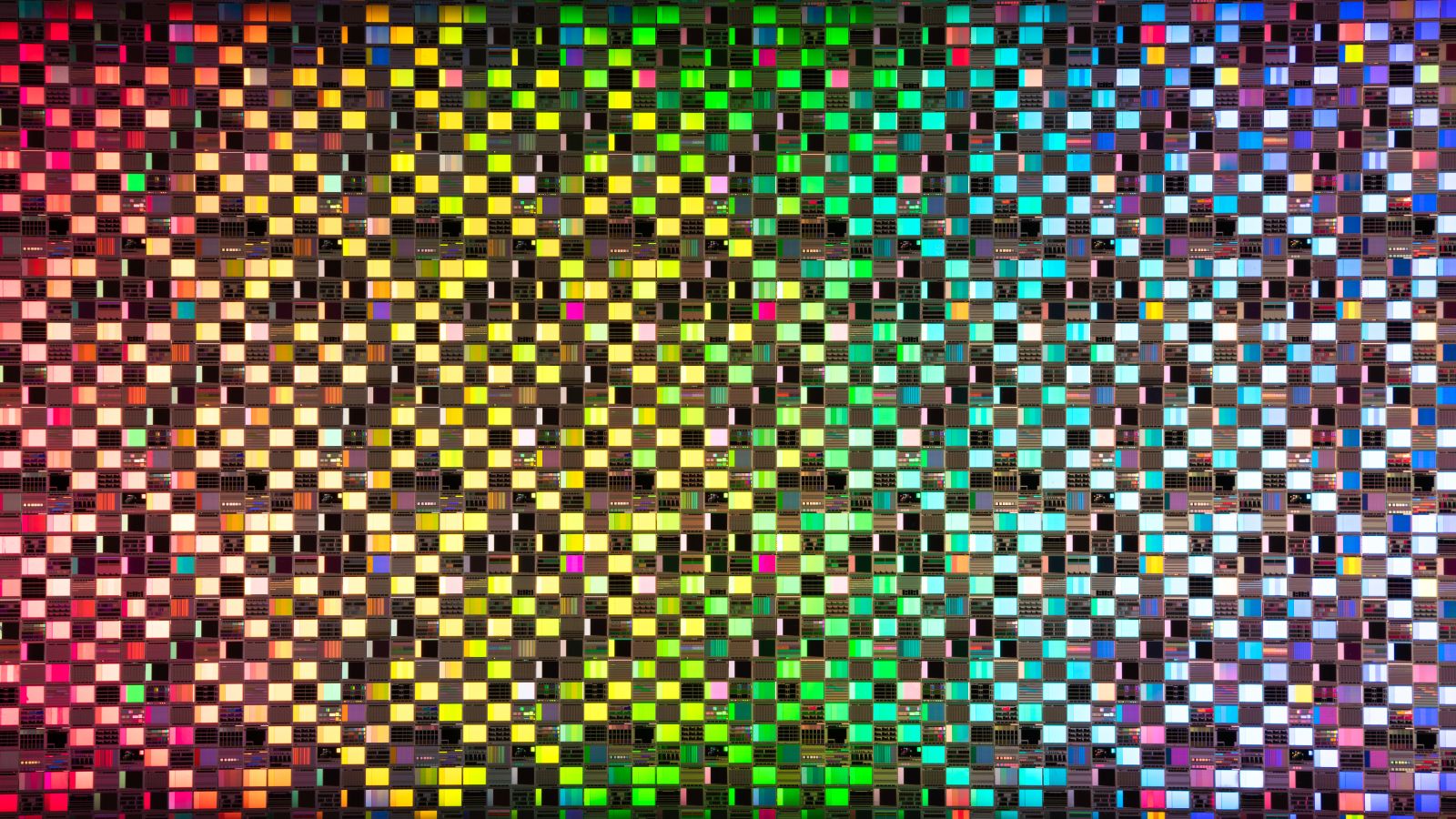
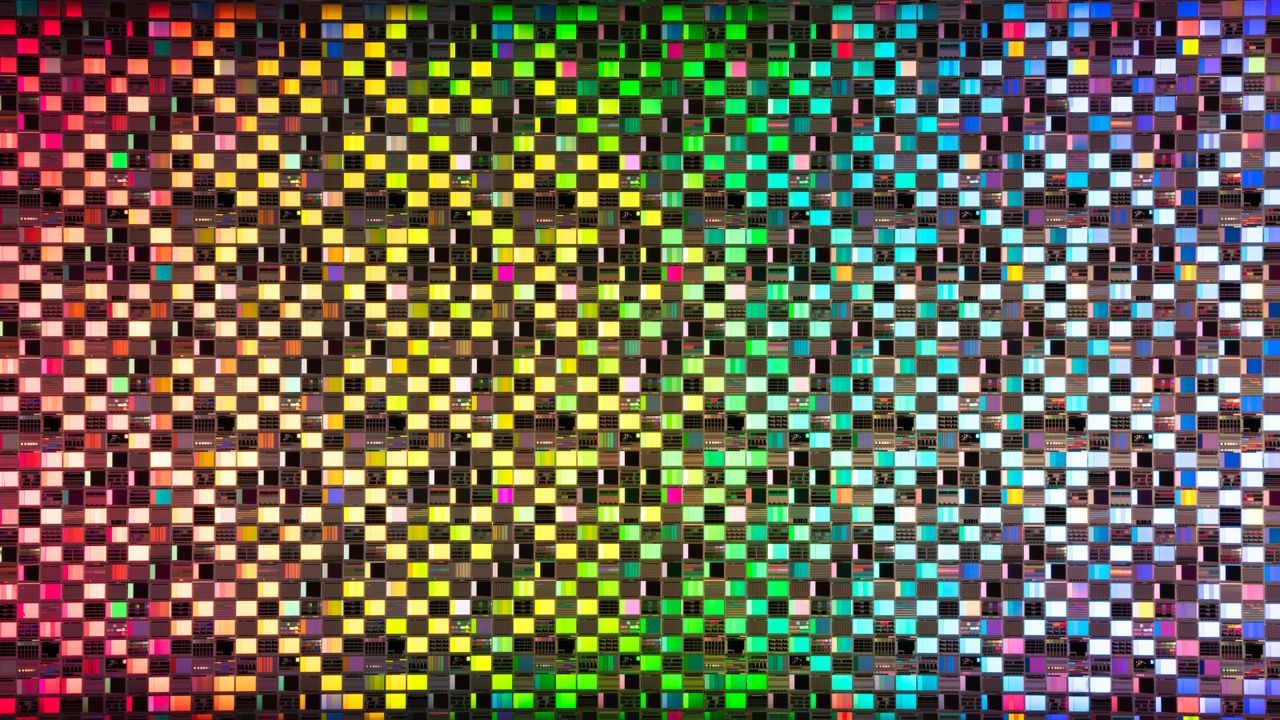
A lab accident has led engineers to build a chip that fires a rainbow of powerful laser beams — and it could help data centers better manage skyrocketing volumes of artificial intelligence (AI) data.

The new photonics chip contains an industrial-grade laser source paired with a precisely engineered optical circuit that shapes and stabilizes the light before splitting it into multiple, evenly spaced colors.

Because each color band represents an optical frequency that can carry its own unique stream of data, the technology could enable data centers to move information around far faster and more efficiently than existing optical networks such as fiber, which transmit data using single-wavelength laser pulses.


You may like

Creating this rainbow effect — called a frequency comb — typically requires large and expensive lasers and amplifiers. However, the researchers stumbled on a way to pack this powerful photonics technology into a single, tiny chip when working on a way to improve lidar (light detection and ranging) technology.

Lidar uses laser pulses to measure distance based on the time it takes them to travel to an object and bounce back. While trying to produce more powerful lasers capable of capturing detailed data from further away, the team noticed the chip was splitting the light into multiple colors.

What is a frequency comb?

A frequency comb is a type of laser light made up of multiple colors or frequencies that are evenly spaced across the optical spectrum. When plotted on a spectrogram, these frequencies appear as spikes resembling the teeth of a comb.

The peak of each “tooth” represents a stable, precisely defined wavelength that can carry information independently of the others. Because the wavelengths are locked in both frequency and phase — meaning their peaks stay perfectly aligned — they don’t interfere with one another. This enables multiple data streams to travel in parallel through a single optical channel, such as a fiber-optic cable.

Get the world’s most fascinating discoveries delivered straight to your inbox.

After stumbling on the effect by accident, the scientists then engineered a way to reproduce it intentionally and controllably. They also packed the technology into a silicon chip where light travels through waveguides mere micrometers wide; one micrometer (1 µm) is one-thousandth of a millimeter (0.0001 cm), or roughly one-hundredth the width of a human hair.

The team published their findings Oct. 7 in the journal Nature Photonics. The breakthrough is especially important now that AI is placing more and more resource strain on data center infrastructure, the researchers said.

“Data centers have created tremendous demand for powerful and efficient sources of light that contain many wavelengths,” study co-author Andres Gil-Molina, principal engineer at Xscape Photonics and a former researcher at Columbia Engineering, said in a statement.


You may like

“The technology we’ve developed takes a very powerful laser and turns it into dozens of clean, high-power channels on a chip. That means you can replace racks of individual lasers with one compact device, cutting cost, saving space and opening the door to much faster, more energy-efficient systems.”

Rainbow-on-a-chip

To create a frequency comb on a chip, the researchers needed to find a high-power laser that could be squeezed into a compact photonic circuit. They eventually settled on a multimode laser diode, which is widely used in medical devices and laser cutting tools.

Multimode laser diodes can produce powerful beams of laser light, but the beam is “messy,” meaning the researchers needed to figure out how to refine and stabilize the light to make it workable, the researchers said in the study.

They achieved this using a technique called self-injection locking, which involves integrating resonators into the chip that feed a small portion of the light back into the laser. This filters and stabilizes the light, resulting in a beam that’s both powerful and highly stable.

Once stabilized, the chip splits the laser beam into a multicolored frequency comb. The result is a small but efficient photonics device that combines the power of an industrial laser with the precision needed for data transmission and sensing applications, the scientists added.

Beyond data centers, the new chip could enable portable spectrometers, ultra-precise optical clocks, compact quantum devices and even advanced lidar systems.

“This is about bringing lab-grade light sources into real-world devices,” said Gil-Molina. “If you can make them powerful, efficient and small enough, you can put them almost anywhere.”

Source link

Share. Facebook Twitter Pinterest LinkedIn Tumblr Email
Previous ArticleCollege football star sets NCAA mark in win
Next Article Thieves steal jewels from the Louvre in daylight heist
Editor
  • Website

Related Posts

Lifestyle

‘The scientific cost would be severe’: A Trump Greenland takeover would put climate research at risk

January 17, 2026
Lifestyle

New ‘Transformer’ humanoid robot can launch a shapeshifting drone off its back — watch it in action

November 19, 2025
Lifestyle

Medieval spear pulled from Polish lake may have belonged to prince or nobleman

November 19, 2025
Add A Comment

Comments are closed.

Categories
  • Entertainment
  • Lifestyle
  • News
  • Sports
  • Tech
  • Travel
Recent Posts
  • George Kittle’s wife shares live reaction to Achilles injury
  • ‘The scientific cost would be severe’: A Trump Greenland takeover would put climate research at risk
  • Headlines Across OC as Angel Stadium Sale Debate Intensifies
  • Anti-Islam activists clash with pro-Muslim counter-protesters in Dearborn, Michigan
  • Best monitor deal: Get the 45-inch LG Ultragear gaming monitor for its lowest price yet
calendar
February 2026
M T W T F S S
 1
2345678
9101112131415
16171819202122
232425262728  
« Jan    
Recent Posts
  • George Kittle’s wife shares live reaction to Achilles injury
  • ‘The scientific cost would be severe’: A Trump Greenland takeover would put climate research at risk
  • Headlines Across OC as Angel Stadium Sale Debate Intensifies
About

Welcome to Baynard Media, your trusted source for a diverse range of news and insights. We are committed to delivering timely, reliable, and thought-provoking content that keeps you informed
and inspired

Categories
  • Entertainment
  • Lifestyle
  • News
  • Sports
  • Tech
  • Travel
Facebook X (Twitter) Pinterest WhatsApp
  • Contact Us
  • About Us
  • Privacy Policy
  • Disclaimer
  • UNSUBSCRIBE
© 2026 copyrights reserved

Type above and press Enter to search. Press Esc to cancel.