Close Menu
  • Home
  • UNSUBSCRIBE
  • News
  • Lifestyle
  • Tech
  • Entertainment
  • Sports
  • Travel
Facebook X (Twitter) WhatsApp
Trending
  • 5,000-year-old burial of man with battered skull found in kiln in Germany — and he may have been a human sacrifice
  • A Texas-size chunk of winter sea ice is missing from Antarctica — and it’s probably not coming back
  • Earth-based telescope shares image of Artemis II capsule near the moon — one of the farthest photos of humans ever taken
  • Dangerously hot and humid: Rising temperatures in the US make outdoor exercise hazardous
  • ‘They are trying to tame nature’: China is building the world’s biggest dam in an earthquake-prone region of Tibet
  • ‘I never thought we’d see one alive’: Elusive goblin shark captured on camera for the first time
  • ‘Melted in a pot somewhere’: Vikings used Islamic silver coins to make their early pennies, study finds
  • Lavish Roman villa discovered outside Rome’s walls may have been frequented by Hadrian and Marcus Aurelius
Facebook X (Twitter) WhatsApp
Baynard Media
  • Home
  • UNSUBSCRIBE
  • News
  • Lifestyle
  • Tech
  • Entertainment
  • Sports
  • Travel
Baynard Media
Home»Lifestyle»Pink Moon 2025: April’s full ‘Paschal Moon’ rises this weekend and sets the stage for Easter
Lifestyle

Pink Moon 2025: April’s full ‘Paschal Moon’ rises this weekend and sets the stage for Easter

EditorBy EditorApril 9, 2025No Comments3 Mins Read
Share Facebook Twitter Pinterest LinkedIn Tumblr Reddit Telegram Email
Share
Facebook Twitter LinkedIn Pinterest Email

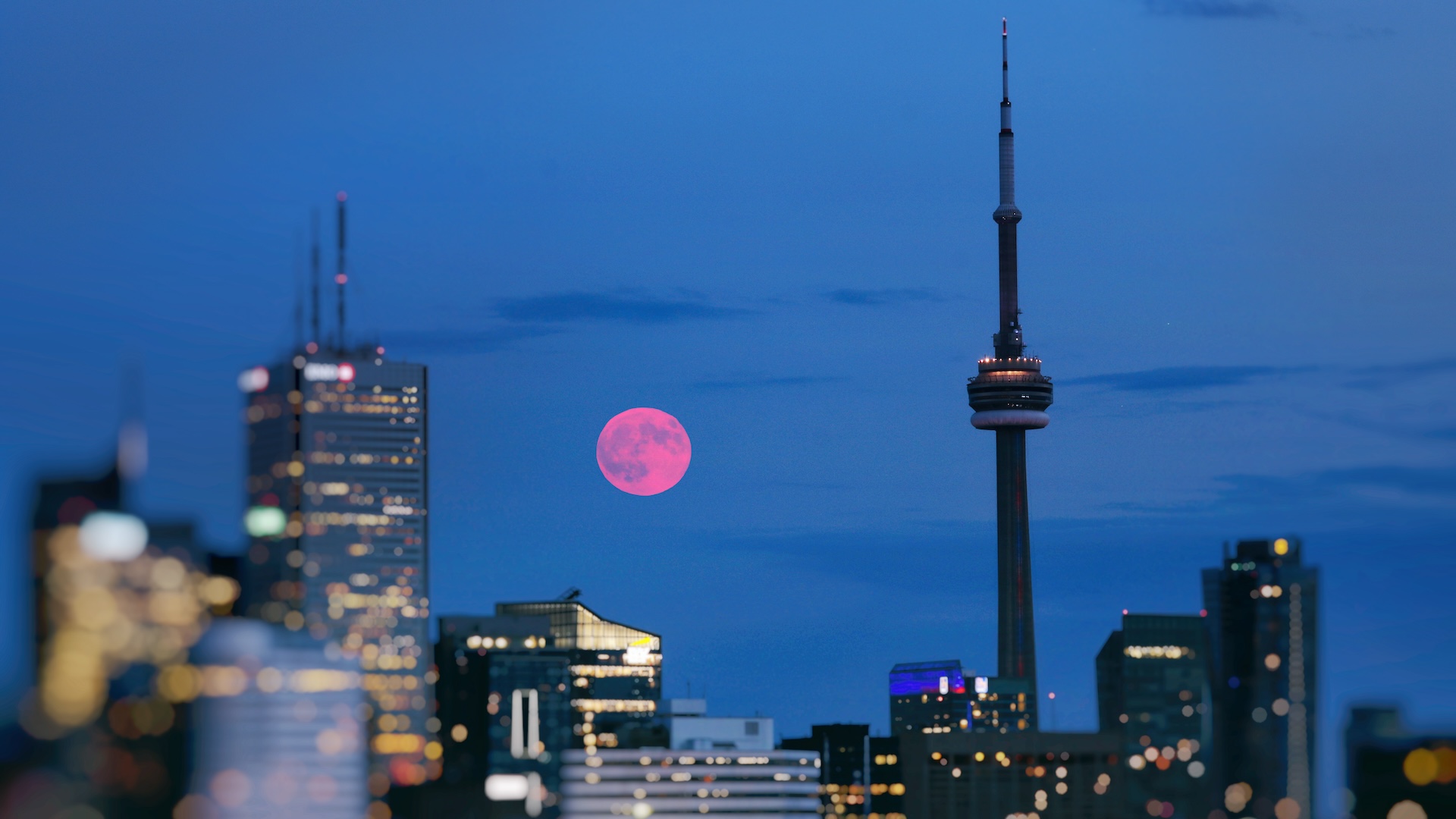
On Saturday, April 12, look east at dusk to see the next full moon rise into the sky: the “Pink Moon”

April’s full moon — the first of spring in the Northern Hemisphere — occurs as Earth gets between the sun and moon. Our natural satellite will be 100% illuminated at 8:22 p.m. EDT on April 12, rising in the east during dusk, shining all night before setting in the west at dawn. If you miss that event, the moon will also appear bright and full on Friday and Sunday.

Although you may think it’s fine to just look at any phase of the moon at any time of night, a full moon is too bright once it’s high in the sky to observe comfortably. By far the best time to see it is as it rises or sets — the former being by far the more practical time unless you’re an early bird.

When the moon is low on the horizon and viewed during dusk — just after the sun has set — it shines through the thickest part of Earth’s atmosphere. As with a sunset, that gives the moon a muted orangey color (rather than the stark, bright white color when it’s high up)because Earth’s atmosphere scatters short-wavelength blue light while allowing longer-wavelength reddish light to shine through.

Related: Full moons of 2025: When is the next full moon?

The full moon can even look pinkish for a short time, depending on the atmosphere, but that’s not why April’s full moon is called the “Pink Moon.” That name actually comes from the spring bloom of a wildflower called Phlox subulata (or “moss pink”), which is native to eastern North America, according to Almanac.

This full moon is also known as the Paschal Moon and is used to determine the date of Easter (Pascha in Latin) each year. In 2025, Easter falls on Sunday, April 20.

Get the world’s most fascinating discoveries delivered straight to your inbox.

The Pink ‘micromoon’ rises with Spica

Every full moon is different, but what makes this month’s special is the presence of the bright star Spica nearby.

Exactly where it will appear in relation to the moon depends on where you stand on Earth. From North America, Spica — the brightest star in the constellation Virgo — will be to the left/upper-left of the moon. However, from almost all of South America, the moon will occult Spica, according to In The Sky. From Europe, Spica will appear on the lower left, but since the moon will already be in the sky at dusk, it will be best seen on Sunday, April 13. Always check a moonrise calculator for the exact times for your location.

The “Pink Moon” will be relatively small in the sky. Unlike a “supermoon,” which occurs when the full phase coincides with when the satellite is closest to Earth on its slightly elliptical orbital path, the opposite will happen on April 12. As it rises, the Pink Moon will be just a couple of hours past its apogee — its farthest point from Earth.

The following full moon will be the “Flower Moon” on May 12, 2025.


Moon quiz: What do you know about our nearest celestial neighbor?

Source link

Share. Facebook Twitter Pinterest LinkedIn Tumblr Email
Previous Article‘Titanic: The Digital Resurrection’ documentary sheds light on night ship sank
Next Article When will the US measles outbreak end?
Editor
  • Website

Related Posts

Lifestyle

5,000-year-old burial of man with battered skull found in kiln in Germany — and he may have been a human sacrifice

June 16, 2026
Lifestyle

A Texas-size chunk of winter sea ice is missing from Antarctica — and it’s probably not coming back

June 16, 2026
Lifestyle

Earth-based telescope shares image of Artemis II capsule near the moon — one of the farthest photos of humans ever taken

June 16, 2026
Add A Comment

Comments are closed.

Categories
  • Entertainment
  • Lifestyle
  • News
  • Sports
  • Tech
  • Travel
Recent Posts
  • 5,000-year-old burial of man with battered skull found in kiln in Germany — and he may have been a human sacrifice
  • A Texas-size chunk of winter sea ice is missing from Antarctica — and it’s probably not coming back
  • Earth-based telescope shares image of Artemis II capsule near the moon — one of the farthest photos of humans ever taken
  • Dangerously hot and humid: Rising temperatures in the US make outdoor exercise hazardous
  • ‘They are trying to tame nature’: China is building the world’s biggest dam in an earthquake-prone region of Tibet
calendar
June 2026
M T W T F S S
1234567
891011121314
15161718192021
22232425262728
2930  
« May    
Recent Posts
  • 5,000-year-old burial of man with battered skull found in kiln in Germany — and he may have been a human sacrifice
  • A Texas-size chunk of winter sea ice is missing from Antarctica — and it’s probably not coming back
  • Earth-based telescope shares image of Artemis II capsule near the moon — one of the farthest photos of humans ever taken
About

Welcome to Baynard Media, your trusted source for a diverse range of news and insights. We are committed to delivering timely, reliable, and thought-provoking content that keeps you informed
and inspired

Categories
  • Entertainment
  • Lifestyle
  • News
  • Sports
  • Tech
  • Travel
Facebook X (Twitter) Pinterest WhatsApp
  • Contact Us
  • About Us
  • Privacy Policy
  • Disclaimer
  • UNSUBSCRIBE
© 2026 copyrights reserved

Type above and press Enter to search. Press Esc to cancel.